|
Eriodictyon angustifolium |
Eriodictyon californicum |
|
Eriodictyon
californicum |
Eriodictyon
californicum |
|
Eriodictyon crassifolium |
Eriodictyon crassifolium
var. crassifolium
|
|
Eriodictyon crassifolium
var. nigrescens
|
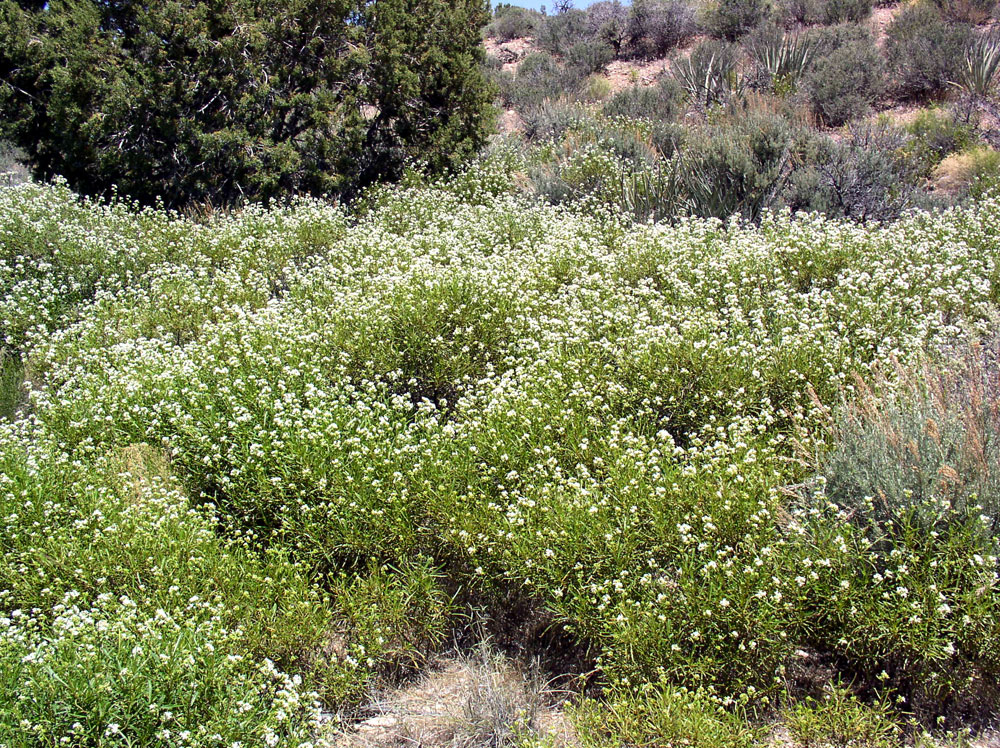
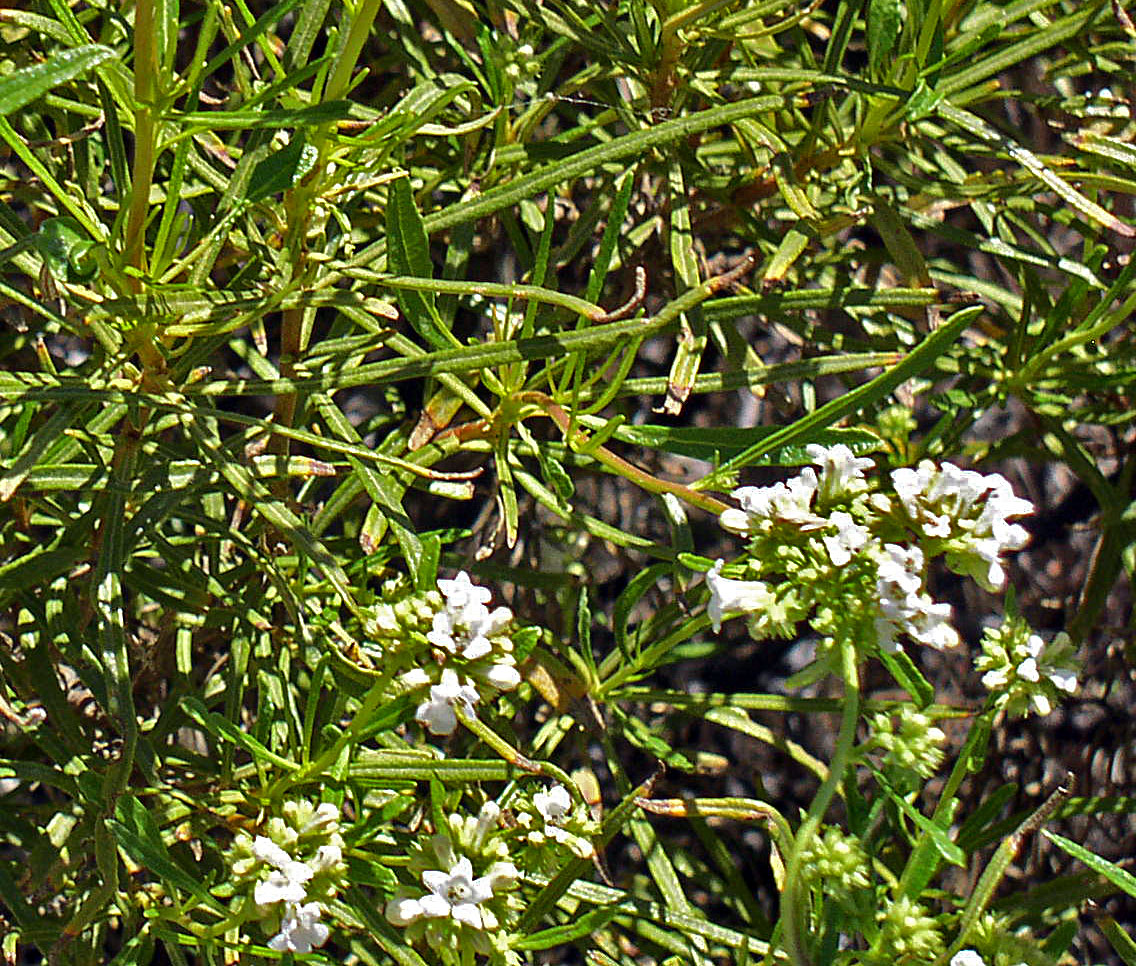
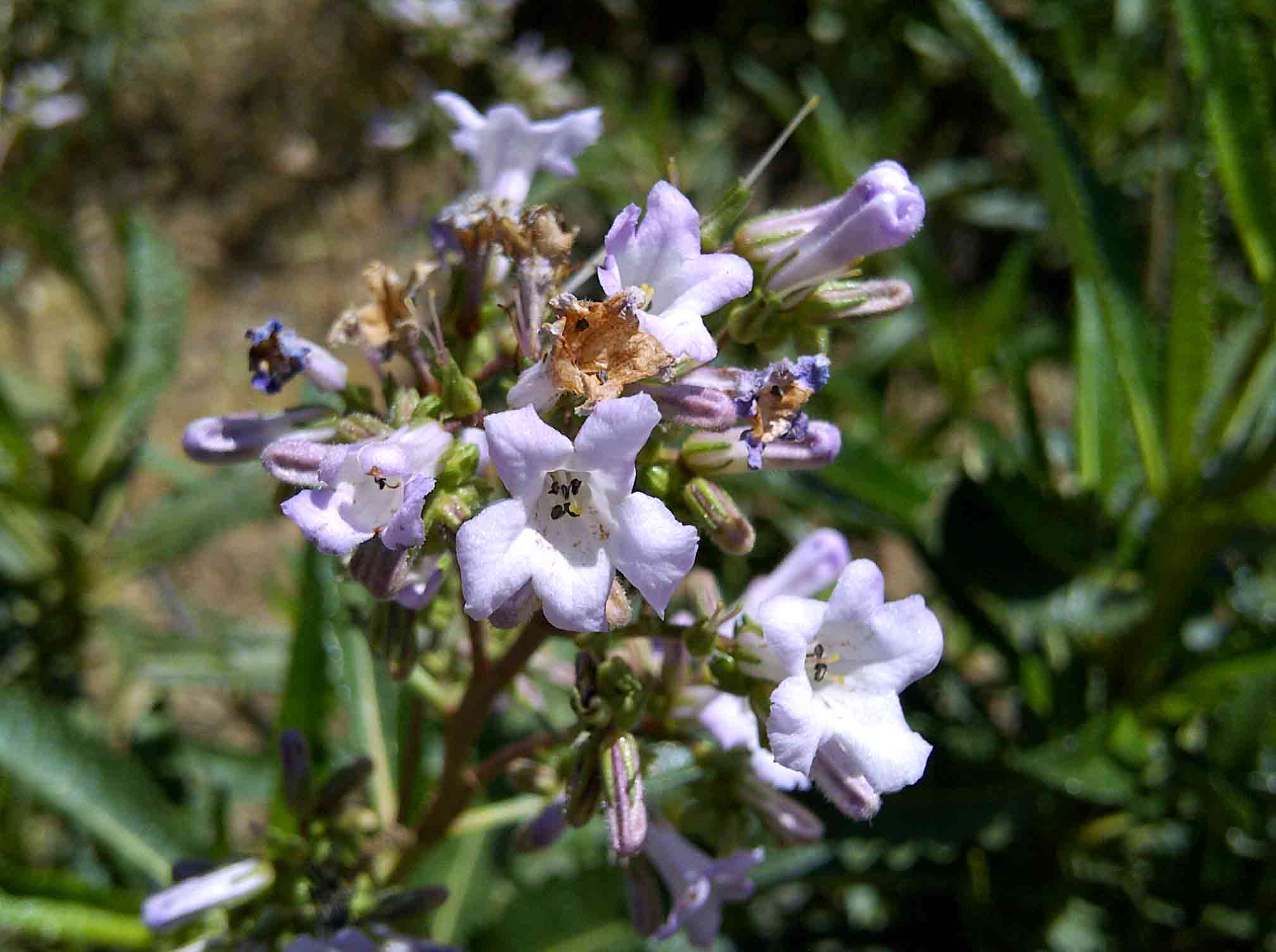
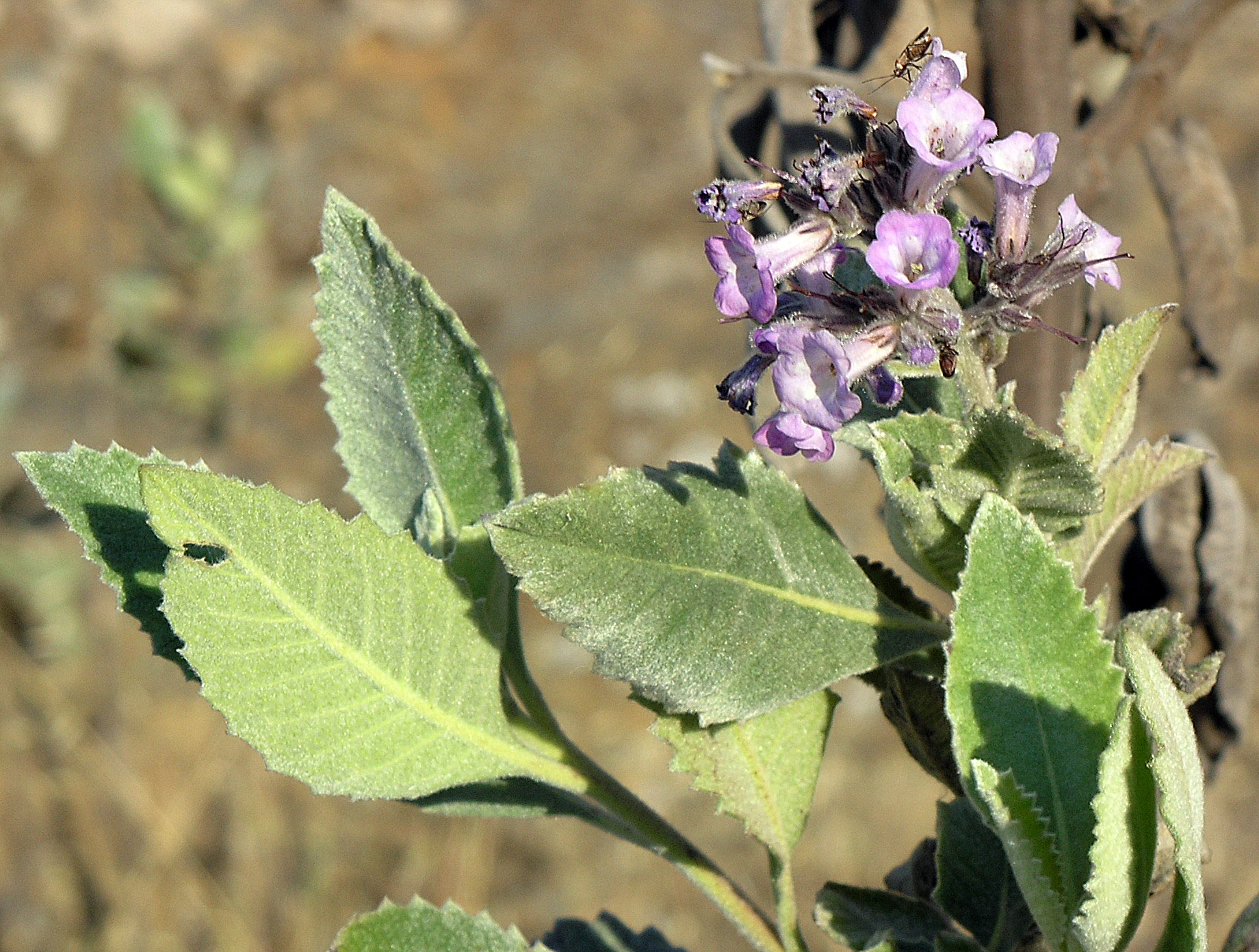
Eriodictyon trichocalyx Piute Mts., Kern Co., south of Lake Isabella along Erskine Creek, 28 May 2016
|
|
Trees and Shrubs of Kern County (Jan 2013) Eriodictyon. Semi-evergreen shrubs, or tree-like in some species, with alternate coriaceous aromatic glutinous leaves; flowers many clustered on terminal shortly branched scapes along a main flowering shoot (branched thyrsoid or cymose inflorescences), or in terminal head-like clusters (E. capitatum), leafy near base of floral shoots; flowers white to purple, bell-shaped to funnelform with spreading corolla lobes; styles distinct to near base; ovary with two deeply intruded and 2-parted placentae, essentially dividing the ovary into four compartments (“semi-locules”), each compartmentalized portion of a placenta with 1-several ovules on a the recurved ending portion. Fruit schizocarpic: opening along the dorsal suture and separating along the intruding placental partitions (coccarium), “each valve closed on one side by the adherent partition or half dissepiment” (Jepson 1925),“breaking up into 4 nutlet-like segments” (Cronquist et al., Intermountain Flora), not all mericarpids fertile. 11 species, southwestern North America; 6 used by native Americans, especially leaves; 29 extracts screened by the NCI before 1980, none active; several species collected by the author during the 1980’s for chemopreventive studies conducted by Cassady et al. at Ohio State University, 12 flavonoids of interest isolated from E. californicum (Liu et al., J. Nat. Prod. 55(3): 357–363). 1. Leaves glossy green above.................................................................................... 2 1. Leaves covered with felt-like hairs above..................................................................................... 3 ...... 2. Flowers 8–17 mm........................ Eriodictyon californicum ...... 2. Flowers 6–8 mm............................. Eriodictyon trichocalyx
3. Flowers
urn-shaped, in head-like clusters, 3–5 mm; leaves white
3. Flowers
funnelform, in linear arrays and in clusters on short
...... 4.
Leaves green above, tertiary veins prominent; flowers 6–10 mm
...... 4.
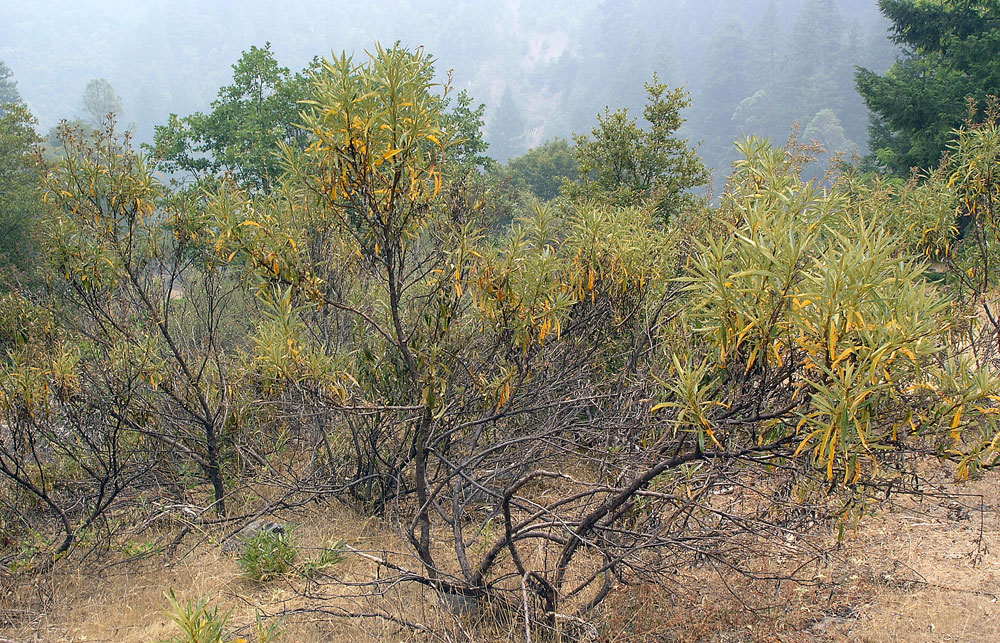
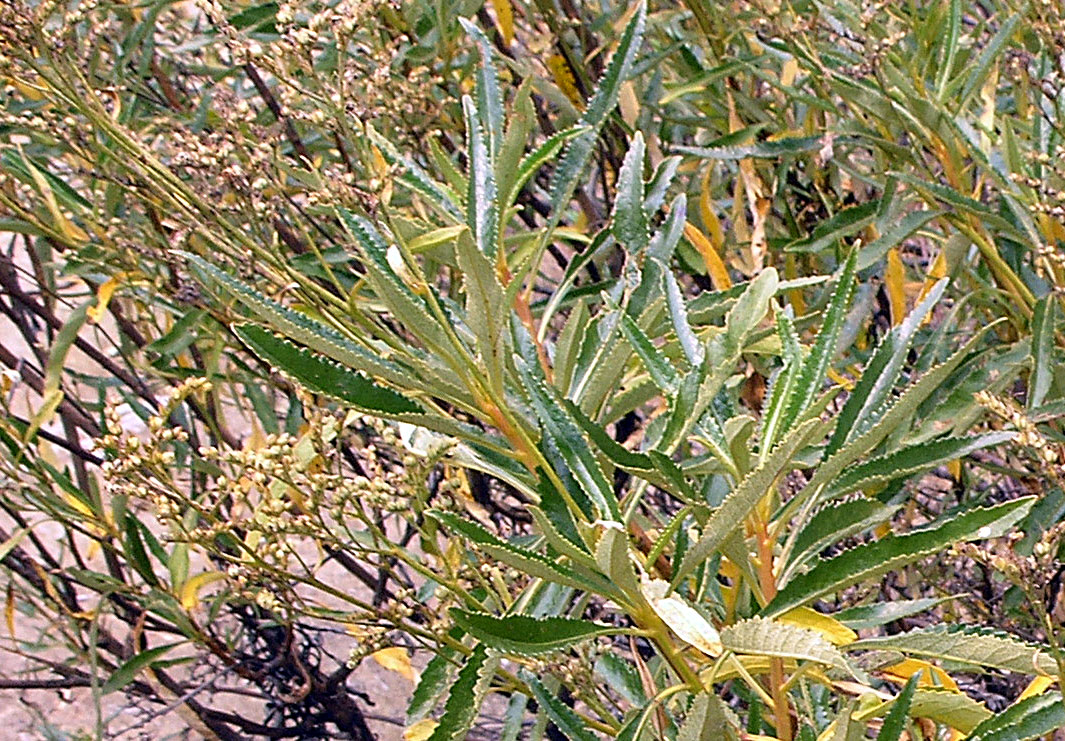
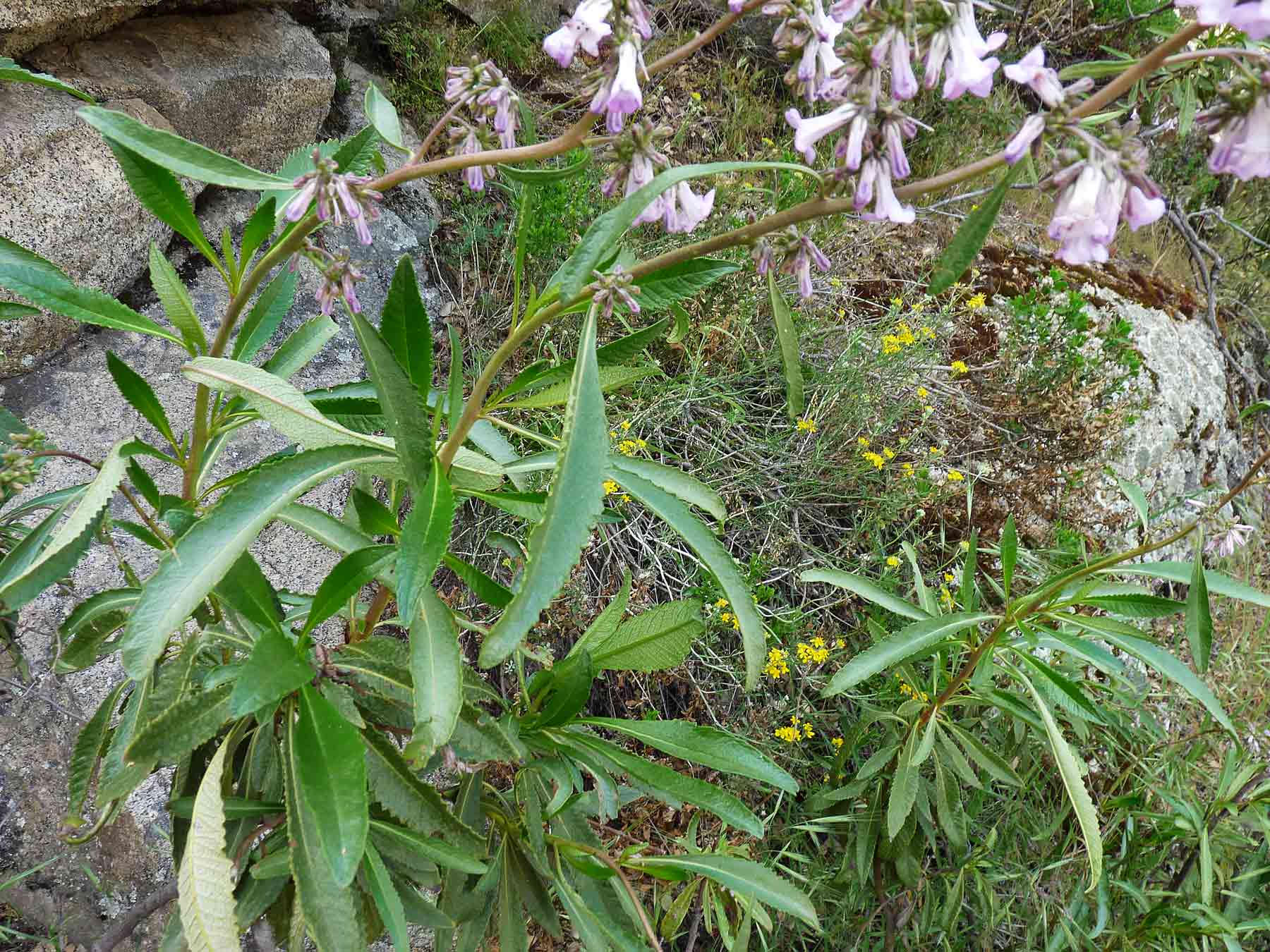
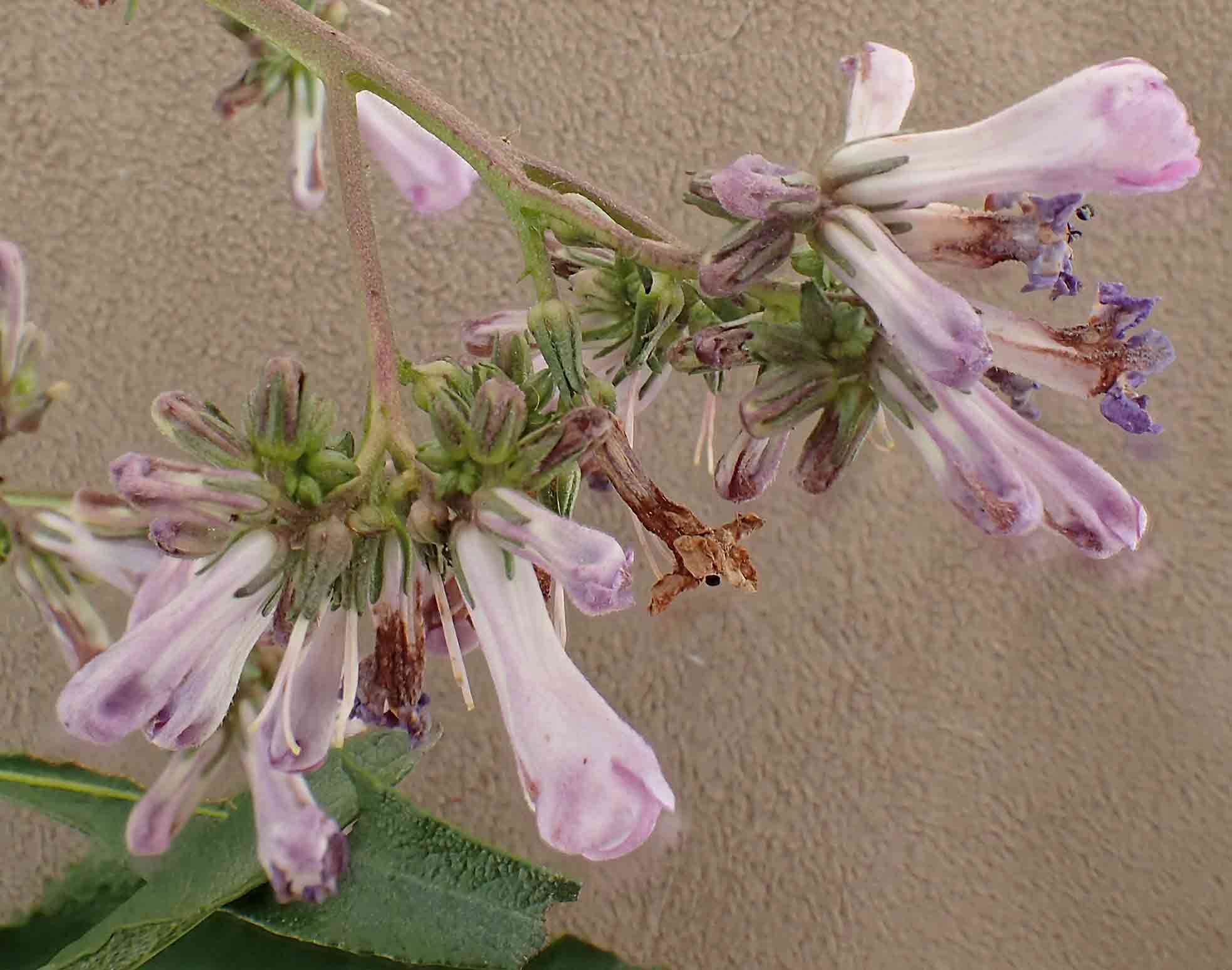
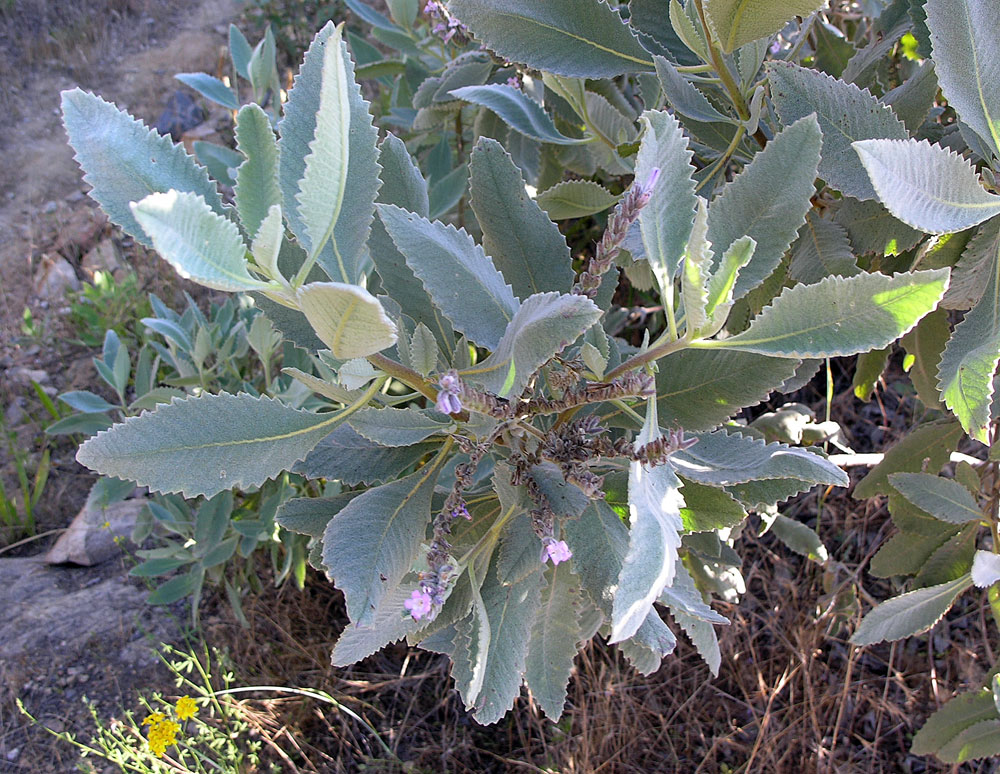
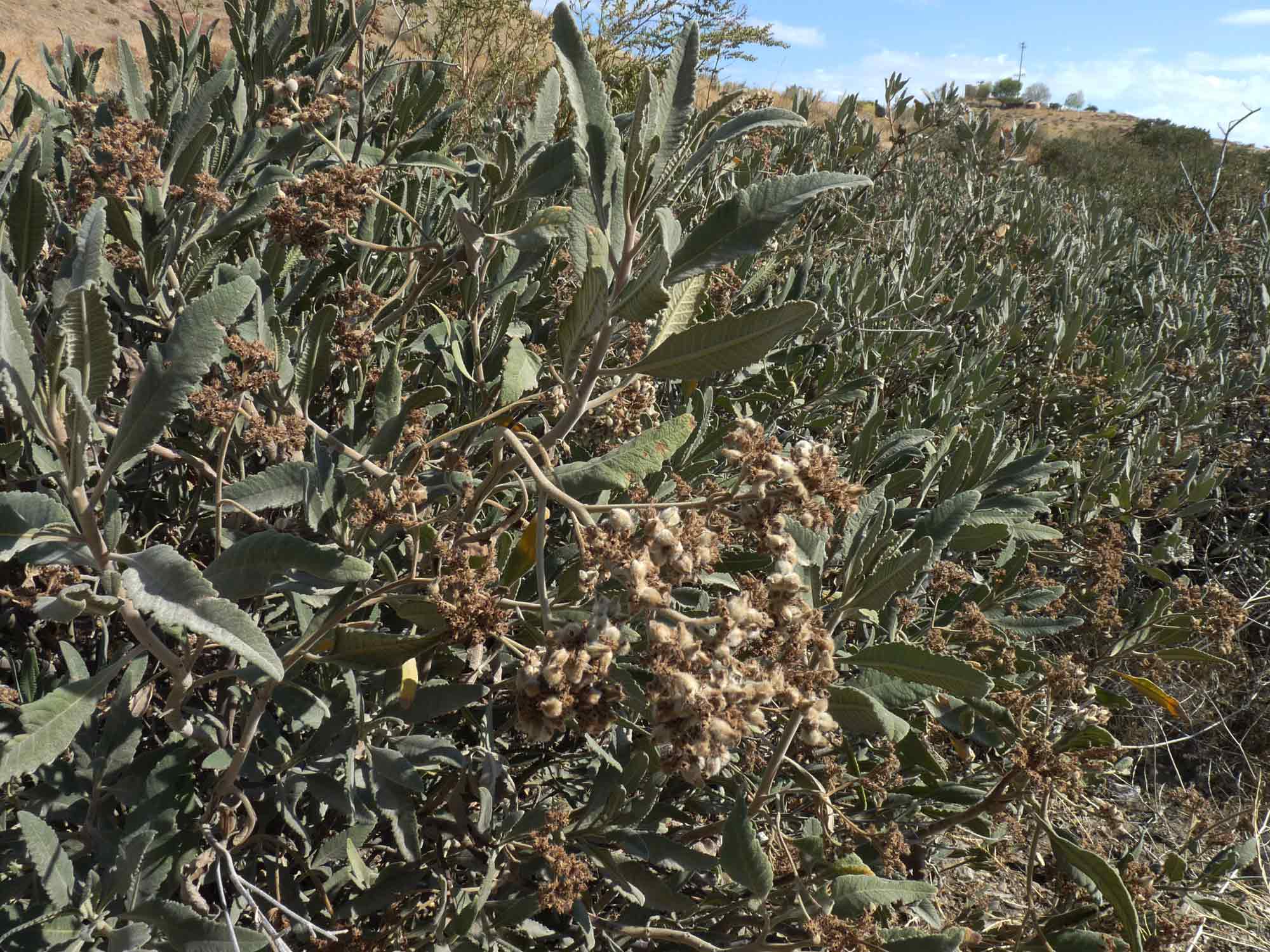
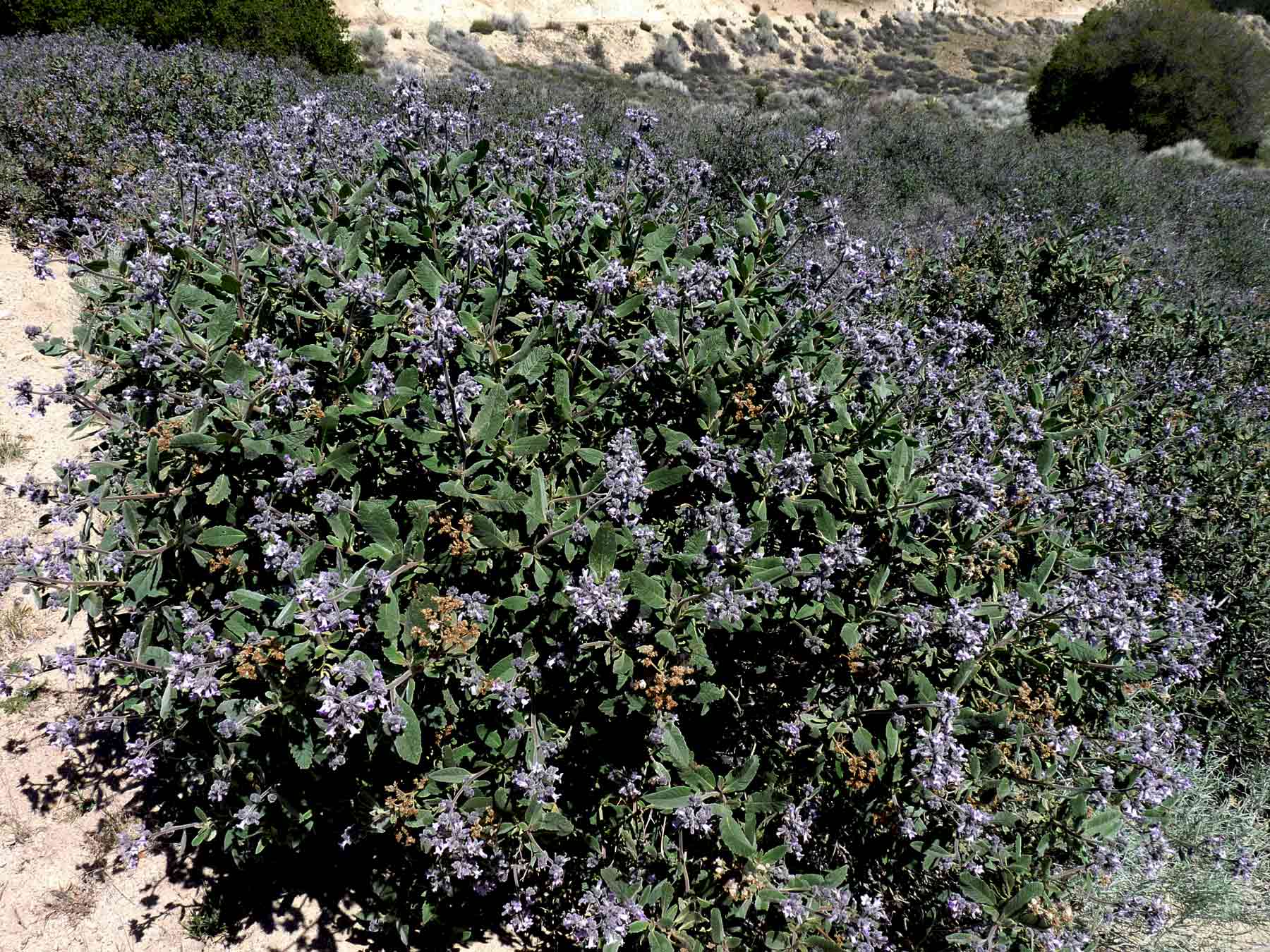
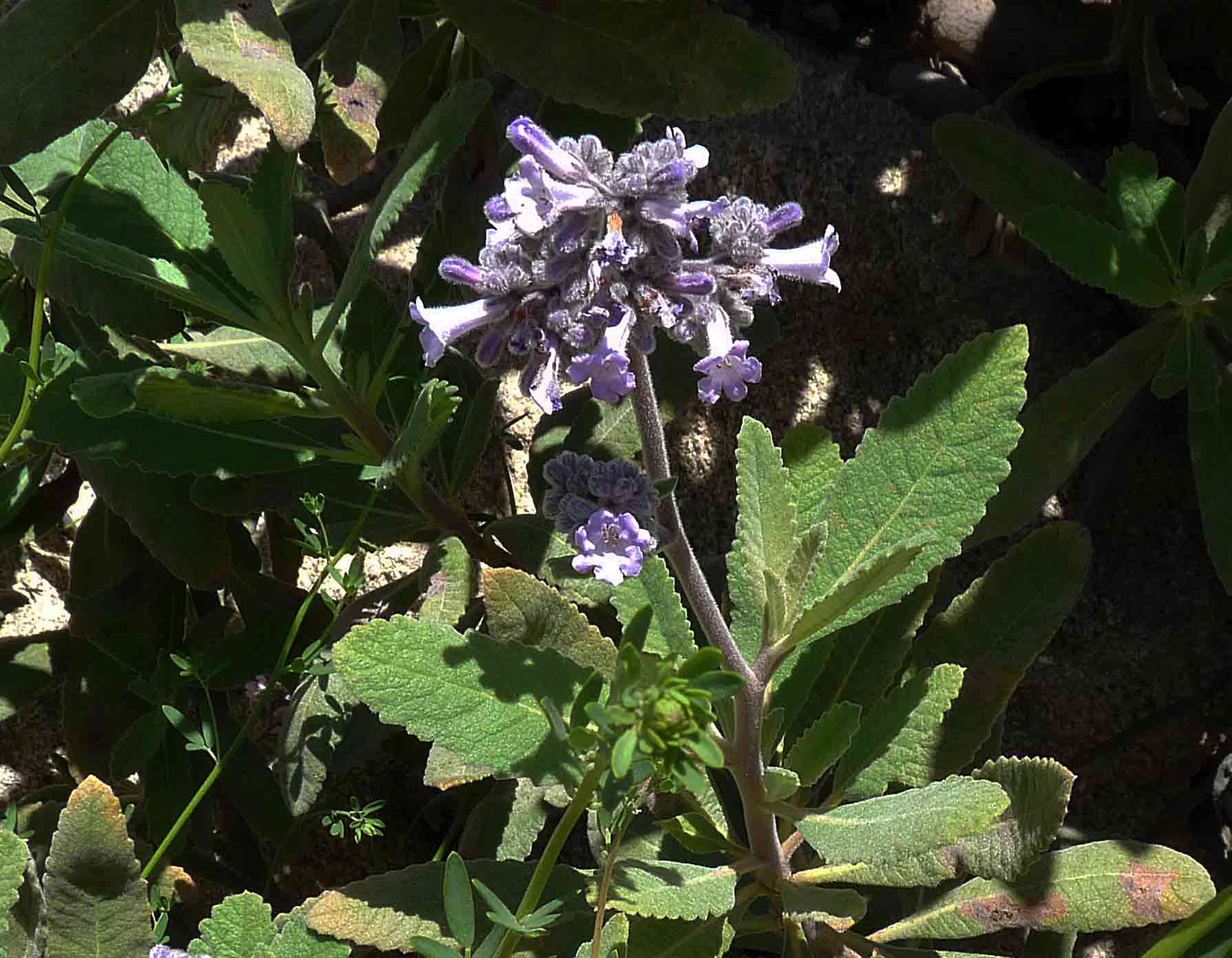
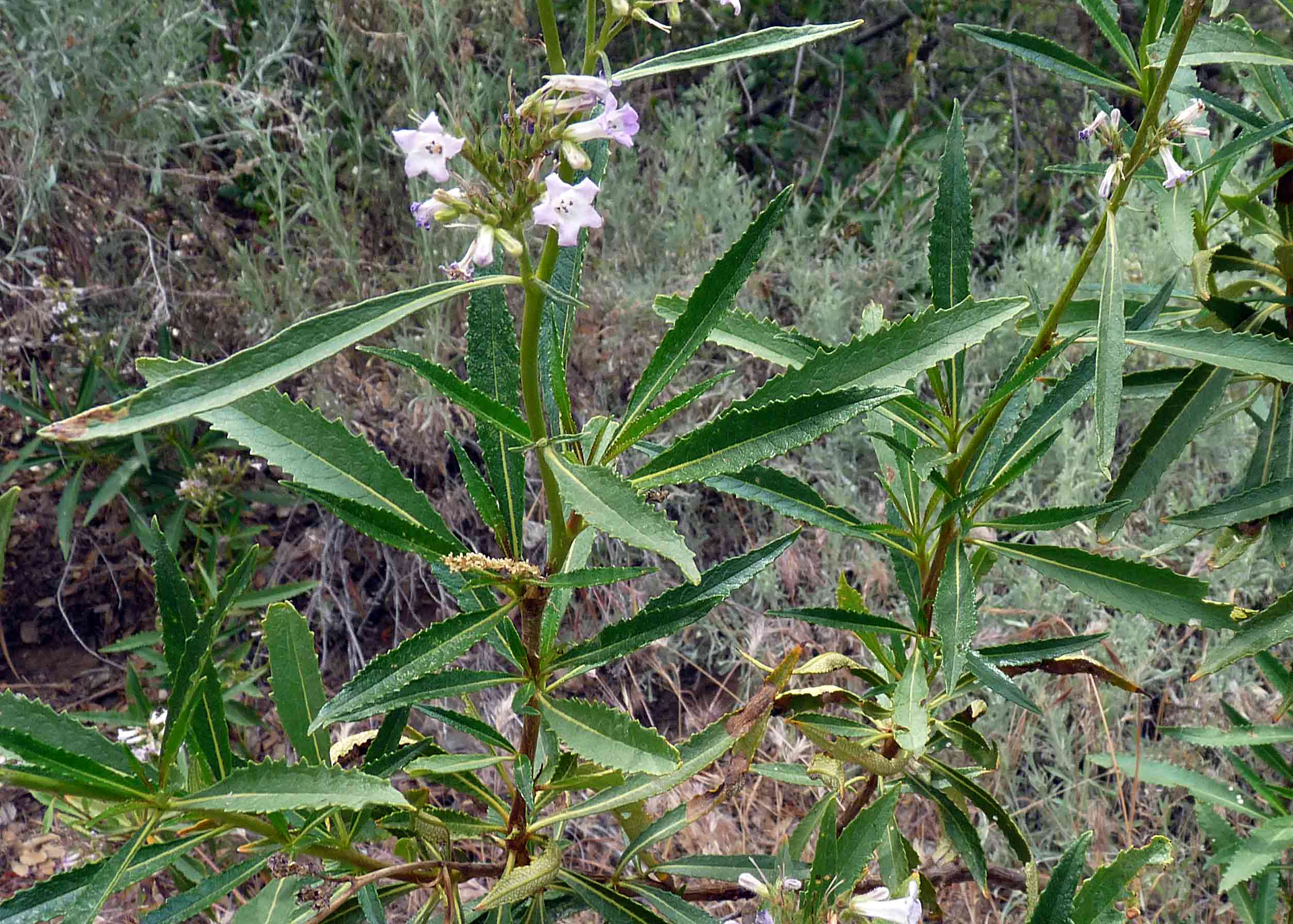
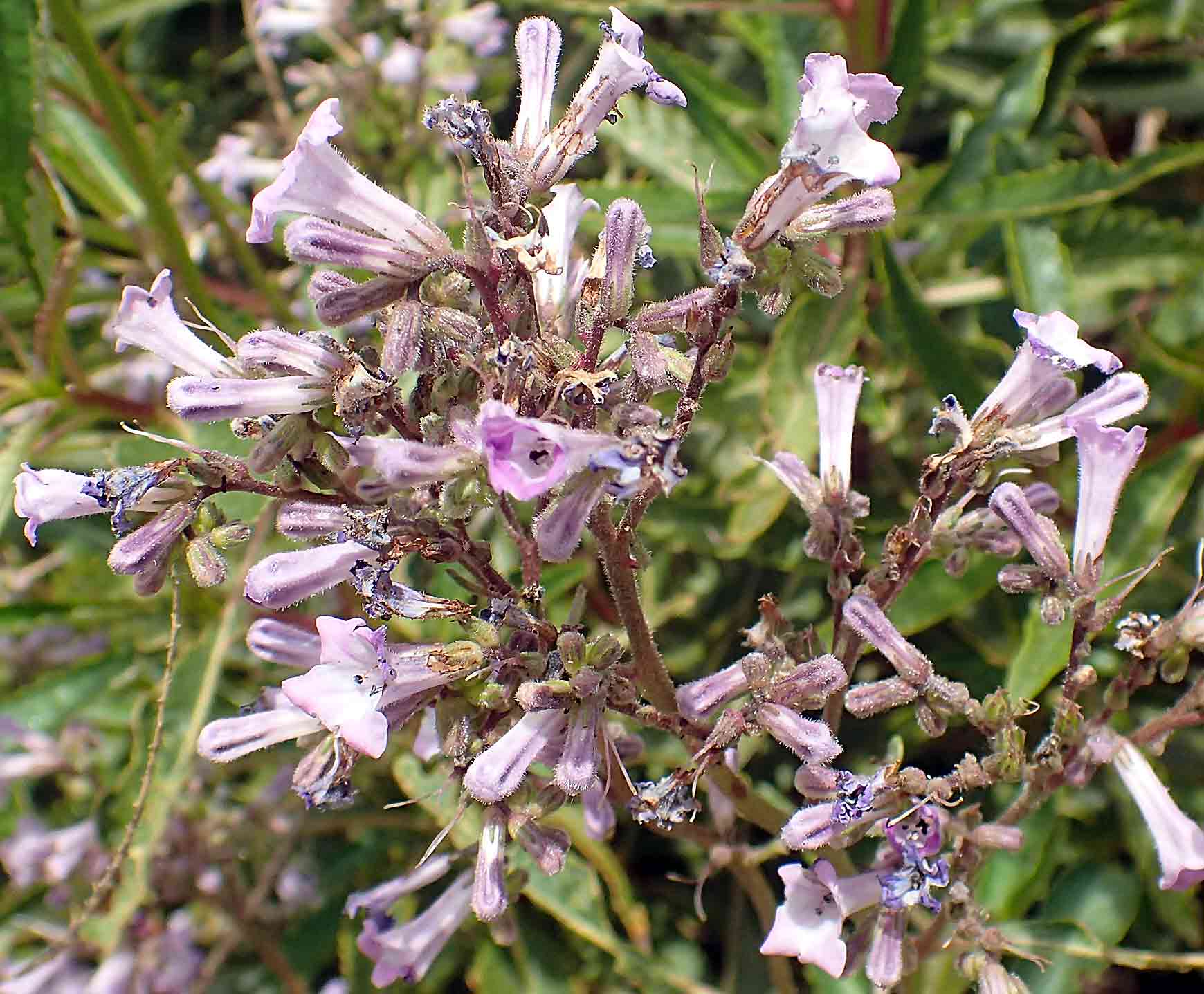
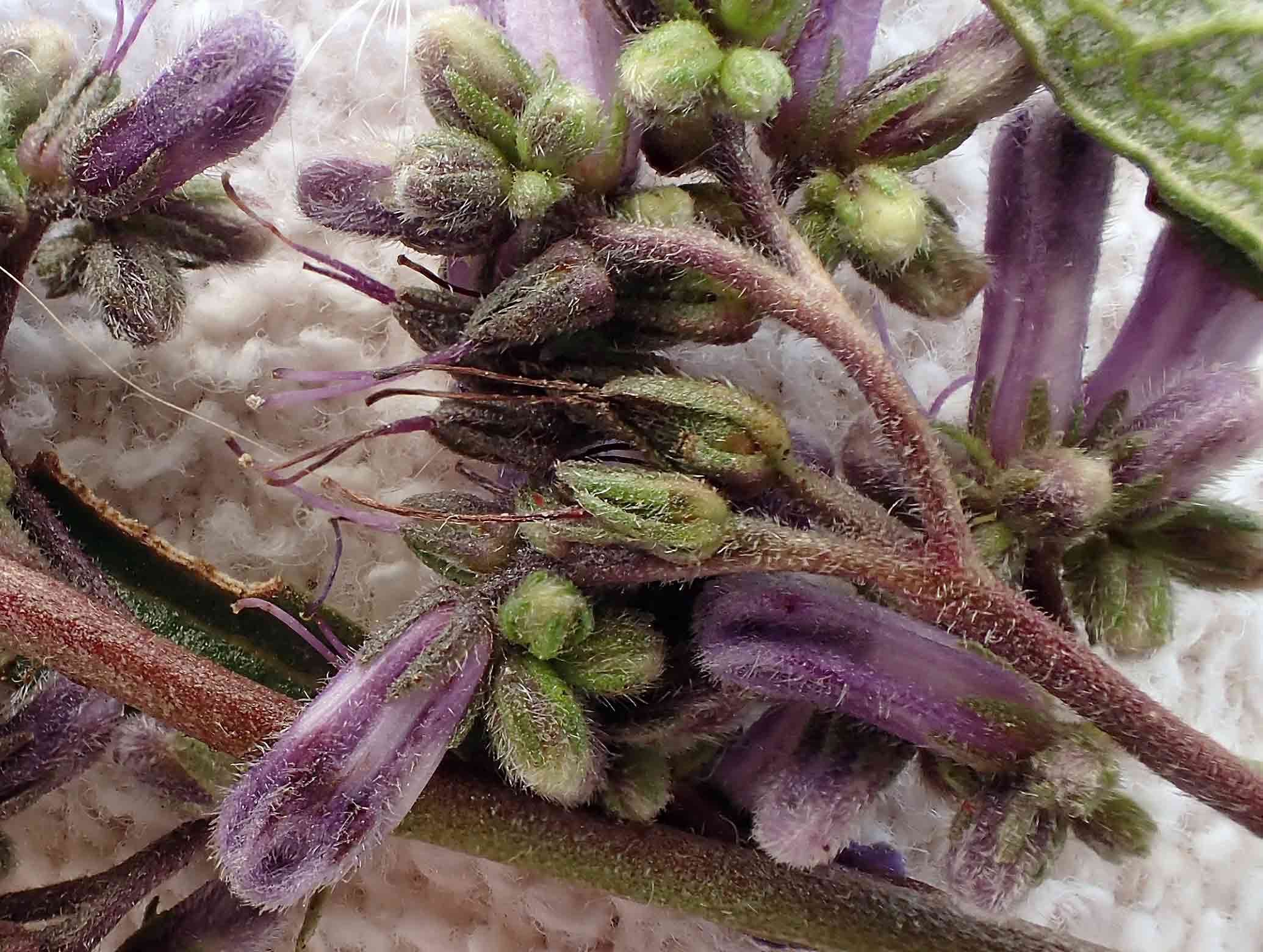
Leaves white hairy above, tertiary veins inconspicuous; ...... Eriodictyon californicum (Wigandia californica Hooker & Arnott 1841) Torrey 1859. California yerba santa. Shrubs with erect stems, sometimes tree-like, 0.5 to 4 m, twigs dull red to pale orange; leaves mostly on young stems and branches but persisting more than one season, narrow elliptic, 6–10× longer than wide, to 15 cm long, tapered at both ends, folded upwards along the midrib, dark glossy green above and pale yellowish beneath, the veins raised on lower surface, inconspicuous above, toothed along margins; flowers May–Jul, lavender to white, usually numerous on terminal branched scape-like stems with a main axis and short side branchlets, tubular funnelform, 8–15 mm long. Oak and pine woodlands, chaparral, below 6,000 ft, Klamath Region of Oregon (Rogue River) south to the Klamath, Coast and Sierra Nevada ranges in California, as far south as Cypress Mt in San Luis Obispo Co., and Breckenridge Mt in Kern Co. California yerba santa scrub recognized in MCV2 when >50% relative cover in the scrub canopy. Type from California. Kern Co.: “Common in the chaparral, south Breckenridge Mountain and the north end of Piute Mountain, especially old disturbed places on rocky soil” (Twisselmann). Also frequent in Kern Canyon, and along Hwy 155, west slopes of Greenhorn Range (pers. obs.). Leaves used by 14 native American tribes for treating colds, coughs, rheumatism, asthma, pulmonary aid, dermatological aid, sores, fever, stomach problems, and as poultices (Moerman). Contains active flavonoids. Eriodictyon crassifolium Bentham 1844. Yerba santa. var. crassifolium. Thick leaf yerba santa. Slender-stemmed, sparingly branched shrub to 5 m; stems erect, branches ascending, pale reddish, densely white to gray hairy on upper surface; leaves on upper stems and branches, or along most of the stems, sticky, elliptical to slightly wider below the mid region, 3–5 × long than wide, 5–15 cm long, densely hairy; pleated and shallowly toothed along margins, the teeth broad triangular. Flowers Apr–Jun, lavender, broad funnelform, 8–16 mm long. Coastal sage (San Diego Co.) and chaparral below 5,000 ft; Peninsular Ranges, San Jacinto Mts., Transverse Ranges. Type from San Diego. Provisional thick leaf yerba santa scrub recognized in MCV2. Kern Co.: San Emigdio Range, Black Bob Canyon and San Emigdio Canyon, 768–1,188 m (CCH). Eriodictyon crassifolium Bentham 1844. Yerba santa. var. nigrescens Brand 1913 (Includes var. denudatum Abrams 1915, type from Red Reef Canyon, Ventura Co., CA). Differs by the less hairy and less sticky leaves, appearing darker green on upper surface, and more elliptical in shape, and by the shorter flowers, 6–10 mm long. Similar in range to the preceding, but extending to the southern Sierra Nevada, generally at higher elevations, up to 8,000 ft. Type from Acton, Los Angeles Co., CA. Kern Co.: San Emigdio Range, Mt. Pinos, Mt. Abel, Cuddy Canyon, Tehachapi Mts., Breckenridge Mts., 761–2,439 m (CCH). Eriodictyon tomentosum Bentham 1844. Woolly yerba santa. Densely white hairy shrub to 2 m; stems erect and sparingly branched, or mostly simple and densely leafy; leaves broad elliptic, ~3× longer than wide, to 10 cm long, densely covered with white felt hairs, pleated and lobed or toothed along margins, or entire; flowering Jun–Jul; flowers in terminal clusters on short branched scapes, urn-shaped, white to lavender, 3–5 mm long, surrounded by calyx with gland-tipped hairs. Chaparral and foothill woodland of Inner Coast Ranges and Sierra Nevada, around Great Valley, below 4.,500 ft. Type from California without specific locality. Kern Co.: Two small colonies on Ross Ridge in the Temblor Range (Twisselmann); no records in CCH. Eriodictyon trichocalyx Heller 1859 var. trichocalyx. Hairy yerba santa. Sparingly branched shrub similar to E. californicum, to 2 m high; twigs dull red to pale orange; leaves mostly on young stems and branches, persisting more than one season, narrow elliptic, 6–10× longer than wide, to 15 cm long, tapered at both ends, folded upwards along the midrib, dark glossy green above and pale yellowish beneath, sticky, the veins raised on lower surface, inconspicuous above, toothed along margins; flowers Apr–Jul, lavender to white, usually numerous on terminal branched scape-like stems with a main axis and short side branchlets, tubular funnelform, 6–8 mm long, conspicuously short hairy, especially on the calyx. Oak and pine woodlands, chaparral, and conifer forests up to 2600 m, Southern Coast Ranges, Transverse Ranges, Southern Sierra Nevada, Tehachapi Mts; San Bernardino Mts. and Peninsular Ranges. Type from San Bernardino Mts., California. Kern Co.: Locally common in Piute Mts. Region along Erskine Creek just south of Lake Isabella (Spjut, 28 May 2016, voucher & photo); Tehachapi Mts., along the road in Upper Tejon Canyon about 0.75 air km west of the ranch boundary, 1138 m (Jensen & Porter, 21 May 2014 (CCH-RSA); Transverse Ranges-Ventura Mts., Cerro Noroeste (Mount Abel), along road to Campo Alto campground, 2439 m (Kelley, 14 Aug 1971, CCH-SFV). The record from Eskine Creek appears to be the northern-most occurrence for the species.
Pharmacological References Ley J. P., G. Krammer, G. Reinders, I. L. Gatfield and H. J. Bertram. 2005. Evaluation of bitter masking flavanones from Herba Santa (Eriodictyon californicum (H. and A.) Torr., Hydrophyllaceae). J. Agric. Food Chem. 53(15):.6061–6066. “Products made from Herba Santa (Eriodictyon californicum (H. & A.) Torr.) have been used as bitter remedies for some pharmaceutical applications for many years, but they are actually too aromatic to be useful for many food or pharmaceutical applications. In sensory studies flavanones homoeriodictyol (1), its sodium salt (1-Na), sterubin (2), and eriodictyol (4) could significantly decrease the bitter taste of caffeine without exhibiting intrinsic strong flavors or taste characteristics. Further investigations on 1-Na elicited a broad masking activity between 10 and 40% toward different chemical classes of bitter molecules (e.g. salicin, amarogentin, paracetamol, quinine) but not toward bitter linoleic acid emulsions. For caffeine and amarogentin, dose-response studies were performed; the masking activity toward bitter taste for both compounds reached a plateau at higher concentrations of 1-Na. Due to these facts, homoeriodictyol sodium salt (1-Na) seems to be a very interesting new taste modifier for food applications and pharmaceuticals.” Liu Y. L., D. K. Ho, J. M. Cassady, V. M. Cook and W. M. Baird. 1992. Isolation of potential cancer chemopreventive agents from Eriodictyon californicum. J. Nat. Prod. 55(3): 357–363. “Activity-based fractionation of Eriodictyon californicum resulted in the isolation of 12 flavonoids that inhibit the metabolism of the carcinogen benzo[a]pyrene by hamster embryo cells in tissue culture. One was identified as a new flavanone, 3'-methyl-4'-isobutyryleriodictoyol [1], on the basis of spectroscopic analysis and alkaline hydrolysis. The seven other active flavanones were identified as eriodictyol [2], homoeriodictyol [3], 5,4'-dihydroxy-6,7-dimethoxyflavanone [4], pinocembrin [5], sakuranetin [6], 5,7,4'-trihydroxy-6,3'-dimethoxyflavanone [7], and naringenin 4'-methyl ether [8]. Four active flavones were also isolated: cirsimaritin [9], chrysoeriol [10], hispidulin [11], and chrysin [12]. The high inhibition of benzo[a]pyrene metabolism and the activation of benzo[a]pyrene to ultimate carcinogenic DNA-binding metabolites by cirsimaritin and chrysoeriol at a concentration of only 10 micrograms/ml indicates that these flavones warrant further investigation in vivo as potential chemopreventive agents.”
Salle A. J.,
G. J. Jann and L. G. Wayne. 1951. Studies on the antibacterial
properties of Eriodictyon californicum. Arch. Biochem. 32(1):
121–123. |
|