Crossosomataceae
©The
World Botanical Associates Web Page
Prepared by Richard W. Spjut
December 2004, May 2009, Oct 2011
|
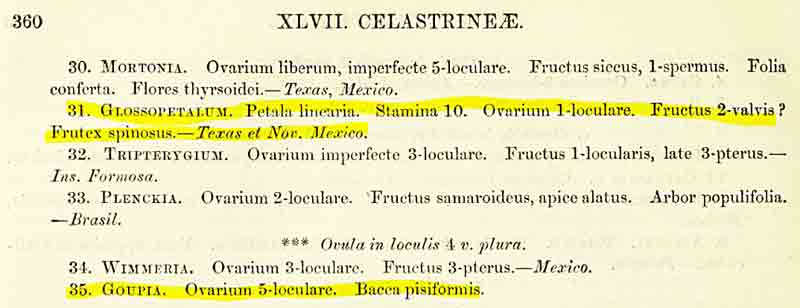
Forsellesia vs. Glossopetalon In much of the literature, Glossopetalon is the name employed, based on Asa Gray (in Plantae Wrightianae Texano-neo-mexicanae 2: 29, 1853 [Pl. Wright., an account of plants collected by Charles Wright]); however, this is not a legitimate name according to the International Code of Botanical Nomenclature (ICBN), because Glossopetalon (A. Gray, ) was considered a homonym of Glossopetalum (J. Schreber 1789, Genera Plantarum ed. 8, I: 205; Goupiaceae or Celastraceae ) by Edward L. Greene (in Erythea 1:206, 1893,) who provided a substitute name, Forsellesia (in honor of a Swedish botanist). Article 53.3 of the ICBN states that “when two or more generic or specific names based on different types are so similar that they are likely to be confused (because they are applied to related taxa or for any other reason) they are to be treated as homonyms.” The slightly different endings for the generic name relate to Greek vs. Latin spellings (N. Holmgren in Intermountain Flora 3A Pt. 1: 160, 1997). Margaret Ensign (a student of Phillip Munz,), in a revision of the genus Forsellesia (American Midland Naturalist 27(2), 1942), upheld Greene's name (Forsellesia). However, St. John (in Proceedings Biological Society of Washington 55: 109–12, 1942) disagreed. Nevertheless, Munz and Keck, in A California Flora (1959) continued to use Forsellesia. Thus, the question on whether or not Glossopetalon and Glossopetalum are homonyms remains confusing as to which genus name is correct, Forsellesia or Glossopetalon? The ICBN provides examples of homonyms such as Asterostemma Decne, (1838) and Astrostemma Benth. (1880), Acanthoica Lohmann (1902) and Acanthoeca W. MN. Ellis (1930), and others. A similar argument was made by Gerhard Follmann in Philippia 1976: 85–89 for the lichen genus Desmazieria Montagne (1852) that he found similar to the grass genus name Desmazeria Dumortier (1822). Follmann (1976, abstract) stated that the names for the two genera “do not sound sufficiently similar that they are likely to be confused. Therefore, the genus name Desmazieria Mont. can be retained.” This was followed by reassignment of species in Ramalina to Desmazieria (new name combinations). But Phillip Rundel and Peter Bowler disagreed (in Mycotaxon 6: 497–99, 1978) with Follmann (1976). They (Rundel & Bowler 1978) provided a substitute name, Niebla, and in so doing they transferred some of Follmann's names and others that they had earlier described in Desmazieria to the genus Niebla, e.g., Niebla pulchribarbara (Rundel & Bowler) Rundel & Bowler, which Bowler and Marsh later placed in synonymy (in Lichen Flora of the Greater Sonoran Desert Region 2, 2004 ) under Niebla josecuervoi (Rundel & Bowler) Rundel & Bowler. Spjut in Flechten Follmann 1995: 337-351 upheld the substitute genus name Niebla. The Code (ICBN) also cites species epithets as examples of homonyms such as chinensis and sinensis, which certainly do not sound alike. Moreover, when a species name gets transferred from one genus name to another, the endings may change for grammatical reasons, such as with Chrysothamnus nauseousus and Ericameria nauseosa. Brummitt, in reference to his unpublished submission for review by the Nomenclatural Committee (Taxon 42: 696-97, 1993), indicated that the Nomenclatural Committee found the names Glossopetalon and Glossopetalum not confusable, an issue that was also raised by Holmgren in which he argued that the spellings of the names were sufficiently different; however, this decision is contradicted by history of application in the literature for the substitute name Forsellesia and its synonym Glossopetalon; both had been used equally (50:50) as reported by Brummitt (1993). Thus, for anyone to say that Glossopetalon and Glossopetalum were not confusing after they had already been confused for the past 108 years is contradictory. If a substitute name (Forsellesia) had never appeared, the Committee's decision would appear reasonable in accordance with Art. 53.5. However, since a substitute name was provided, it would then seem necessary—that for Glossopetalon to be retained—it must be conserved as suggested by Ensign (1942), in regard to Articles 53.1, 53.3 and 53.5. Although the Nomenclatural Committee may arbitrarily decide on whether two generic names are similar such as with the case of Glossopetalon (Art. 53.5; Brummitt, Taxon 43(3): 460, 1994), these decisions are not included in the appendix of the ICBN as in cases with names that are conserved and rejected, nor do all controversial names get reviewed by the Committee (e.g., Desmazieria). Art. 53.5 of the ICBN does not mandate that problematic names must be reviewed, but rather they are presented as a subjective issue stated as follows: “When it is doubtful whether names of their epithets are sufficiently alike to be confused, a request for a decision may be submitted to the General Committee...A recommendation may then be put forward” (emphasis added). Thus, the ICBN does not specify that when two or more similar names have been confused that they have to be reviewed. The conclusion here is that because Glossopetalon has not been conserved, Forsellesia remains as the correct name to be applied. Richard Spjut, Oct 2011
Further note. ICN Art. "32.2. Names or epithets published with an improper Latin termination but otherwise in accordance with this Code are regarded as validly published; they are to be changed to accord with Art. 16–19, 21, 23, and 24, without change of the author citation or date (see also Art. 60.12). " This appears to be what Bentham and Hooker did in Genera Plantarum (1883); the Greek ending on was changed to um to conform with Latin. Regardless of Brummit's (1993) decision, Forsellesia Greene is the only legitimate choice, unless Glossopetalum A. Gray is conserved. Richard Spjut, Dec 2016 |
G. Bentham and J. D. Hooker. 1883. Genera
Plantarum, Reeve & Co.
Extracted from Biodiversity Heritage Library (yellow highlight added)
|
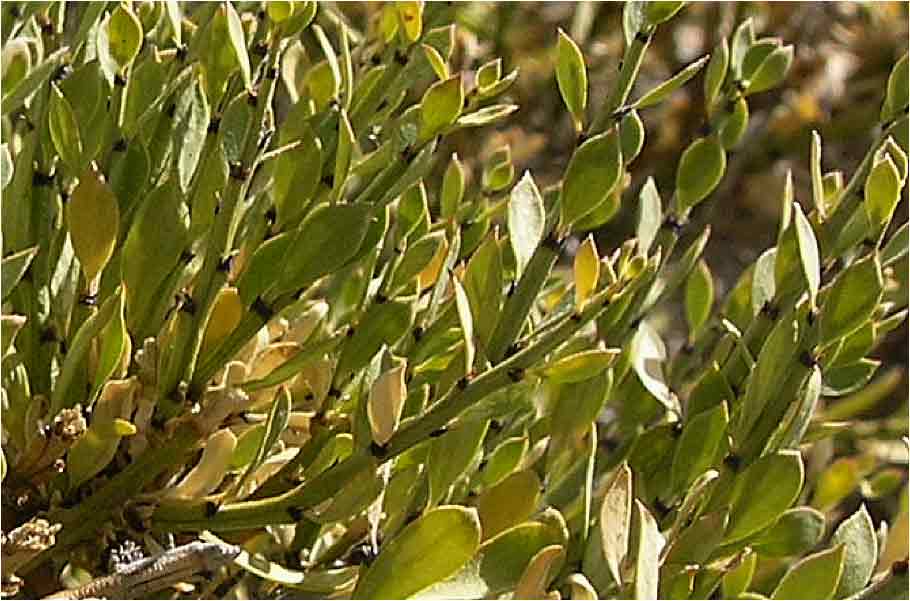
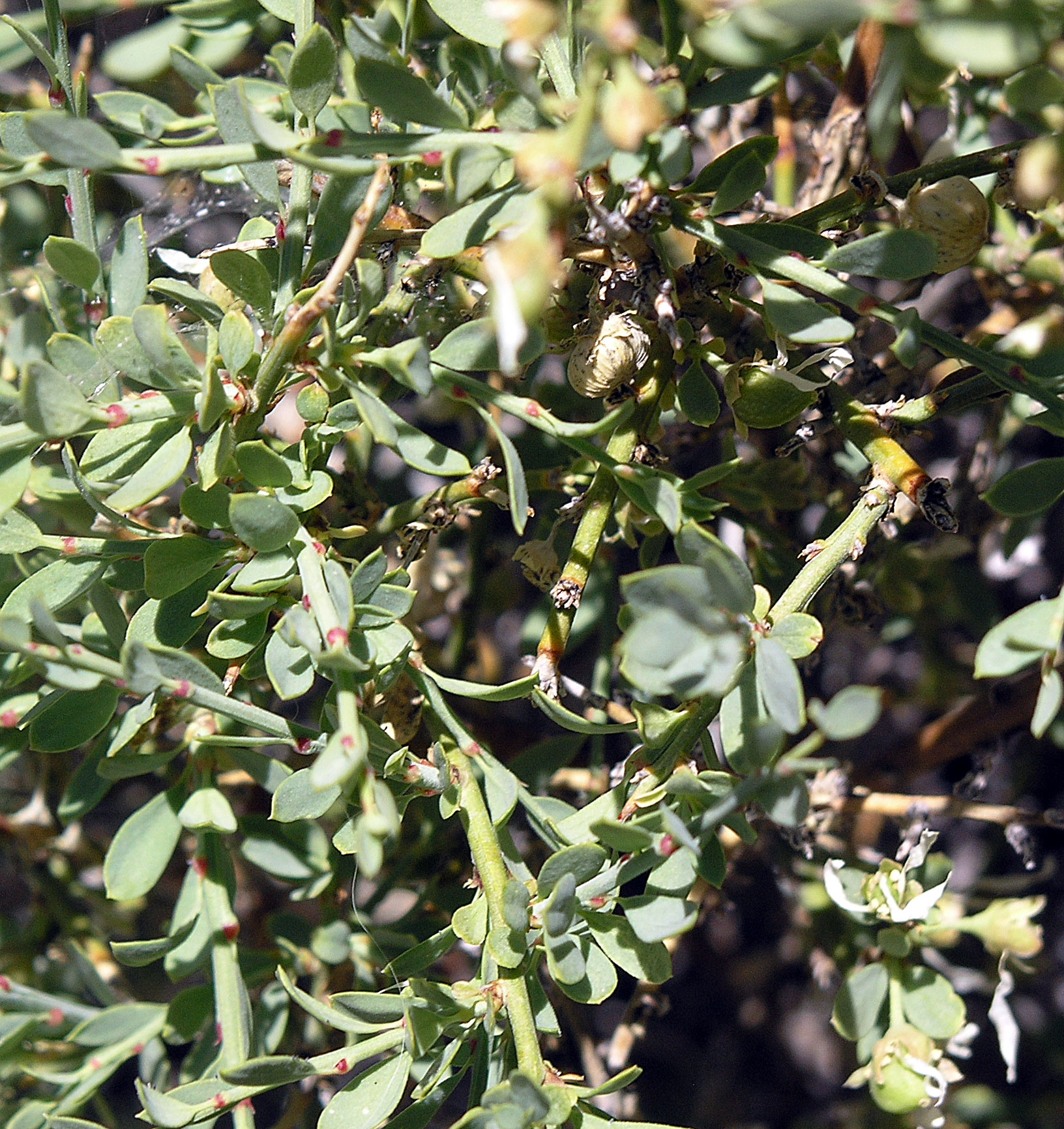
Forsellesia meionandra (black petiole bases)
|
|
|
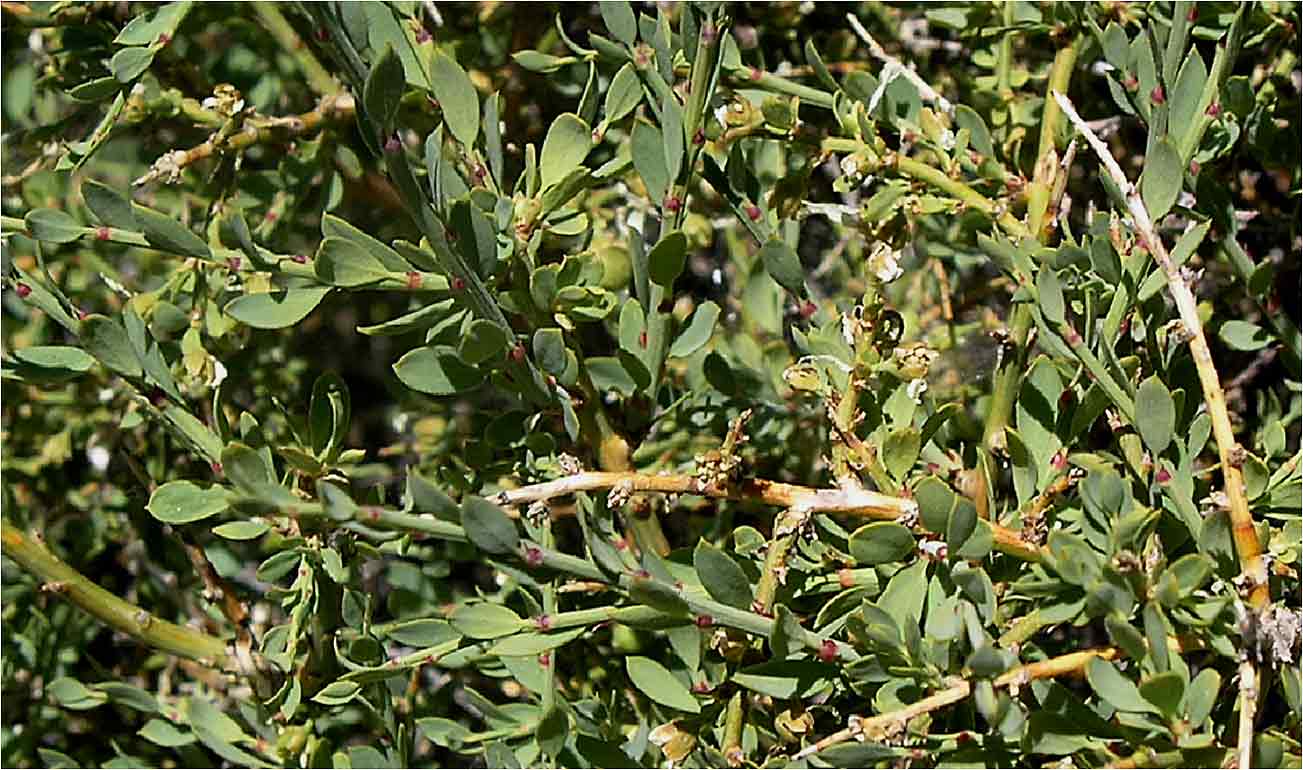
Forsellesia nevadensis
(red petiole bases)
|
|
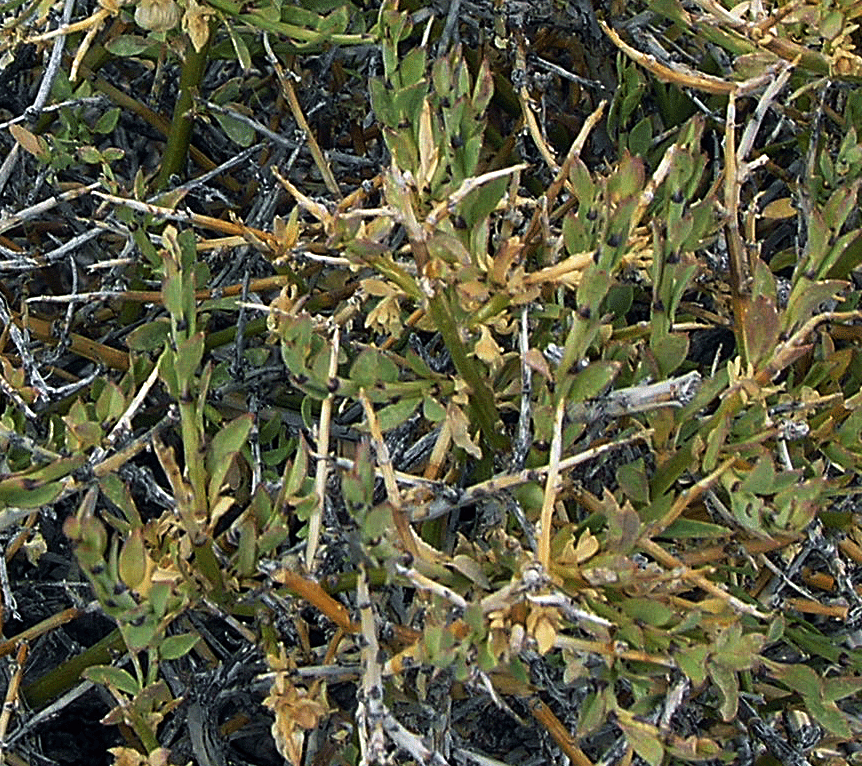 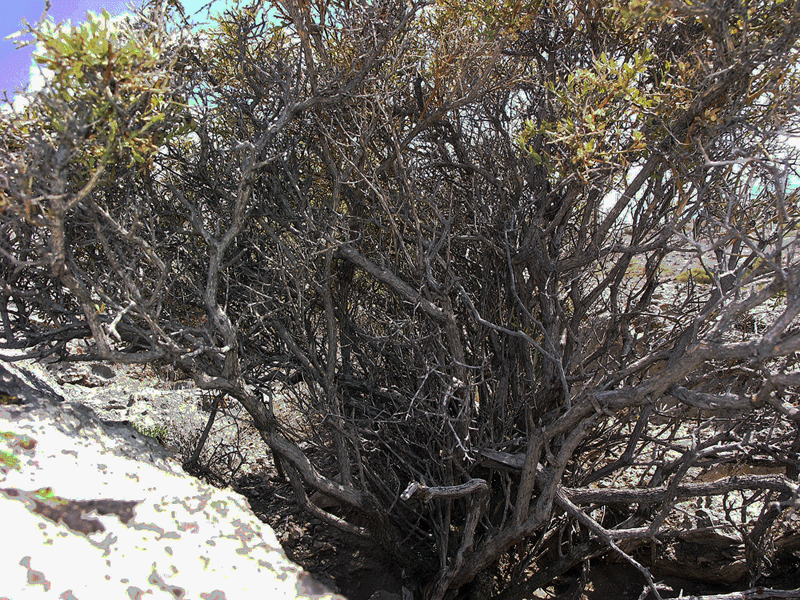 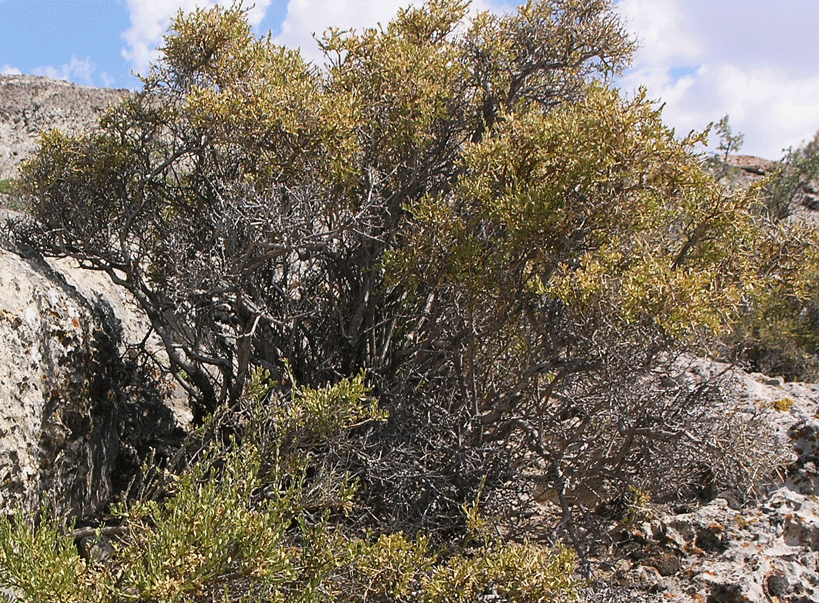
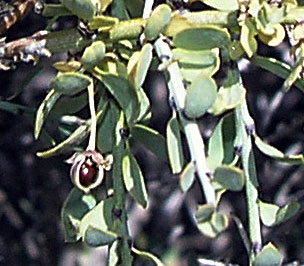
Forsellesia meionandra
|
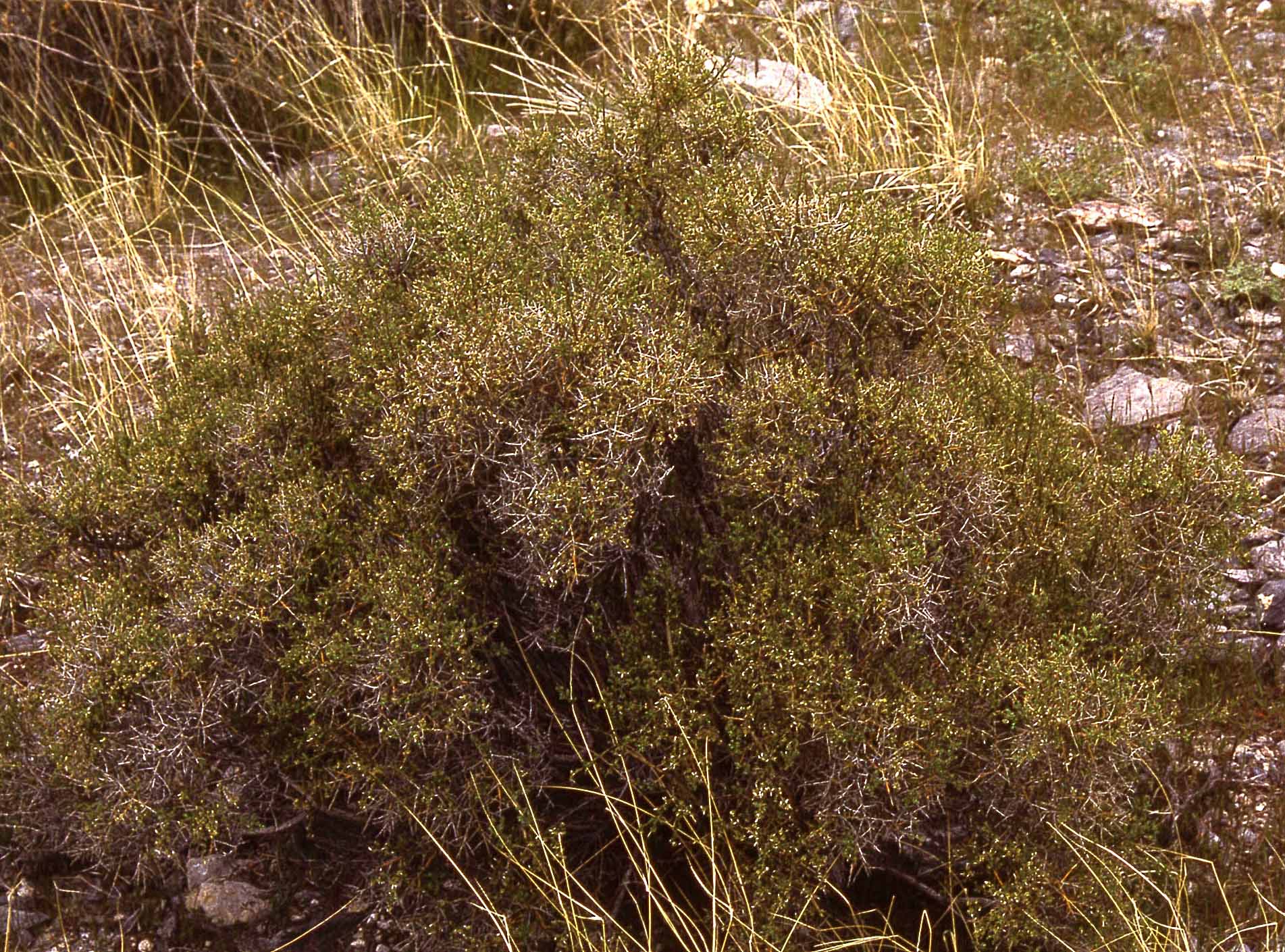
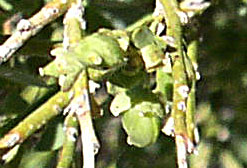
Forsellesia nevadensis
|
|
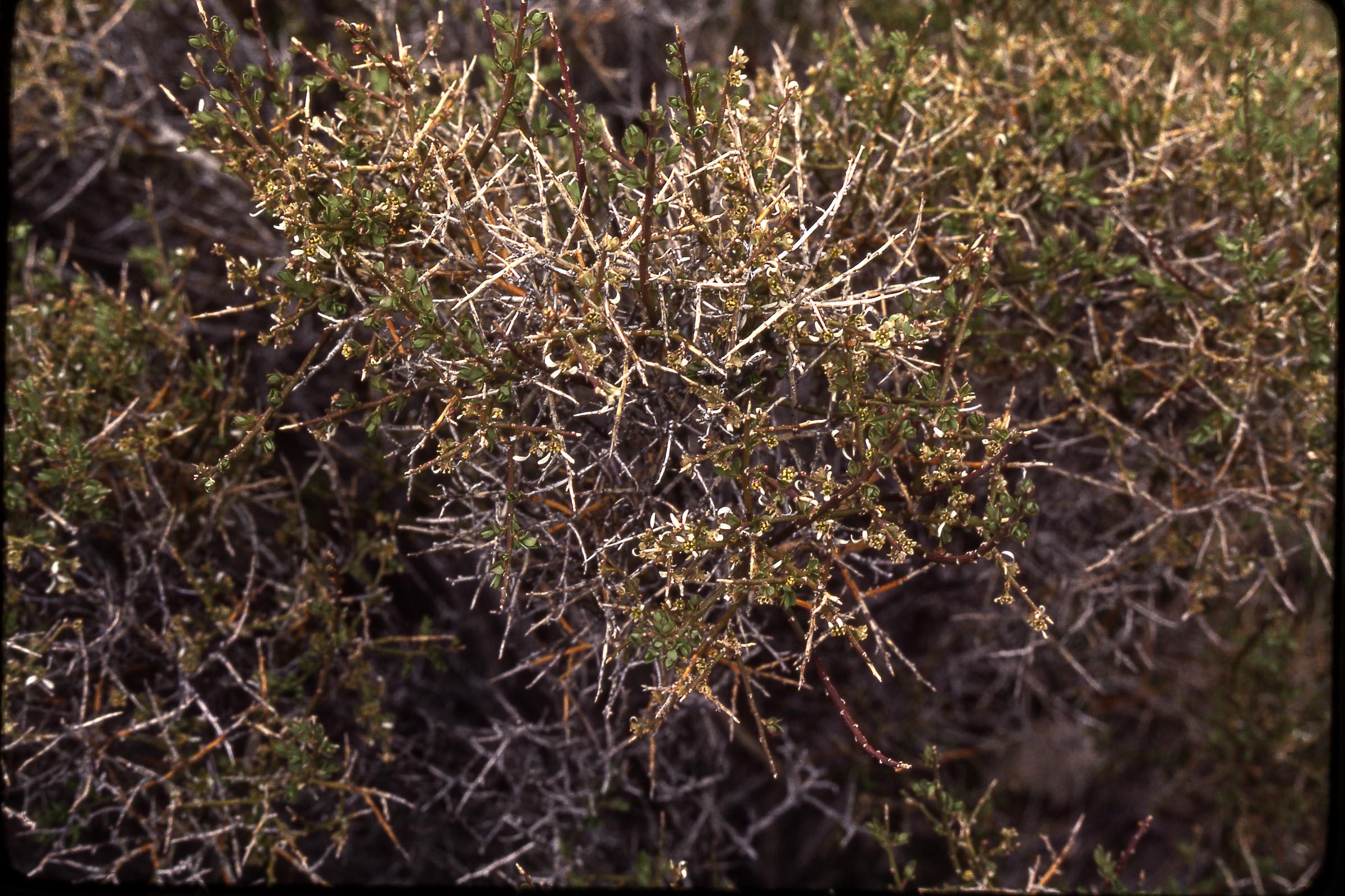
Forsellesia nevadensis |
Forsellesia nevadensis |
|
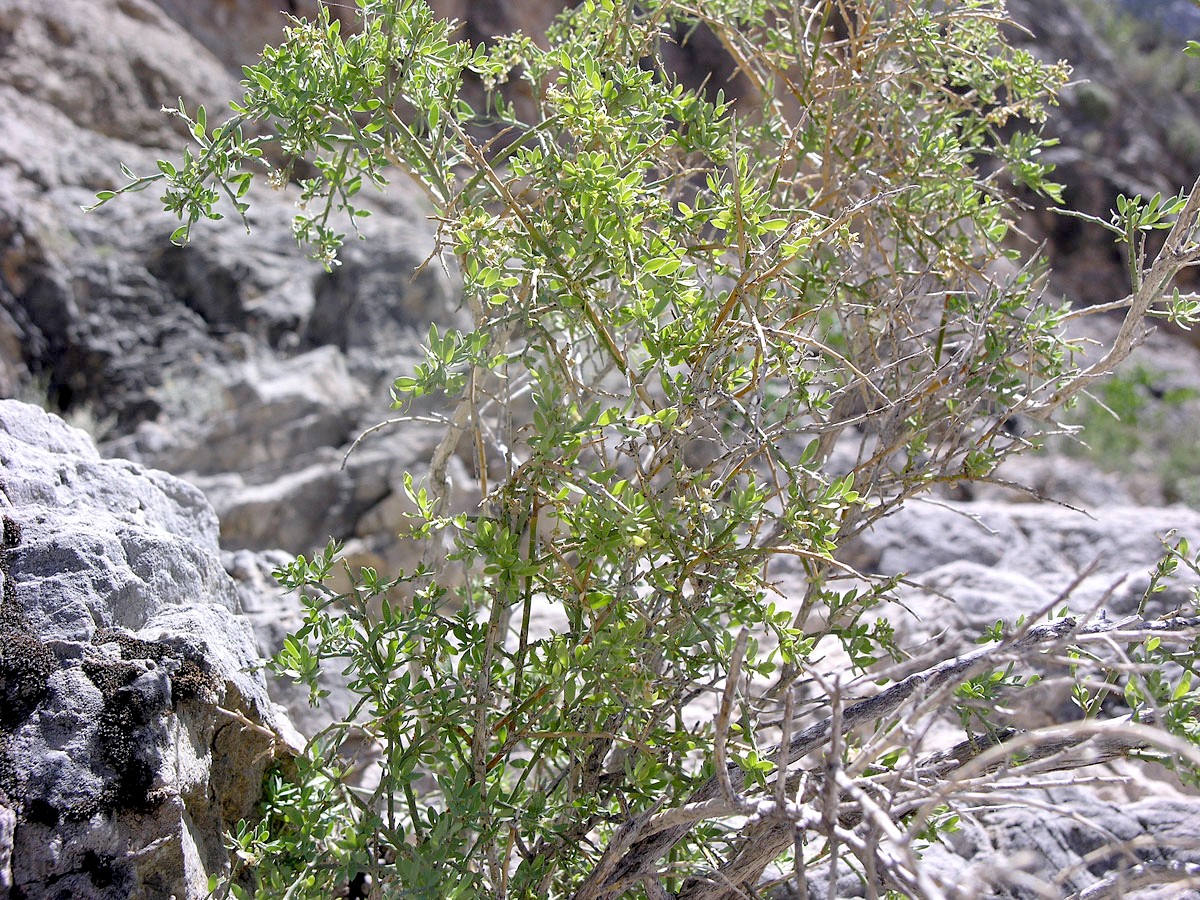
Forsellesia nevadensis |
|
|
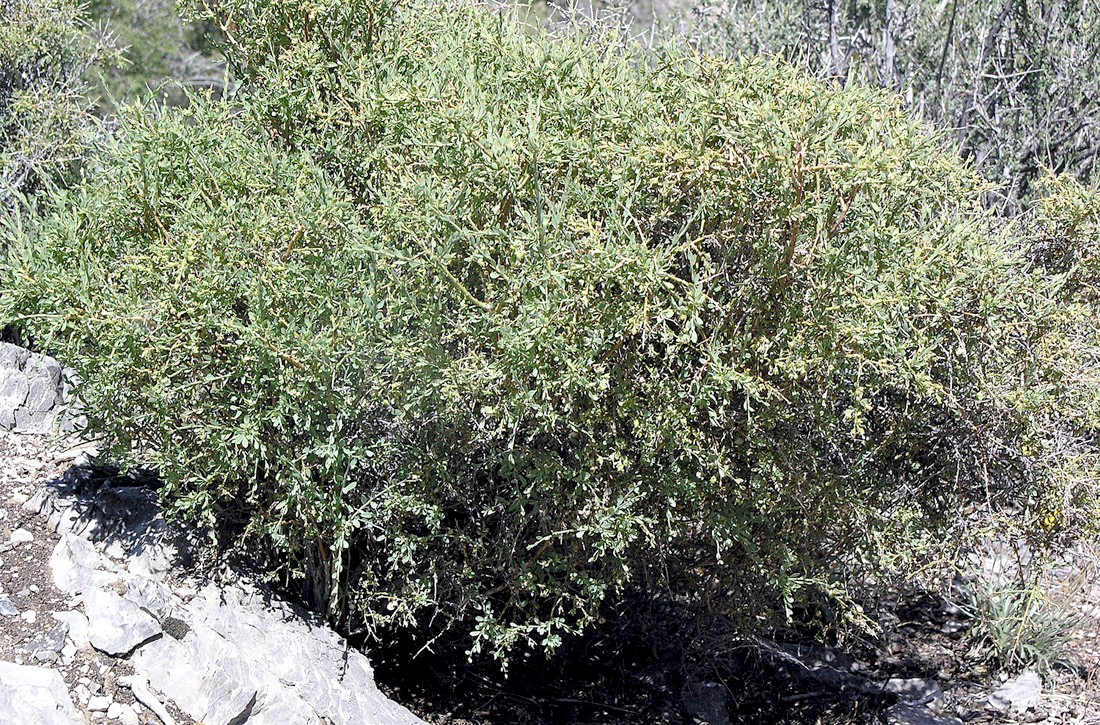
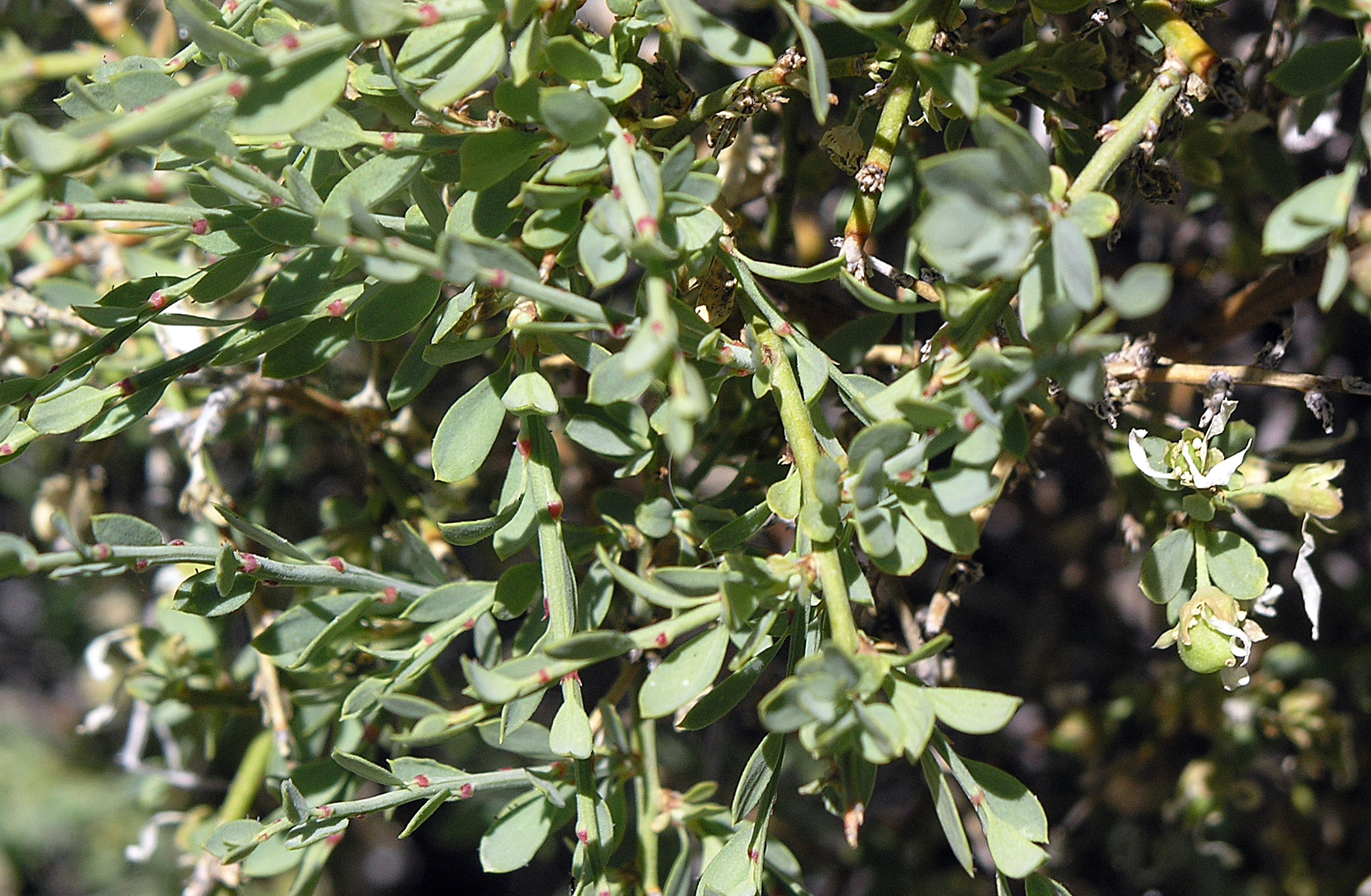
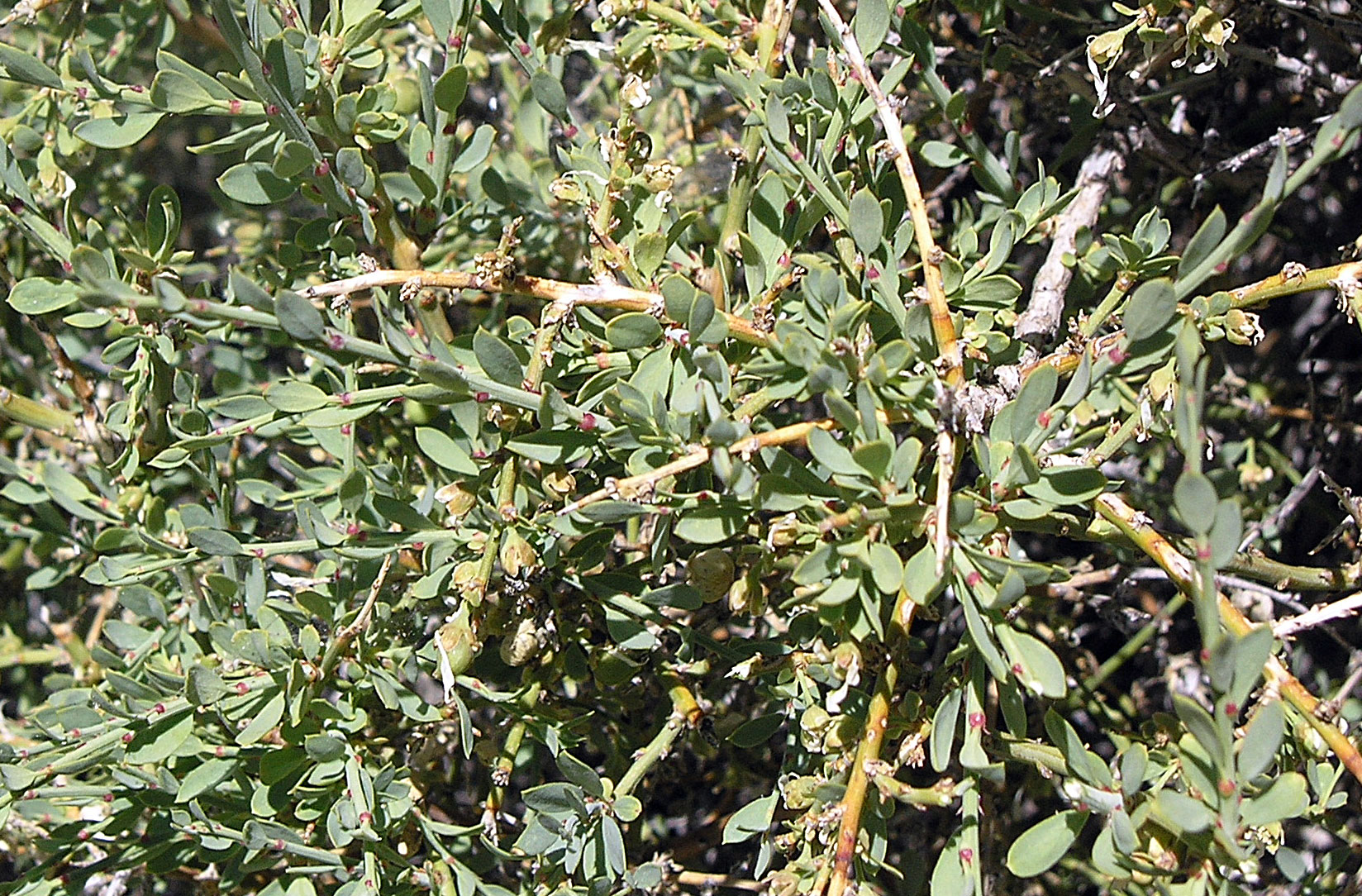
Trees and Shrubs of Kern County (Jan, Mar 2013) Forsellesia. Shrubs with one to several basal stems and intricately branched crowns; branches often short with spine-like tips; young twigs often green aging orange, angled with decurrent lines, with persistent leaf (petiolar) bases appearing as swollen glands that are red, black, or scarcely swollen and green or off-white; leaves deciduous, elliptical to widest above mid region, with short petiole (<3 mm), or the blade abruptly narrowed to a fused stipular-petiolar swelling, the stipular portion extending into a short-awn-like lobe from the upper margins in 5 species; flowers axillary or terminal, solitary or in small clusters; petals white, strap-shaped in most species, 4–6 in number, clawed; gynoecium apocarpous with 1–3 carpels; fruit follicular, asymmetrical, striate, half of the carpel often persisting with a seed after dehiscence, the seed with a white aril. 8 species and 2 varieties and 1 form, western United States and northern Mexico (Ensign 1942); 3 species in California (Munz & Keck 1959); 1 in Kern County (not in Twisselmann). One variety recognized by Holmgren (1988, Glossopetalon spinescnes var. microphyllum, the genus regarded by him to have 4–5 species) to occur from southern Utah to southern Nevada and northern Arizona, distinguished by smaller leaves (3–8 mm) and branches mostly green only in the first year before changing to orange brown. Key species of Forsellesia (relevant to Kern County)
Branches mostly leafless and green for several yrs,
the leaves
Branches mostly leafy to late fall, turning yellowish
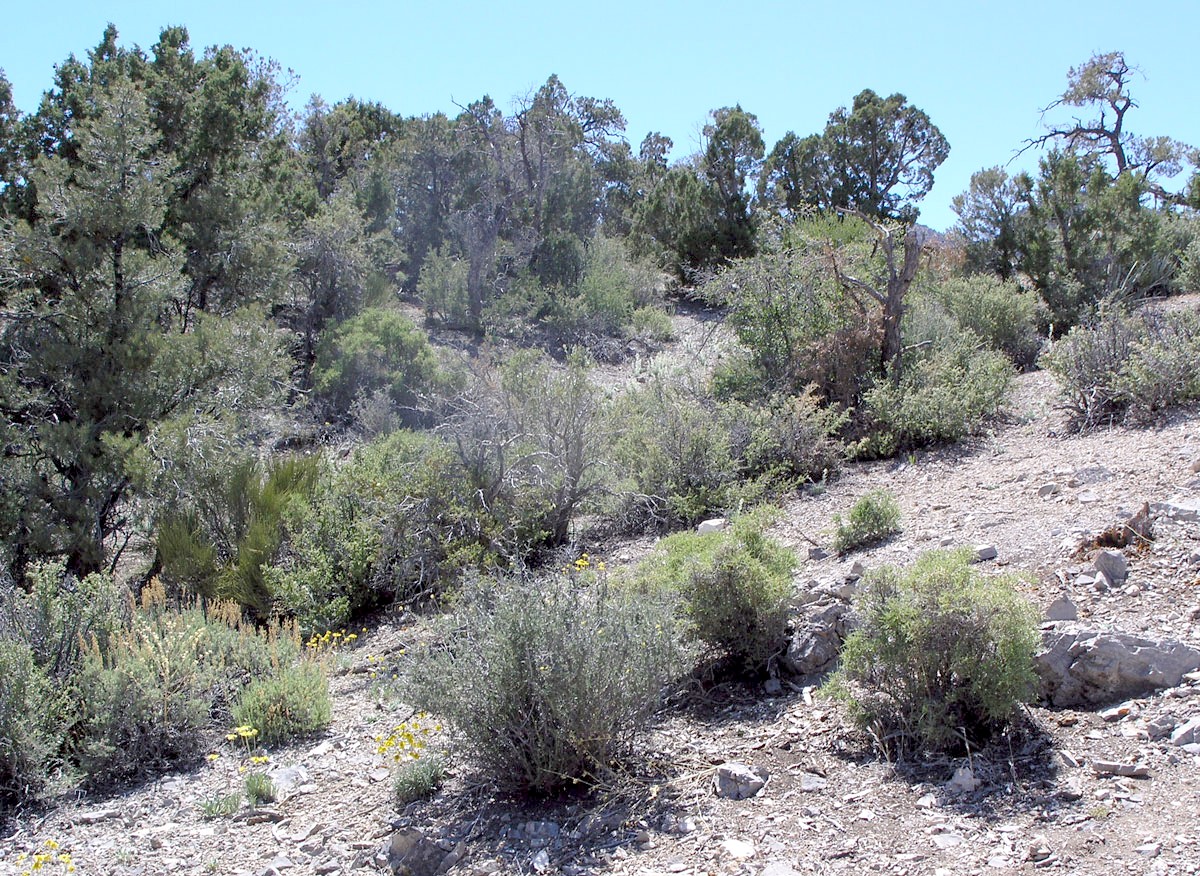
orange by Forsellesia nevadensis (Glossopetalon nevadense A. Gray 1876) Greene 1893. Nevada greasebush. Intricately branched, spinescent shrubs to 2 m high and broad; stems green turning orange brown in summer to winter; leaves alternate, narrowly elliptical to wider above the mid region, small, ~3× longer than wide, 5–12 mm, petiole bases thickened, reddish orange, the stipular portion ending in short antenna-like lobes along margins. Flowering briefly in the spring (May); flowers small, of 4–5 separate white strap-shaped petals arising from near edge of a fleshy disk, soon deciduous Fruit: apocarpous camarilla, 1–2, seeds 1 or 2, aril white. Usually growing out of limestone rock crevices, also an understory shrub on gravelly soils derived from limestone in pinyon-juniper woodland in the Spring Mountains of Nevada. Type from northern Washoe Co. [west shore of Pyramid Lake], NV. Kern Co.: Of local occurrences on limestone and marble in canyons on the north side of the Piute Mts.: Erskine Canyon, Long Canyon (common, mid elevations, Keeler-Wolf 1990), Goat Canyon, and Laura Peak; 1,100–1,523 m (CCH, mostly Shevock, 1980’s). Specimen from Laura Peak (Purpus 5520, 1897) cited by Ensign (1942) under her f. glabra in contrast to hairy stems and leaves typical of the species. Aside from the nomenclatural controversy for the genus name, the delimitation of the species in Forsellesia is controversial. Floristic literature prior to JM1 recognized two or three species in California (Kearney & Peebles 1951; Munz & Keck 1959) separate from F. spinescens, originally described from near El Paso, Texas. Foresellesia stipulifera (Glossopetalon stipuliferum H. St. John 1937) Ensign 1942 (type from southeastern Washington) and F. nevadensis were considered synonyms of Glossopetalon spinescens var. aridum M.E. Jone 1898 by Holmgren (1988), type from Lepantha Mine east of Hawthorne in Mineral County, NV, distinguished by longer thinner stipular lobes (>1 mm); the specimen was cited by Ensign (1942) under F. nevadensis f. nevadensis, however. Forsellesia stipulifera was also recognized by the longer stipular lobes (Ensign 1942). Thus, it would appear that Ensign and Holmgren disagreed on the identification of the specimen (type) from near Hawthorne, while it may be further noted that an image of a Forsellesia specimen on the Oregon Flora Project from southeastern Washington seems to differ from F. nevadensis in having slender ascending stems, weakly spinescent (as distinguished by Ensign for F. stipulifera) with green stipules and reddish bud-scales, http://web.ewu.edu/ewflora/Crossosomataceae/Glossopetalon%20spinescens.html. The treatment adopted by Shevock (JM1) and Preston & Shevock (JM2) indicate the California plants belong to var. aridum without distinguishing it from the typical variety; presumably, this is based on the Holmgren (1988)taxonomy. Specimens I have collected from western Utah have black petiole bases, in contrast to the reddish orange bases of the southern California and Nevada plants (see images above). Mason (1992), who recognized only one species and two varieties in Arizona, distinguished var. aridum by the “dark” petiole base in contrast to “pale” for var. spinescens. Specimen of a specimen near El Paso, Texas on SEINet appears to have pale weakly defined leaf bases. Forsellesia pungens, which occurs in the Clark Mts. of California and Sheep Mts. of Nevada, may belong to the genus Apacheria, a genus currently regarded as monotypic, occurring in eastern Arizona and western New Mexico, differing by the opposite leaves but otherwise similar in many features, particularly in the terminal flowers in contrast to axillary flowers in typical Forsellesia. Ensign (1942) commented that: “The species [F. pungens] is so distinct from the others that there has been some doubt as to whether or not it really belongs to the genus Forsellesia.”
|
|