|
Trees and
Shrubs of Kern County (Jan 2013)
Acmispon.
Herbs, subshrubs or shrubs; leaves alternate, ± pinnately divided into
(2-) 3–5 (-7) leaflets, with odd terminal leaflets and sometimes with an
odd number, 3, alternate lateral leaflets; flowers often many in
umbellate clusters on short to long or obsolete solitary scapes
(peduncles) arising from leaf axils, or sometimes few or one, usually
yellow; fruit dehiscent or indehiscent, usually terminating in a slender
curved beak. Previously included in Lotus, which differs by lower
pair of leaflets crowding the stems (“stipular position”) and distantly
spaced from upper leaflets, and from Hosackia, which has evenly
spaced opposite leaflets. ±23 species in western North America and 1 in
Chile; 22 in California, 1subshrub species in Kern County.
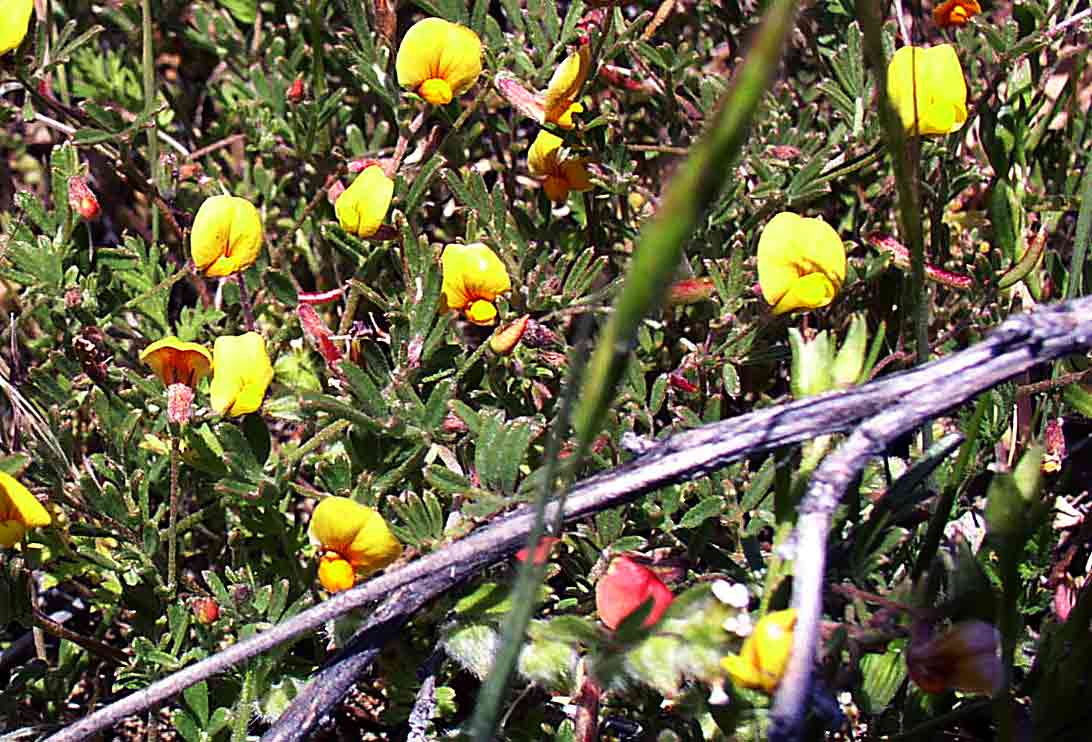
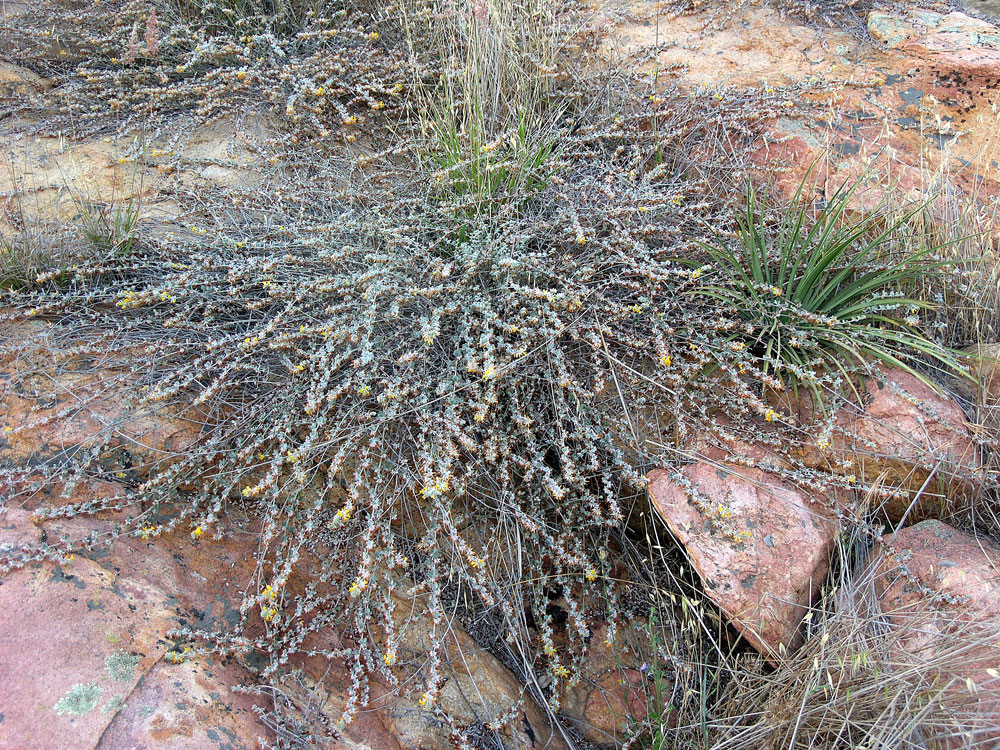
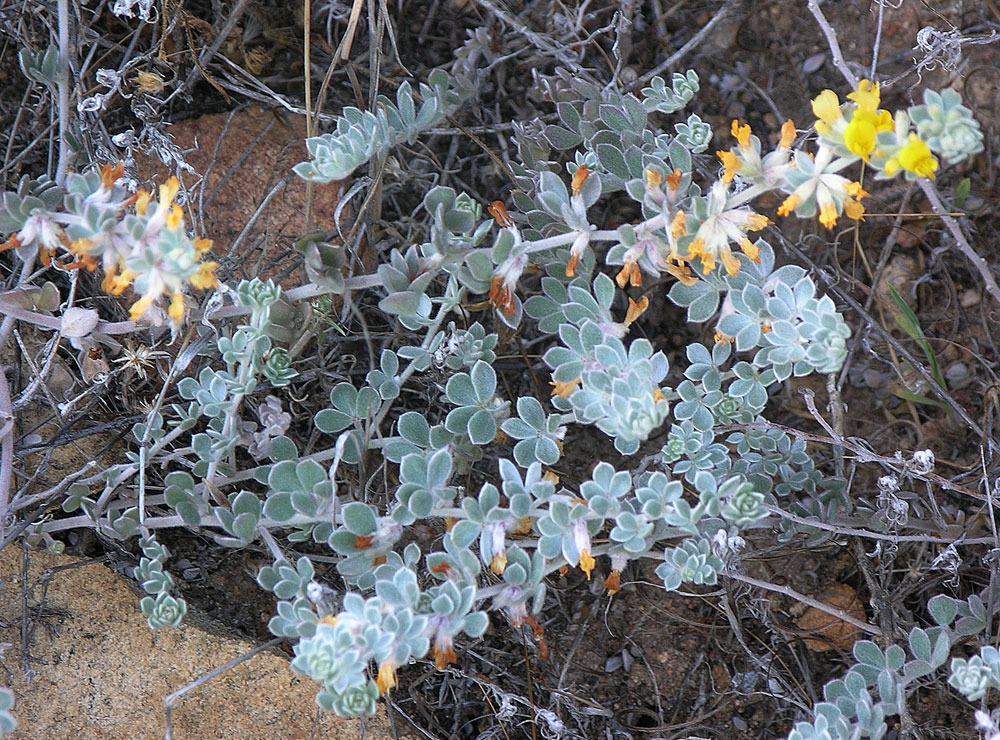
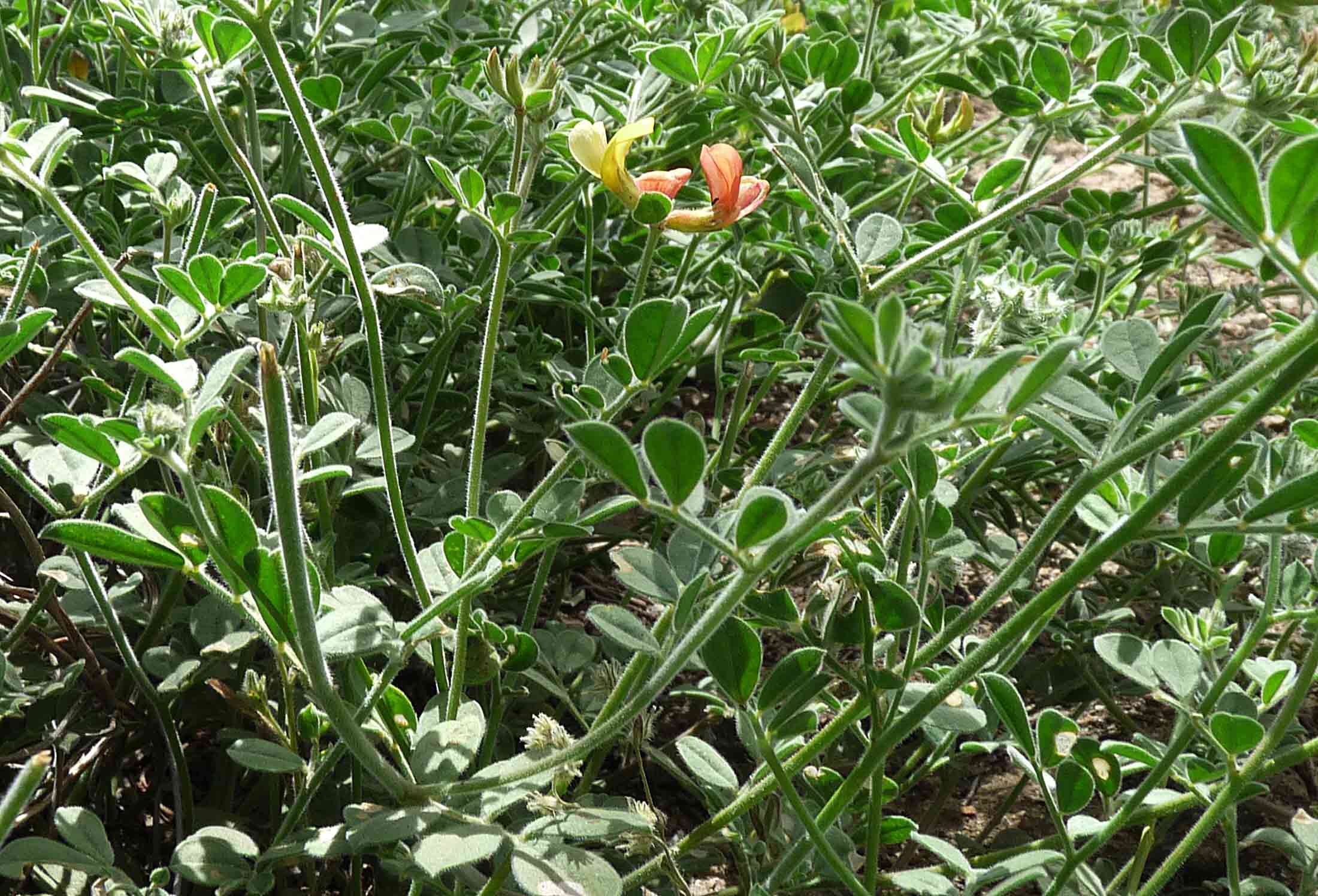
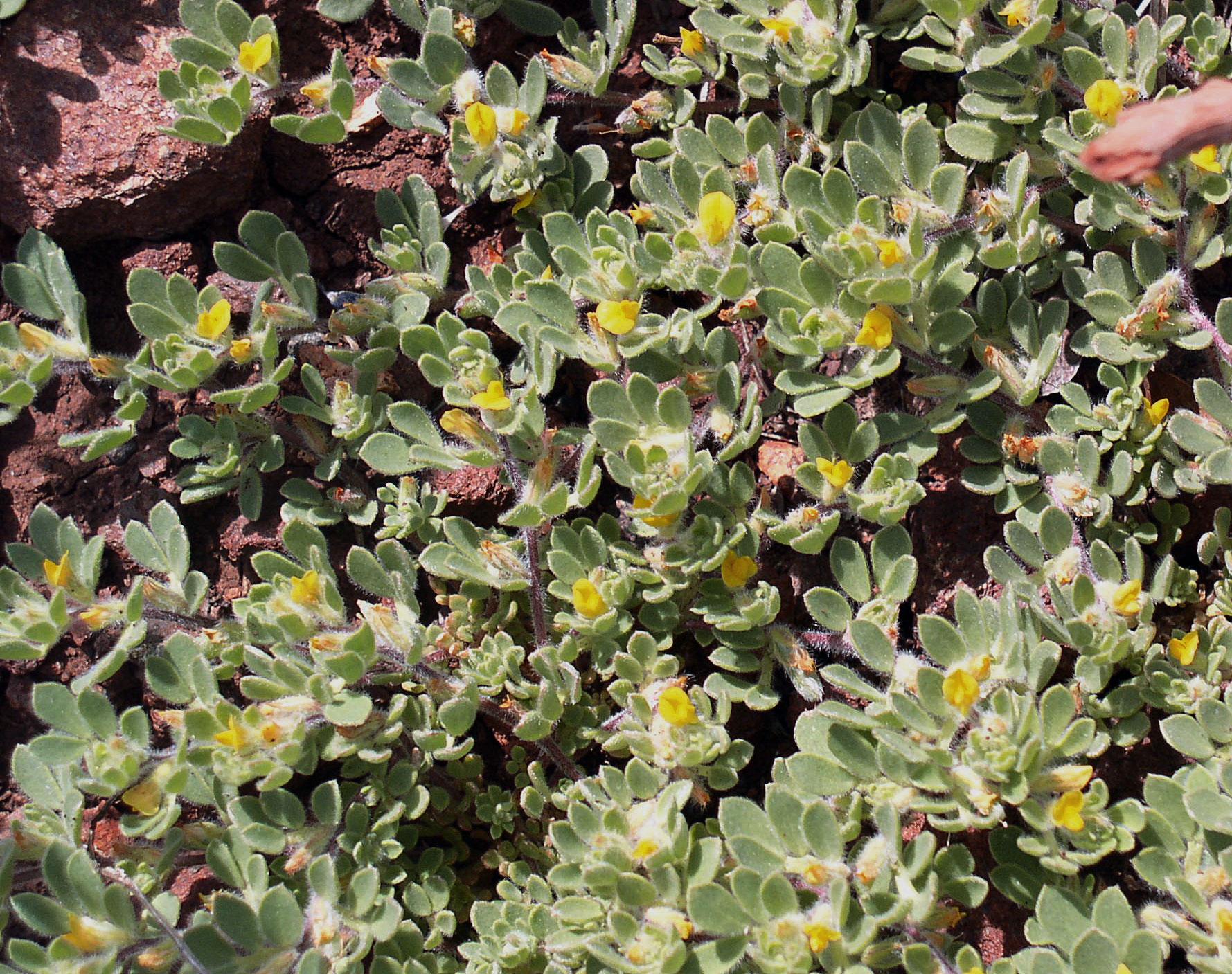
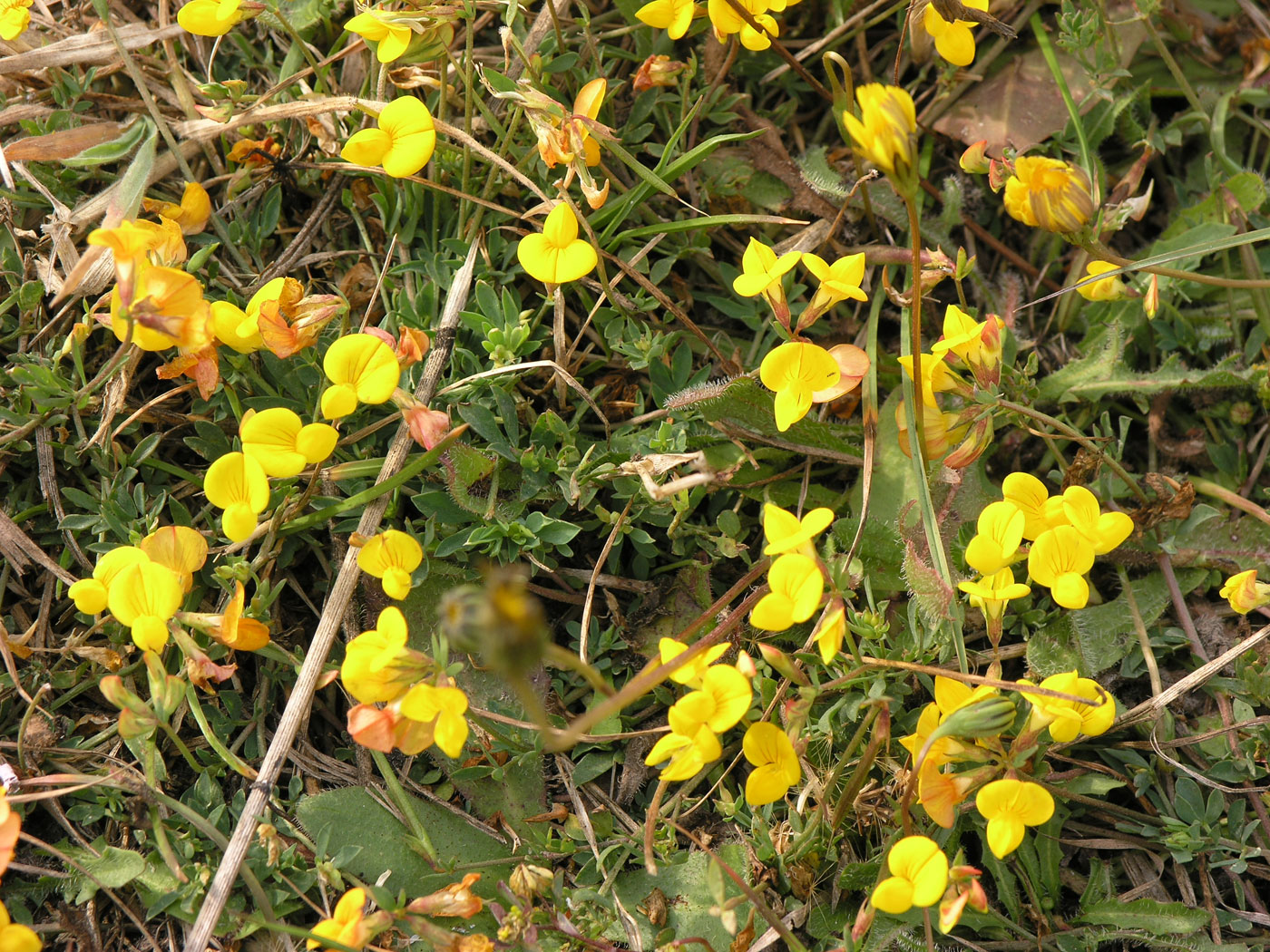
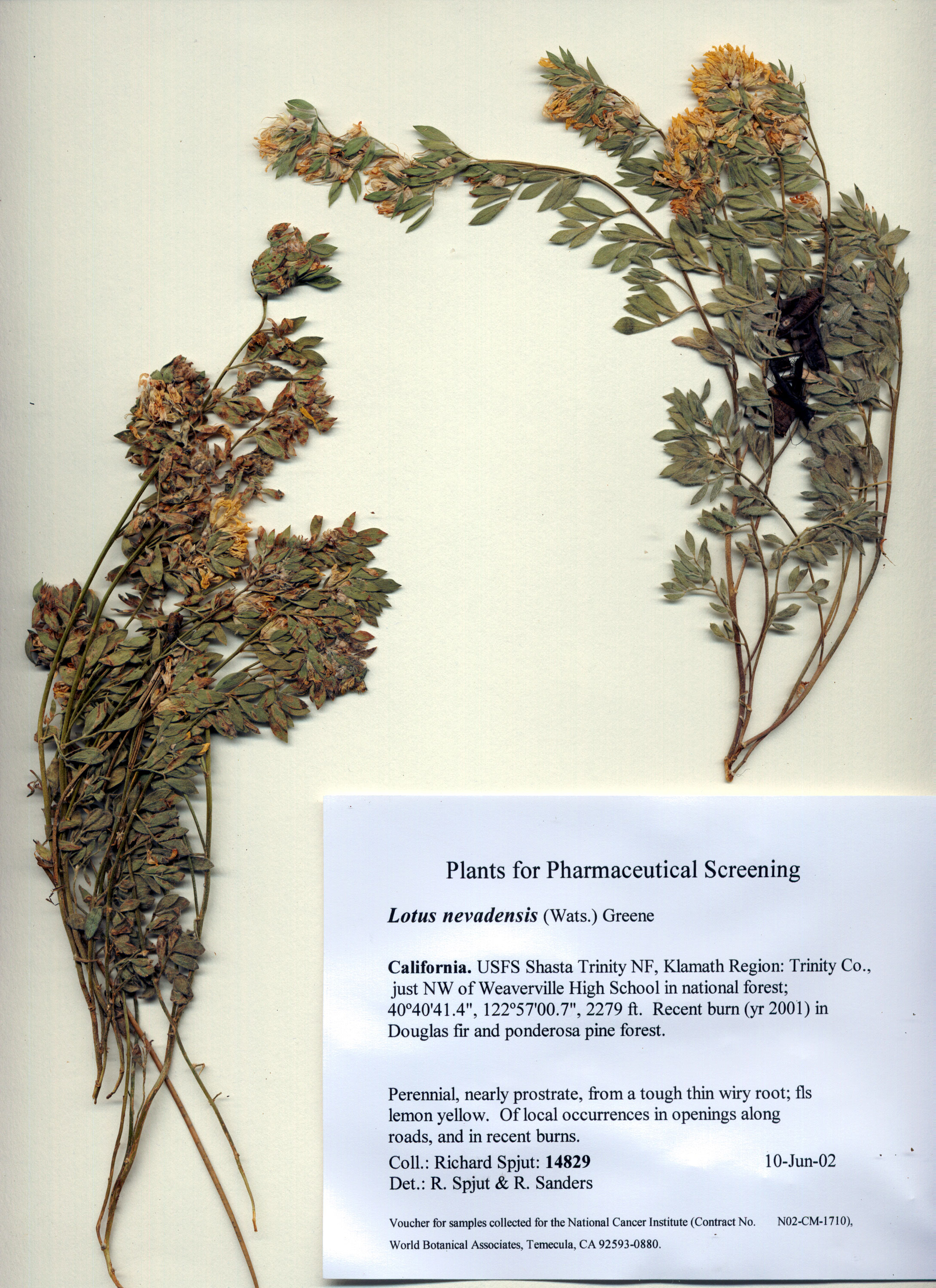
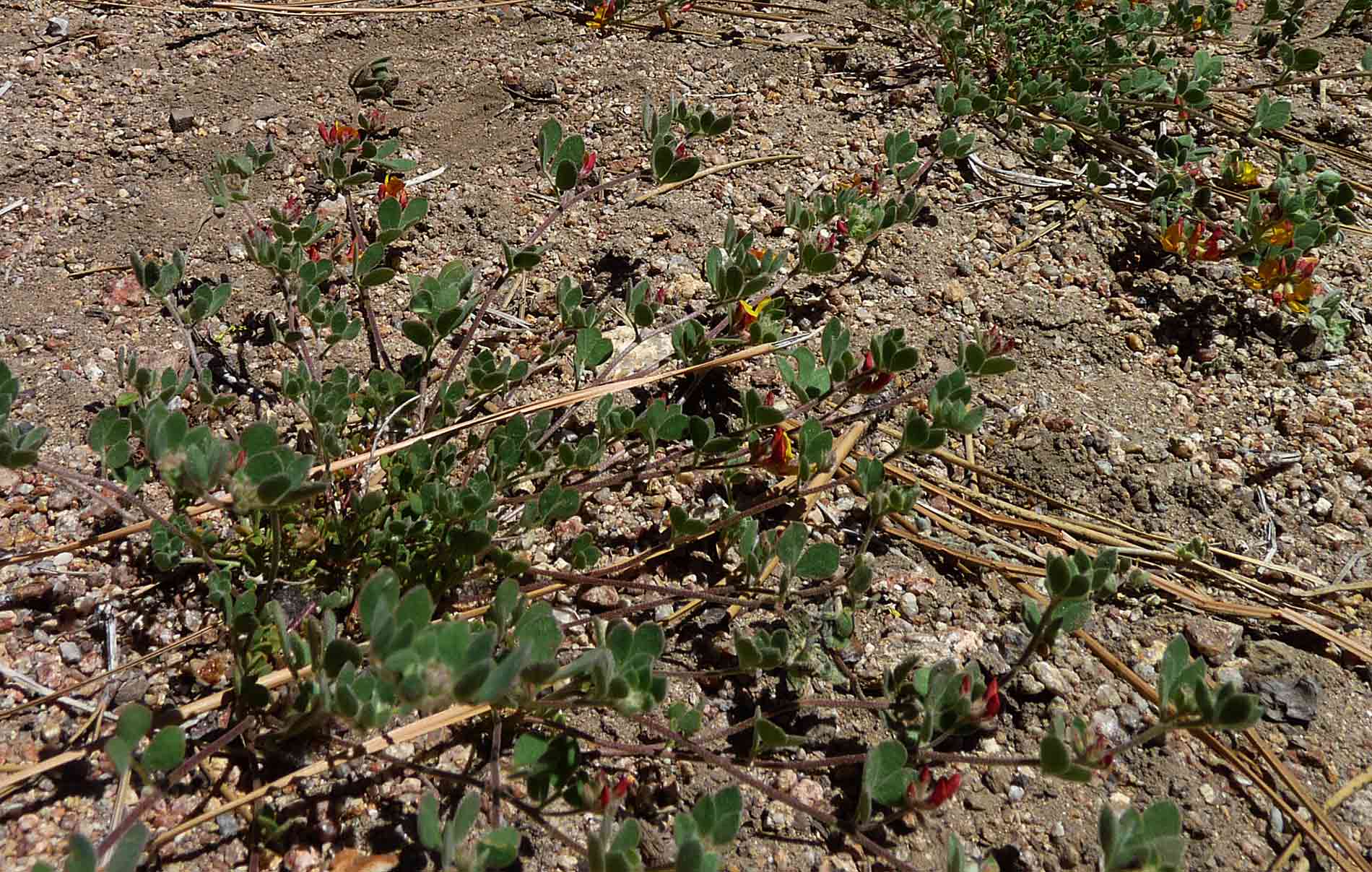
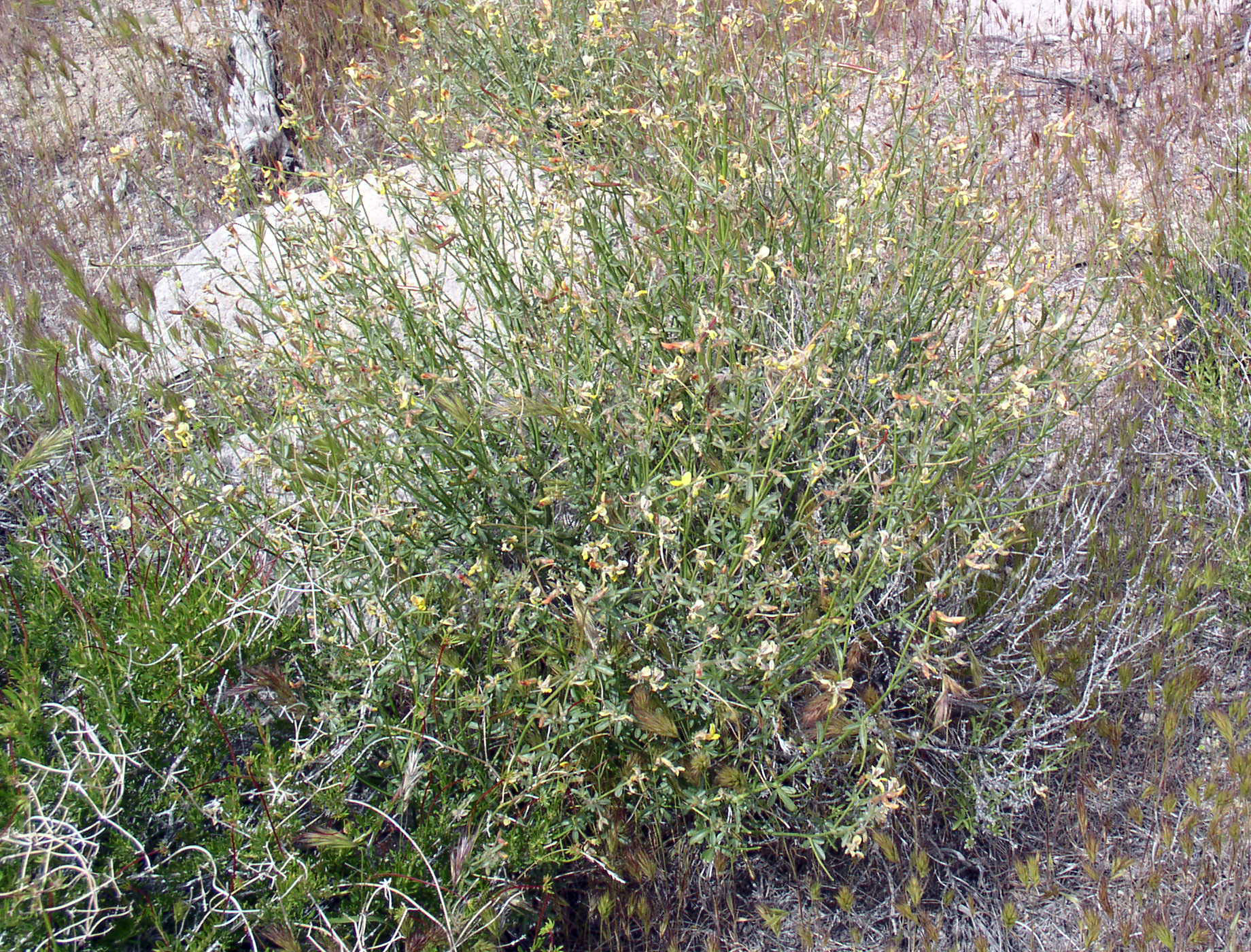
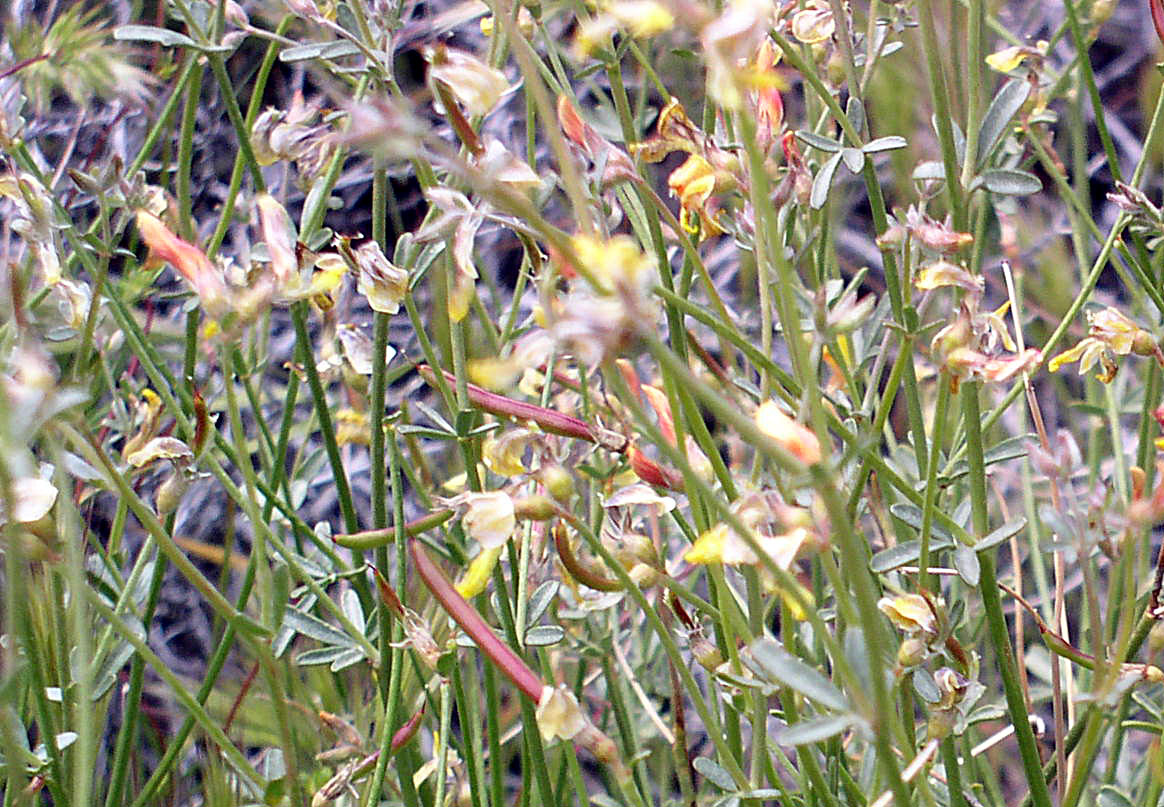
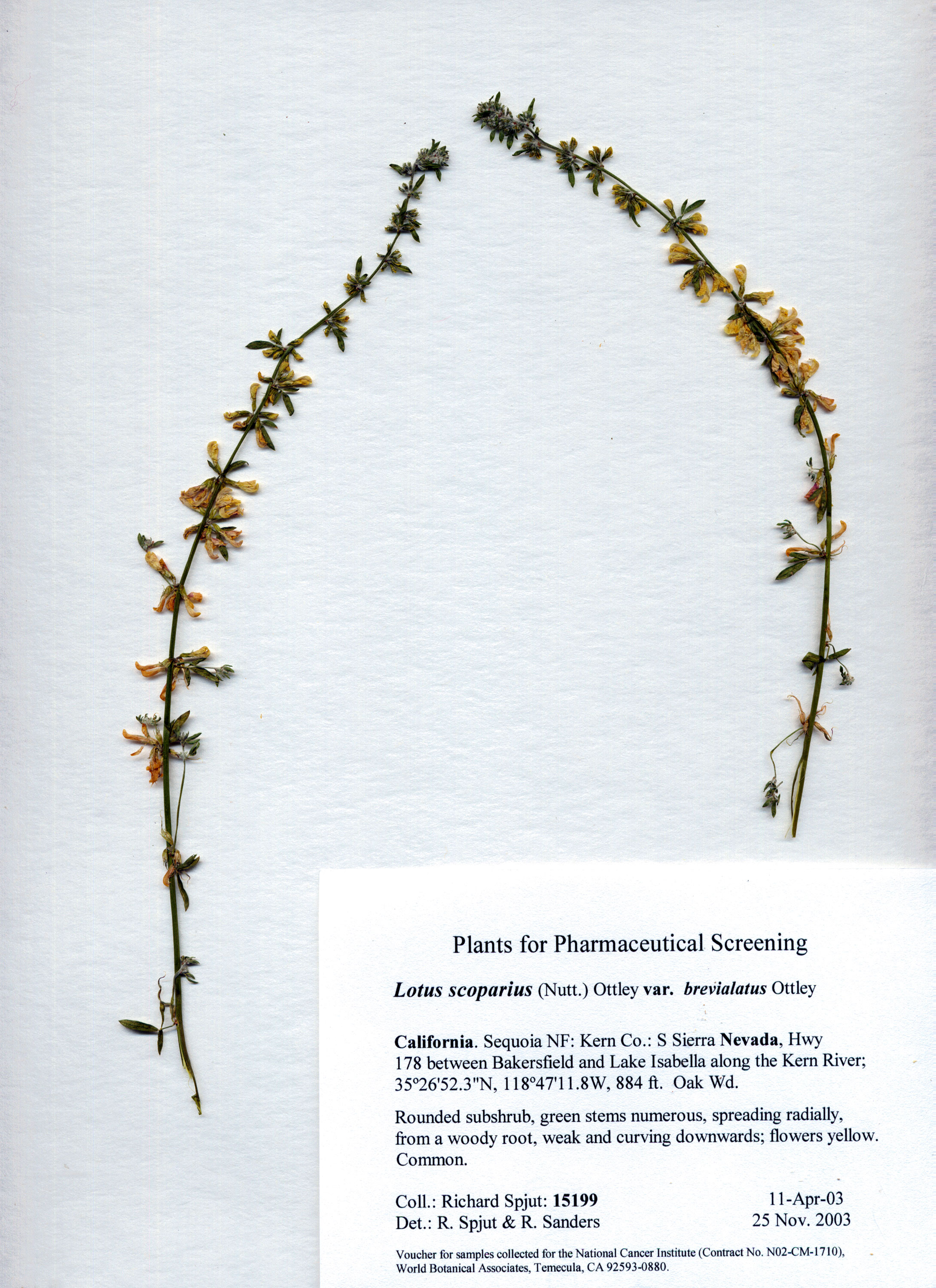
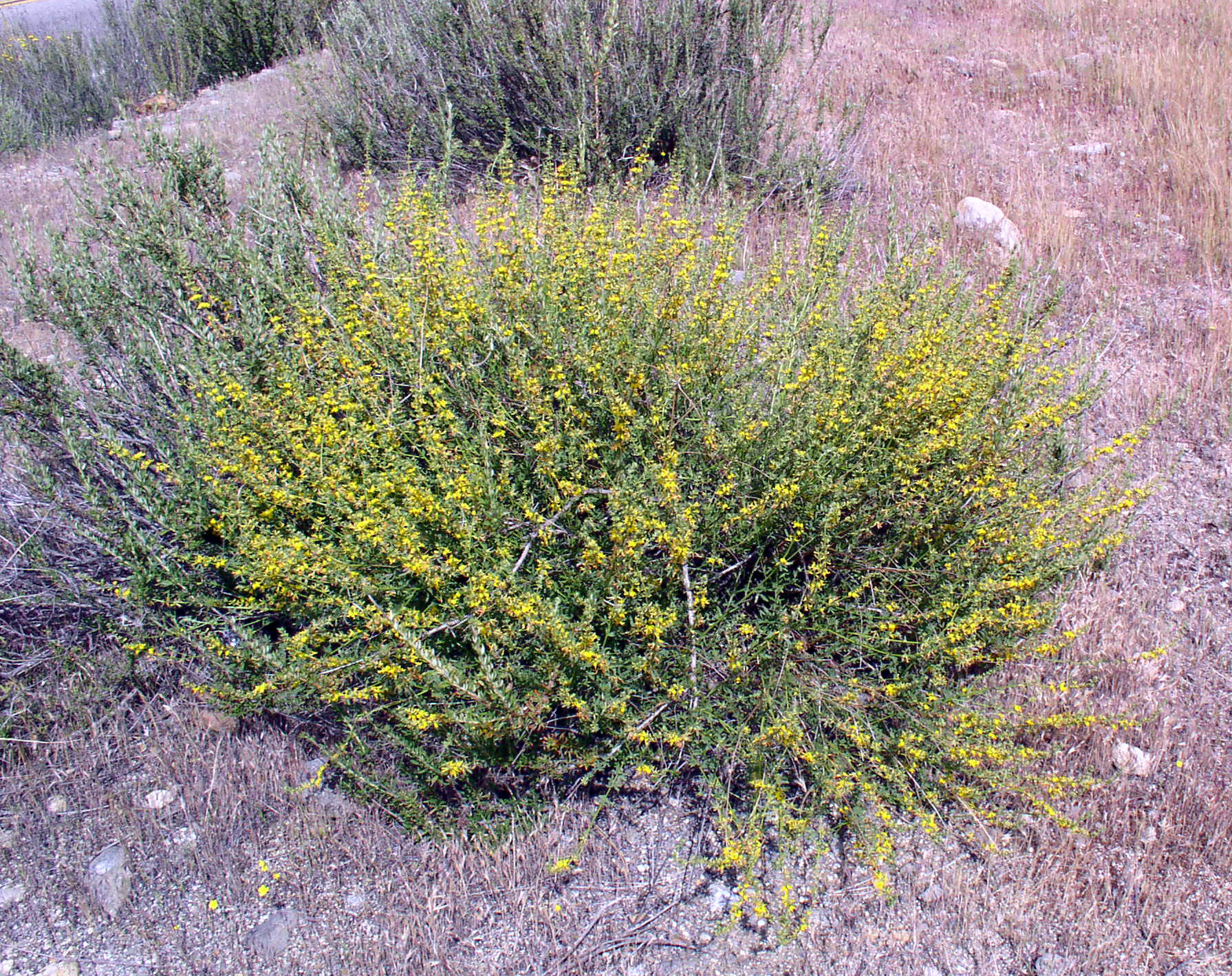
Acmispon glaber (Syrmatium glabrum Vogel
1836) Brouillet 2008 var. glaber California
broom, deer weed. [Lotus scoparius (Hosackia scoparia
Nuttall 1838) Ottley 1923]. Subshrub with numerous broom-like erect
branching stems up to 2 m; leaves divided into 3 leaflets on upper
stems, or to 6 leaflets on older stems; flowers Mar–Aug, yellow aging
reddish orange, in small verticillate-like clusters of 2–7 in leaf axils
along green stems, 2–7 mm; fruit cyclindrical, reflexed or spreading,
with upcurved beak, 10–15 mm. Coast Ranges as far north as near Fortuna,
CA, Sierra foothill woodland, and western Sonoran Desert, south to
Sierra Juárez in Baja California. Deer weed scrub recognized in MCV2
when >50% relative cover in the shrub canopy. Type from California.
Kern Co.: Common along Hwy 178 in Kern Canyon. A. glaber
var. brevialatus (Ottley) Brouillet, which is generally
scarce in Kern County—according to Twisselmann—is recognized by a more
prominent keel exceeding the wings of the flower that is 7–12 mm long,
whereas flowers in var. brevialatus are within the range of
variation, 8–9 mm long. For review of the taxonomy see http://www.fs.fed.us/psw/publications/beyers/psw_2010_beyers(montalvo)_NativePlantRecomm.Lotus.scoparius.pdf.
Abdel-Kader M.
S., M. E. Amer, S. Tang and D. G. Kingston. 2006. Two
new isoflavone derivatives from the roots of an Egyptian collection of
Lotus polyphyllos. Nat. Prod. Res. 20: 922–926. “Investigation
of the roots of Lotus polyphyllos Clarke resulted in the isolation
of two new isoflavone derivatives; 4'-O-methylerythrinin C (3) and
4'-O-methyl-2''-hydroxydihydroalpinumisoflavone (4). In addition, the
three known isoflavone derivatives 4'-O-methylalpinumisoflavone (1)
lupinalbin F (5), 4',7-dimethoxy-5-hydroxyisoflavone (6), and the
phenylpropanoid ester tetracosyl p-coumarate (2) were also identified. The
structures were determined from spectroscopic data.”
Ali, M.
S., F. Ahmad, V. U. Ahmadu, I. Azhar, and K. Usmanghaniu. 2001.
Unusual chemical constituents of Lotus garcinii (Fabaceae). Turk. J.
Chem., 25: 107–112. “The methanol soluble part of
Lotus garcinii, belonging to the family Fabaceae, yielded three new
interesting metabolites: garceine (1), garoside (2) and garthiol (3),
which have never been detected from any natural source. In addition,
isophytol, hexadecanoic acid, cholesterol, oleanolic acid, butulinic acid
and lupeol were also obtained for the first time from L. garcinii.
All the isolated metabolites were characterized by spectroscopic means.” |
.jpg)