|
Rosa
californica
|
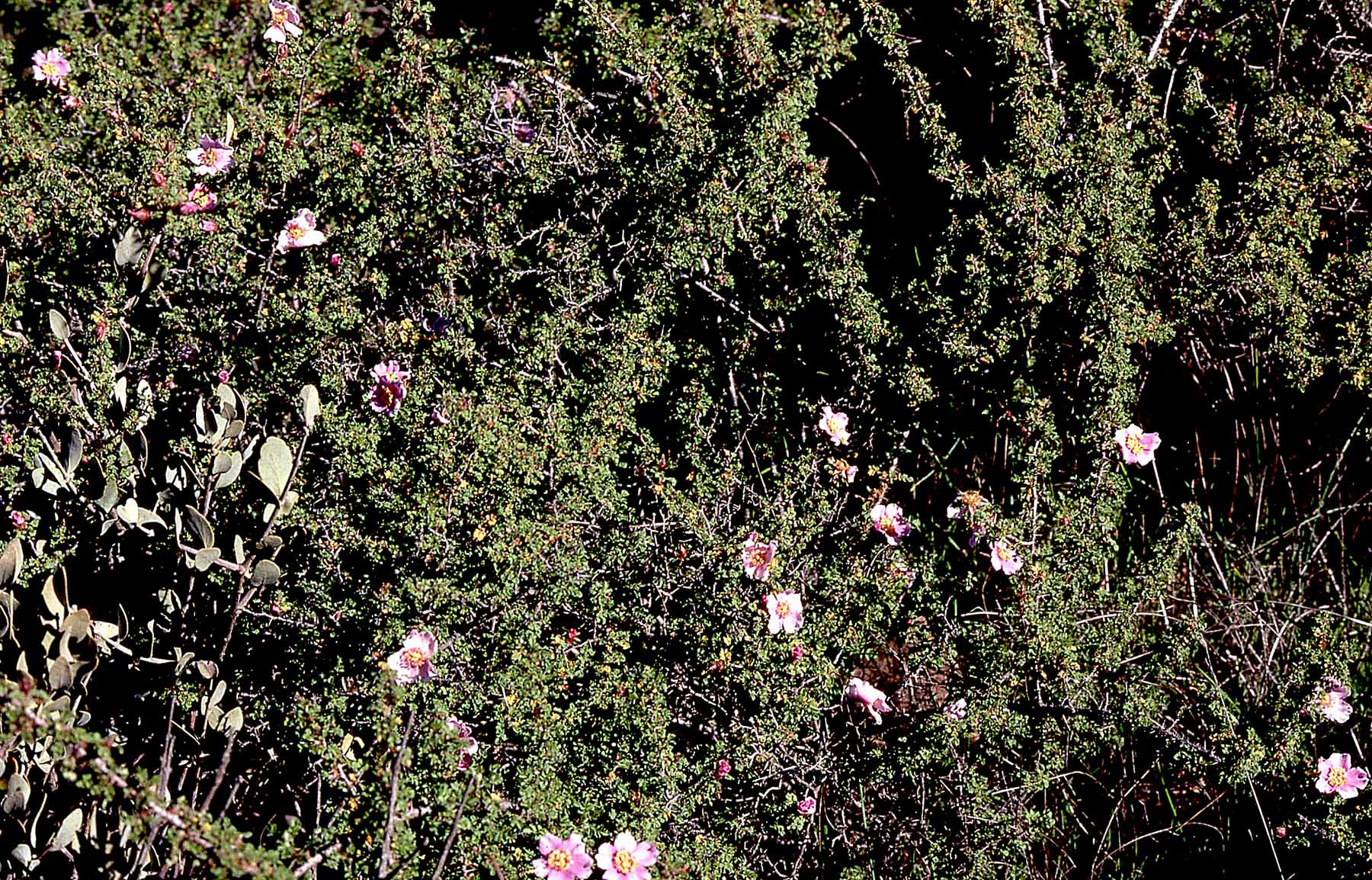
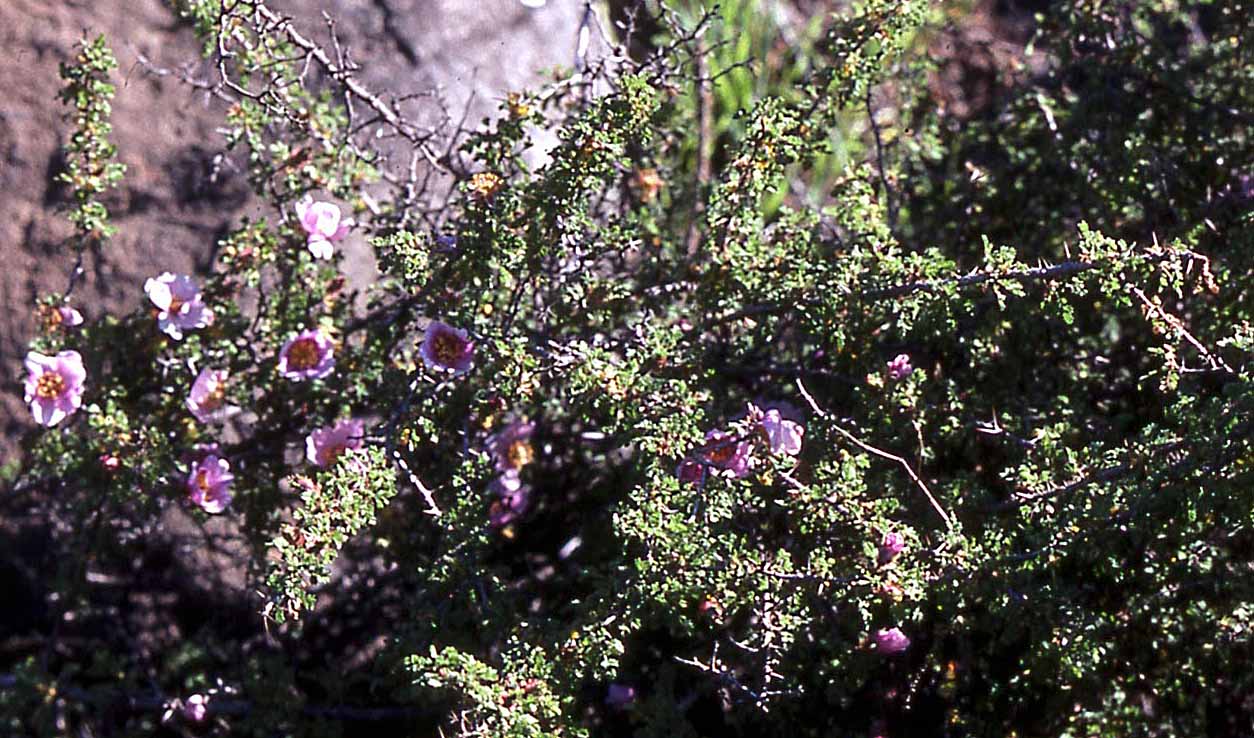
Rosa minutifolia
|
|
Rosa gymnocarpa
|
Rosa gymnocarpa Lake-of-the-Island, |
|
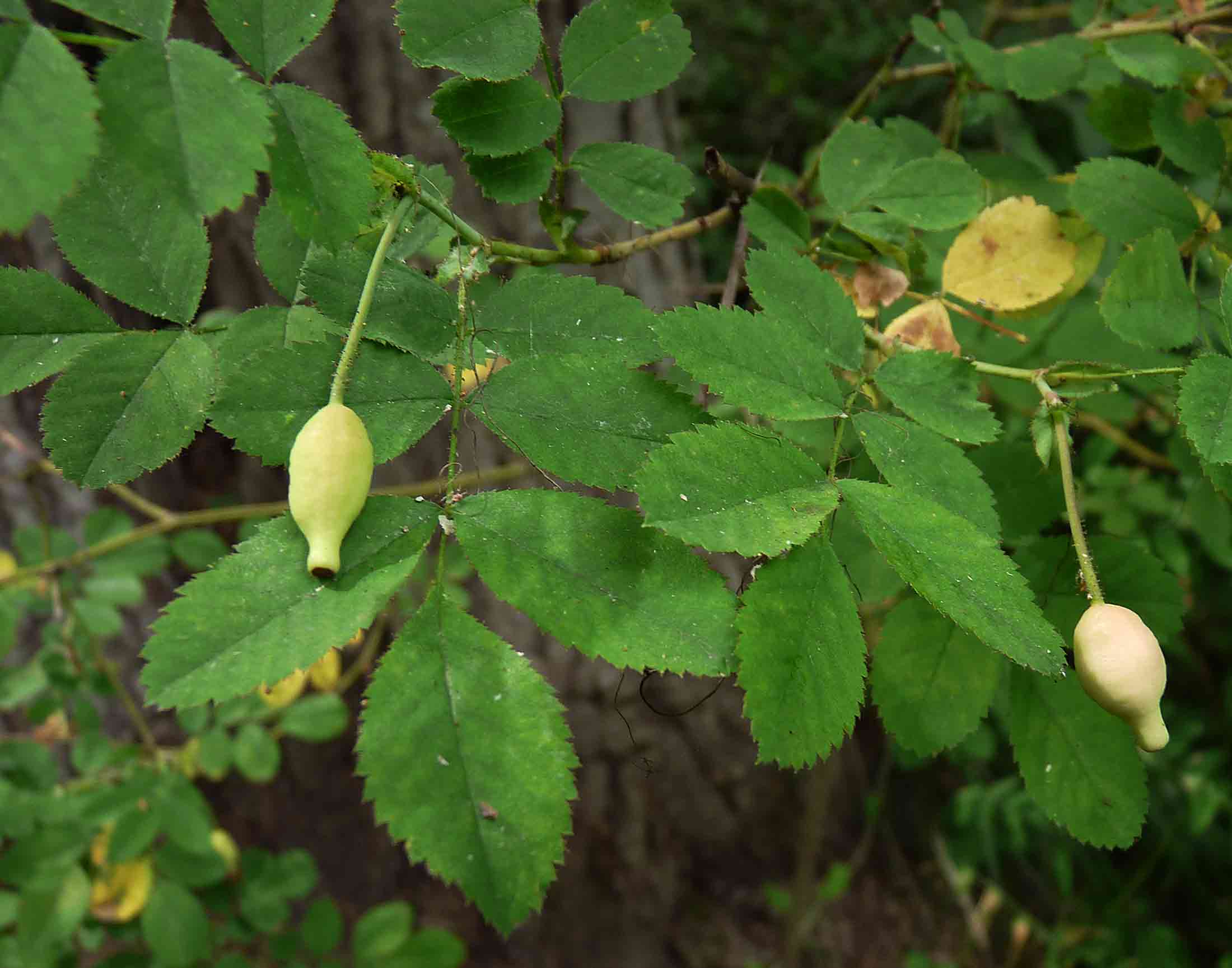
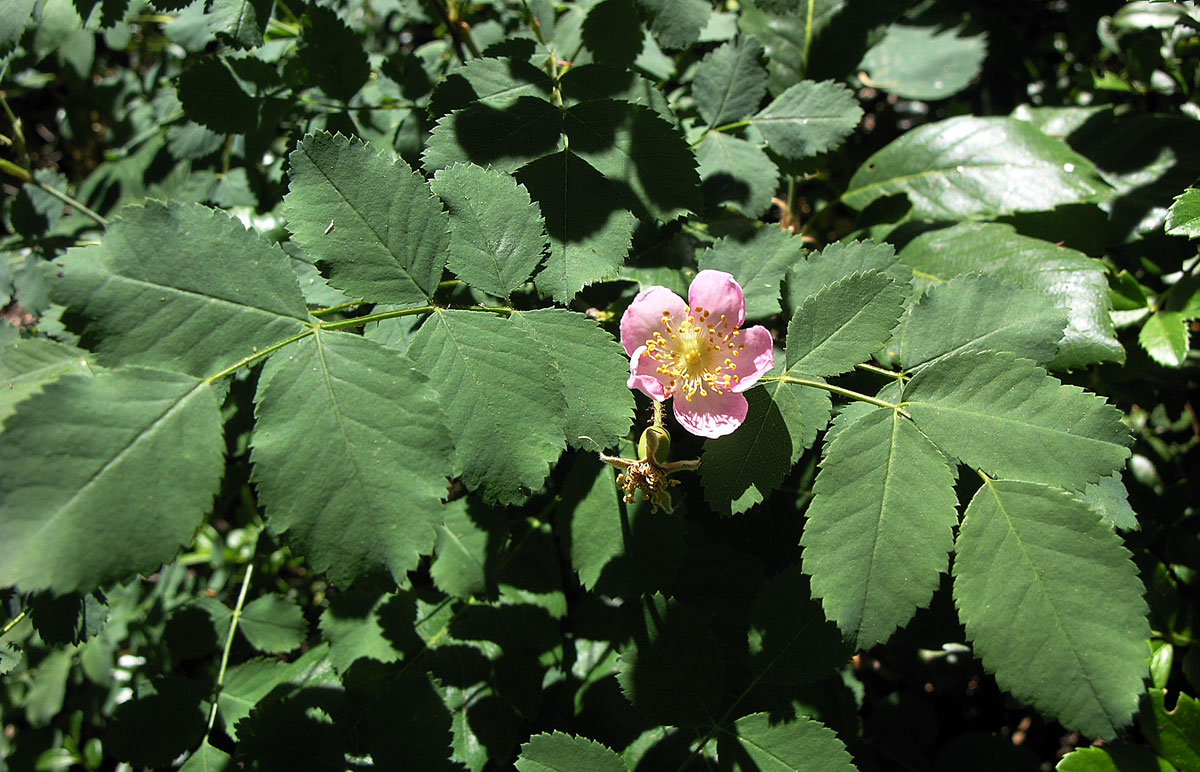
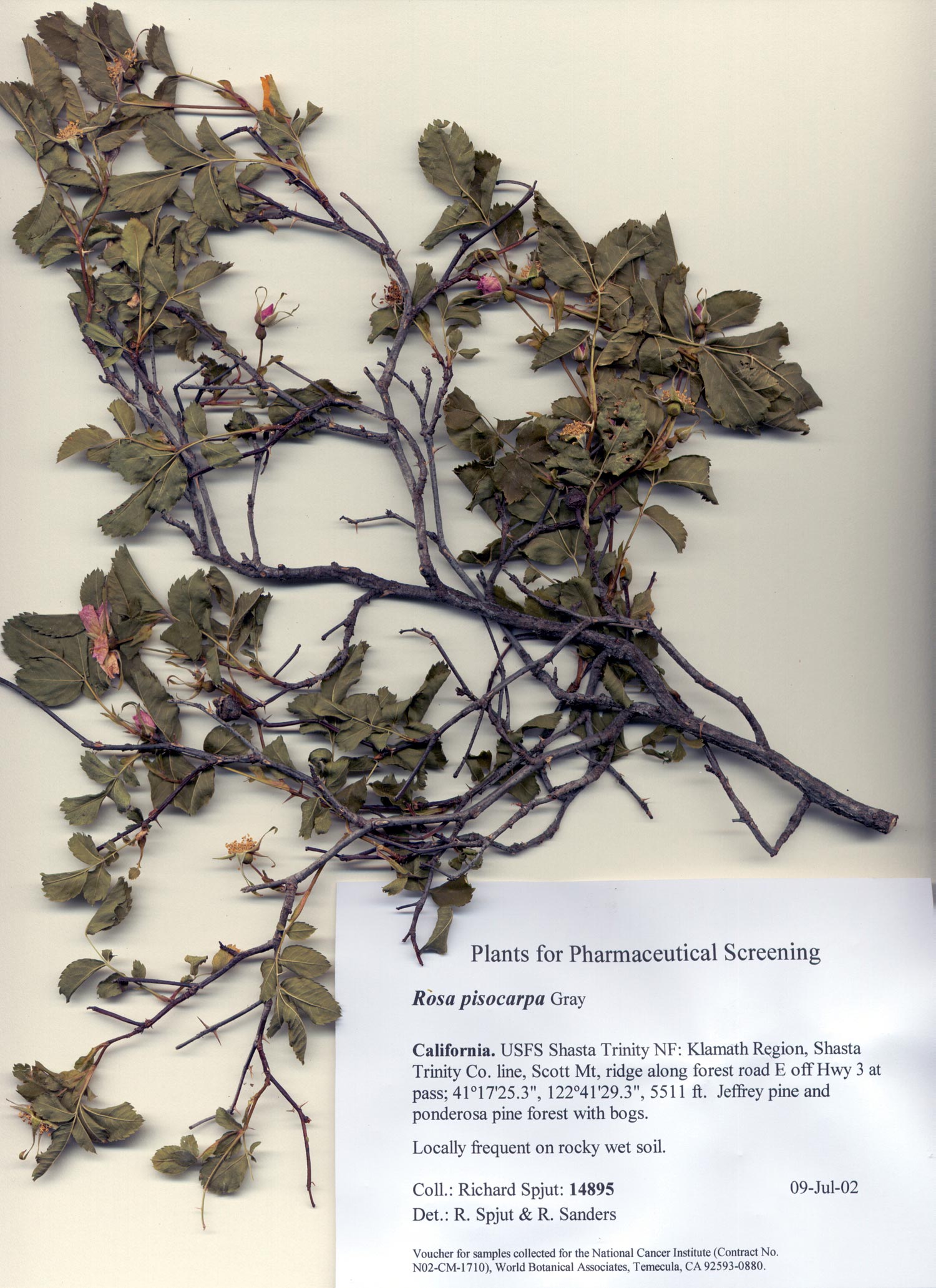
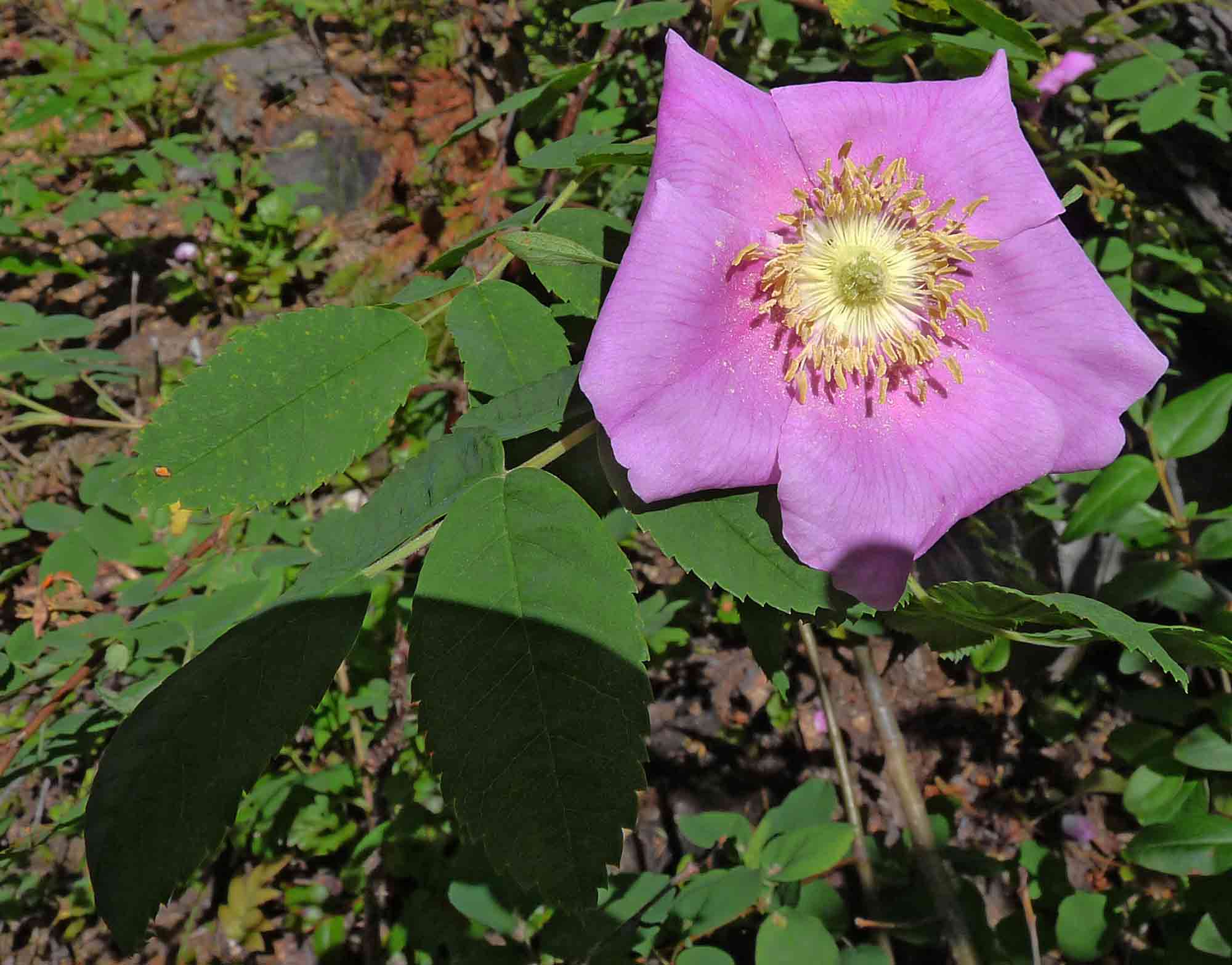
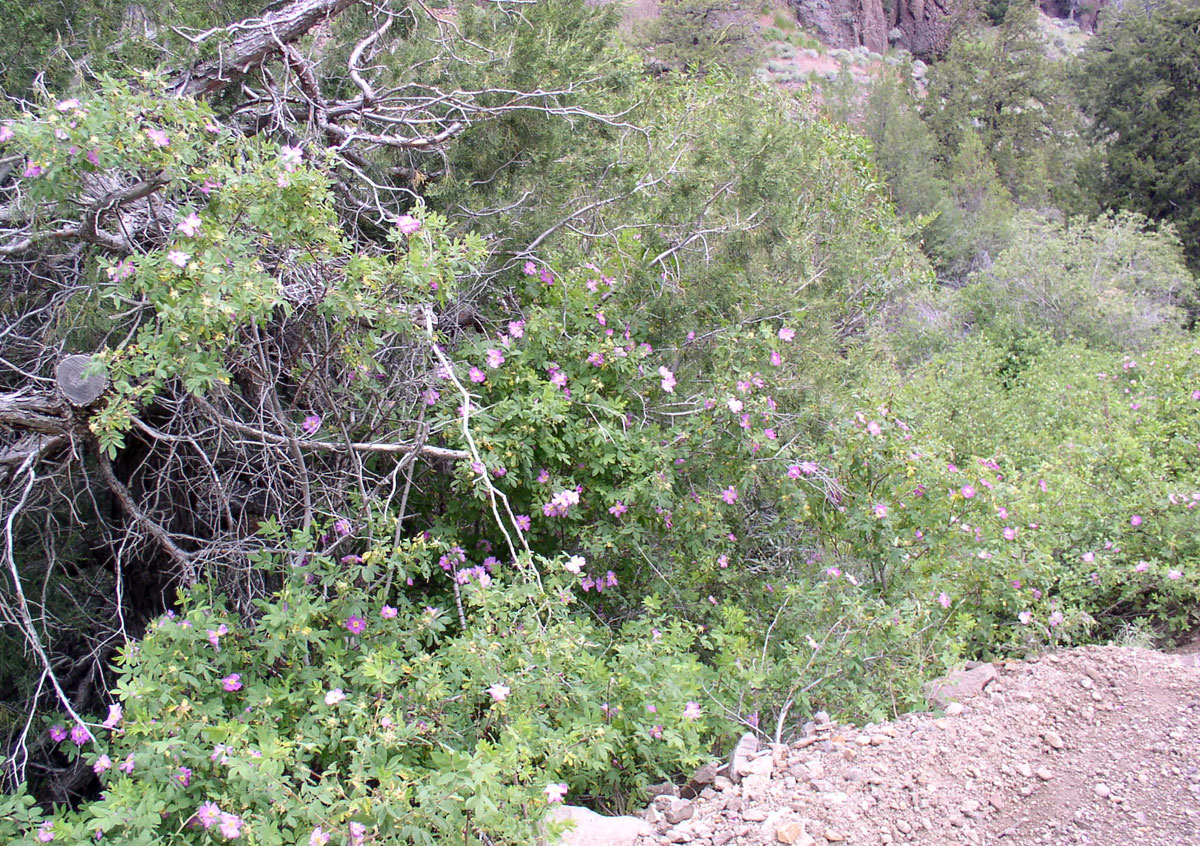
Rosa pisocarpa
|
|
|
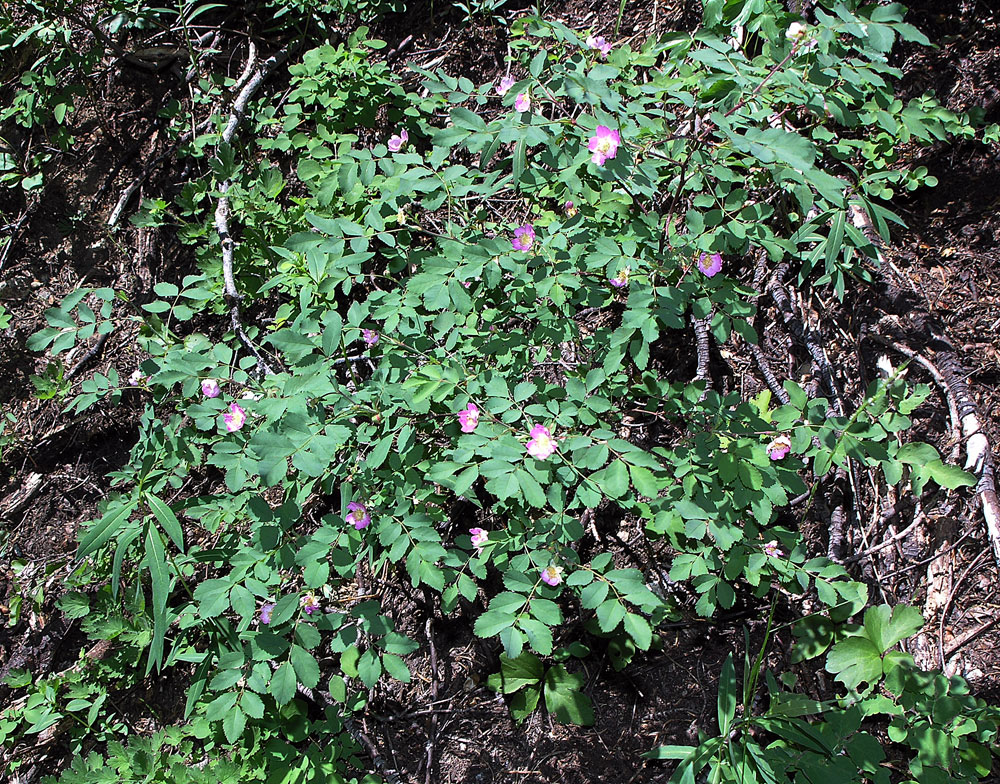
Rosa woodsii Washington. Wenatchee NF: Icicle Creek, along south side of River on trail between Chatter Creek and Jack Creek; 47º19.436, 120º34.626", 2825 ft. Dense riparian forest on nearly level rocky soil with Abies grandis, Thuja plicata, Picea englemannii, Tsuga heterophylla, Pinus monticola, P. ponderosa, Pseudotsuga menziesii, Larix occidentalis, and understory shrubs Acer circinatum, Amelanchier alnifolia, Alnus sinuata, Arctostaphylos uva-ursi, Berberis nervosa, Cornus sericea, Lonicera involucrata, Menziesia ferruginea, Paxistima myrsinites, Rubus parviflorus, Shepherdia canadensis, Rosa woodsii and herbs Smilacina racemosa, Xerophyllum tenax. 12 July 2010.
|
Rosa woodsii var.
ultramontana |
|
Trees and Shrubs of Kern County (Dec 2012) Key to Rosa
1. Fruit with
persistent sepals reflexed or spreading, the sepals toothed 1.Fruit with erect entire sepals, natives...................................................................... 2
2. Low shrubs with wide spreading branches, <50 cm high ................ Rosa bridgesii 2. Shrubs with erect stems and or branches, >50 cm high......................................... 3
3. Terminal leaflet
mostly widest below mid region, marginal teeth
3. Terminal leaflet
mostly widest above mid region, teeth curved; ...... Prickles often many, thicker towards base; leaflets thin............... ssp. gratissima
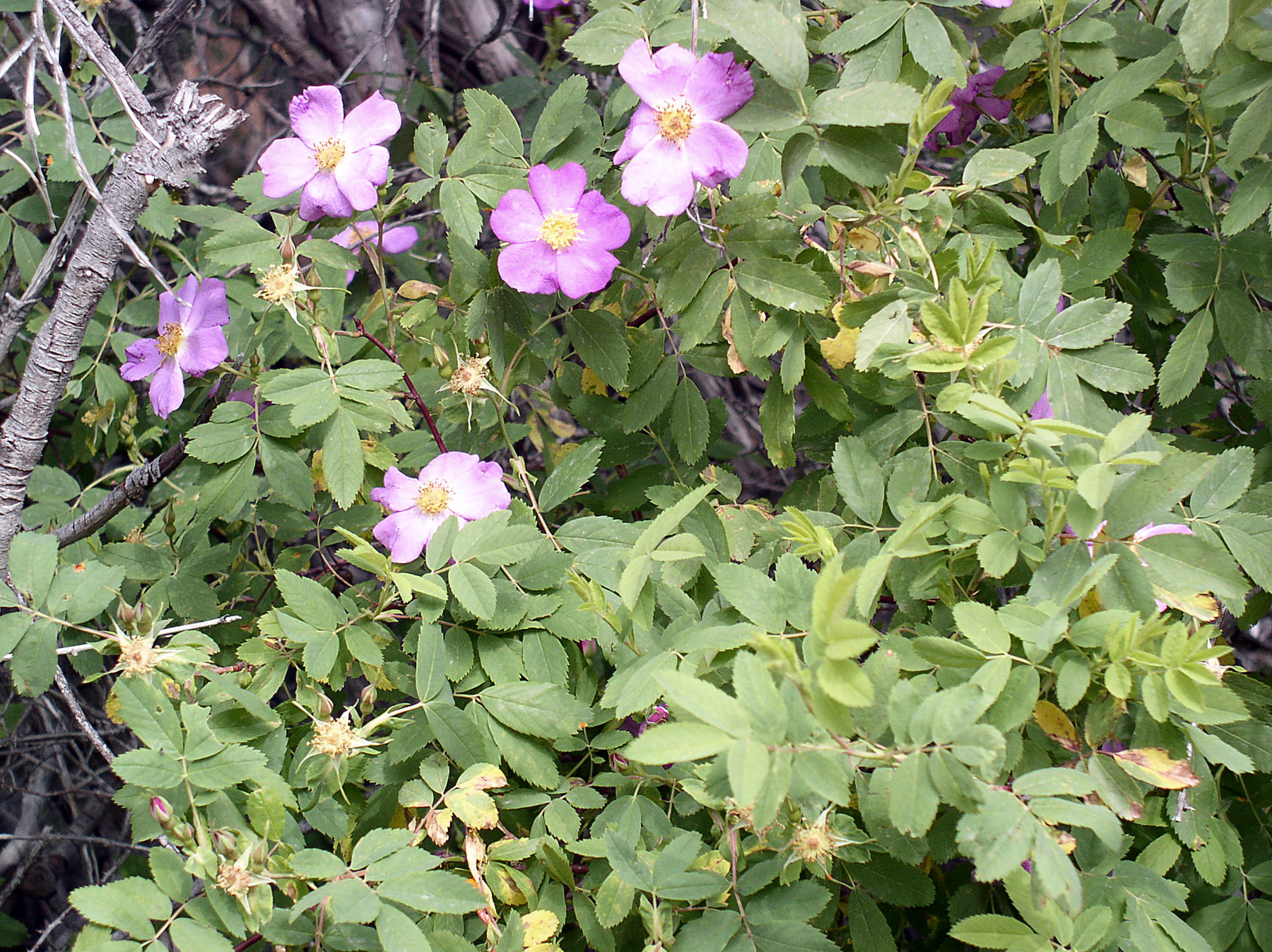
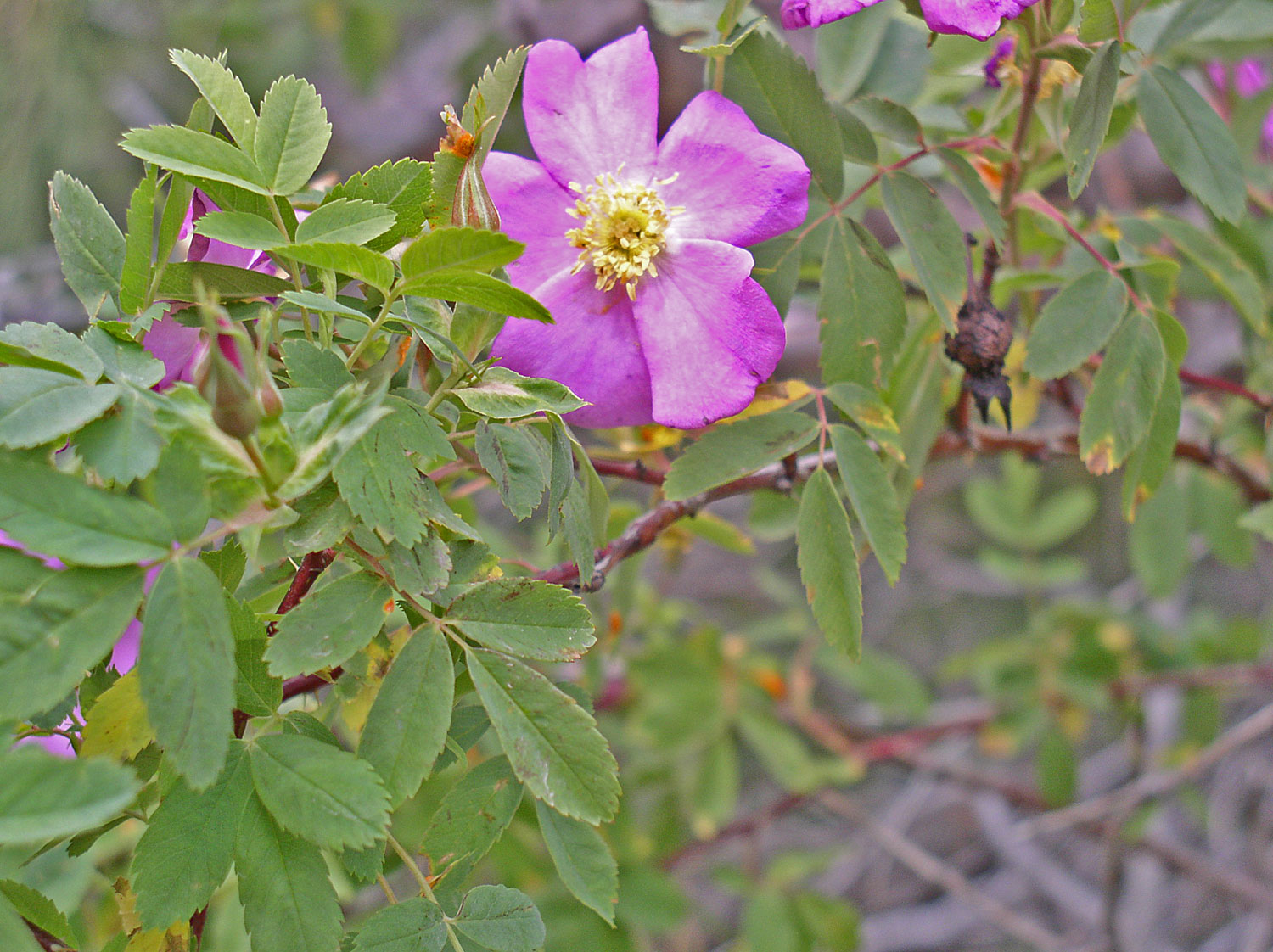
...... Prickles few or more, uniformly narrow to base; Rosa bridgesii Rydberg 1917. Sierra dwarf rose. (Rosa pinetorum Heller 1904) Weakly prickled deciduous shrub to 50 cm, differing from R. californica by its dwarf habit, having few prickles, and not forming thickets, although rhizomatous; flowering May–Aug. Rocky areas in open forests, 2,000–8,000 ft; Sierra Nevada to southern Oregon. Type from California. Kern Co.: “Scarce in moist places in the ponderosa pine and red fir forests in the Greenhorn Range southwest to Basket Peak and in the Jeffrey pine forest of the southwestern Kern Plateau” (Twisselmann); also Piute Mts., French Meadow, 1,981 m. Rosa californica Chamisso & Schlechtendal 1827. California wild rose. Prickly deciduous shrub to 3 m, often forming thickets; leaves pinnately divided into 2–3 pairs of lateral leaflets and an odd terminal serrated leaflet, the terminal leaflet generally widest near the mid region; flowers May–Aug, conspicuous, rose-pink with yellow stamens and pink styles; fruit with many pericarpia enclosed within a floral tube (pometum), usually persistent. Southern Oregon to northern Baja California, throughout most of California but mainly west of the valley. Type from San Francisco, CA. California rose briar patches recognized in MCV2 when >30% relative cover in the shrub canopy Kern Co.: Infrequent, mostly Transverse Ranges, less in the Sierra Nevada foothills and San Emigdio Range, generally below 5,000 ft but reported up to 7,500 ft near the Ventura County line on road to Mt Pinos, 701–2,437 m (CCH). *Rosa rubiginosa Linnaeus 1753[Rosa eglanteria Linnaeus] Sweet briar. Native to Eurasia. Kern Co.: Two plants on floodplain 3.4 miles south of Kernville (Twisselmann) and two records in CCH from Havilah Ranger Station. Rosa woodsii Lindley 1820 ssp. gratissima (Rosa gratissima Greene 1891) W.H. Lewis & Ertter 2008. Tehachapi Rose, Mojave Rose. Densely prickly and branched, odd leaflet widest above the mid region flowering stems with prickles, moist areas, 2,500–10,000 ft; central and southern Sierra Nevada, Transverse Ranges, and desert mountains to Nevada. Type from mountains of Kern Co., CA. Kern Co.: Water Canyon, Tehachapi Mountains ; Near Kernville; 3 miles north of monolith (annotated by Ertter); Frazier Park; edge of French Meadow, 1.3 miles northwest of Claraville, Piute Mountains (CCH). Included by Twisselmann under R. woodsii var. ultramontana. Rosa woodsii ssp. ultramontana (Rosa californica var. ultramontana S. Watson 1876) L. Taylor & McBride 1978. Interior rose. Differs from the preceding in being less prickly, the flowering stems lacking in prickles. Widely distributed, northern Sierra Nevada to British Columbia, Montana, Nevada, 3,300–8,000 ft. Kern Co.: “Occasional in moist sunny places in the lower Jeffrey pine forest and the upper levels of the pinyon woodland from the Lamont Meadow region of the eastern Sierra Nevada and from Kern River below Kernville southwest through the mountains to the Mt. Pinos region (Twisselmann).” CCH: Owens Peak region, Buena Vista Canyon, drainage of Morris Peak; Cache Peak, Champagne Spring, northwest shoulder; Breckenridge road , Flying Dutchman Creek Canyon on Havilah-Mt.; Piute Mts., Back Canyon; Kern River above Kernville; Kern Plateau, Fay Creek, se of True Mdw; 838–2,072 m. The occurrence of var. ultramontana in Kern County is questionable. (Ertter's Native California Roses 2001, http://ucjeps.berkeley.edu/ina/roses/rosa_woodsii.html; Ertter JM2 online). In California, the variety occurs mainly along the Eastern Sierra Nevada and desert mountains, north to the Cascade Region, the southernmost occurrence in the Sierra Nevada shown to be Cottonwood Creek in Inyo Co. The marginal teeth of this variety are often slightly curved, in contrast to appearing more straight in R. californica.Pharmaceutical References Nowak R. 2005. Chemical composition of hips essential oils of some Rosa L. species. Z. Naturforsch. [C]. 60(5-6): 369–378. “The chemical composition of the hips essential oils of 9 taxa of Rosa L. was analyzed and compared using the standardized analytical GC and GC/MS methods. The volatile hips oil compositions for these species are presented. All oil samples were dominated by following components: vitispiran (isomer), a-E-acaridial, dodecanoic acid, hexadecanoic acid, docosane (C22), beta-ionone, 6-methyl-5-hepten-2-one, 2-heptanone, heptanal, myristic acid and linolic acid. Statistical analyses of 97 GC peaks of these oils were used to distinguish compositional patterns. There appeared to be correlation between the essential oil patterns and the classification within Rosa L. Cluster analysis of the composition of main components clearly showed two groups, one constituted by R. rugosa Thunb. from the Cinnamomea section, and the other constituted by the remaining taxa from the Caninae section.” Park J. C., S. C. Kim, M. R. Choi, S. H. Song, E. J. Yoo, S. H. Kim, H. Miyashiro and M. Hattori. 2005. Anti-HIV protease activity from rosa family plant extracts and rosamultin from Rosa rugosa. J. Med. Food. 8(1): 107–109. Twelve extracts of Rosa family plants were screened for their inhibitory effects against HIV-1 protease. Of the extracts tested, the strongest inhibitory effects were observed in the root of Rosa rugosa and the leaves of Prunus sargentii, at a concentration of 100 microg/mL. Rosamultin, isolated from the root of R. rugosa, inhibited HIV-1 protease by 53% at a concentration of 100 microM. |
|