|
Salvia aethiopica
|
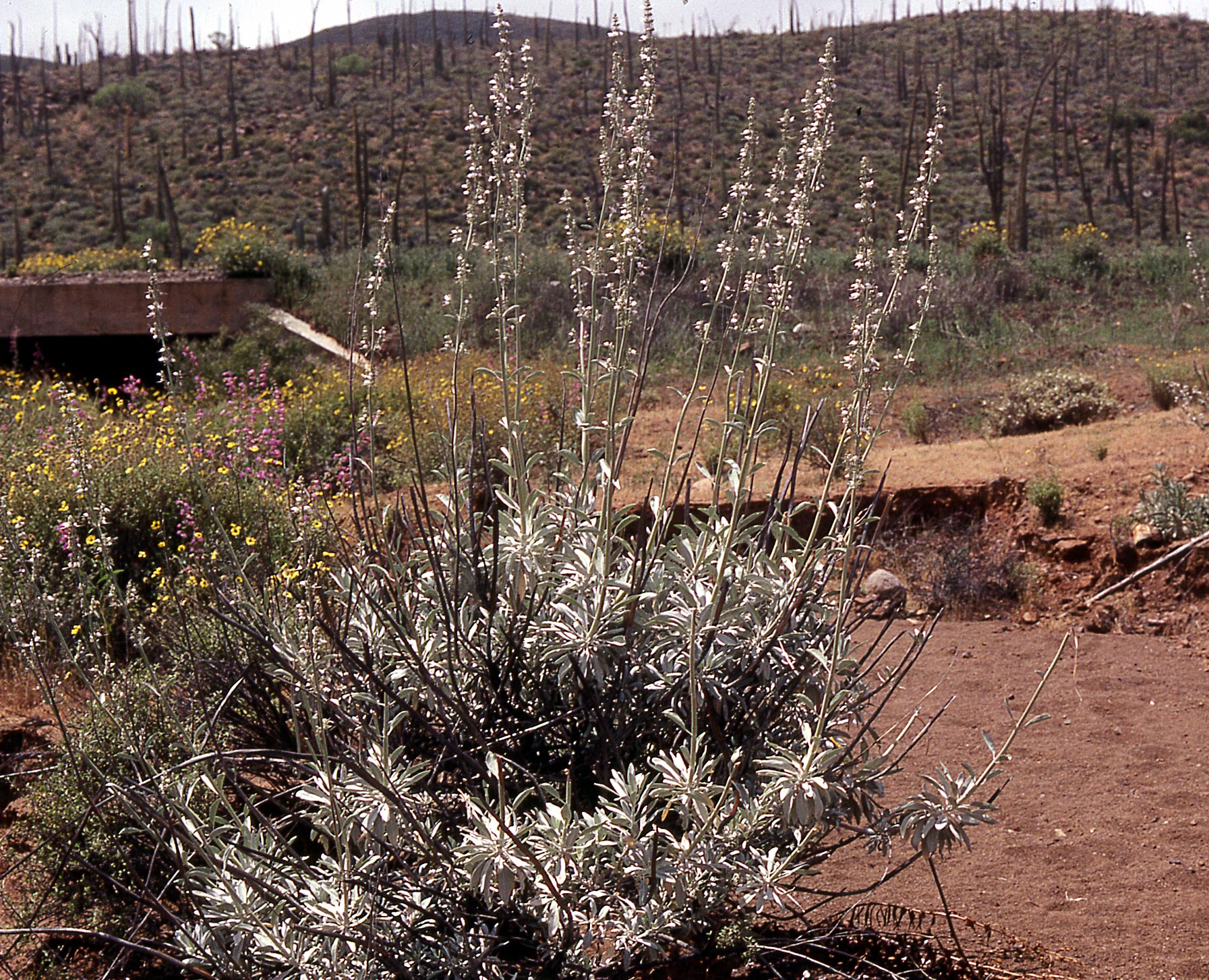
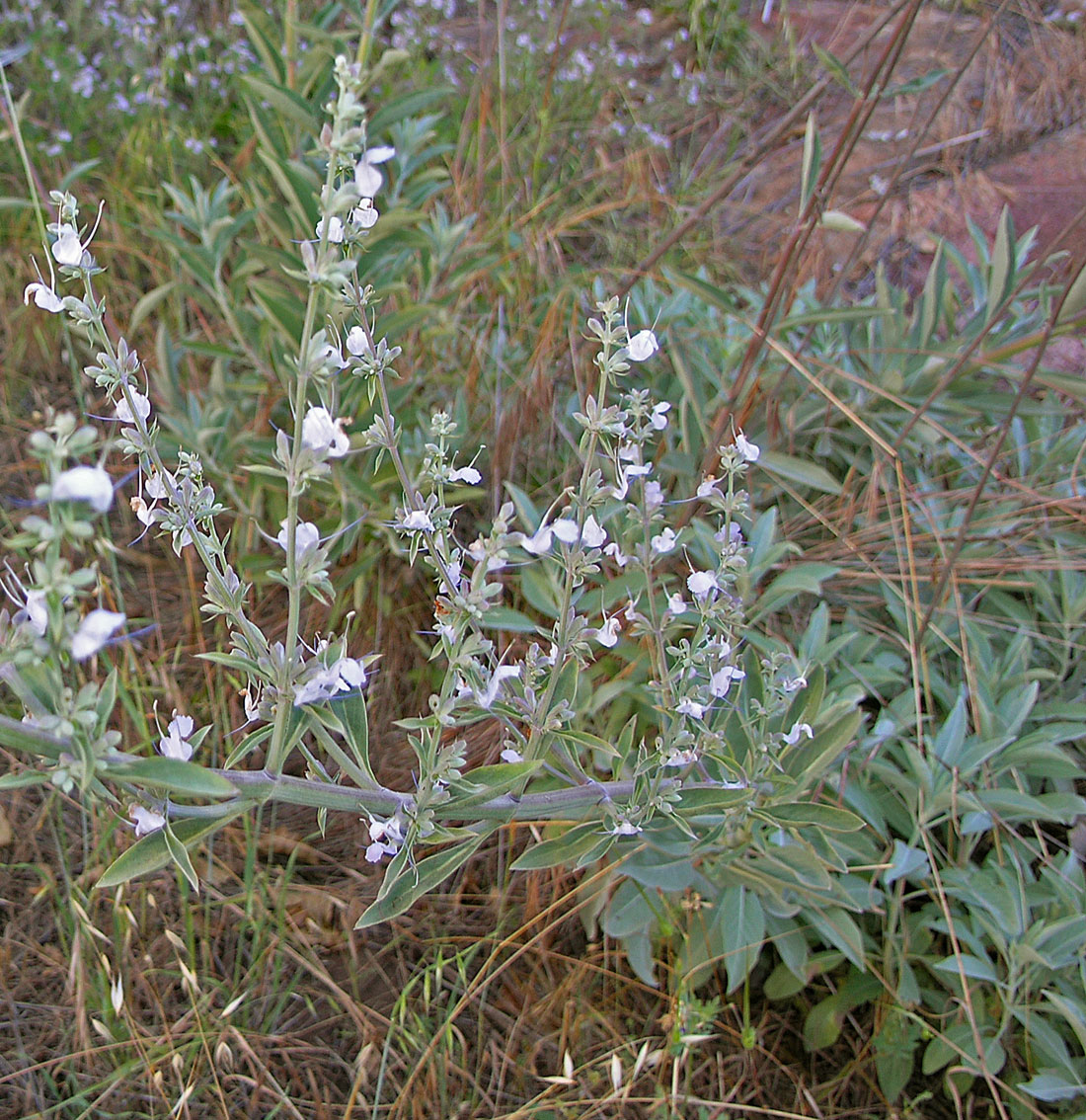
Salvia apiana
|
Salvia apiana |
Salvia ballotiflora
|
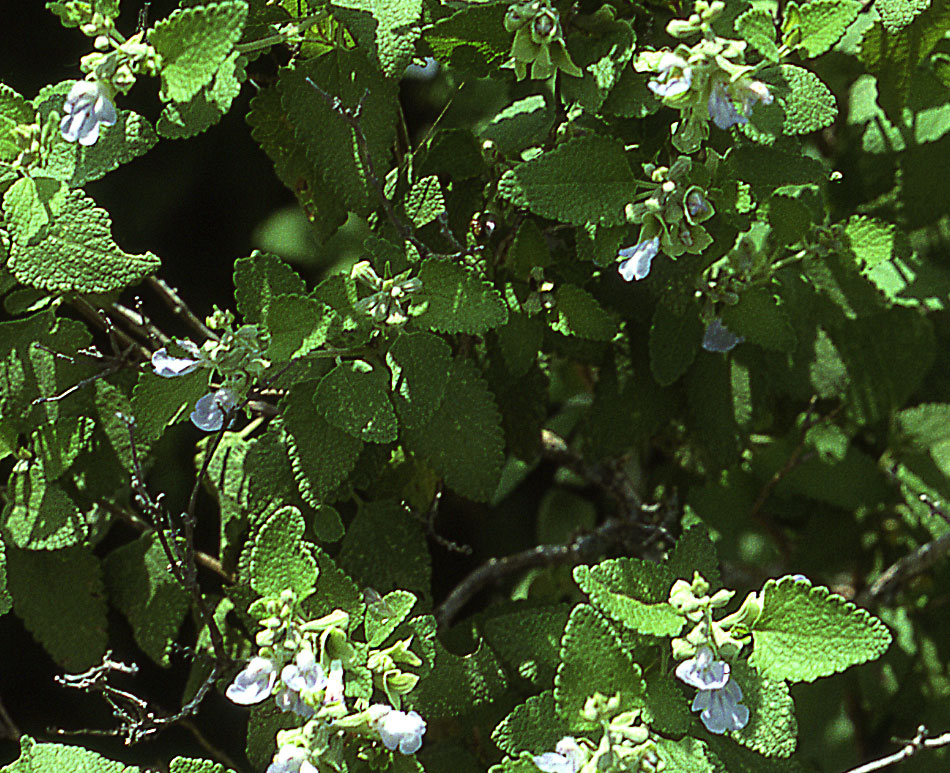
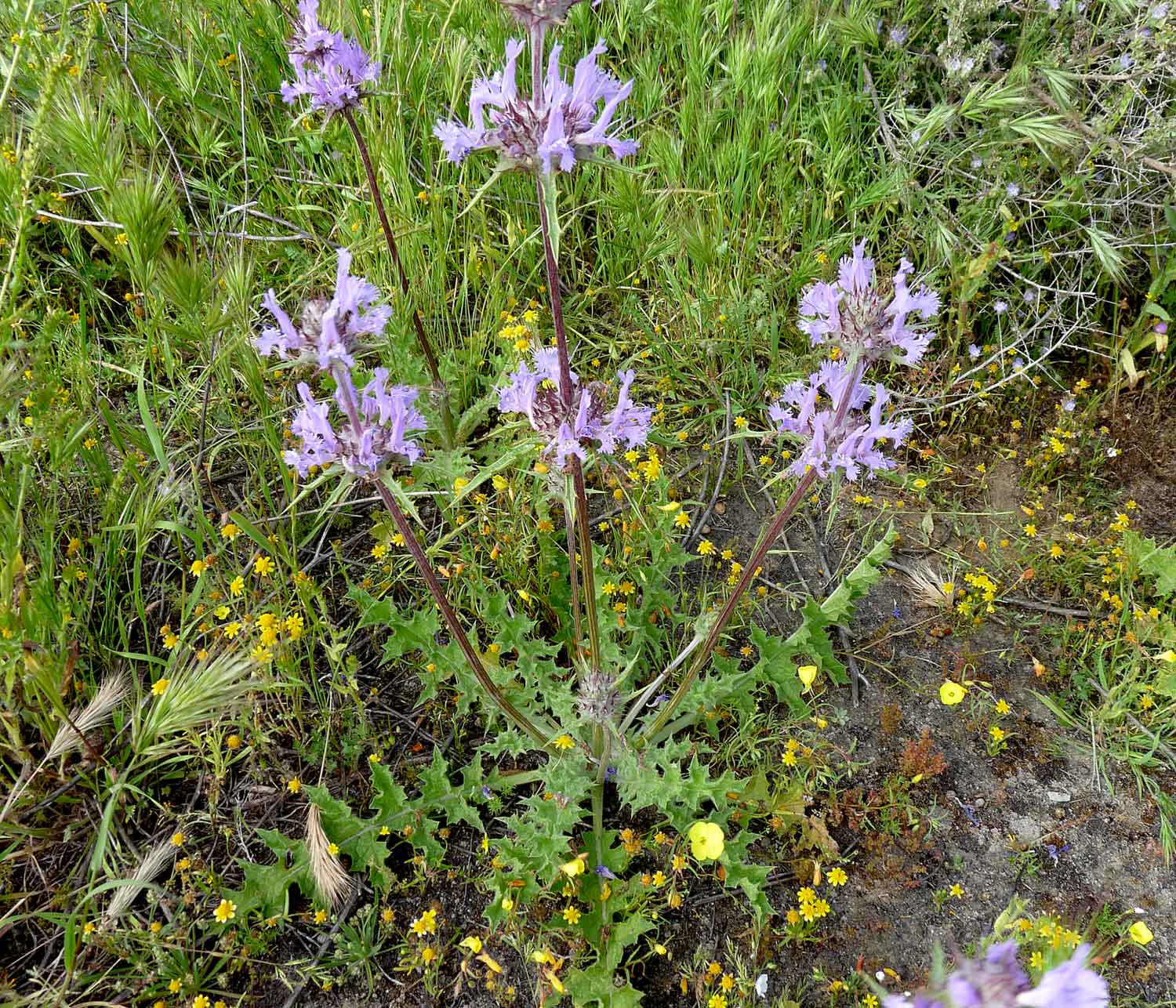
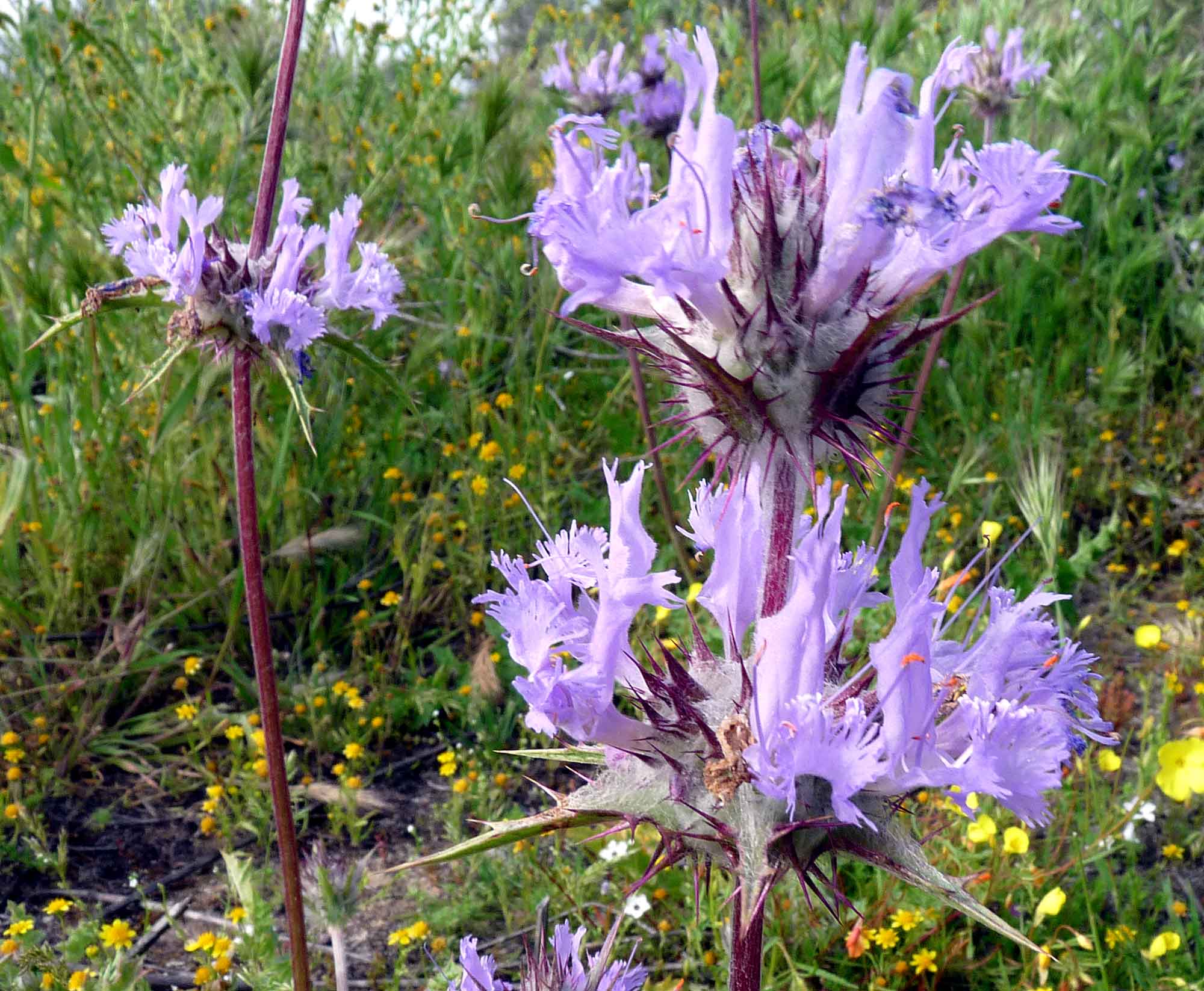
Salvia carduacea |
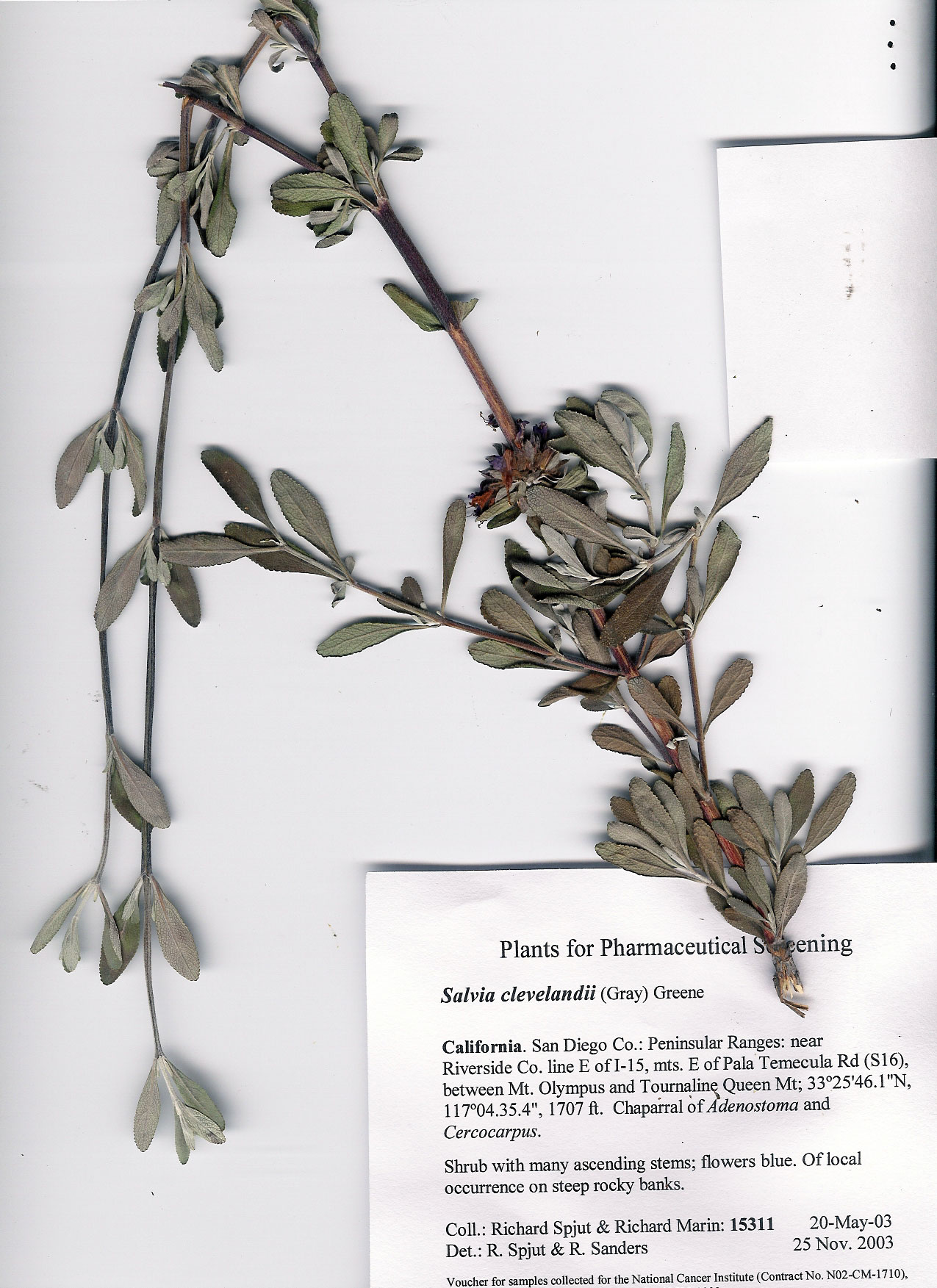
Salvia clevelandii
|
|
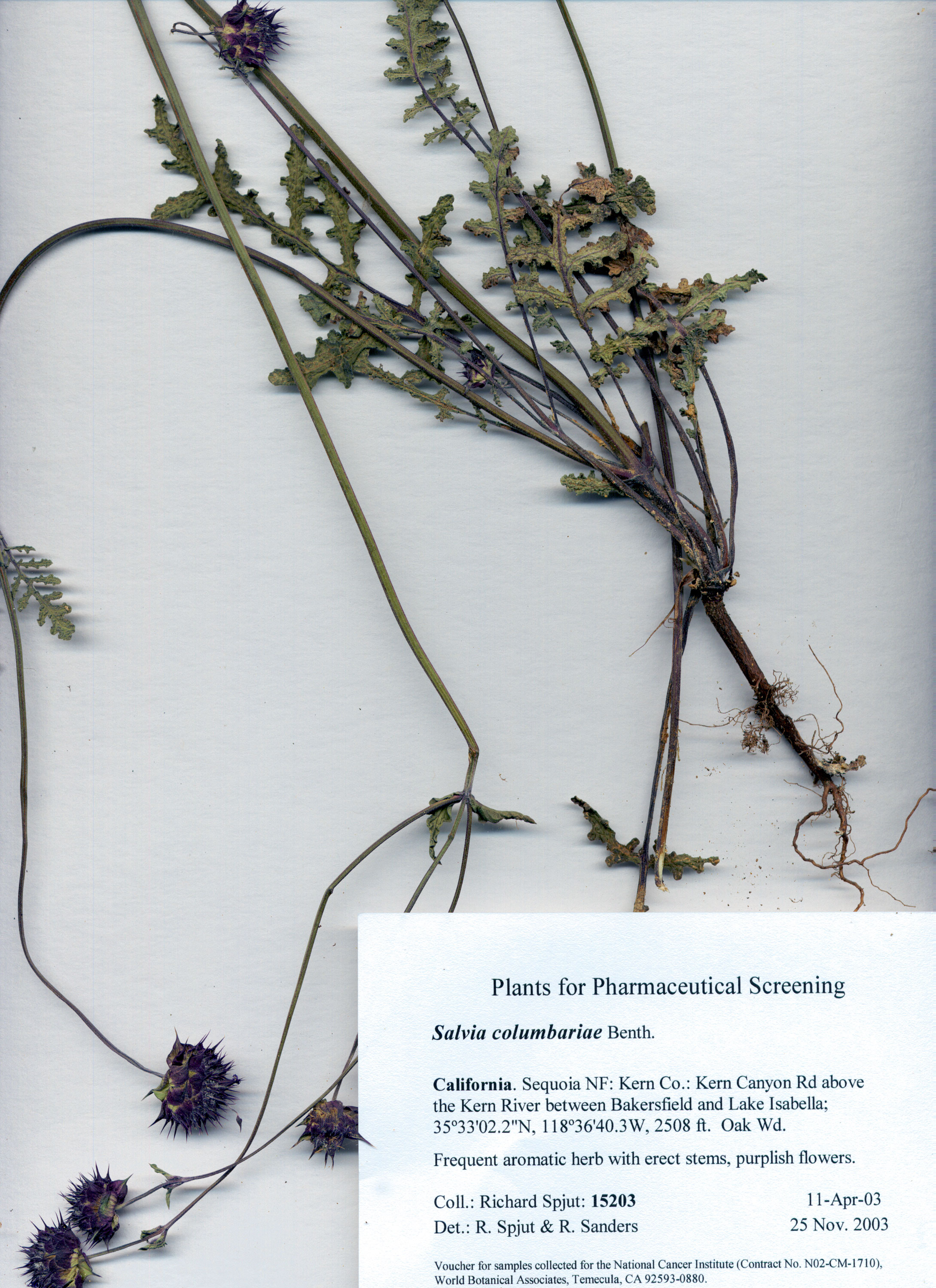
Salvia columbariae
|
Salvia columbariae
|
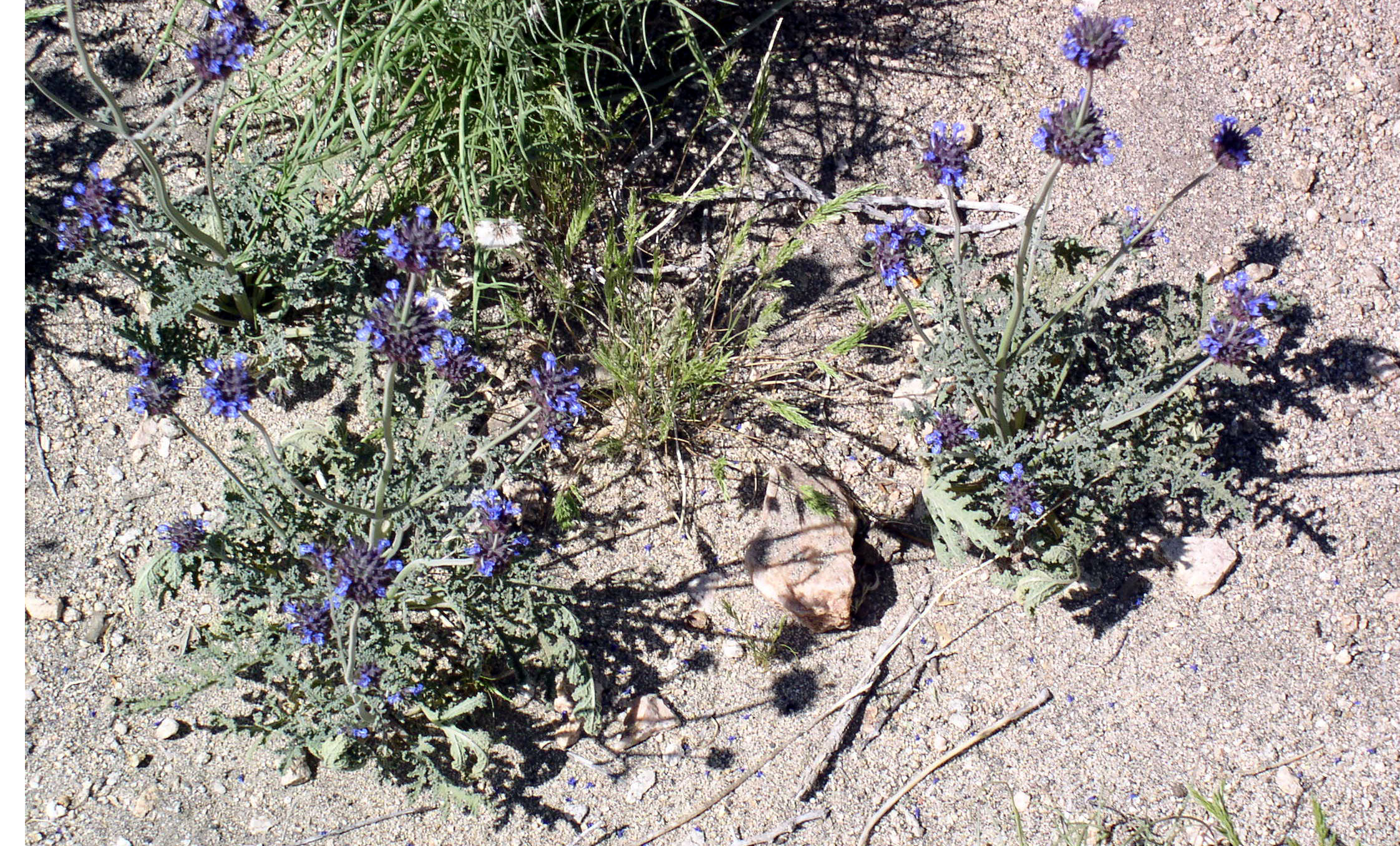
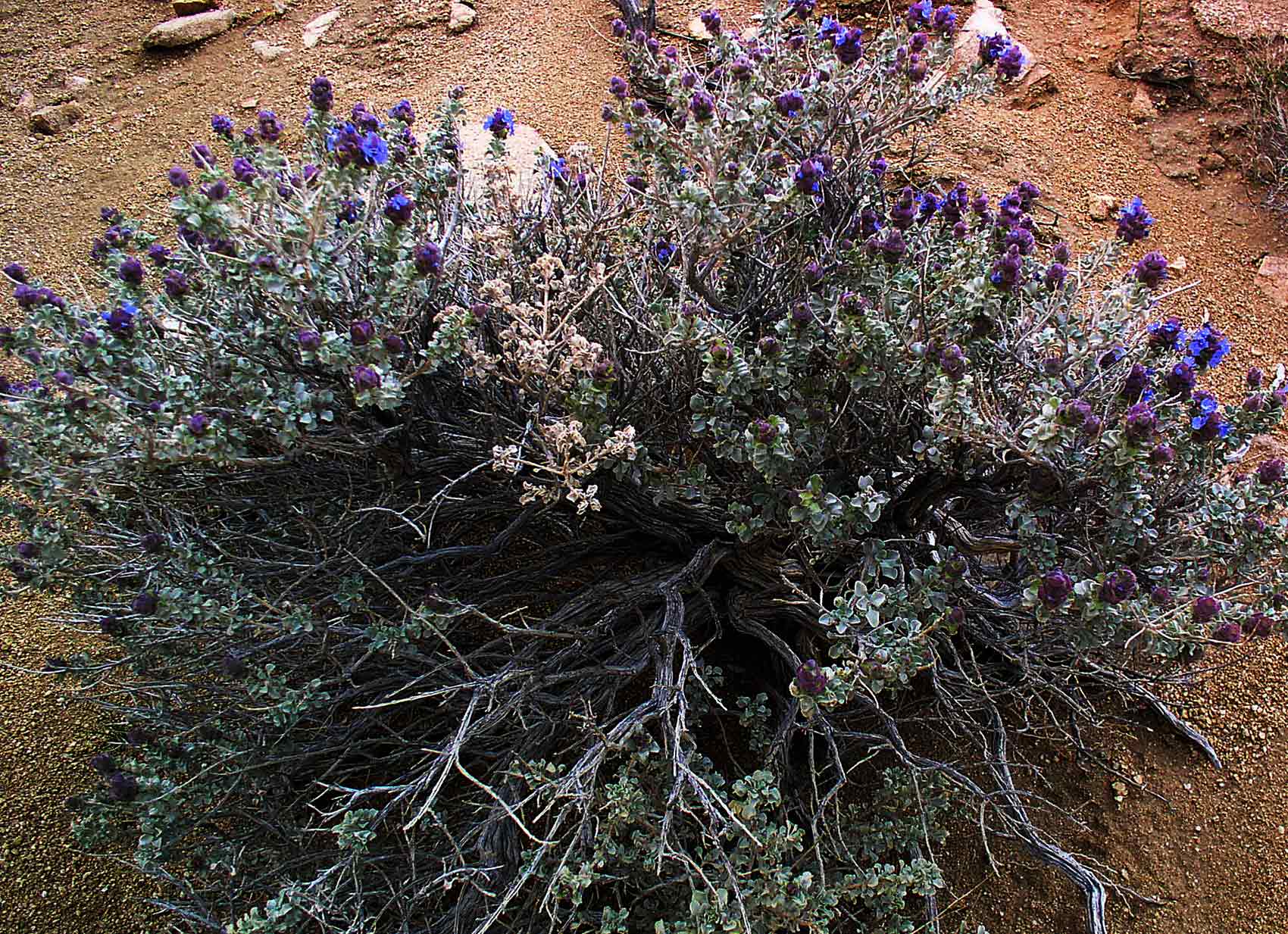
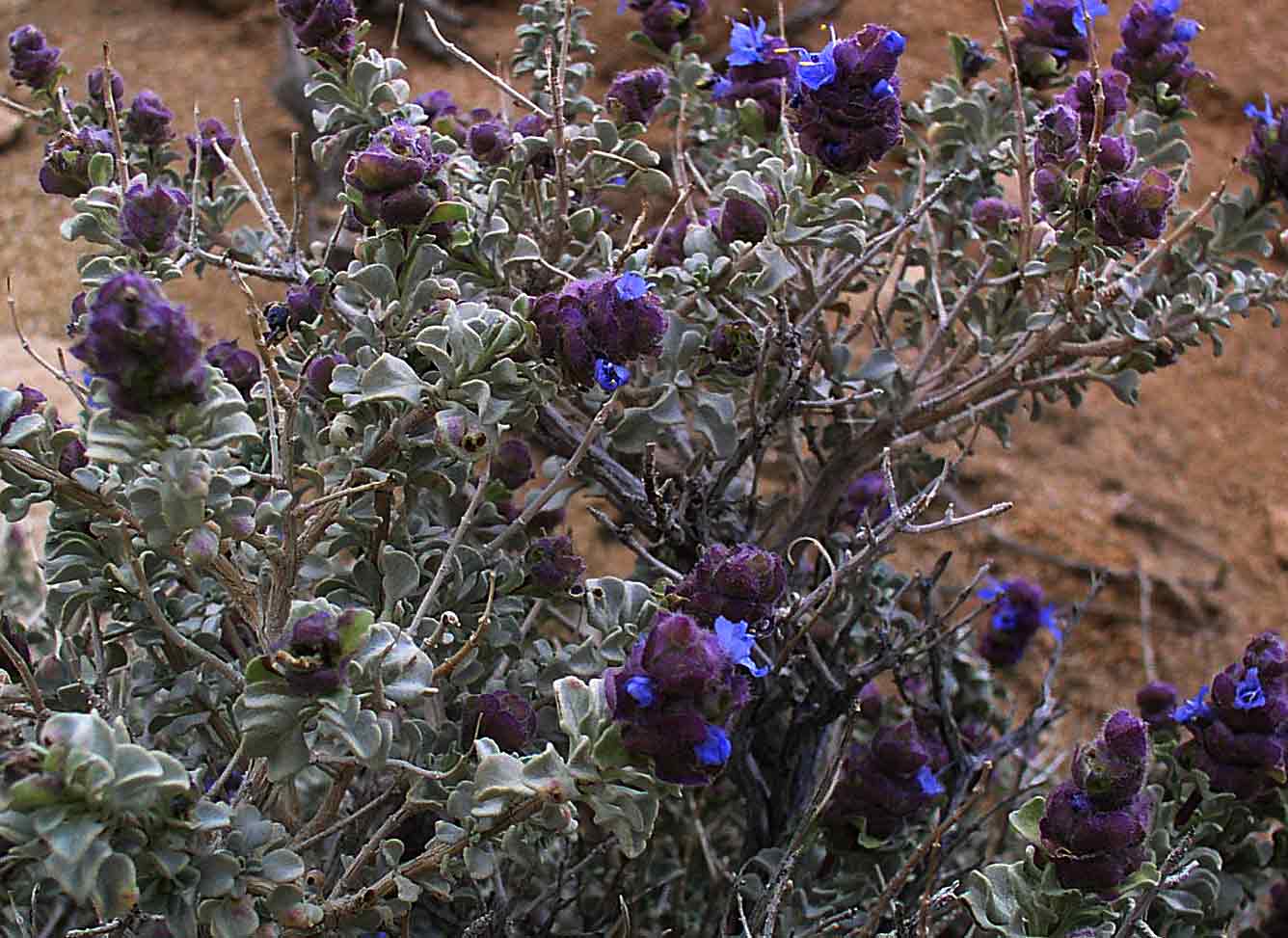
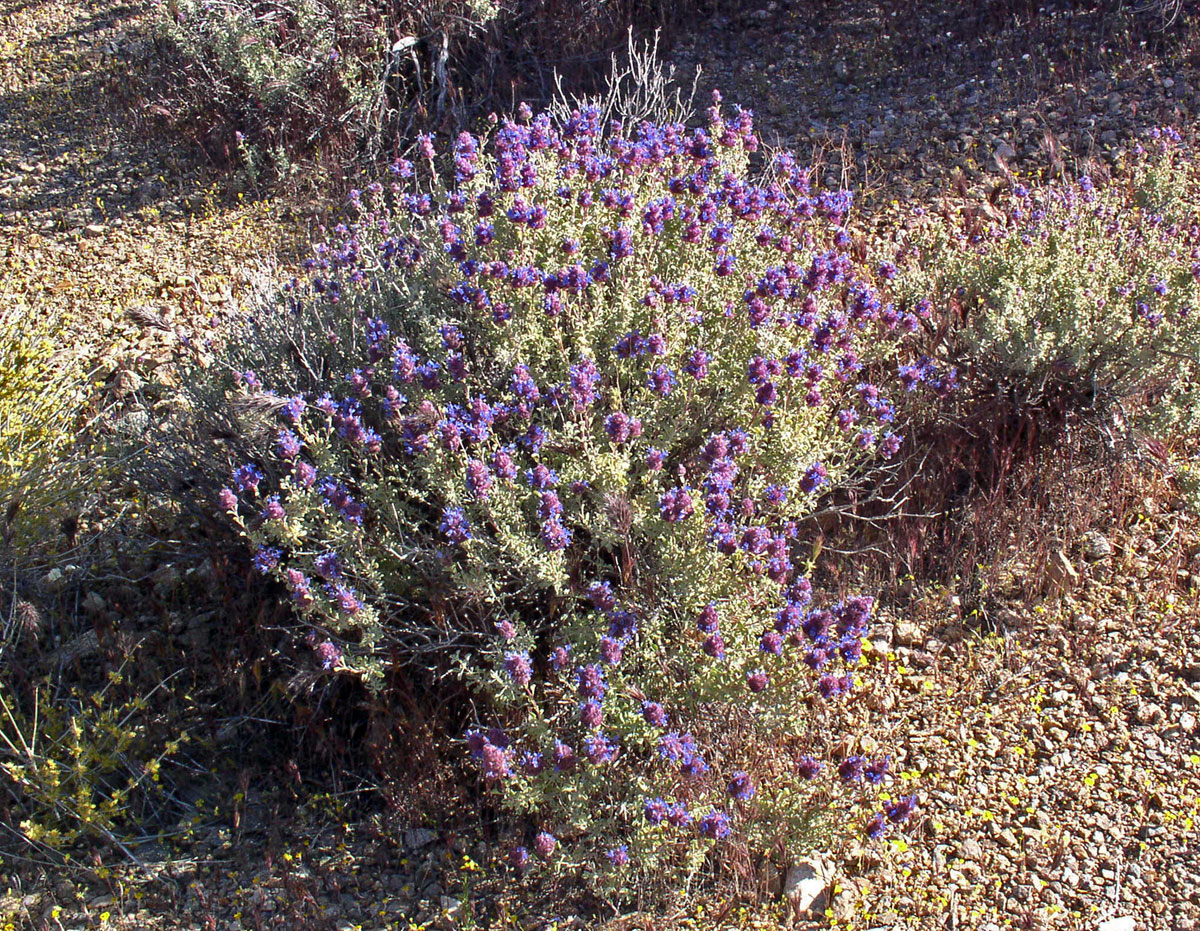
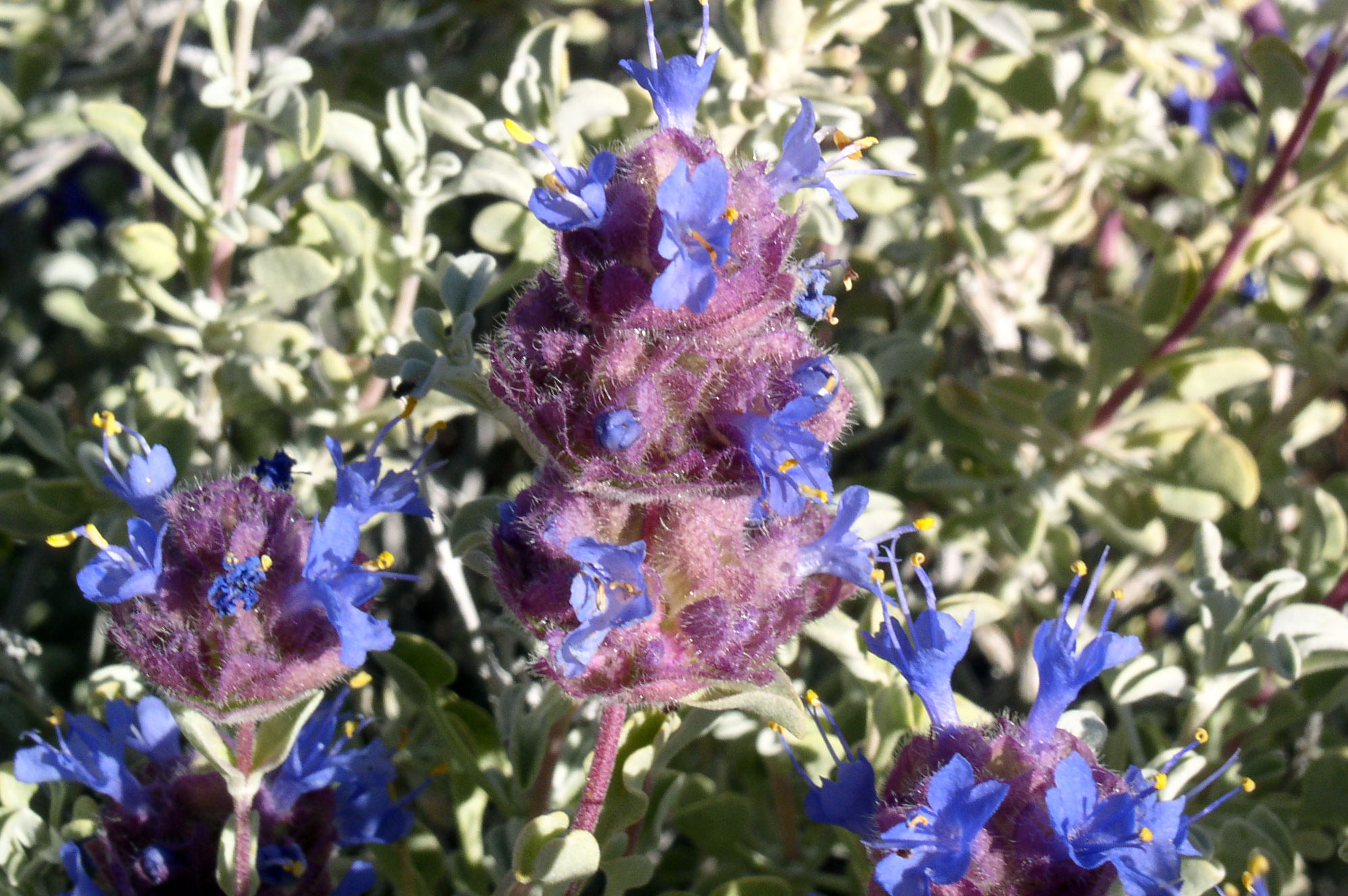
Salvia dorrii
var. dorrii
|
|
Salvia dorrii
var. pilosa
|
Salvia dorrii
|
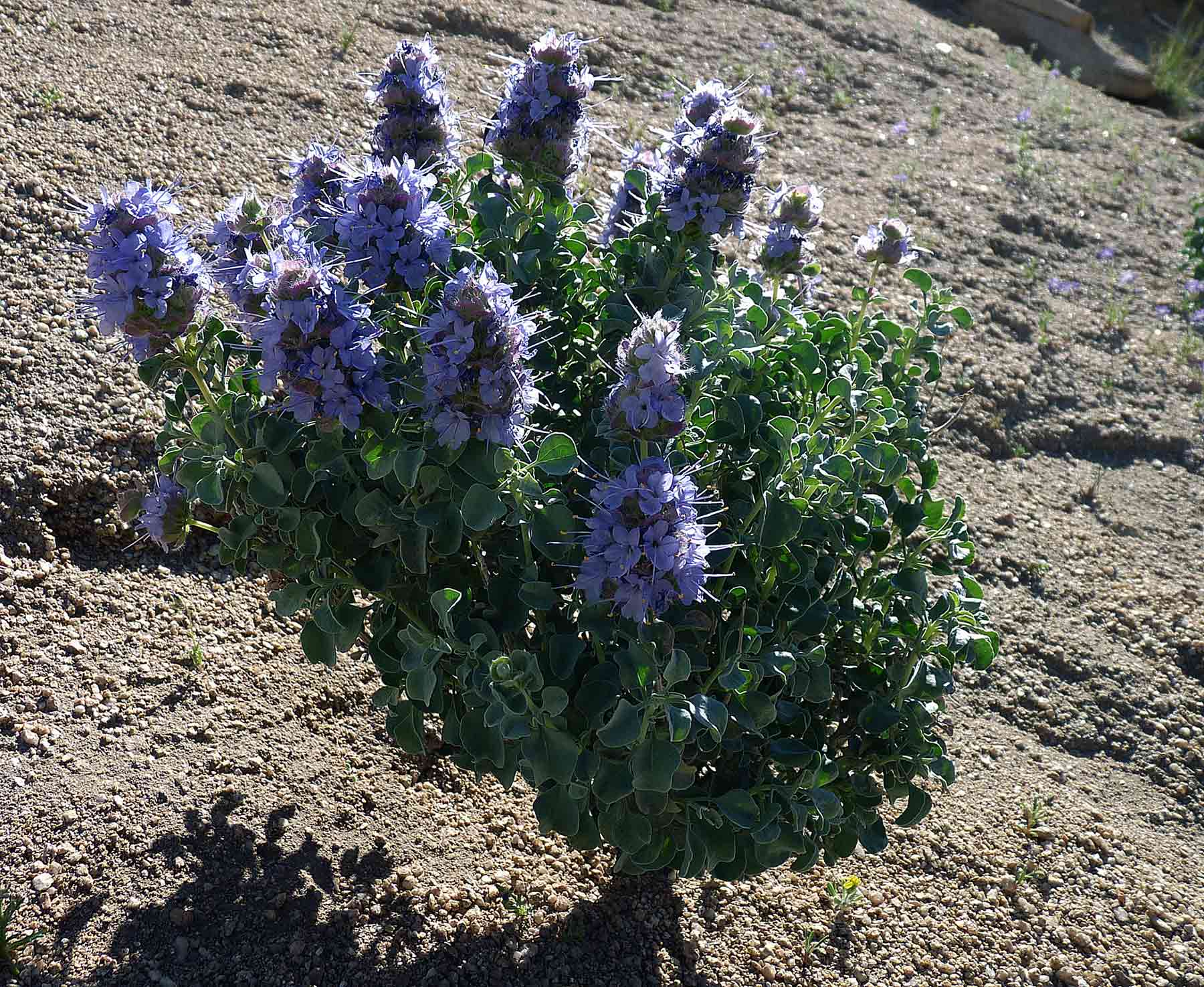
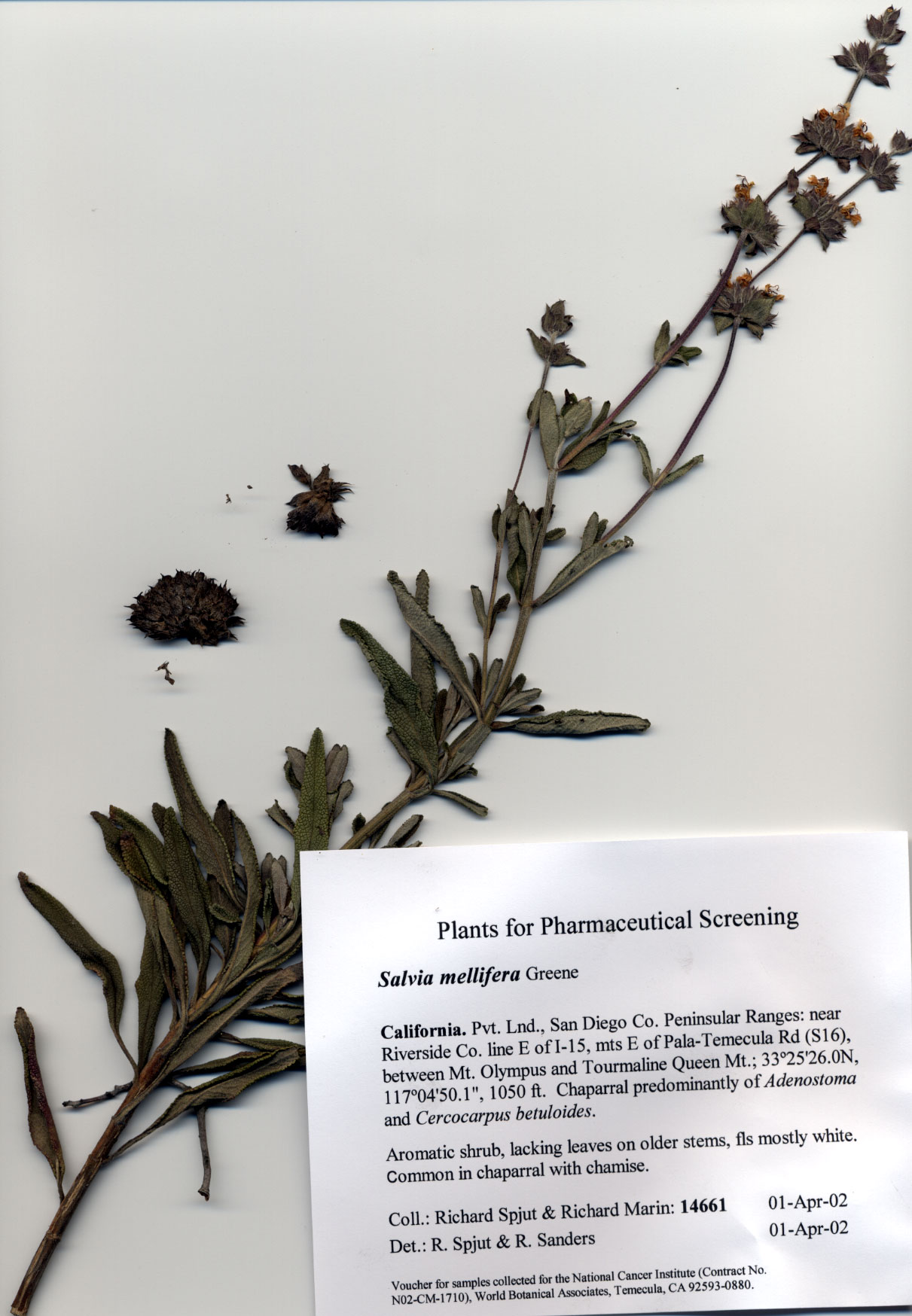
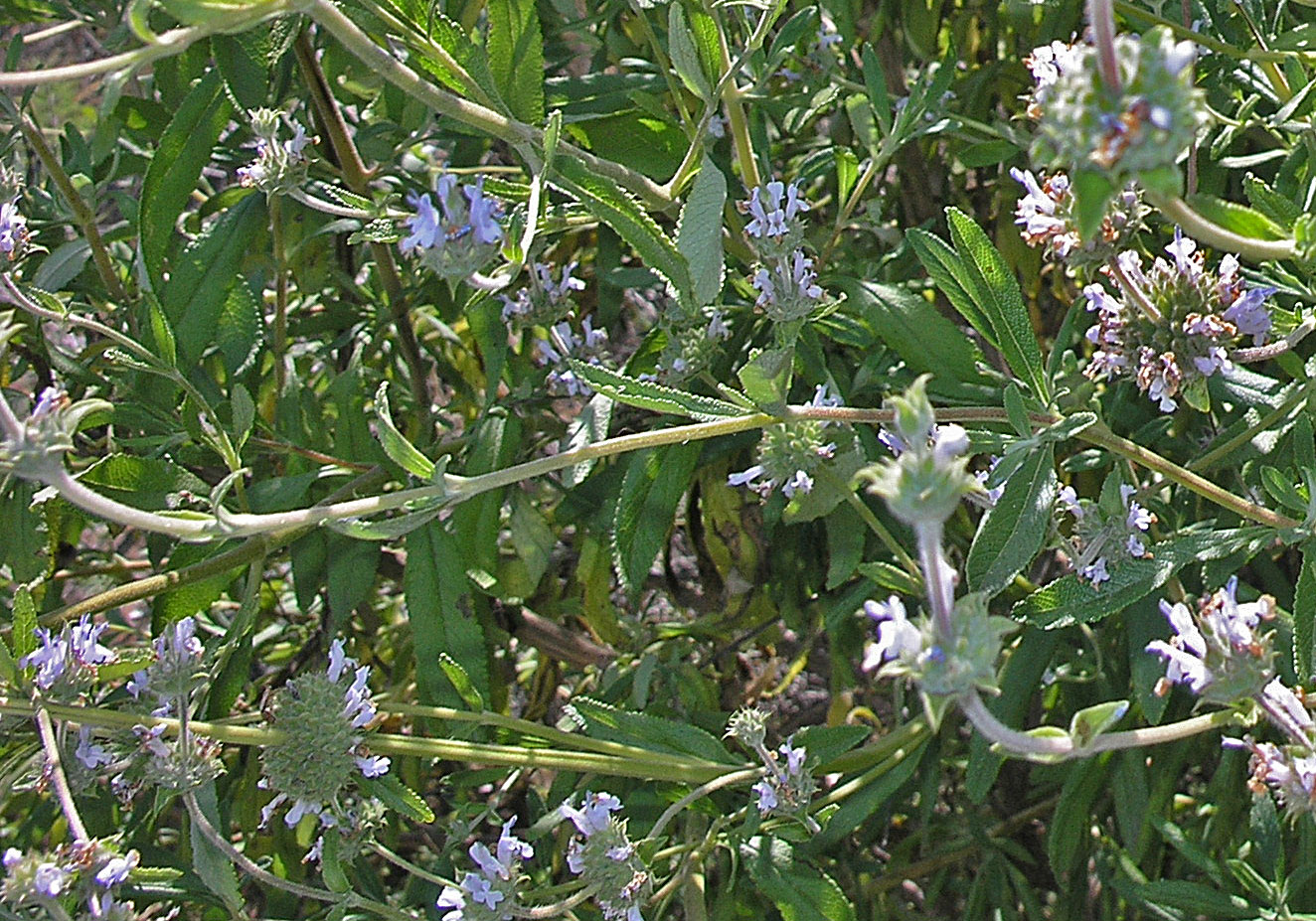
Salvia mellifera
|
|
Salvia mellifera
|
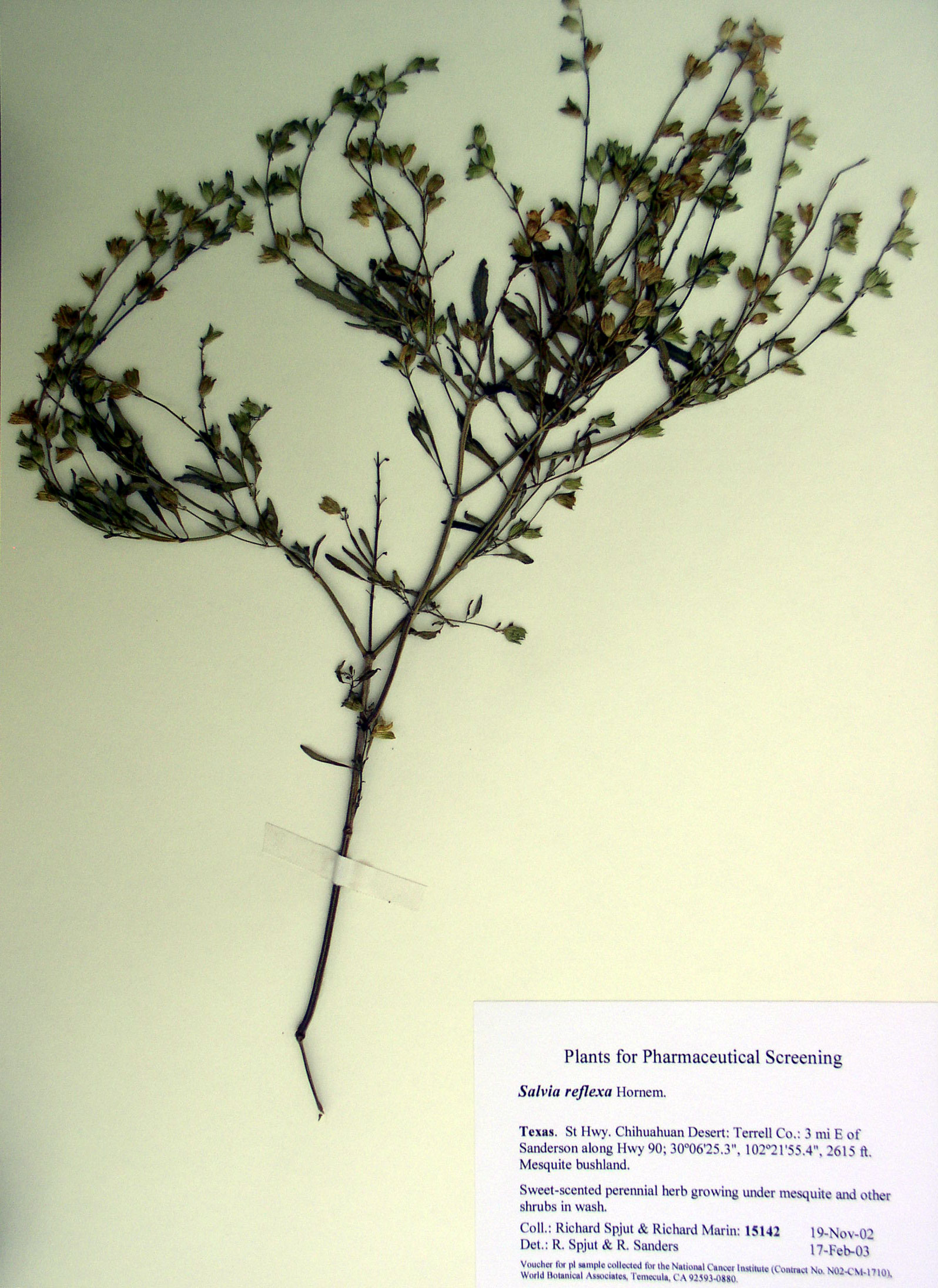
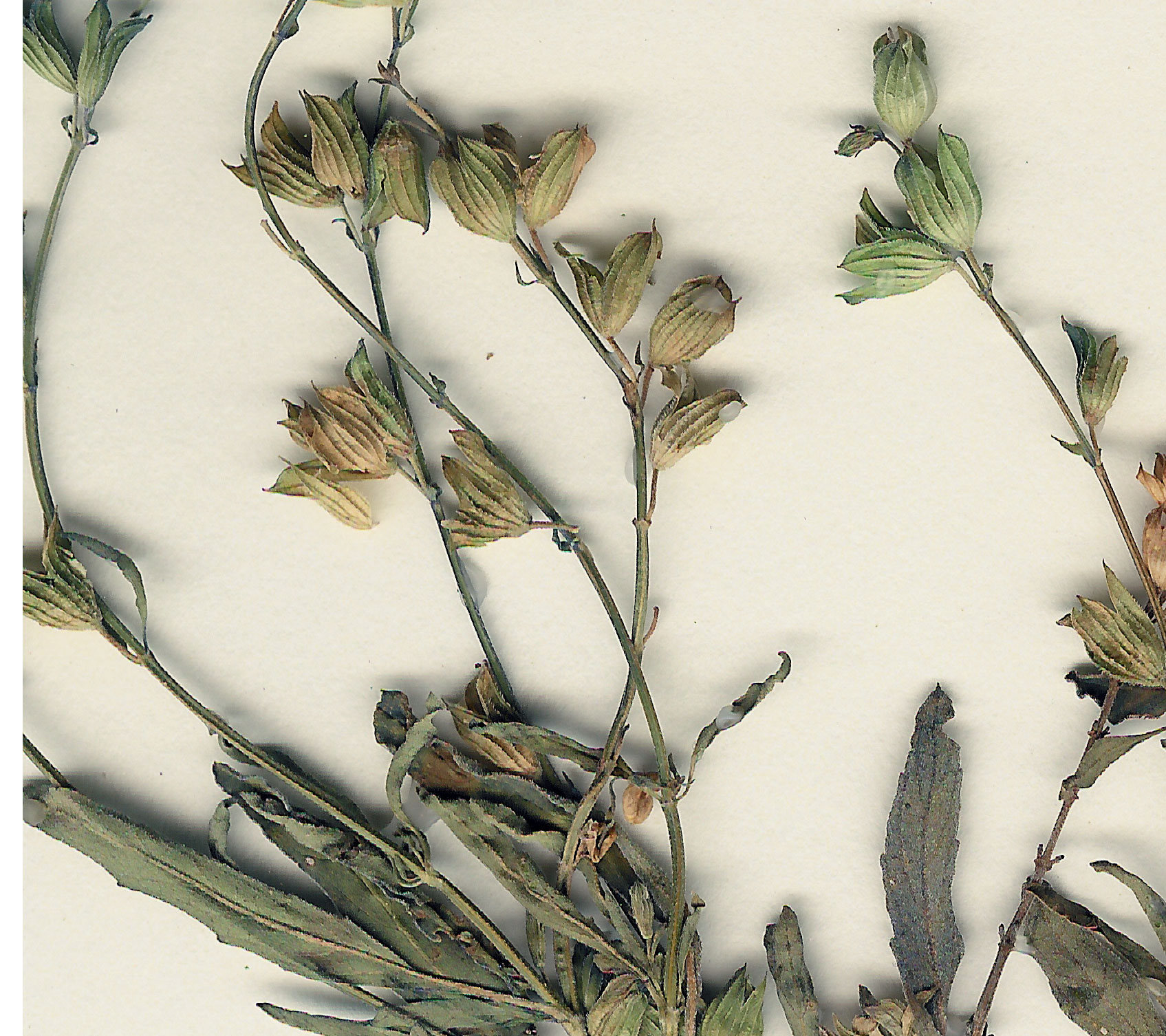
Salvia reflexa
|
|
|
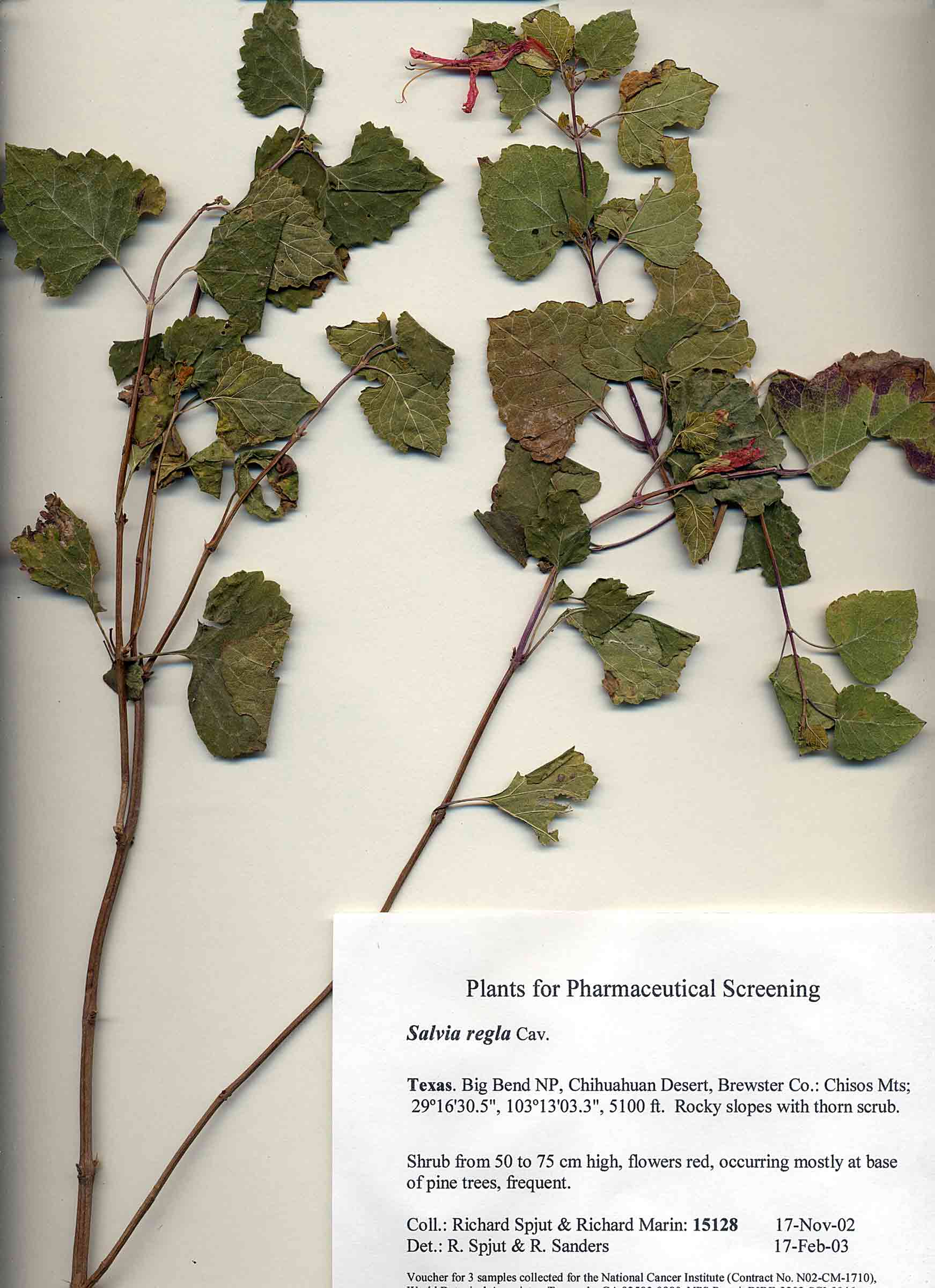
Salvia regal |
|
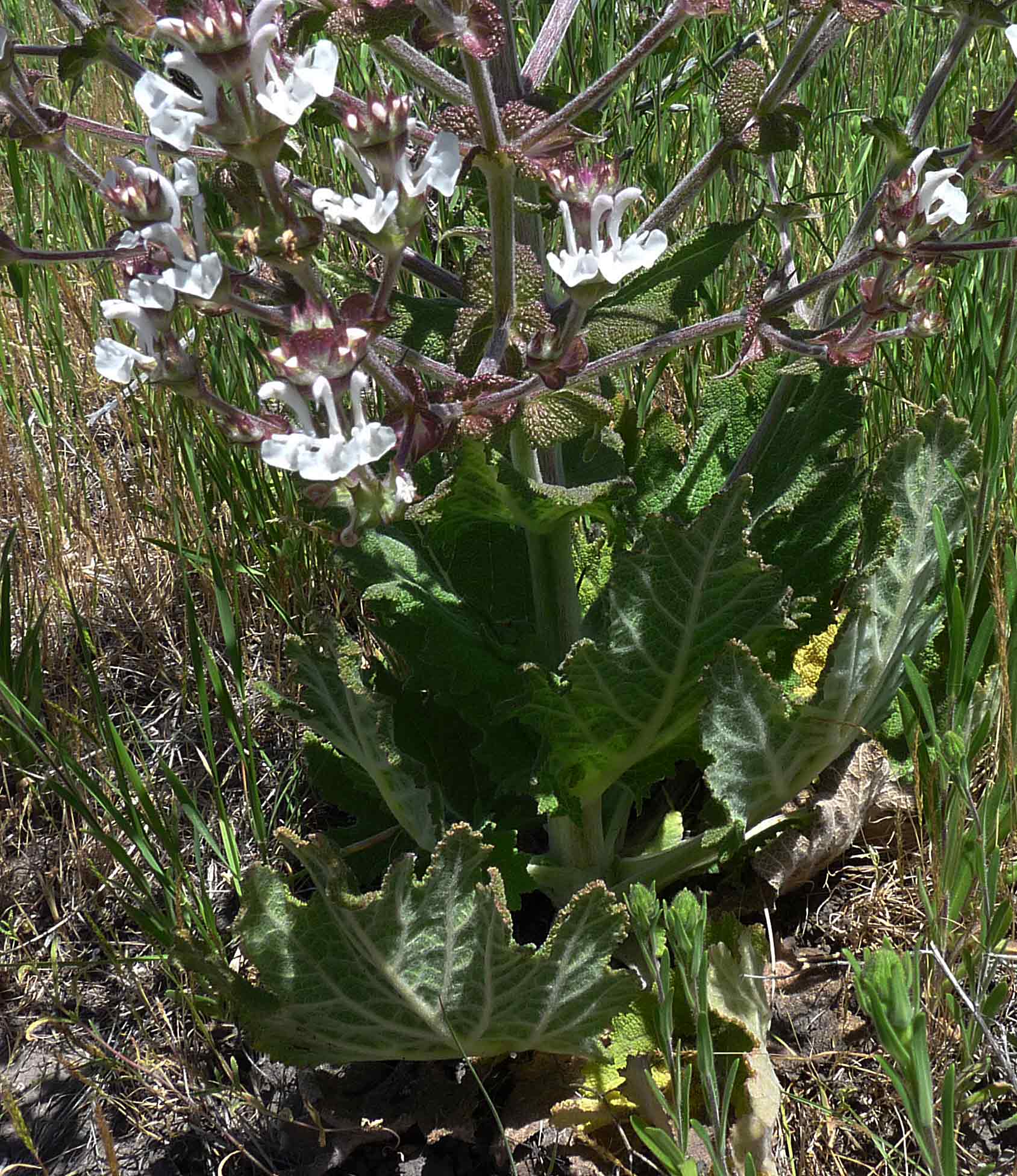
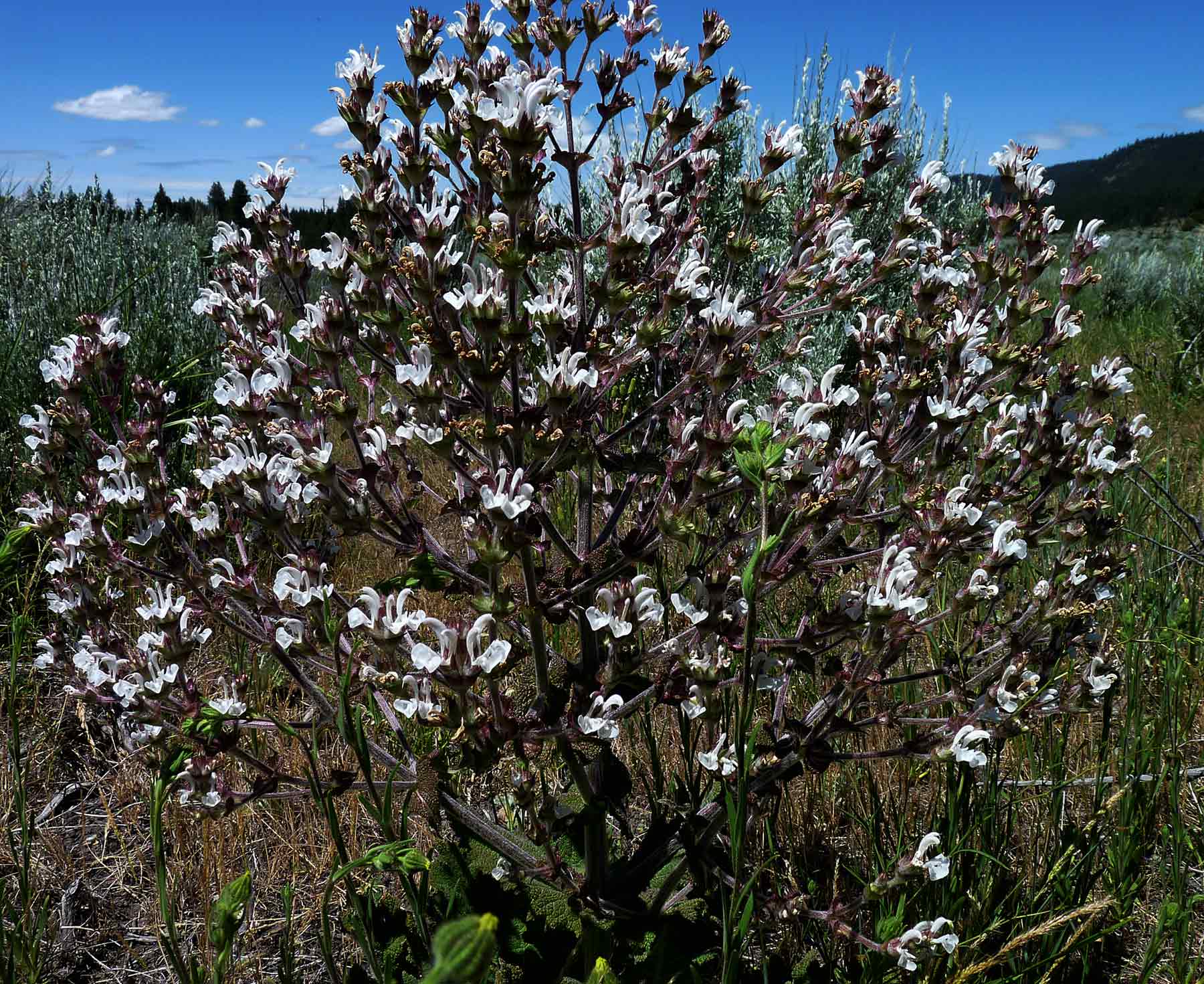
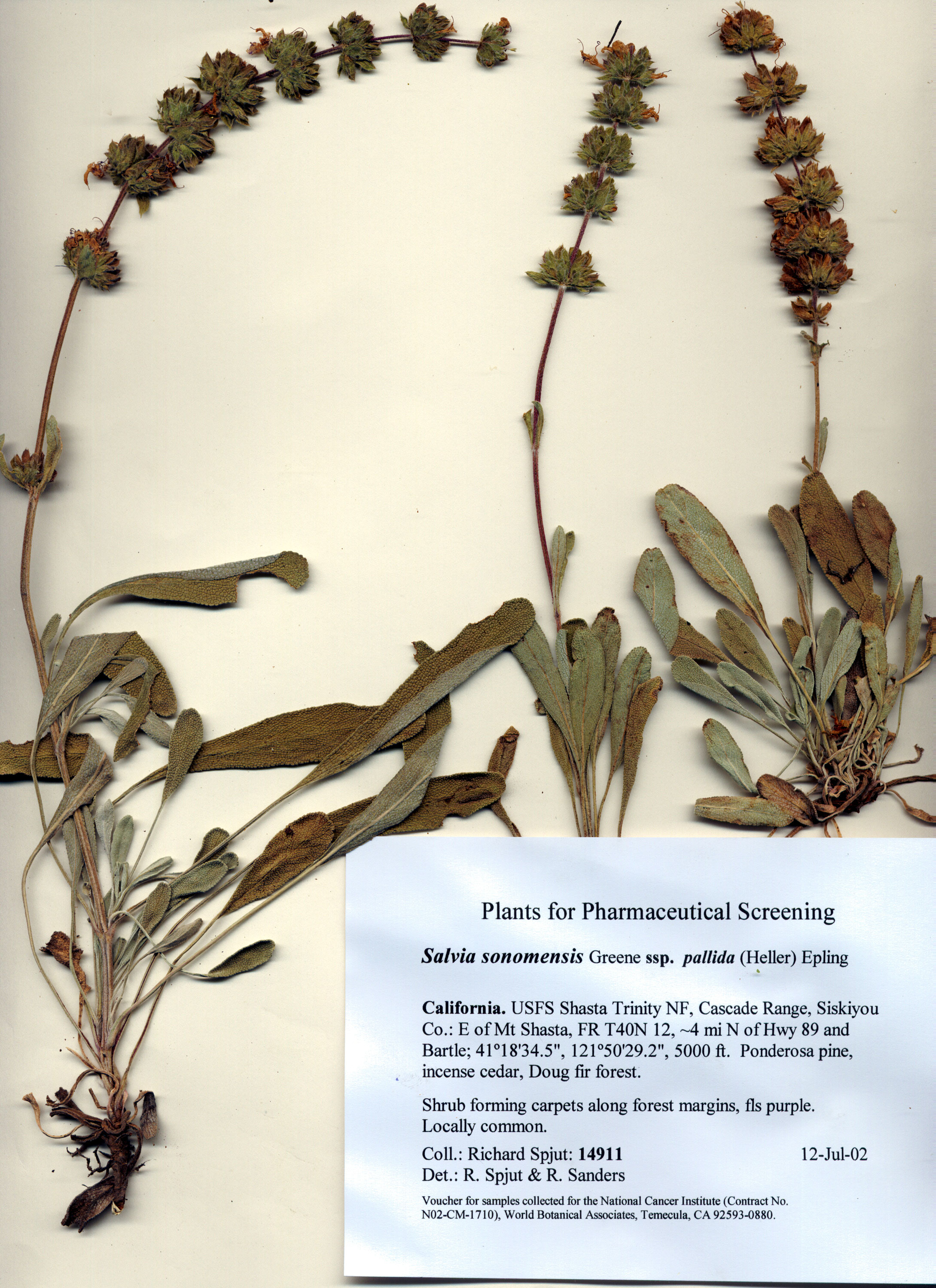
Salvia sonomensis
|
|
Trees and Shrubs of Kern County (Jan 2013) Key to Salvia species
1. Leaves often
twisted, margins entire, tongue shaped, minutely hairy on 1. Leaves plane, minutely toothed or indented along margins; bracts not colored......... 3
2. Flowers 13–15 mm long....... ............................................................. Salvia dorrii Bracts and calyx with shaggy hairs....................................................... var. pilosa Bracts and calyx without hairs, or hairs short........................................ var. dorrii 2. Flowers 15–22 mm long.......................................................... Salvia pachyphylla
3. Stems and leaves green................................................................. Salvia mellifera 3. Stems and leaves densely white hairy.......................................... Salvia leucophylla
Salvia dorrii (Audibertia dorrii Kellogg 1863) Abrams 1951 var. dorrii. Blue sage. Aromatic densely branched shrub to 1 m high; twigs reddish, covered with white branched hairs; leaves spoon-shaped with a long handle (narrow portion of blade)—abruptly long tapered to petiole 5–8 mm; twisted or vertically wavy or variously curved, densely covered with whitish scaly hairs, 0.6–2 cm long; flowering May–Jul; flowers in several or more separate clusters along a terminal flower scape, 10–15 mm, usually blue surrounded by rose to greenish bracts. Sagebrush flats and slopes, Joshua tree woodland, and pinyon-juniper woodland, 2500–8,800 ft, Great Basin Desert in Idaho, Oregon, Utah, Nevada, California and Mojave Deserts in California, southern Nevada and Arizona. Type from western Nevada, presumed to be near Virginia City. Blue sage scrub recognized in MCV2 when 7% cover in the shrub canopy and >50% relative cover (eastern Inyo and San Bernardino Cos.). Kern Co: Walker Pass, Cane Brake Creek, Erskine Canyon, 900–1,341 m. Salvia dorrii var. pilosa (Audibertia incana Bentham1832 var. pilosa A. Gray 1886) Strachan & Reveal 1981. Differs from the typical variety by the shaggy hairs on bracts and calyx. Similar range as the typical variety. Type from the north base of the San Bernardino Mts., CA. Kern Co.: “Occasional, often in colonies, in the arid shrub association and pinyon woodland south to Jawbone Canyon and Kelso Valley, west to South Fork Valley, and east to Mesquite Canyon in the desert El Paso Range.” “Rare southwest to the slopes below Tejon Pass on the southeastern slopes of the Tehachapi Mountains” (Twisselmann with reference to “S. carnosa var. pilosa”); 914–1,800 m (CCH). “An important browse plant for deer and livestock” (Twisselmann). Salvia leucophylla Greene. Purple sage. Aromatic shrub with many erect stems to 1.7 m; stems 4-angled, pale reddish orange, with conspicuous white powdery (dendritic) hairs; leaves: opposite and decussate, boat-shaped to sword shape, widest below the mid region, 3–6× longer than wide, 2–8 cm long, abruptly tapered to short petiole, 3–8 mm, margins with short vertical incisions and square segments, tapered to a blunt tip, upper surface whitish green, reticulated and with impressed veins, lower surface white from dense cover of short hairs; flowering Feb–Aug; flowers in multiple (3−7) round clusters along a main terminal flowering scape (verticillate), rose to blue lavender, (6–)9−11.5(−13) mm long,. Fruit: of 4 brownish gray mericarps (microbasarium), each 3-angled, ~twice as long as wide, 2.5−3.5 mm. Rocky slopes and canyons below 4,000 ft; Southern Coast Ranges, San Gabriel Mts., and western Transverse Ranges. Twisselmann questioned its occurrence in Kern County with reference to specimens collected northwest of Blue Point, Tejon Ranch, and from ridge near Lebec. Moe included the species in his key. Kern Co.: CCH: Ridge near Lebec, M. E. Jones, 18 Apr 1924 (DS677873) ; Ridge Route (U.S.99) near Lebec, Crampton, 761 m, 18 Jun 1941 (UCD125449). Salvia mellifera Greene 1892. Black sage. Aromatic shrub with many ascending or spreading to erect stems, to 2 m high and broad; stems 4-angled, pale reddish orange, with conspicuous white powdery (dendritic) hairs; leaves: opposite and decussate, narrowly elliptic, 3–7× longer than wide, 3–8 cm long, tapered to petiole, 2–13 mm, more gradually tapered to a blunt tip; margins with short bluntly toothed segments; upper surface shiny green and minutely glandular hairy, reticulated and with impressed veins, lower surface pale green with minute glandular and nonglandular hairs; flowering Jan–Dec; flowers in multiple (2−5) round clusters along a main terminal flowering scape (verticillate), pale lavender to nearly white, 9−15 mm long. Fruit: of 4 dark brown and black mericarps (microbasarium), each ~twice as long as wide, 2−3 mm. Coastal chaparral and scrub below 4,000 ft; Central Coast Ranges to El Rosario in Baja California Norte. Type from CA, probably vicinity of Monterrey. Black sage scrub recognized in MCV2 when >60% relative cover in shrub canopy or combined with a coastal shrub species >30% relative cover in the shrub canopy. Kern Co., “Occasional in the Temblor Range (Twisselmann), 609–1,341 m (CCH). Salvia pachyphylla Munz 1935. Thick-leaved sage. Similar to S. dorrii, plants spreading 1 m high; twigs reddish, covered with white branched hairs; leaves spoon-shaped with a long handle—blade abruptly long tapered to petiole 5–15 mm; twisted or vertically wavy or variously curved, densely covered whitish scaly hairs, 2–4 cm long; flowering Jul–Sep; flowers in several or more aggregate clusters along a terminal flower scape to 15 cm, usually dark violet blue surrounded by dark purplish bracts. Pinyon-juniper woodland and ponderosa pine forests, 4,000–10,000 ft; desert mountain ranges of California and northern Arizona to Sierra San Pedro Mártir in Baja California. Type from Bear Valley, San Bernardino Mts., NV. Kern Co: Owens Peak region, Spanish Needle Peak, Owens Peak, Mt. Jenkins, Morris Peak, Buena Vista Canyon, south to Scodie Mts., 1,706–2,297 m (CCH).
Pharmaceutical References Adams J. D. Jr and C. Garcia. 2006. Women's health among the Chumash. Evid. Based Complement Alternat. Med. 3(1):125–131. “Plants were, and still are, widely used for a number of conditions affecting women in California. This article discusses traditional remedies of the Chumash for dysmenorrhea, premenstrual syndrome, feminine hygiene, heavy menstruation, urinary tract infections, parturition, lactation, infant care, menopause, sexually transmitted diseases, fertility, contraception and abortions. Many plants are presented including Artemisia douglasiana, Paeonia californica, Trichostema lanatum, Salvia apiana, Ephedra viridis, Leymus condensatus, Vitis californica, Eschscholzia californica, Rosa californica, Scirpus acutus, Anemopsis californica and Phoradendron macrophyllum. By providing the specific uses of plants for specific diseases and discussing chemistry, efficacy and safety concerns for each plant, we hope that this article gives direction to women seeking to use plants in their health care.” Ahmed A. A., Ael-H. Mohamed , J. Karchesy and Y. Asakawa. 2006. Salvidorol, a nor-abietane diterpene with a rare carbon skeleton and two abietane diterpene derivatives from Salvia dorrii. Phytochemistry 67(5): 424–428. “Salvidorol (1), a irregular nor-abietane-type diterpene, was isolated from the aerial parts of Salvia dorrii, in addition to two epimeric abietane diterpenes (2 and 3). This is the first report of a nor-diterpene with an irregular skeleton. The structures were established by high-field NMR techniques ((1)H-(1)H COSY, DEPT, HMQC, HMBC, NOESY and HRMS) and in case of 2 was confirmed by X-ray analysis.” Marrero J.G., L. S. Andres and J. G. Luis. 2005. Quinone derivatives by chemical transformations of 16-hydroxycarnosol from Salvia species. Chem. Pharm. Bull. (Tokyo) 53(12):1524–1529. “The known diterpenes 12,16-epoxycarnosol (2), isotanshinone II (6), and (+)-neocryptotanshinone (8) were obtained by partial synthesis from 16-hydroxycarnosol (1), a C-16 hydroxylated abietatriene diterpene isolated in relative abundance from the aerial part of Salvia mellifera GREENE. The physical and spectroscopic data of these semisynthetic diterpenes were identical to those given for the natural ones in the literature. These abietane diterpenes have very interesting biological activities and the semisynthetic approach described here represents an alternative to obtain them from other major diterpenes isolated from Salvia species. Additionally, seven new semisynthetic diterpene analogues, 11,14-dioxo-12,16-epoxy-8,12-abietadien-20,7beta-olide (3), 11,14-dioxo-12,16-epoxy-8,12,15(16)-abietatrien-20,7beta-olide (4), 15,16-didehydro-12,16-epoxycarnosol (5), 1-oxoisotanshinone II (7), 16-hydroxycolumbaridione (9), 12,16-diacetoxycolumbaridione (10), and 14-methoxy-12,16-epoxycarnosol (13), were obtained from 1. The structures of the new compounds were established based on their spectroscopic data.” Topcu G., E. N. Altiner, S. Gozcu, B. Halfon, Z. Aydogmus, J. M. Pezzuto, B. N. Zhou and D. G. Kingston. 2003. Studies on di- and triterpenoids from Salvia staminea with cytotoxic activity. Planta Med. ;69: 464–467. “A new ursane-type triterpenoid, 3 beta,11 alpha,21 alpha-trihydroxyurs-12-ene, named salvistamineol (1), has been isolated from the methanol extract of Salvia staminea. In addition to 1, the methanol extract yielded four known compounds and the acetone extract yielded twelve known compounds consisting of two sesquiterpenes, six diterpenoids, a triterpenoid, two steroids and one flavone. DNA damaging properties of the extracts and some isolated diterpenes were investigated against three yeasts and only taxodione gave a positive response and also showed the highest cytotoxic activity against a panel of cell lines among the investigated compounds in this study.” Topcu G, Z. Turkmen, A. Ulubelen, J. K. Schilling and D. G. Kingston. 2004. Highly hydroxylated triterpenes from Salvia kronenburgii. J. Nat. Prod. 57: 118–121. “The three new triterpenes (1-3) and five known triterpenes and a sterol were isolated from the acetone extract of a Turkish collection of Salvia kronenburgii. The structures of the new triterpenes were established as 1beta,2alpha-dihydroxy-3beta-acetoxy-11-oxours-12-ene (1), 2alpha,20beta-dihydroxy-3beta-acetoxyurs-9(11),12-diene (2), and 1beta,2alpha-dihydroxy-3beta-acetoxyurs-9(11),12-diene (3) on the basis of spectral analyses, including 1D and 2D NMR and mass spectroscopy. It is probable that compounds 2 and 3 are artifacts from dehydration of the corresponding allylic alcohols. 1beta,2alpha,3beta,11alpha-Tetrahydroxyurs-12-ene (5), the most abundant compound in the extract, was found to be highly cytotoxic to renal, non-small cell lung, and breast cancer cell lines.” |
||