|
Niebla
eburnea
is a common fruticose lichen on rocks along the California coast from Mendocino Co. to San
Diego Co., occurring also in the Channel Islands, and less frequently further
south in Baja California to near Punta Santa Rosalillita. The original
(type) collection was from a rock outcrop within ocean mist near Cerro Solo
along the Pacific Coast of Baja California between San Vicente and Colonet. It was part of sample submitted for
anti-HIV screening that was collected on the vertical face of a isolated
1.5 tall rock on a beach in association
with other fog lichens,
N.
josecuervoi, Vermilacinia
laevigata,
V. ceruchoides, and V. procera. Duplicates were later provided to the Lichen Exchange at
ASU, in addition to isotypes that may have been distributed by the Smithsonian Institution (intended
for BCMEX, LA).
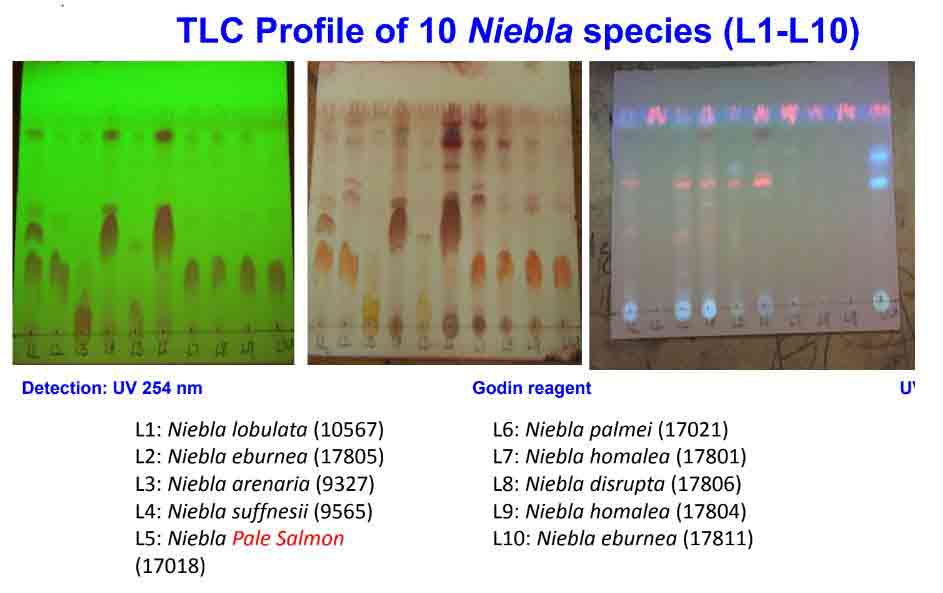
The type collection was reported to have divaricatic acid but later found to
actually have isodivaricatic acid as determined by a natural product chemist at
Ohio State University (Professor
Rakotondraibe)
employing NMR.
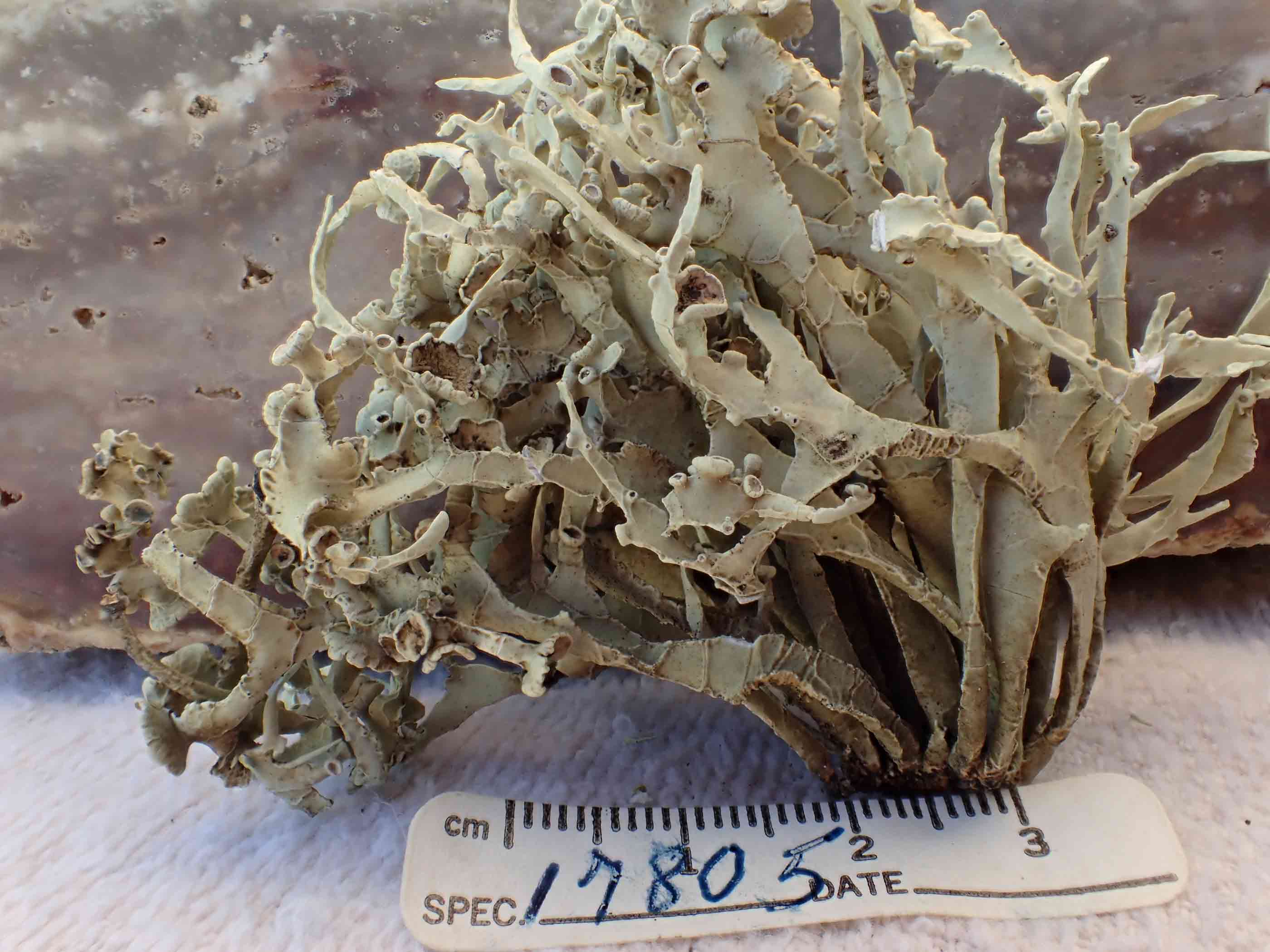
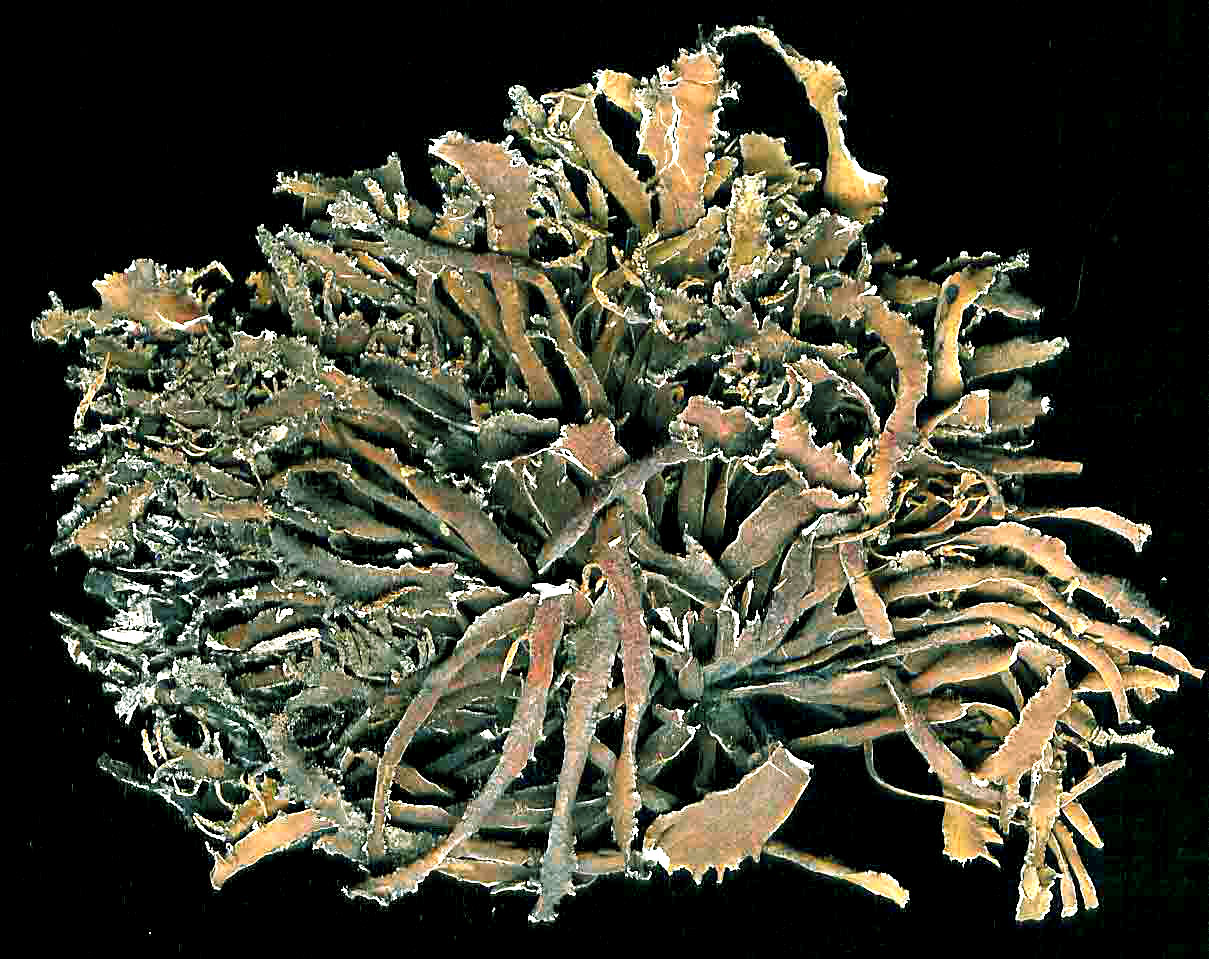
Niebla
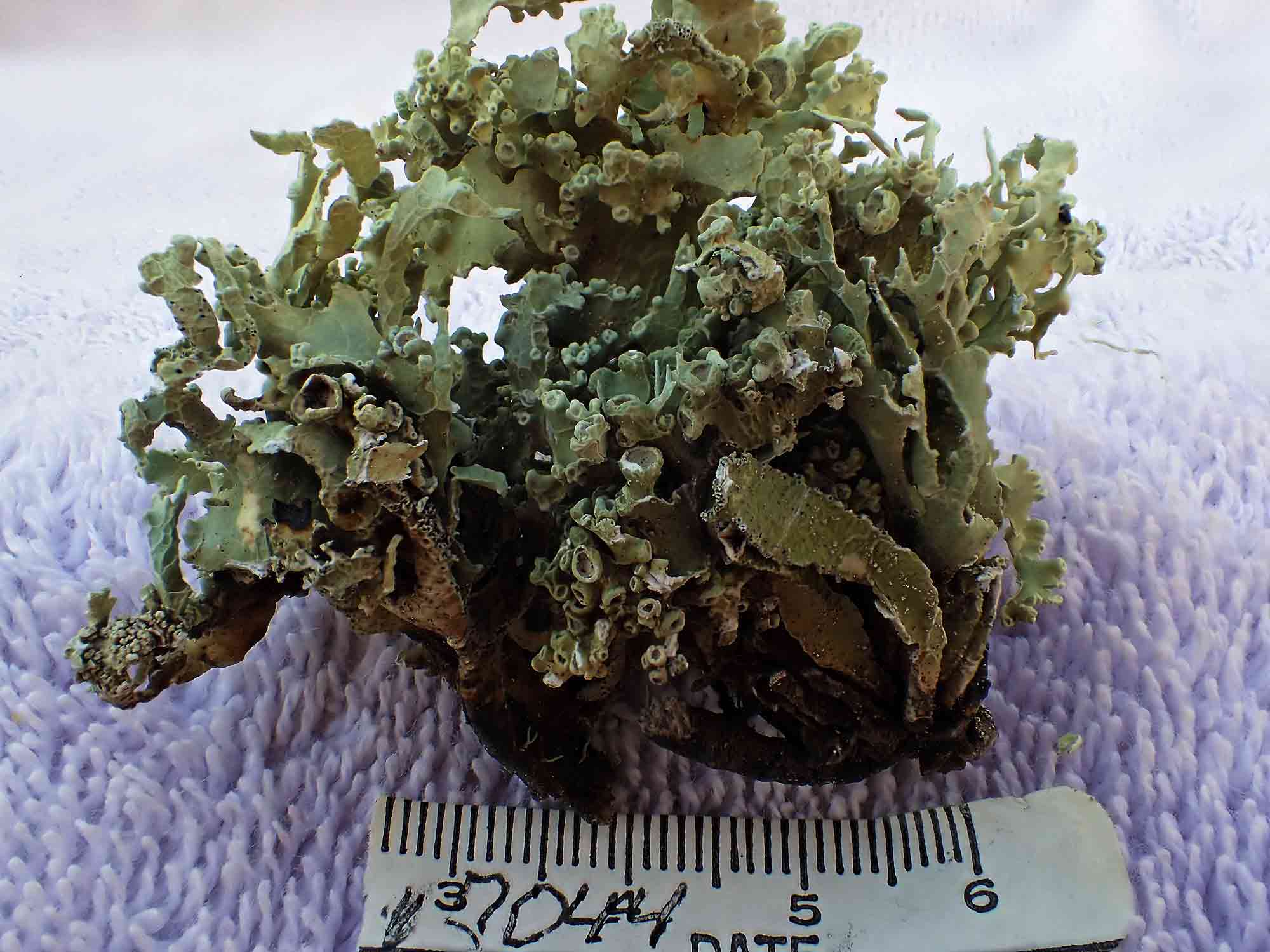
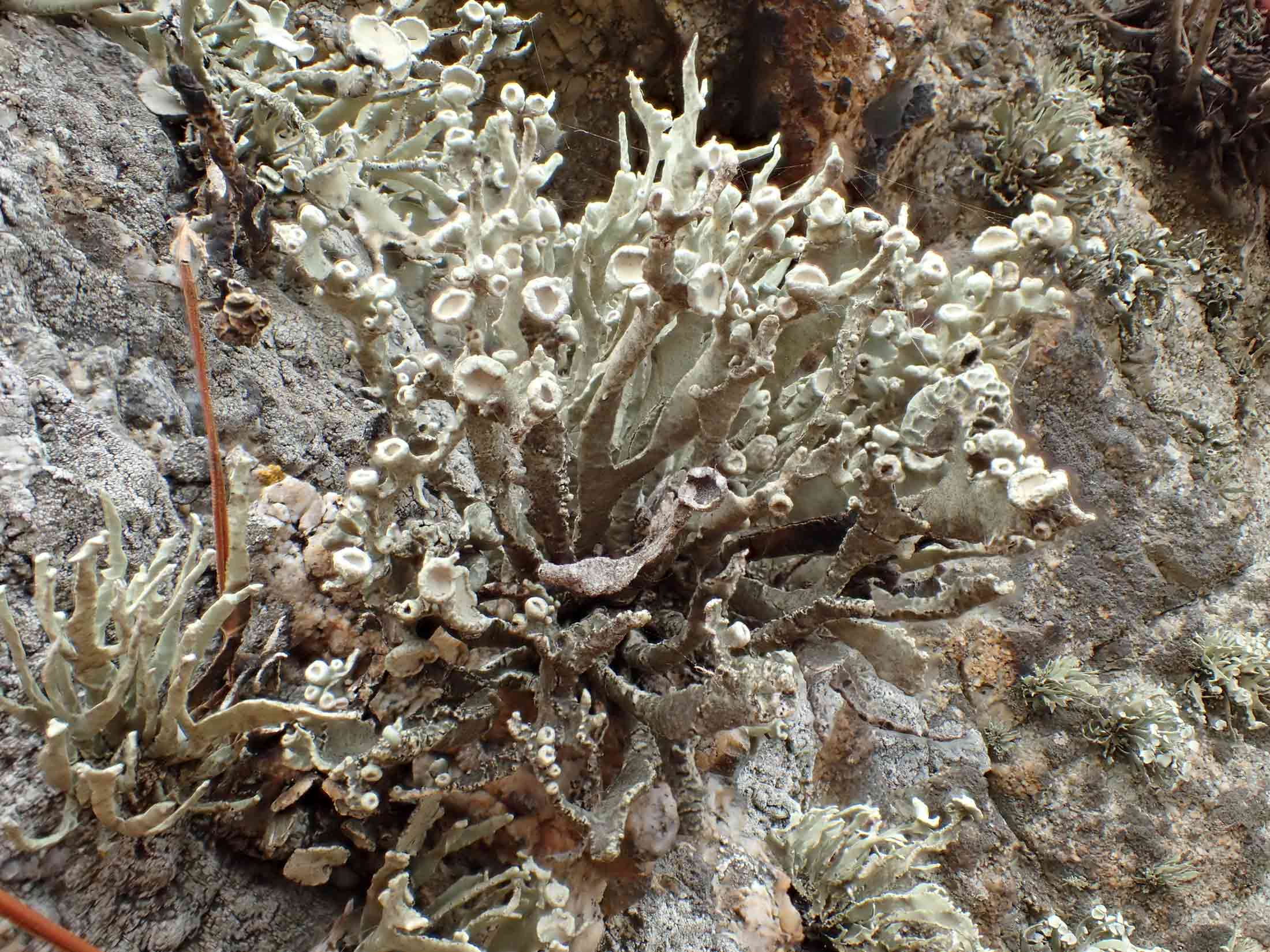
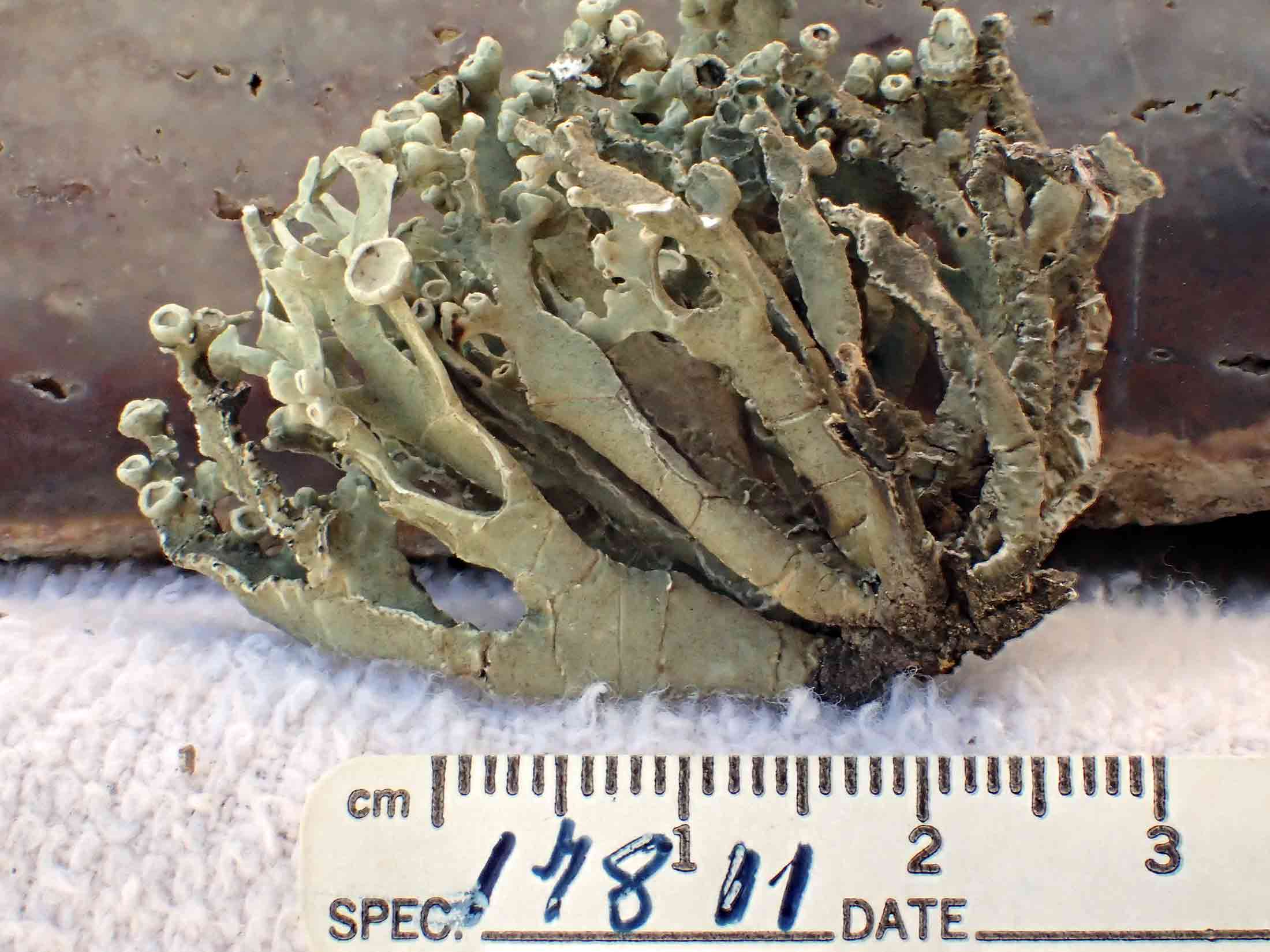
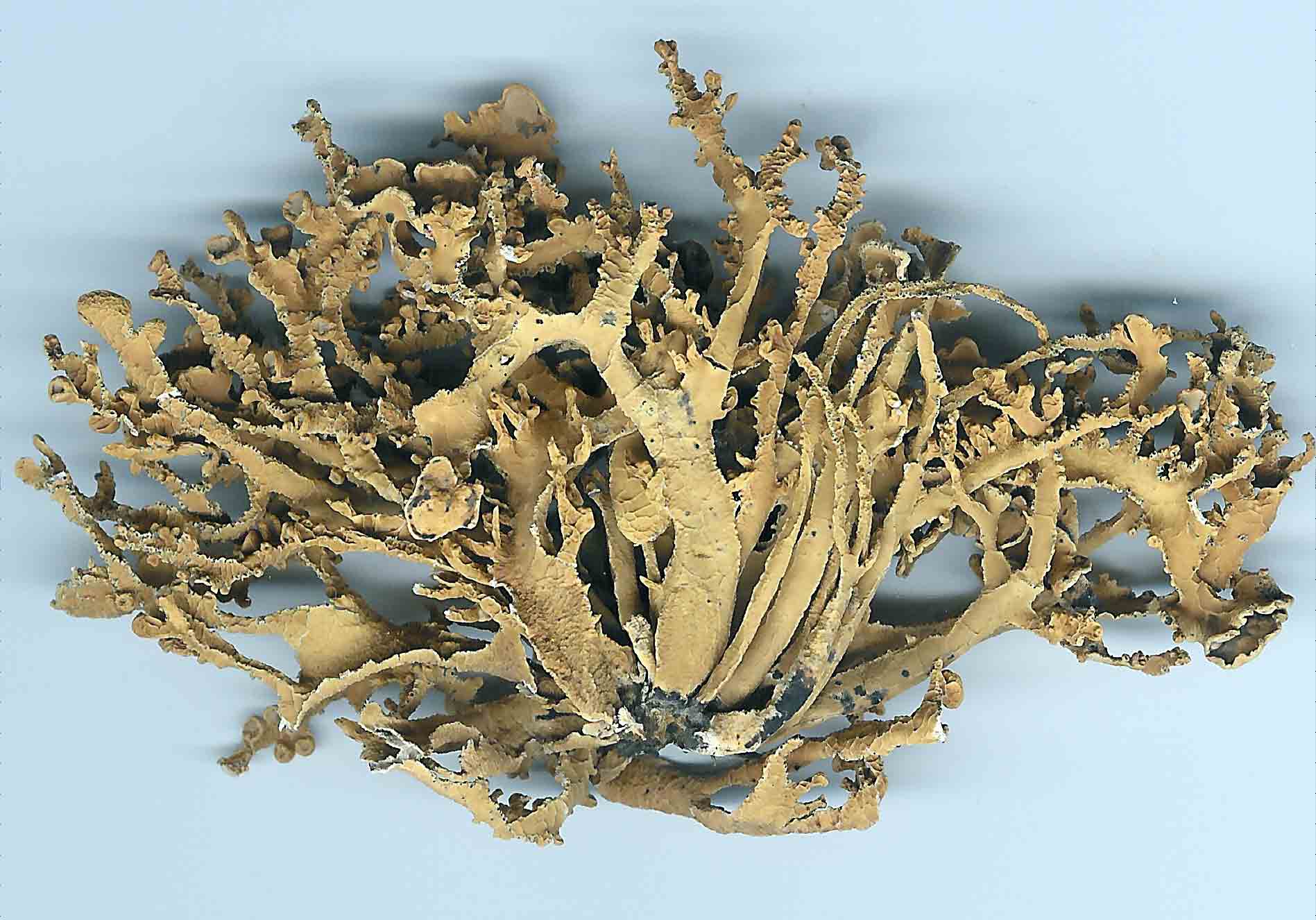
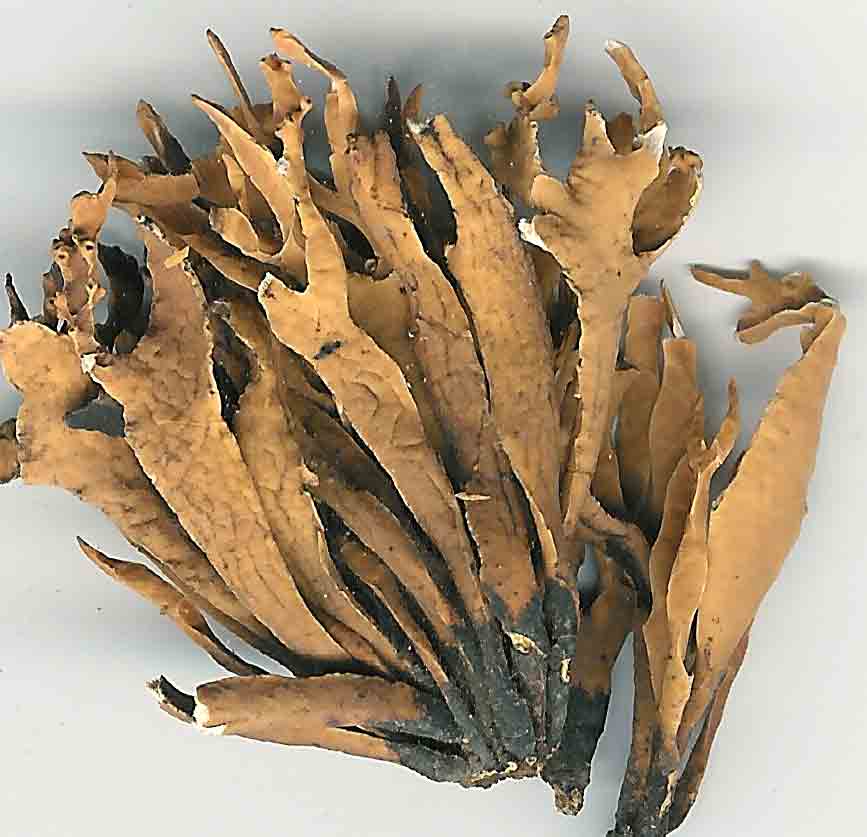
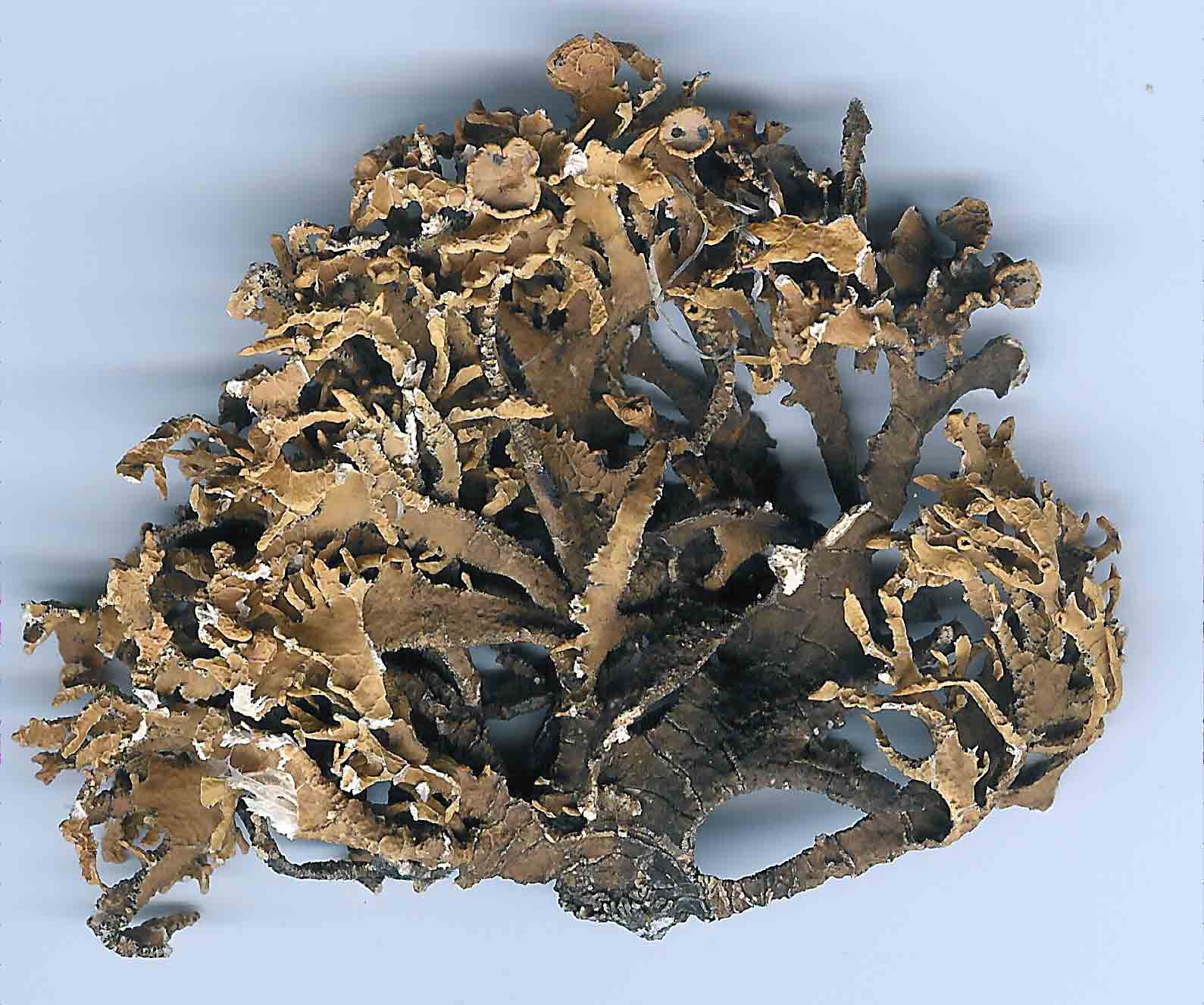
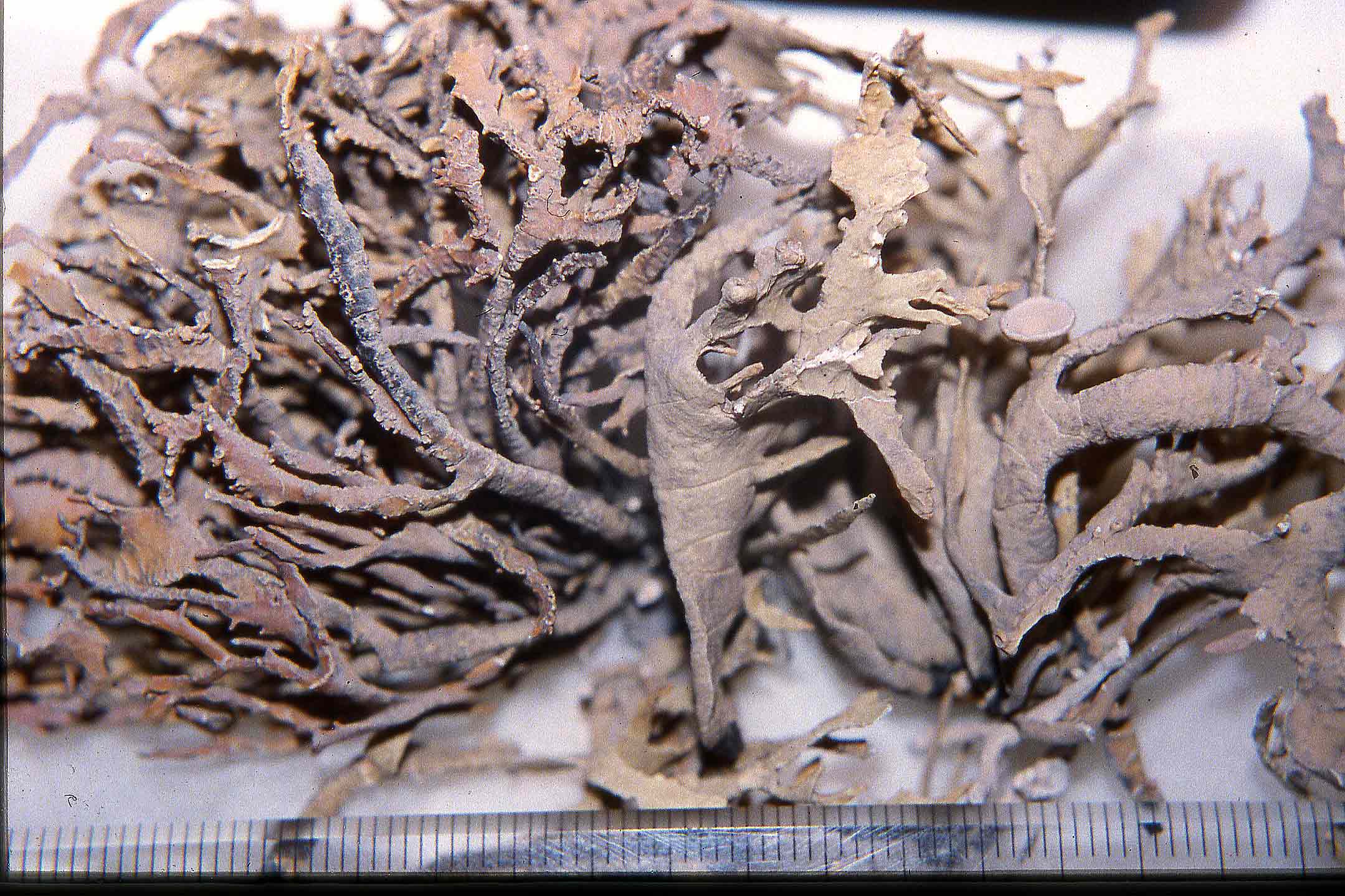
eburnea is identified by the ±
creamy (ivory)-glazed cortex (skin-like or like
frosting on a pastry), by its branches
half-twisted near apex and near base—in which the margins ± do not alternate (cross or unite), by
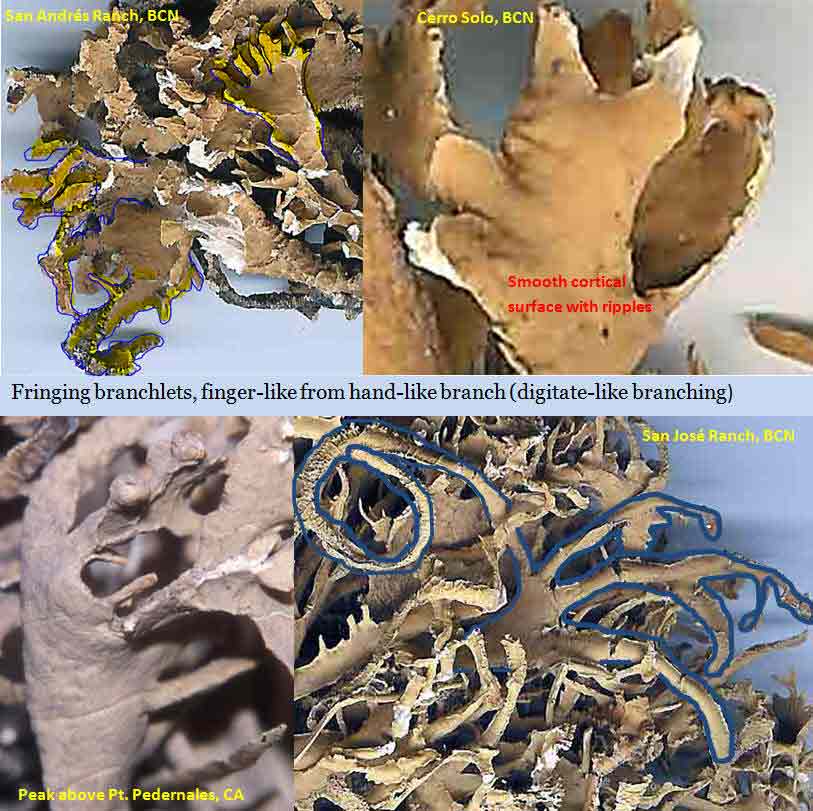
the terminal part of a main branch often digitately divided into finger-like or
claw-like branchlets (fringing branchlets), and by the key lichen substance, divaricatic
acid (with triterpenes and basal pigment skyrin), or isodivaricatic acid from the type collection
collected just west of Cerro Solo, Baja California in May 1985.
The type for
Niebla eburnea was collected near Colonet, BC. It resembles the type for
N. cornea (sekikaic acid) from Morro
Bay in having mostly simple, apical dilated branches uniformly
blackened around base (from pigment skyrin). The two species are distinguished by their chemistry.
Vermilacinia laevigata can be easily confused with these species.
It differs by the absence of chondroid strands, and by the terpenes zeorin
(triterpene) and
[-]-16 α-hydroxykaurane (diterpene); N. eburnea has
triterpenes nieblastictanes and nieblaflavicanes.
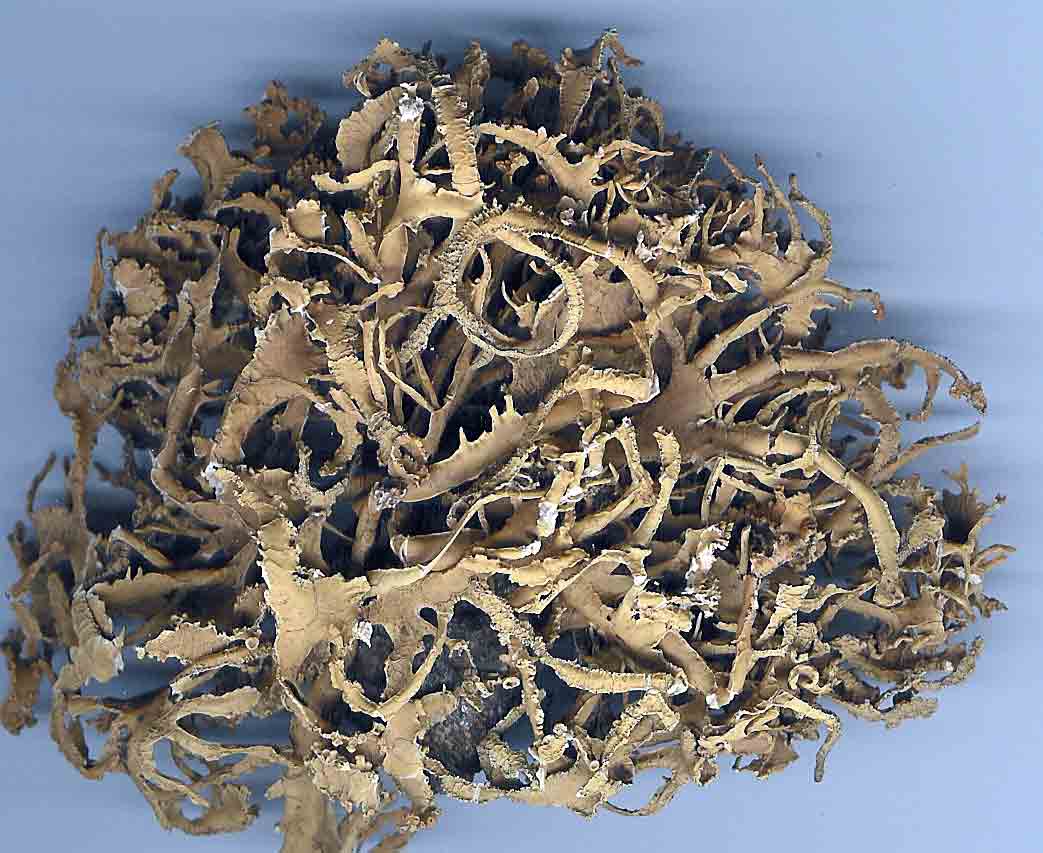
Occasionally N. eburnea is difficult to distinguish from
N. homalea (divaricatic acid) and
N. disrupta (sekikaic acid), which generally have narrower branches that twist
90° at frequent intervals between the base and apex, and which have a uniformly glossy cortex transversely
cracked at various intervals. Problem thalli have
±uniformly
narrow branches with a transversely cracked cortex (e.g., Bratt 5591 from Point
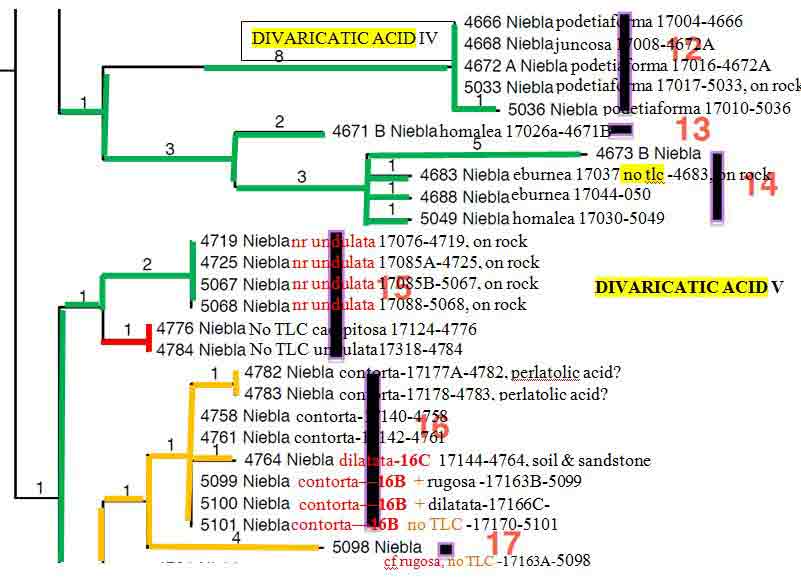
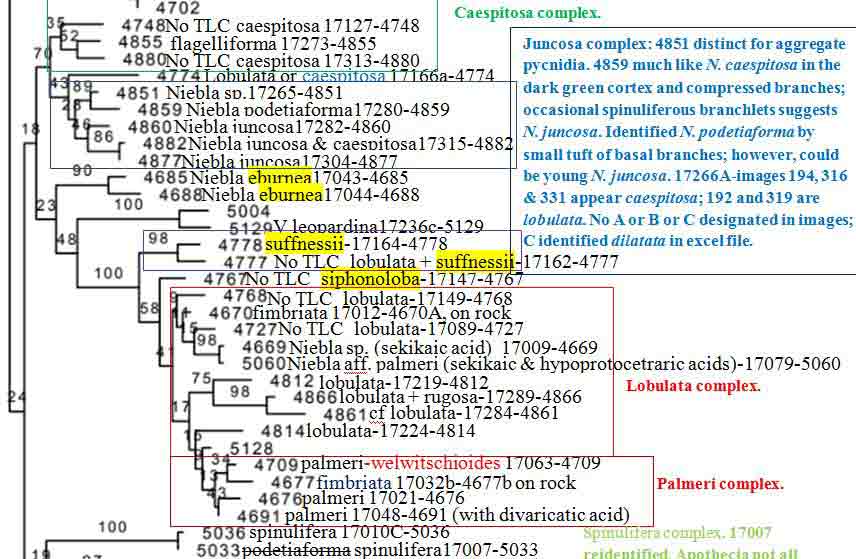
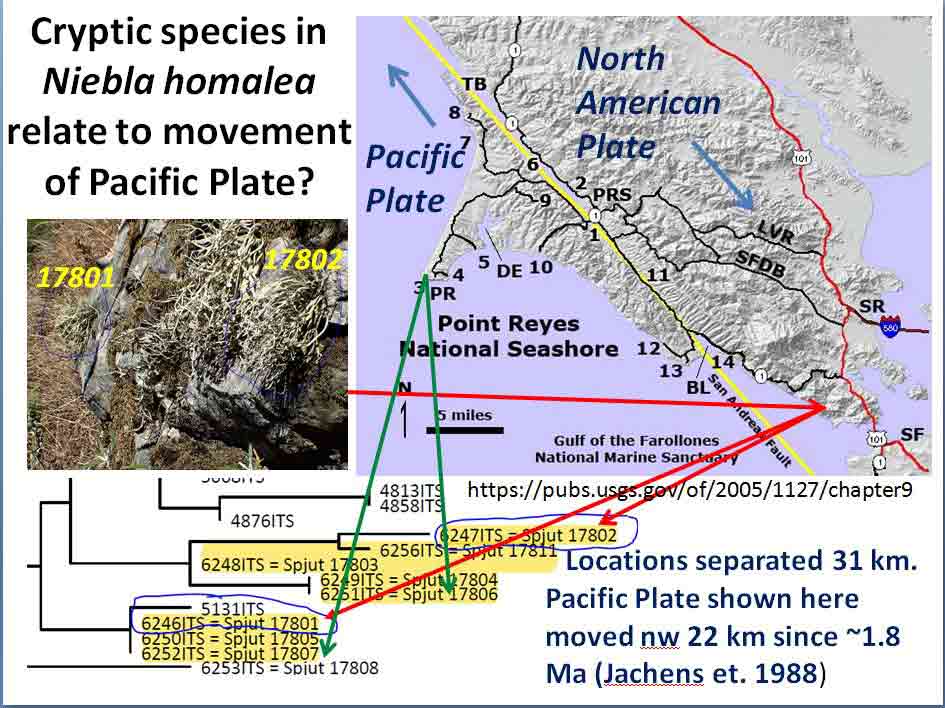
Pedernales, CA, photo 10.3, Spjut 1996). DNA phylogeny shows these in sister
clades with N. homalea cryptic species, and also N. testudinarai;
thus, phylogenetically unresolved based on phenotypic identifications.
The phylogeny for N.
eburnea in Spjut et al. (2020) included four specimens from three locations,
two in northern California (Monterey Peninsula , Pt. Reyes) and one in Baja
California near San Quintín for two specimens. Analyses by BPP and Stacey
both delimited three species that likely correspond to three clades. In the
phylogenetic tree (Fig. 7), the species in Baja California is monophyletic. In
California, the species is not separated from N. homalea in which
both occur together in two separate clades. Thus, in northern California both
N. homalea and N. eburnea comprise cryptic species, while N.
eburnea may also be viewed as a cryptic hybrid (or allasomorph),
phenotypically different but genetically undifferentiated from N. homalea.
As noted above, the type collection reportedly contains only isodivaricatic acid
(Professor Rakotondraibe, pers. comm.), in
contrast to divaricatic acid confirmed for specimens collected of N. homalea
at the putative type locality at Pt. Reyes (Zhang et al. 2020). Whether
cryptic species relate to differences in isomers remains to be determined while
it may be further noted that they can have different physical properties; for
example, isodivaricatic acid has shown activity against a cancer cell line, but
not divaricatic acid, although reported in literature to have antifungal and
antibacterial activities.
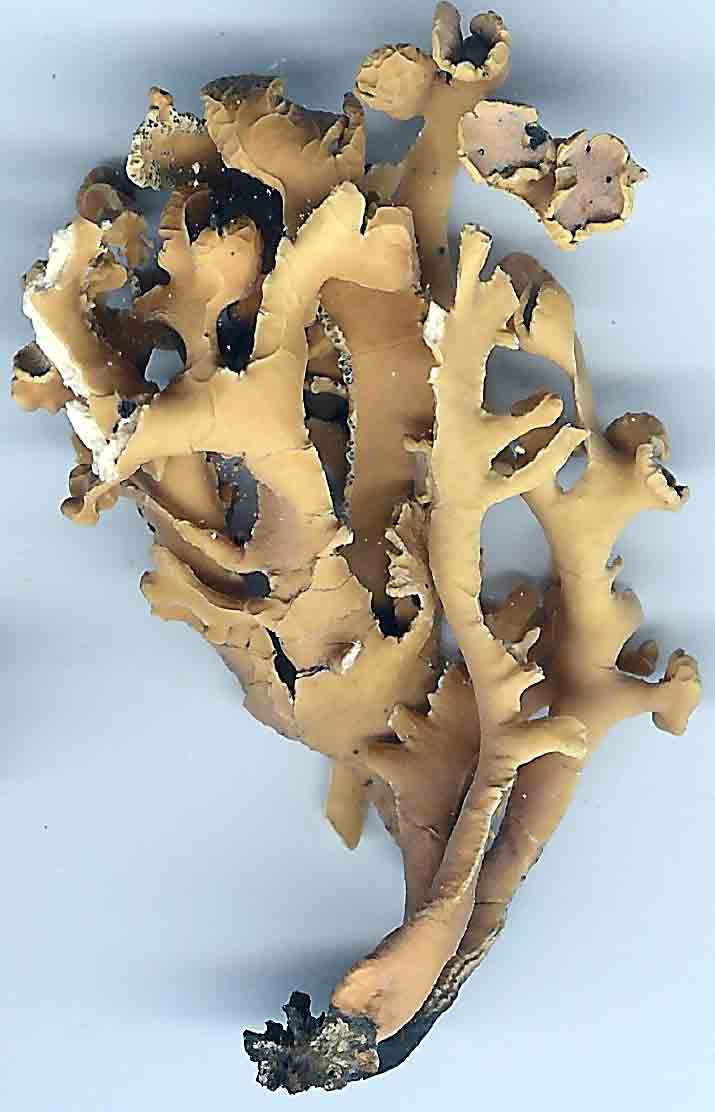
The related
N.
testudinaria differs by the regular appearance of reticulate cortical ridges
resulting in the branches appearing more prismatic than sub-tubular; it
occurs from California to Baja California Norte, especially in the Channel
Islands, and is also on Isla Guadalupe and on Isla San Martín. Niebla
testudinaria was found in a separate clade from N. eburnea, but not from
N. homalea
(Spjut et al. Fig. 7). Their
differences are summarized in the following table, the bold type indicating the
diagnostic features.
|
|
N. homalea |
N. eburnea |
N. testudinaria |
|
|
|
|
|
|
Branching general |
Anisotomic. |
Anisotomic. |
Isotomic. |
|
Terminal bifurcate
branches |
Usually not evident. |
Usually not evident. |
Frequent. |
|
Branch shape lengthwise |
Sublinear. |
Variable. |
Variable. |
|
Branch shape cross-section |
Elliptic. |
Elliptic. |
Elliptic, prismatic, or
±4-angled. |
|
Branches twist |
Frequent between base and apex. |
Half twist near base and apex. |
Frequent between base and apex. |
|
Branch margin |
Usually well-defined, acute. |
Rounded to acute, usually thickened, wrinkled in upper half
of thallus. |
Variable. |
|
Cortex |
Glassy, transversely cracked at various intervals. |
Creamy frosting or like a glazed donut, irregularly
transversely cracked or pleated. |
Dull, transversely cracked and reticulate ribbed
between margins. |
|
Apothecia |
Subterminal on short branch-like segments, often perpendicular to
branch margin. |
Usually subterminal, often in plane with the branch. |
Usually absent, subterminal in type, elevated from main
branch by a short flattened lobe. |
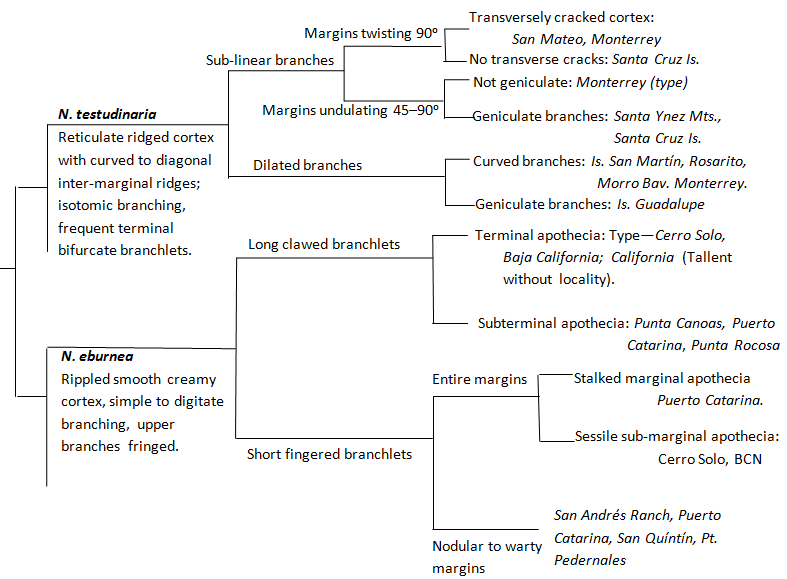
Niebla eburnea includes variation that might be recognized as
distinct varieties but here considered 'variants'
as outlined below with reference to geographic locations from where
specimens were collected.
|