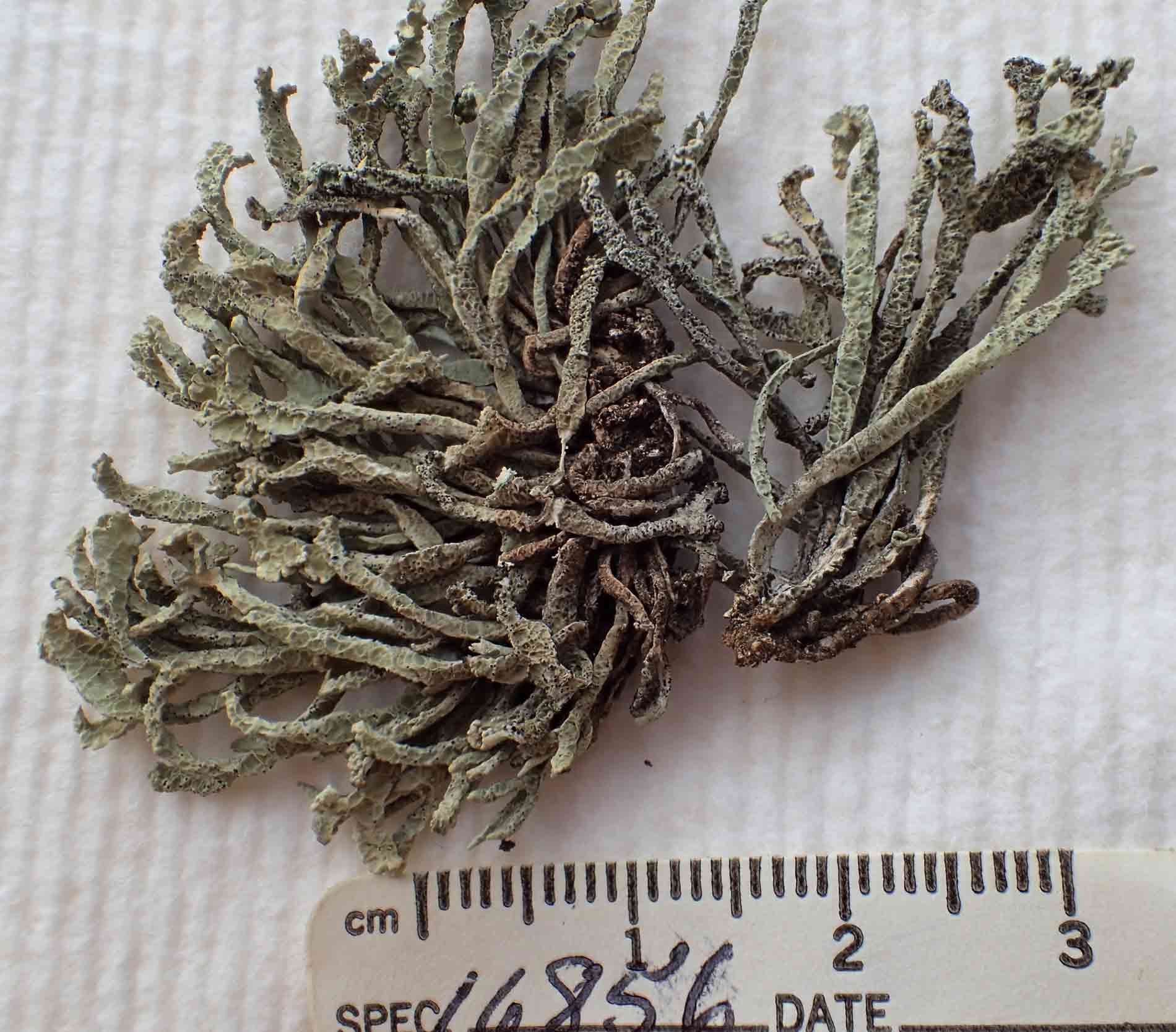
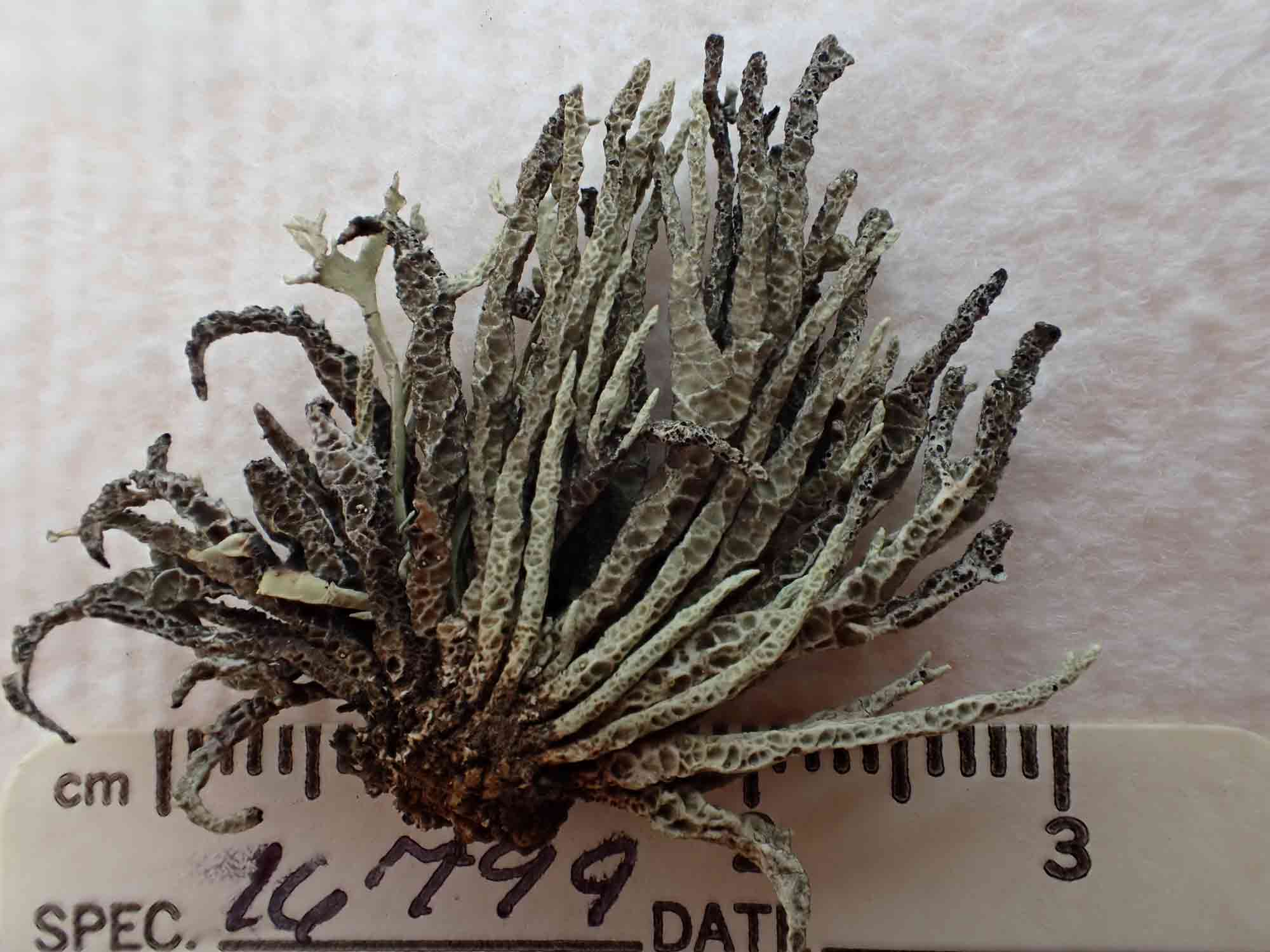
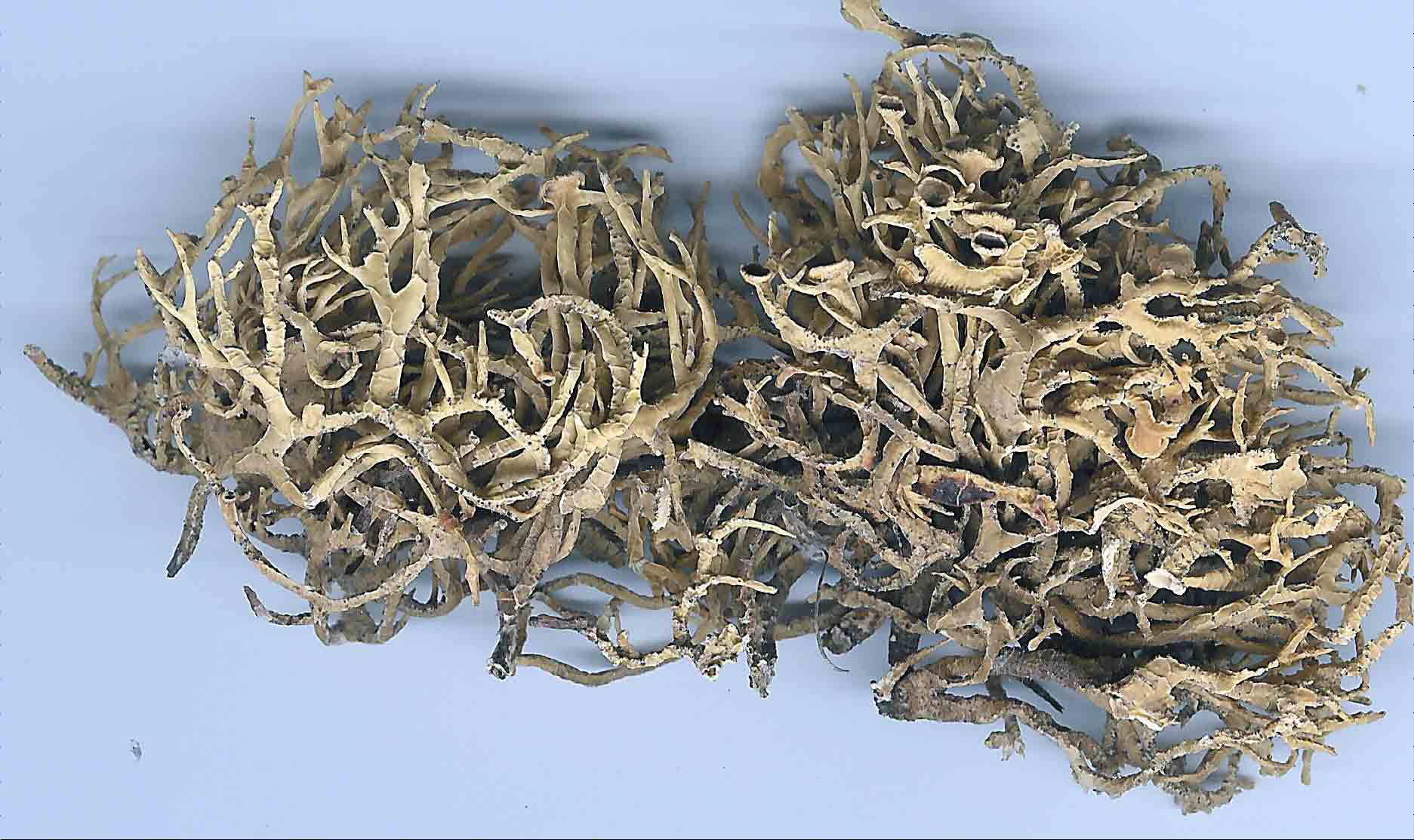
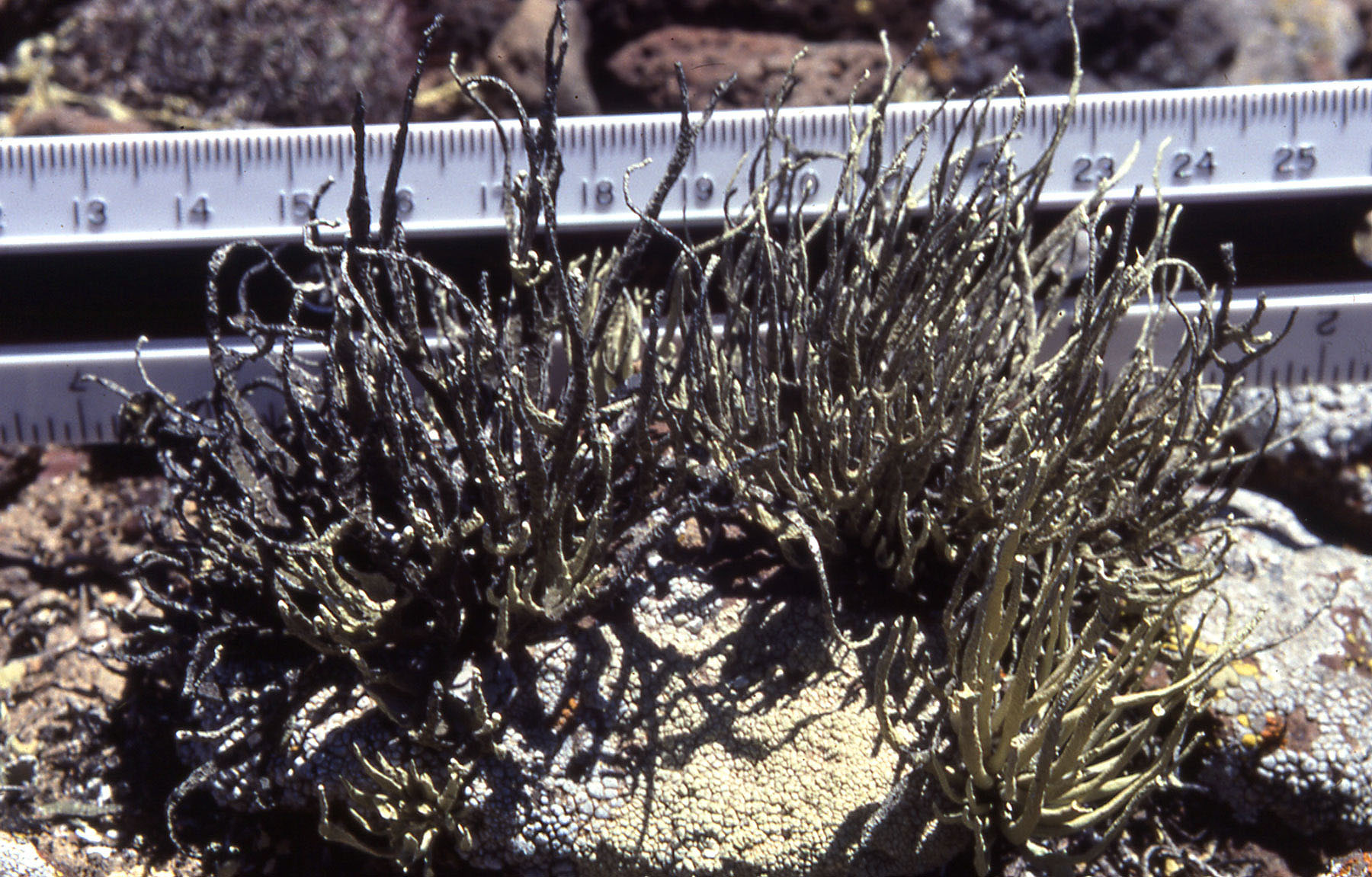
Niebla
flagelliforma
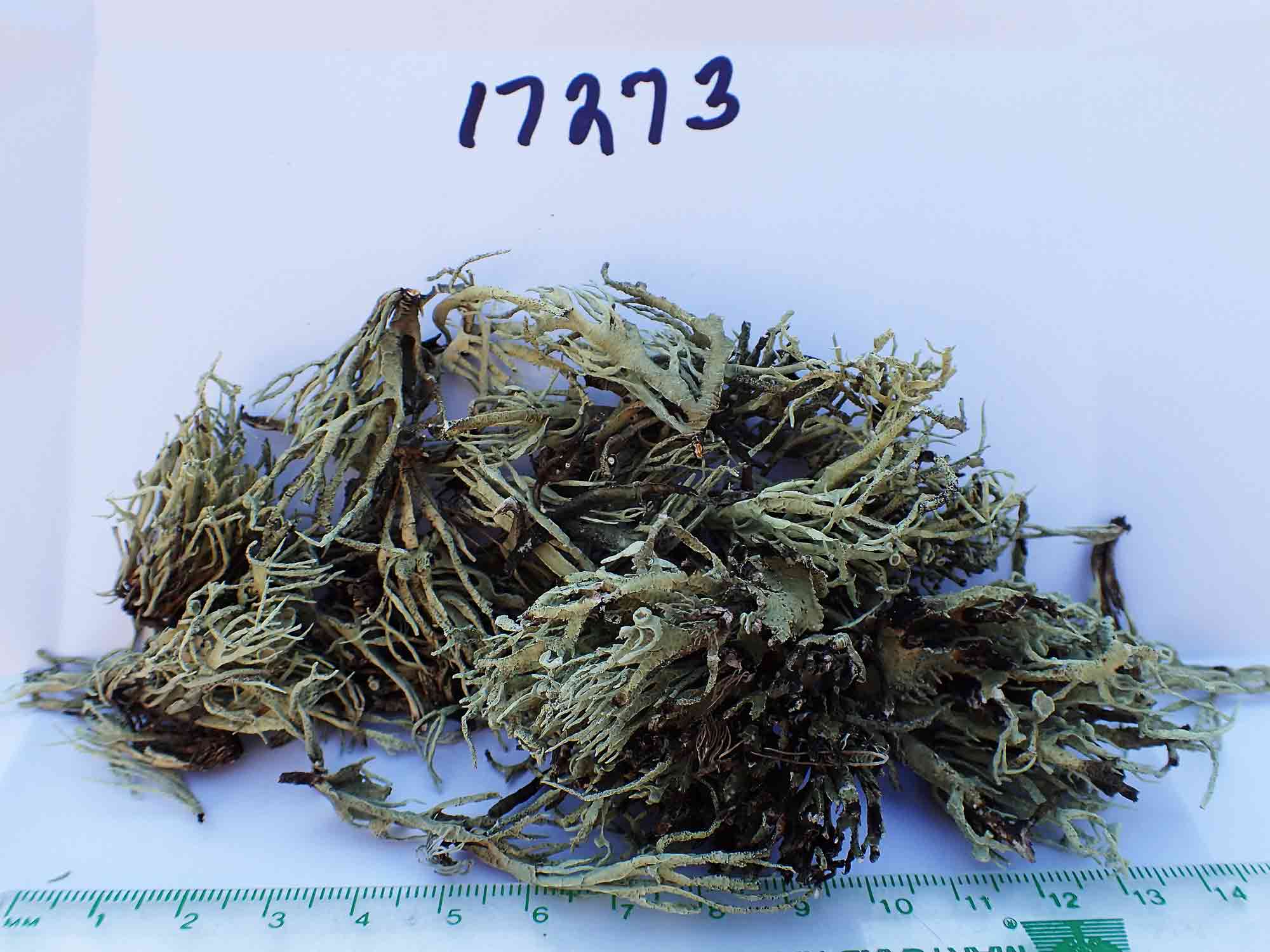
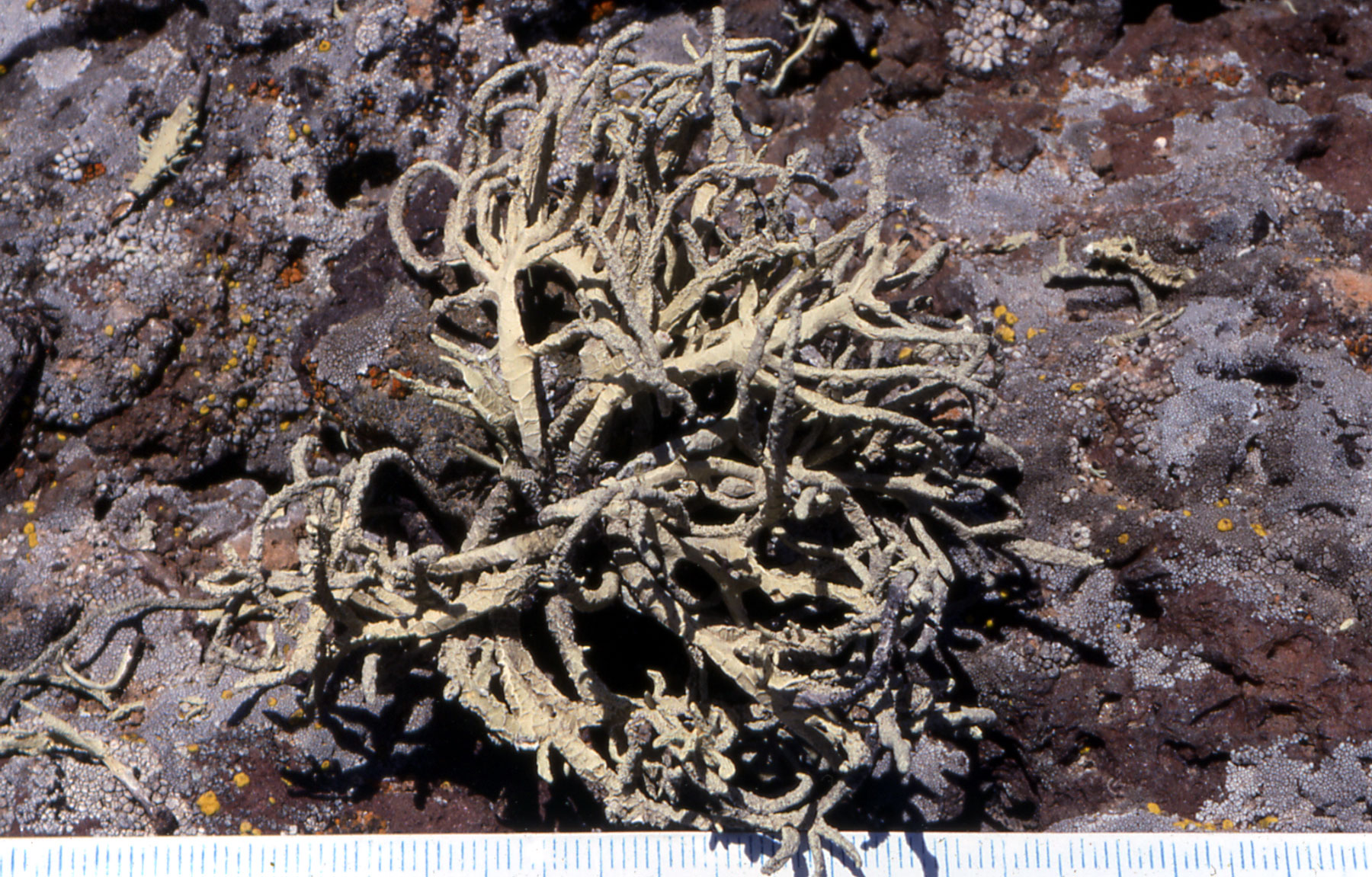
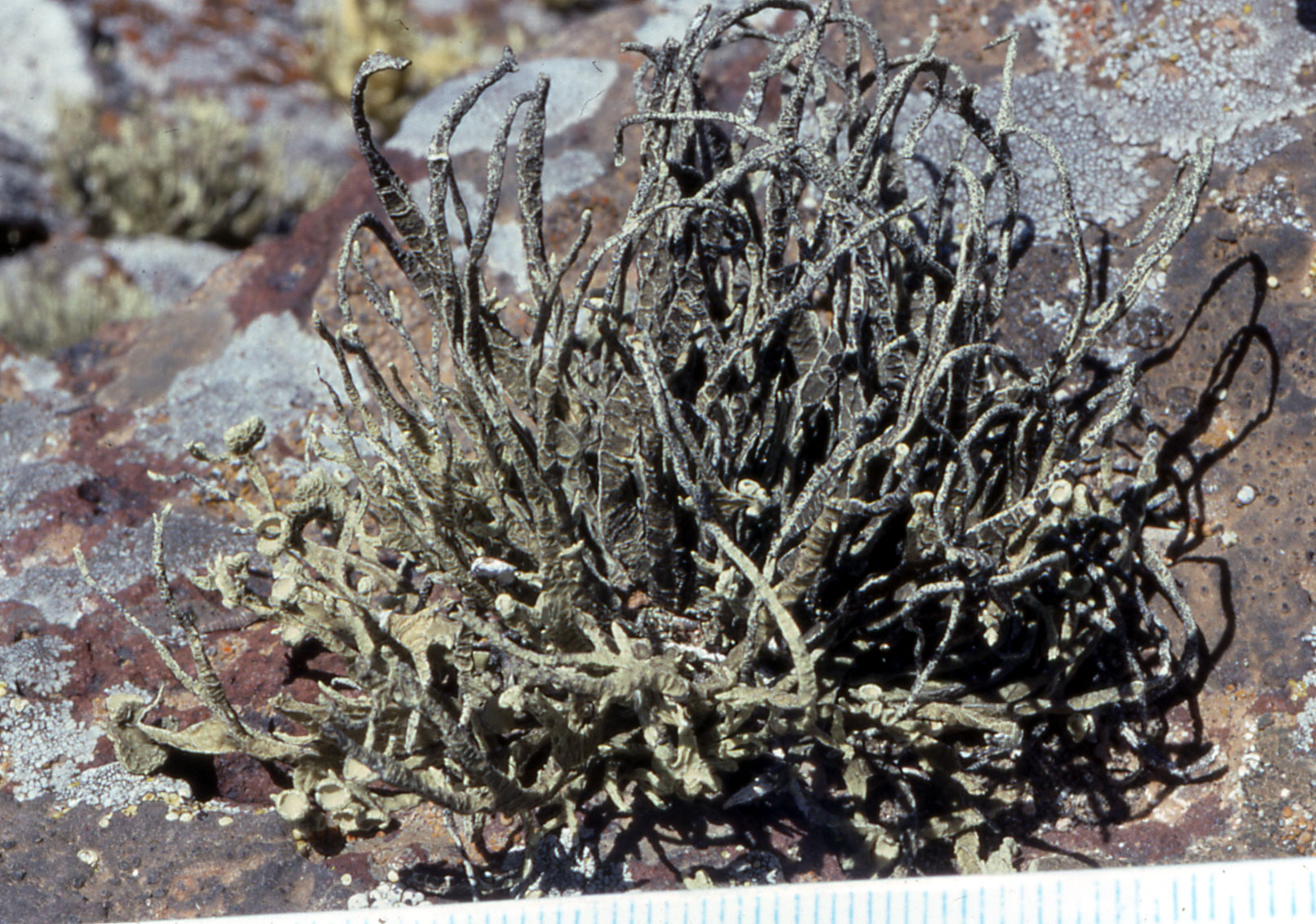
is a fruticose lichen that occurs frequently on wind-sheltered rocks in the
Northern Vizcaíno Desert of Baja California, mostly between Guerrero Negro and
San Quintín, but possibly further north based on one specimen collected by
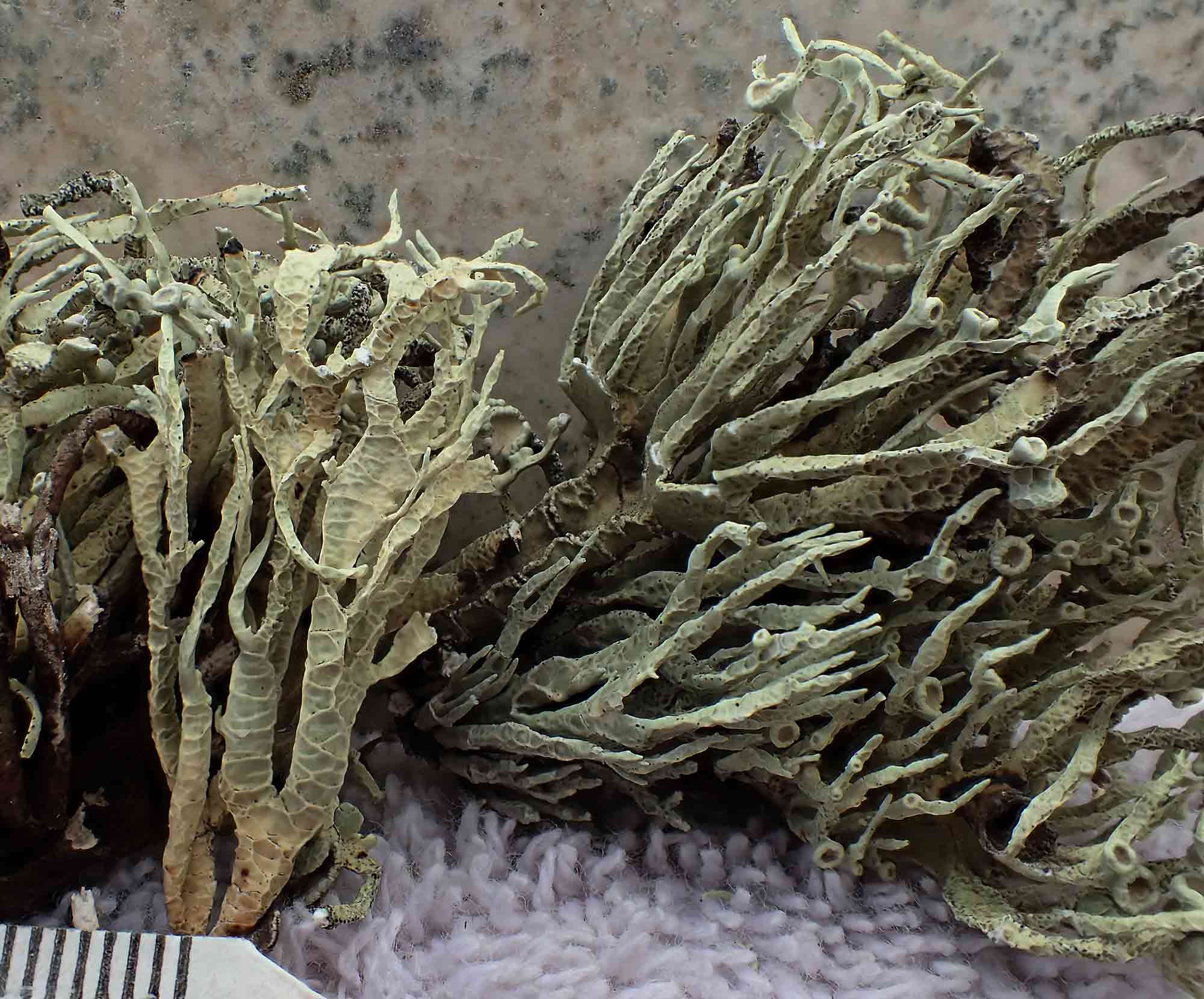
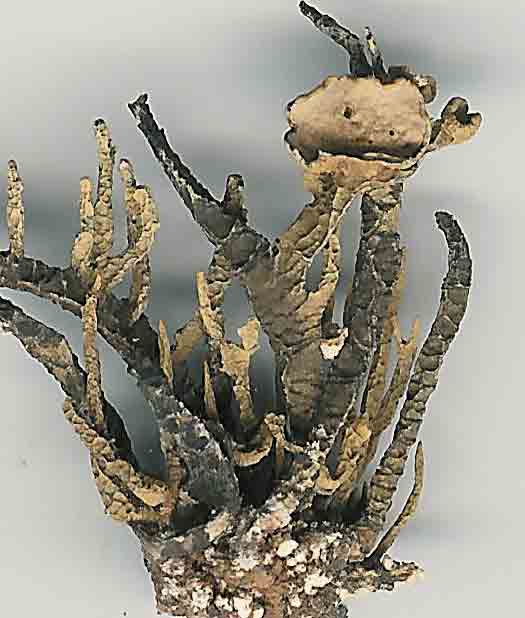
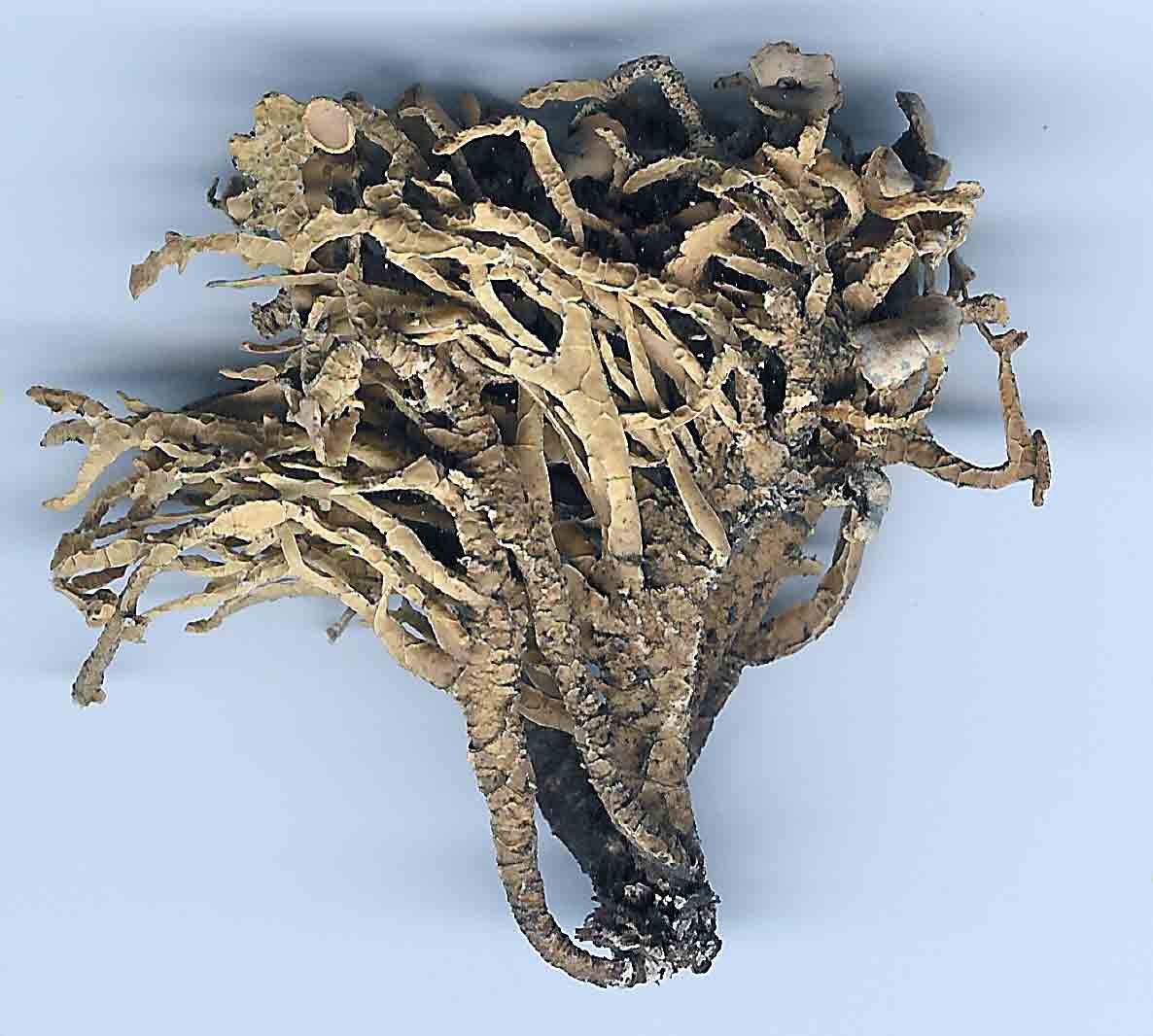
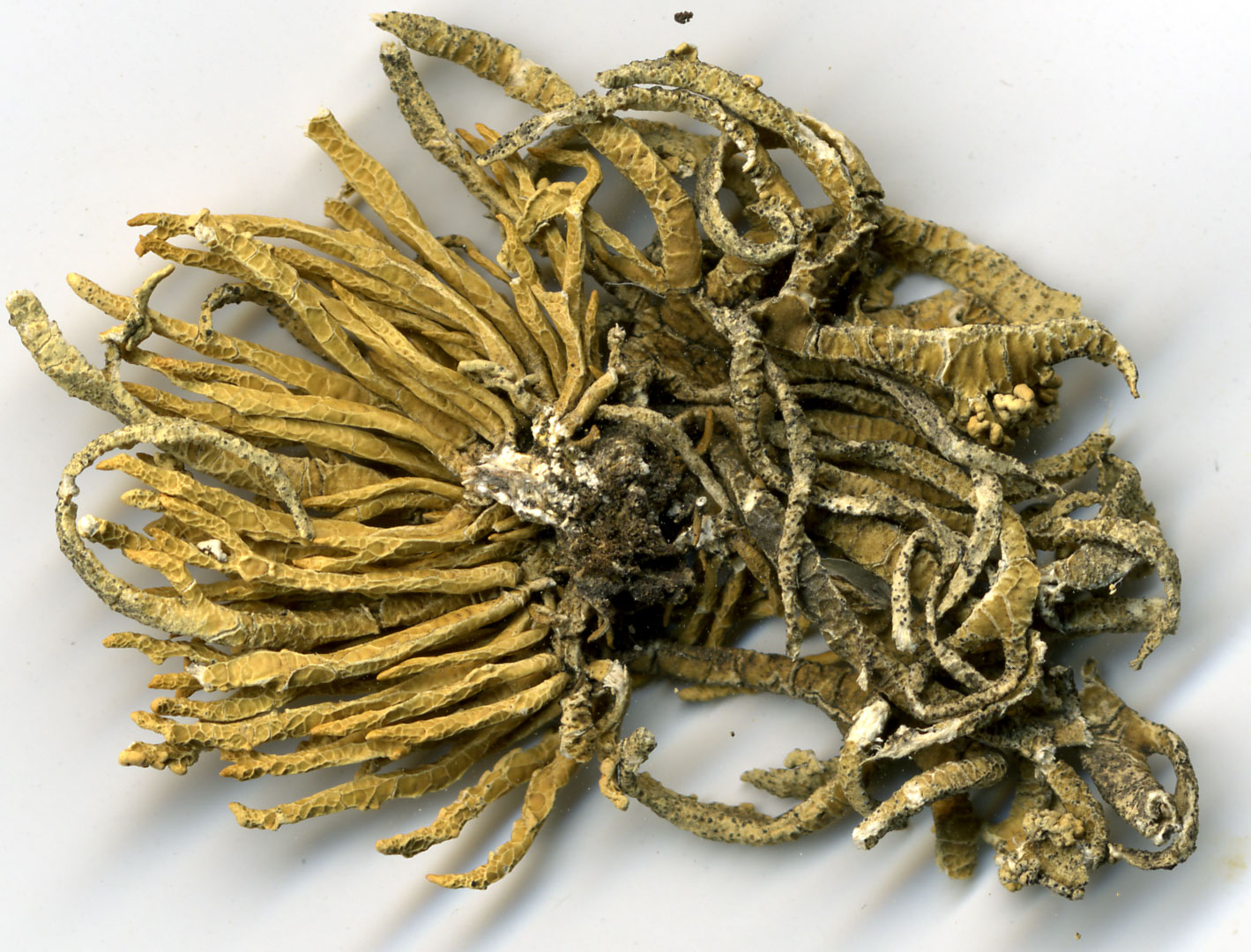
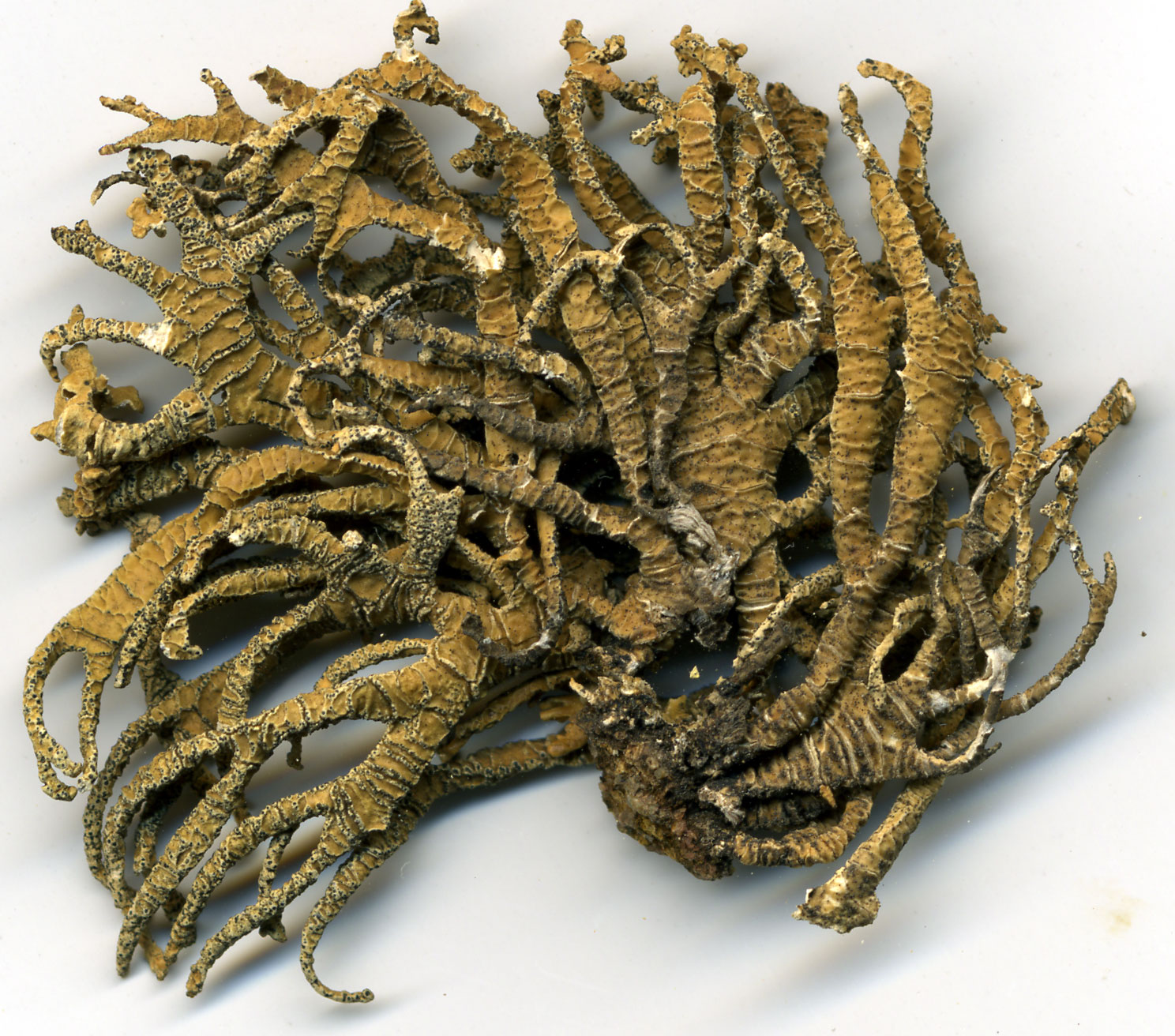
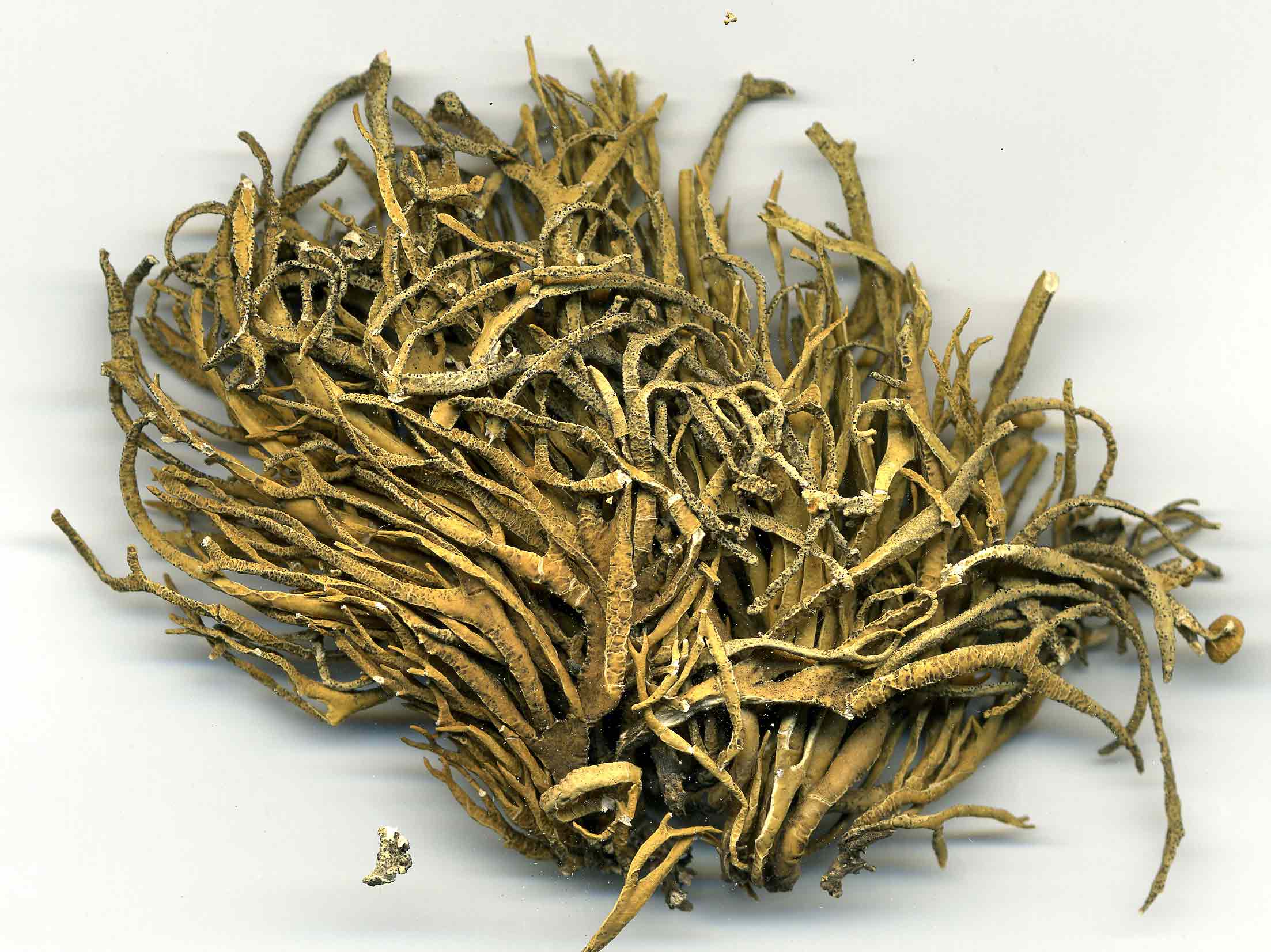
Palmer from “near San Diego.” It is recognized by having divaricatic acid
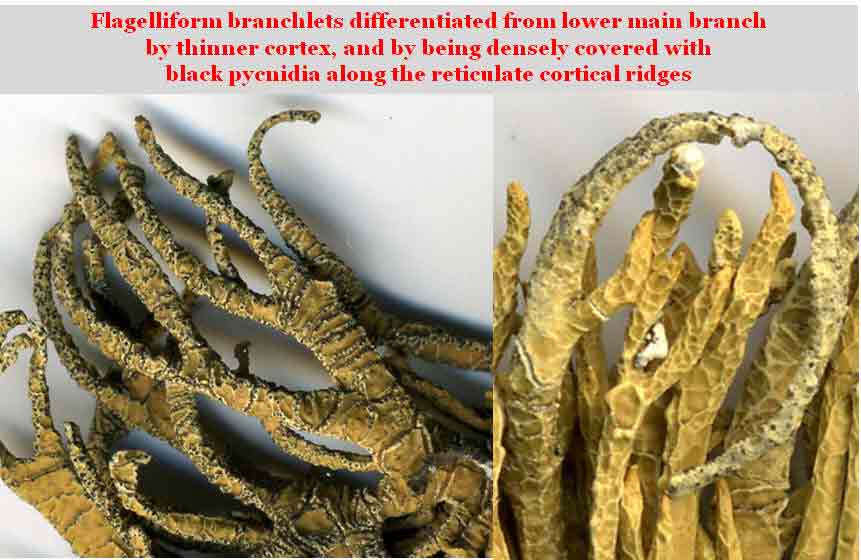
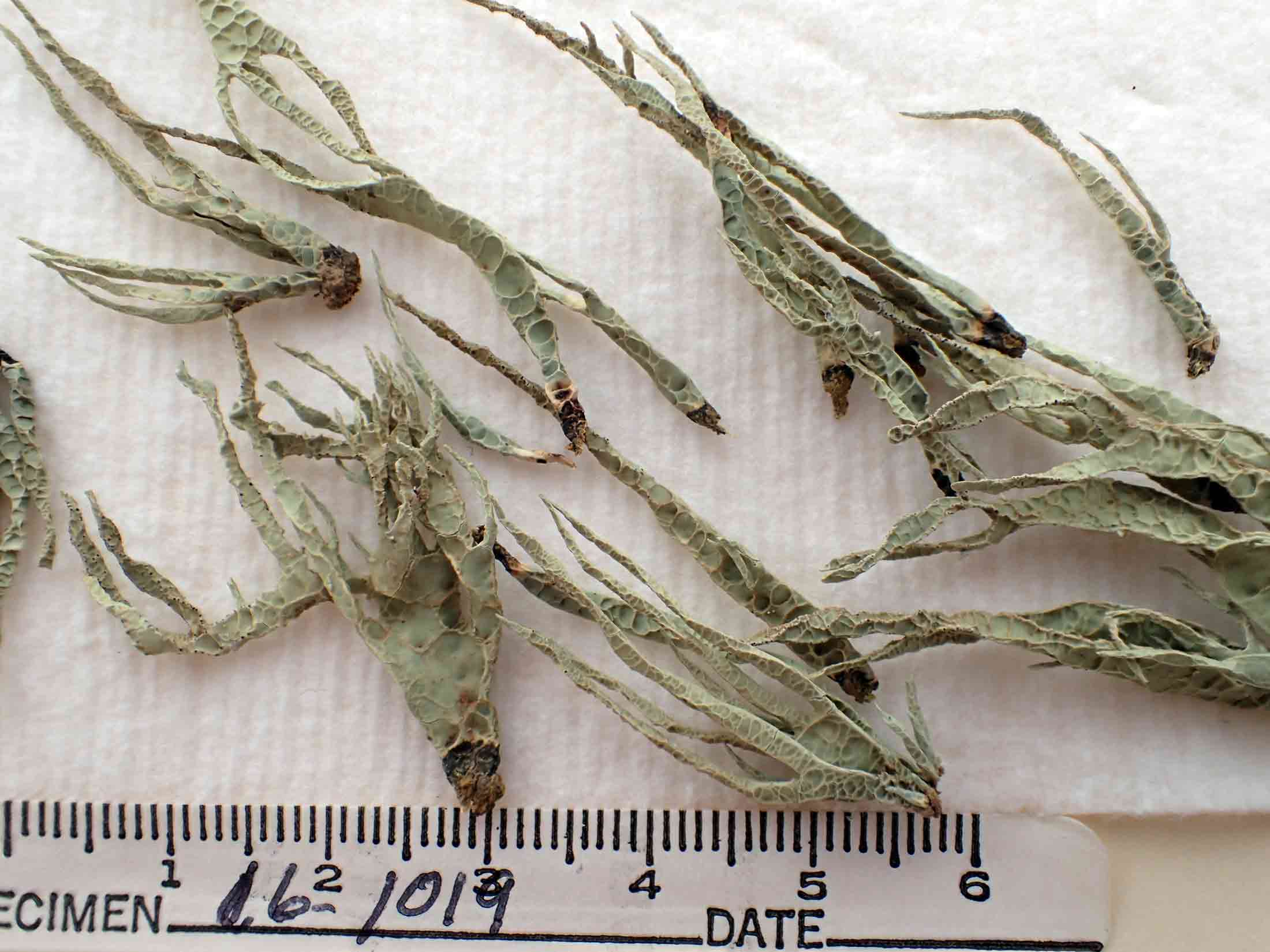
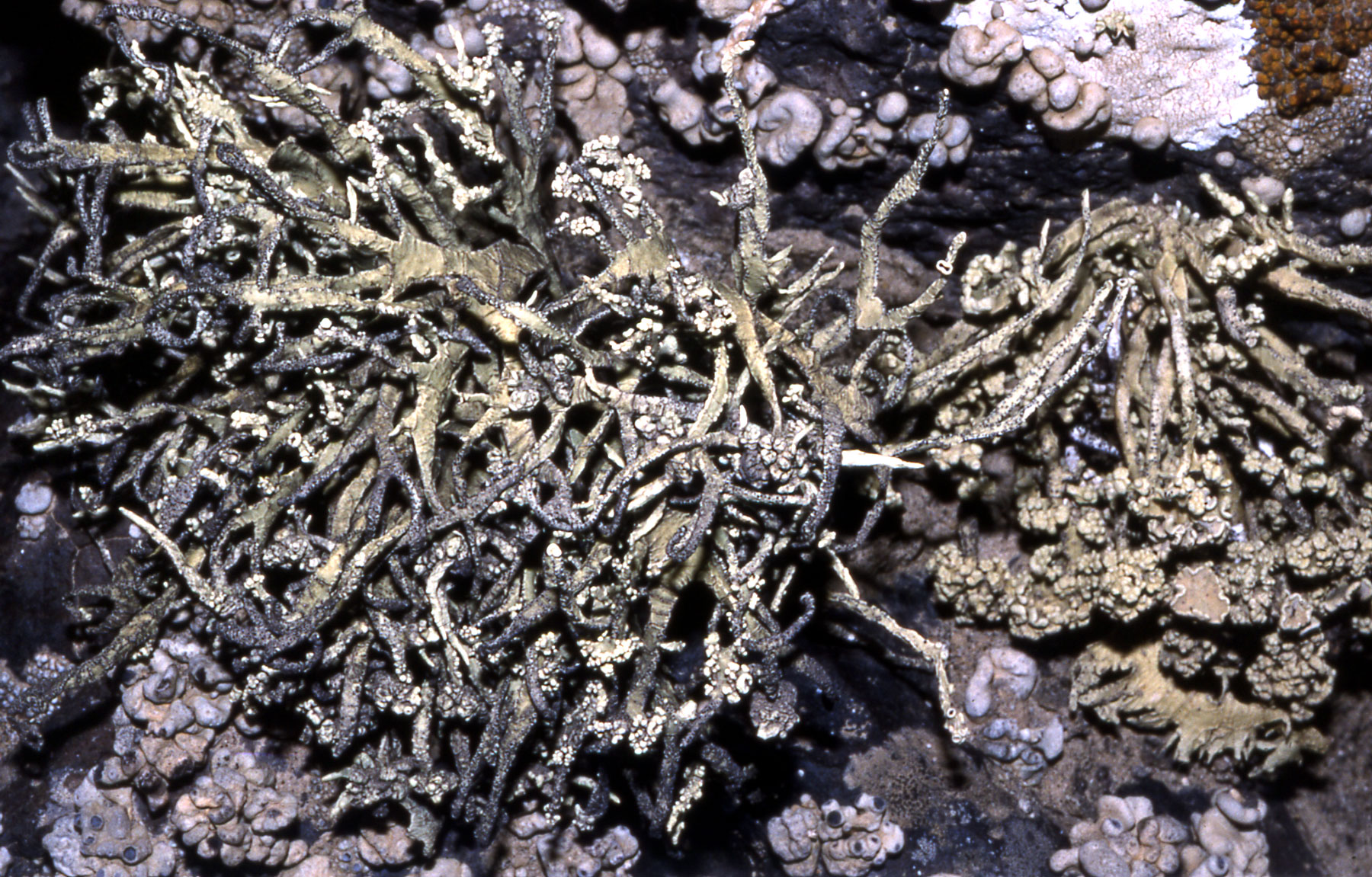
(with triterpenes), and a closely reticulate cortex on terminal flagelliform branchlets
that are usually
densely covered with pycnidia.
The flagelliform branchlet appears to be a specialized type of
reproductive branch in producing abundant black pycnidia on its cortical
ridges in contrast to fewer pycnidia developing on the lower part of the
branch, thus, the flagelliform branchlet probably breaks off easily from
below—where the main branch widens—which is also where the cortex
increases in thickness. Thalli with fewer flagelliform branchlets
generally have fully developed apothecia. Branchlets that produce
apothecia usually change direction of growth at the juncture of
apothecia, often nearly at right angles.
Branchlets in some thalli have apothecia that apparently abort
development, appearing mostly aggregate near tips of flagelliform branchlets.
Thalli of N.
flagelliforma are frequently blackened, appearing as if burnt. The
black areas are associated with an epiphytic cyanobacteria species of Nostoc.
This has also been observed in N. caespitosa
and N. podetiaforma.
Niebla flagelliforma is most likely to be confused with
N. caespitosa
where they occur together as near Punta Santa Rosalillita. Both species have
primary branches that widen above base, but taxonomic emphasis is then placed
more on the regular narrow shape of terminal branchlets for identifying N.
flagelliforma.
Other species that resemble Niebla flagelliforma are
N. marinii and
N. flabellata. They have
salazinic acid and pycnidia at the tips of branchlets as well as on lower
cortical ridges. A distinct morph of
N. testudinaria, collected by Charis Bratt from the Santa Ynez Mts. and
Santa Cruz Is., is similar to N. flagelliforma in the narrow branches
with close reticulating cortical ridges, but the branchlets also differ in that
they are generally geniculate (bend abruptly), not densely covered with
pycnidia, and are shortly bifurcate near apex.
Niebla flagelliforma was especially
common on rocks of steep slopes east of BCN Hwy. 1 near junction with road to El Tomatal; Spjut & Marin 9058
represents a voucher for a 100 g sample collected for antitumor screening from
this area.
Two other species with flagelliform branches are noteworthy, N. usneoides
(sekikaic acid) and N. isidiaescens (divaricatic acid). Instead of
pycnidia, they produce isidia on flagelliform branchlets.
Niebla flagelliforma phenotypically intergrades with N.
homalea and N. juncosa in the Chaparral Desert Transition
just north of El Rosario and northern Isla Cedros.
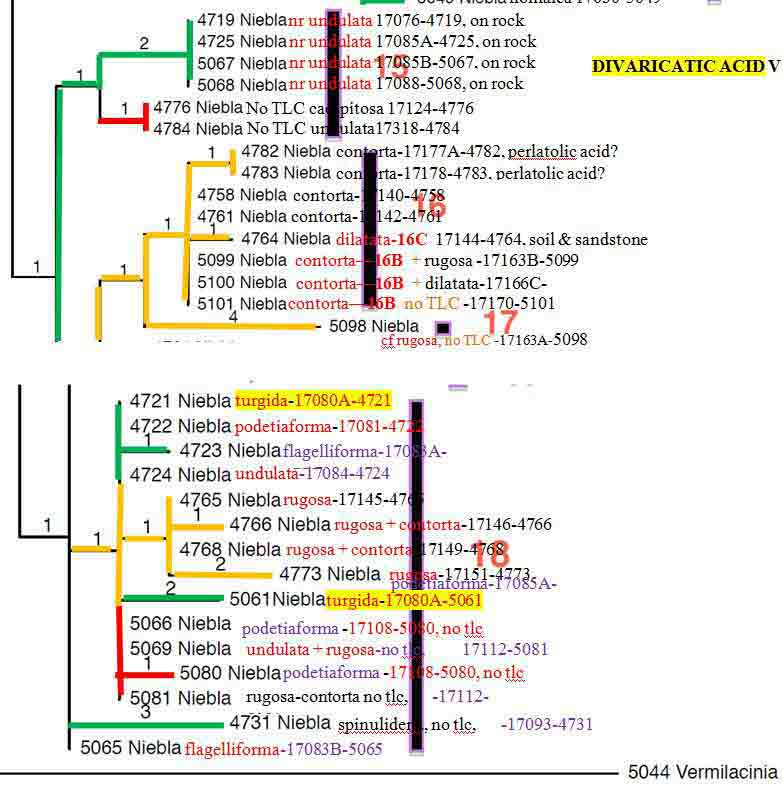
The phylogeny of Niebla flagelliforma is not only unresolved but
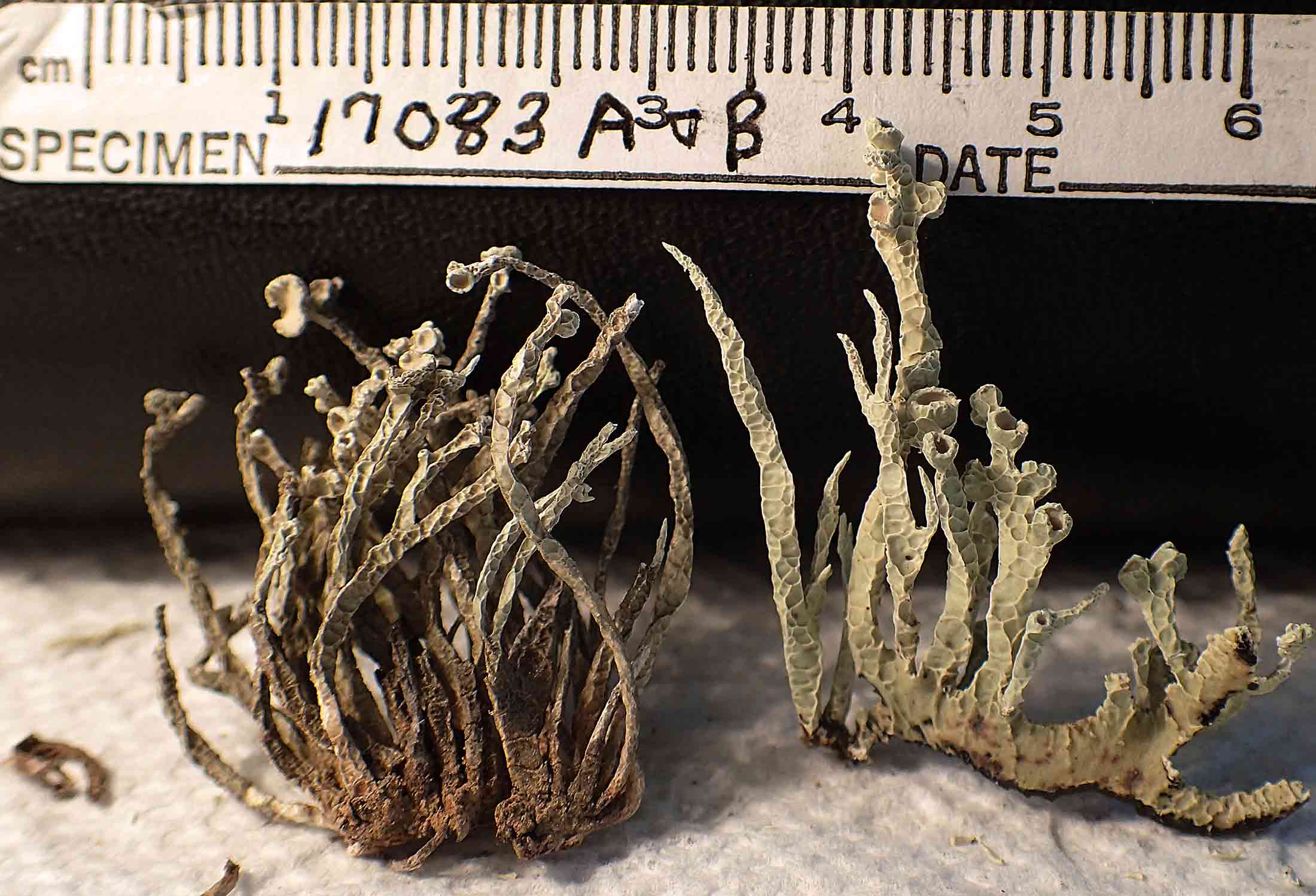
puzzling. 17083 collected along the road to Punta Baja from El
Rosario was separated into A, having erect branches arising from
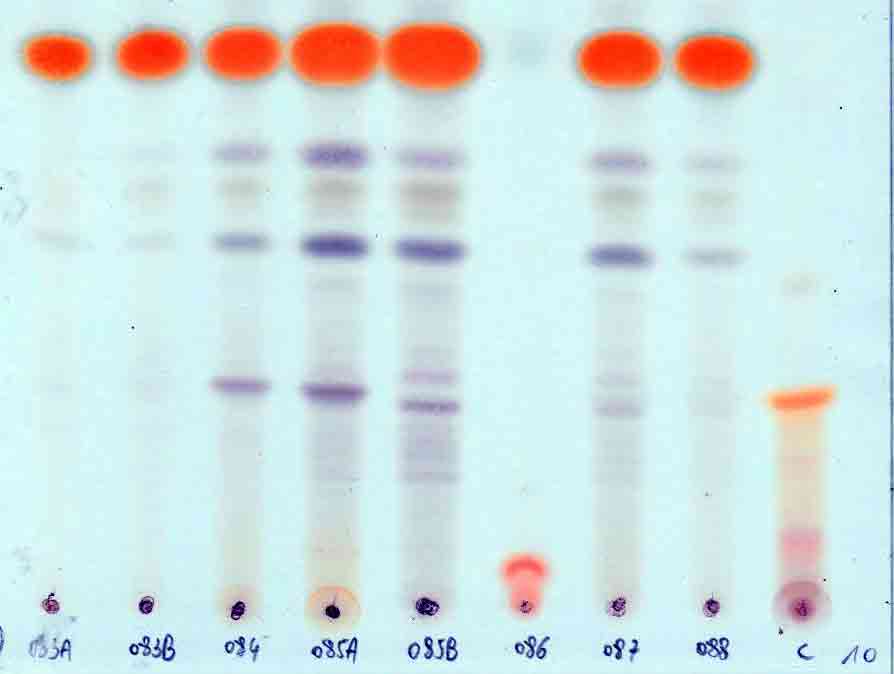
holdfast, and B, erect branches arising from a prostrate branch. TLC
from both specimens were found with divaricatic acid, as might be
expected, but weak lacking in triterpenes, compared with other
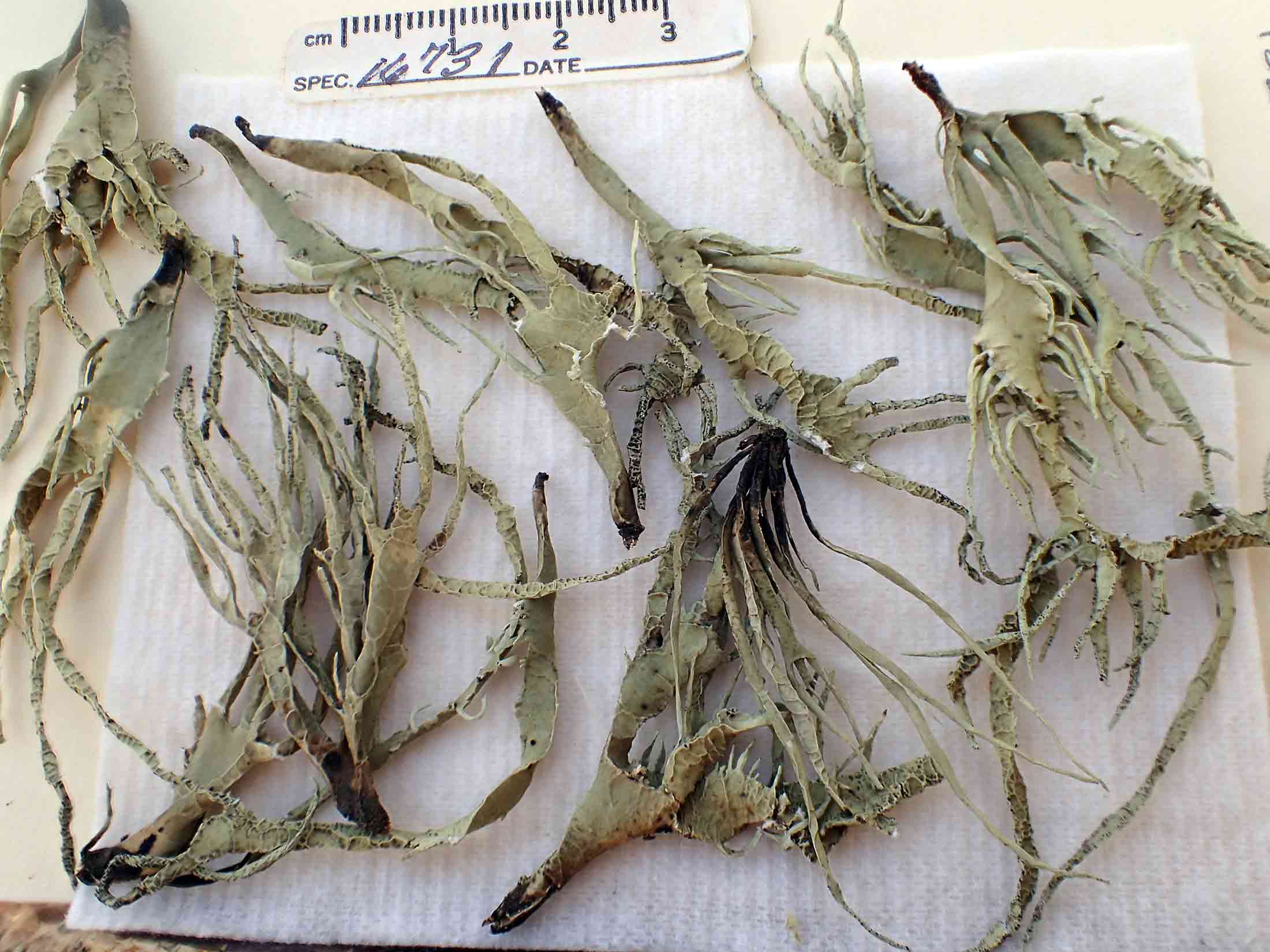
divaricatic species from the same location. Collections by Leavitt et
al. also in different clades, e.g., 16-1019 and 16-731.
The type is from coastal ridges north of Puerto San Andrés and south of
Punta Negra, Spjut 9970. This site is not easily accessible
Spjut and Sérusiaux collected specimens near Punta Santa Rosalillita;
however, no DNA obtained.
Additional
References: See
Niebla.