|
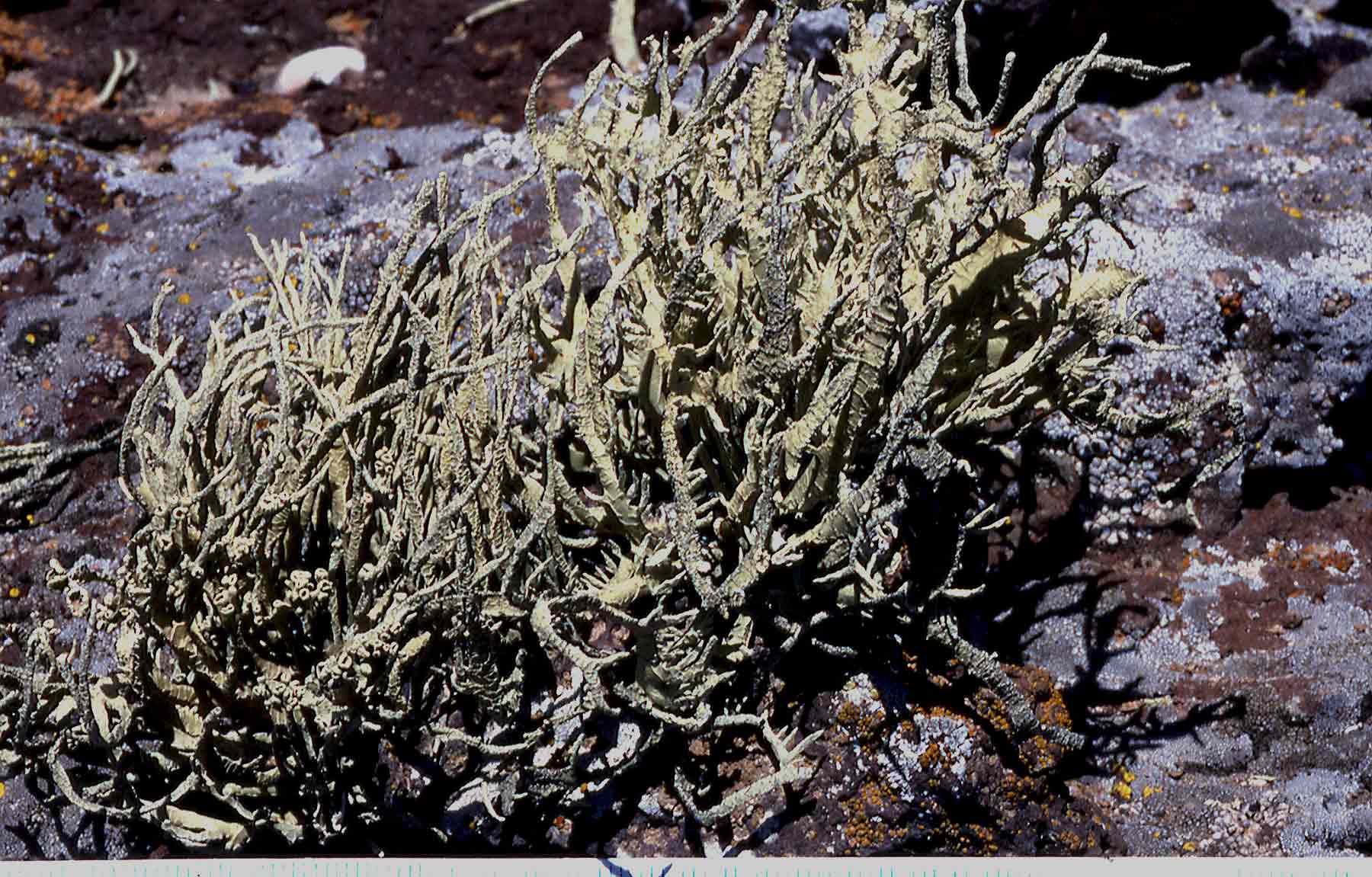
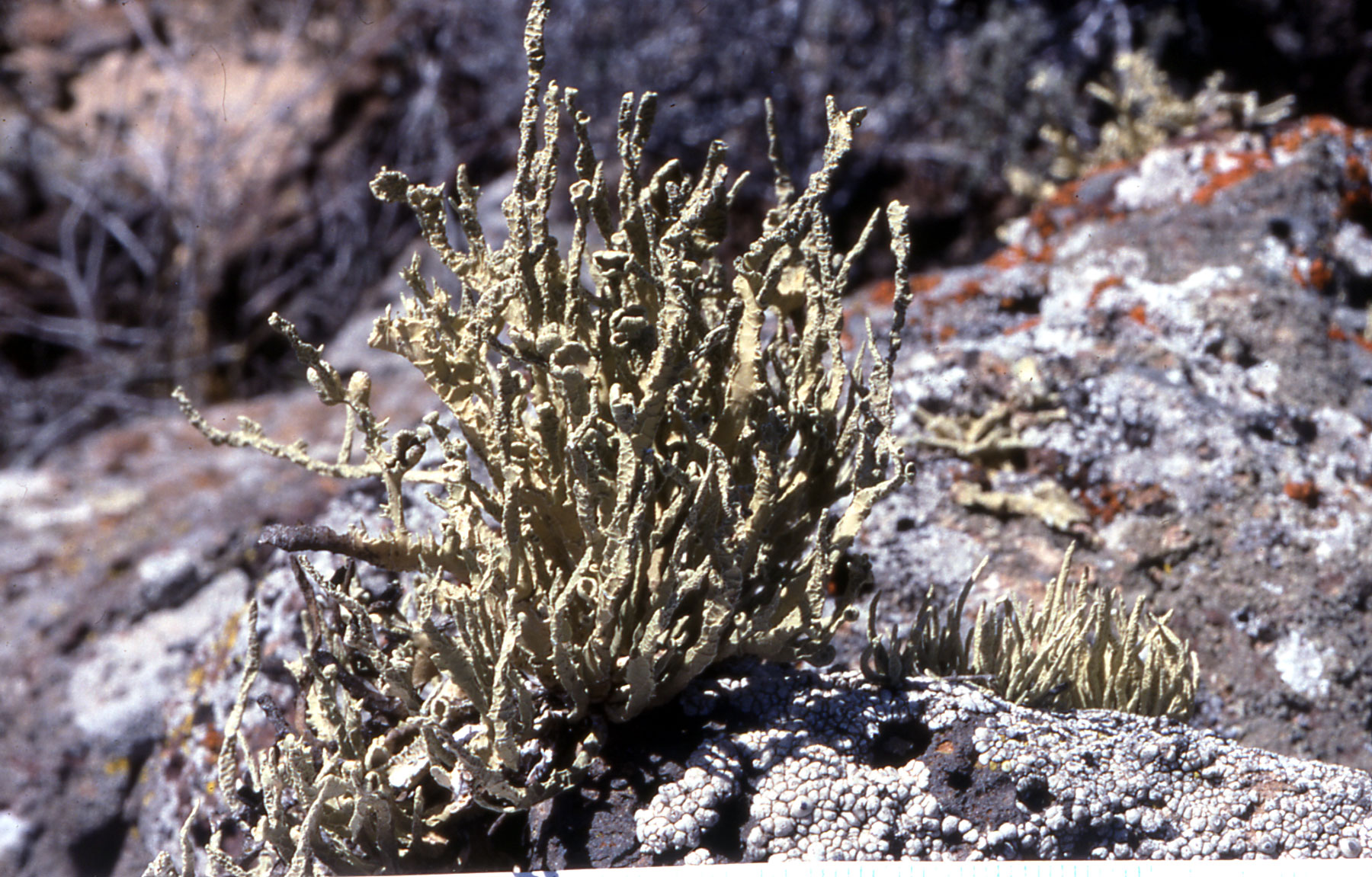
Niebla suffnessii
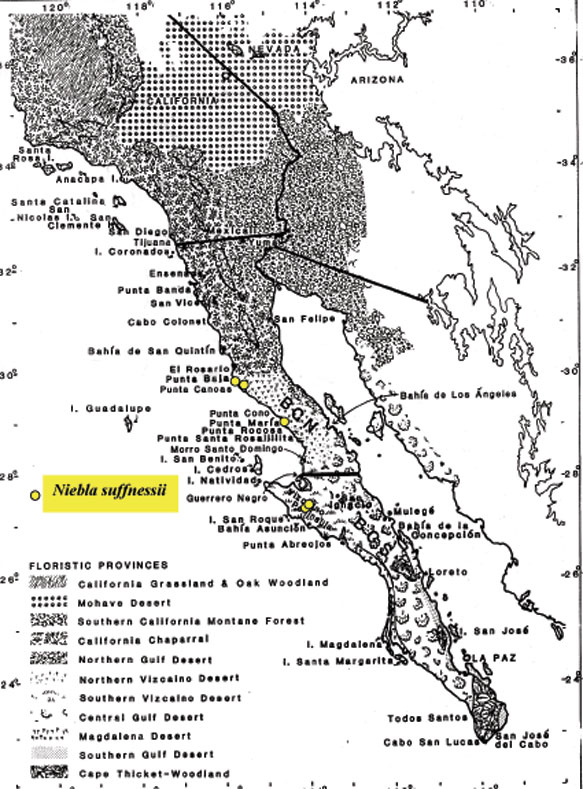
is a species of fruticose lichen endemic to Baja California, ranging from the Vizcaíno
Peninsula to near El Rosario in Baja California Norte.
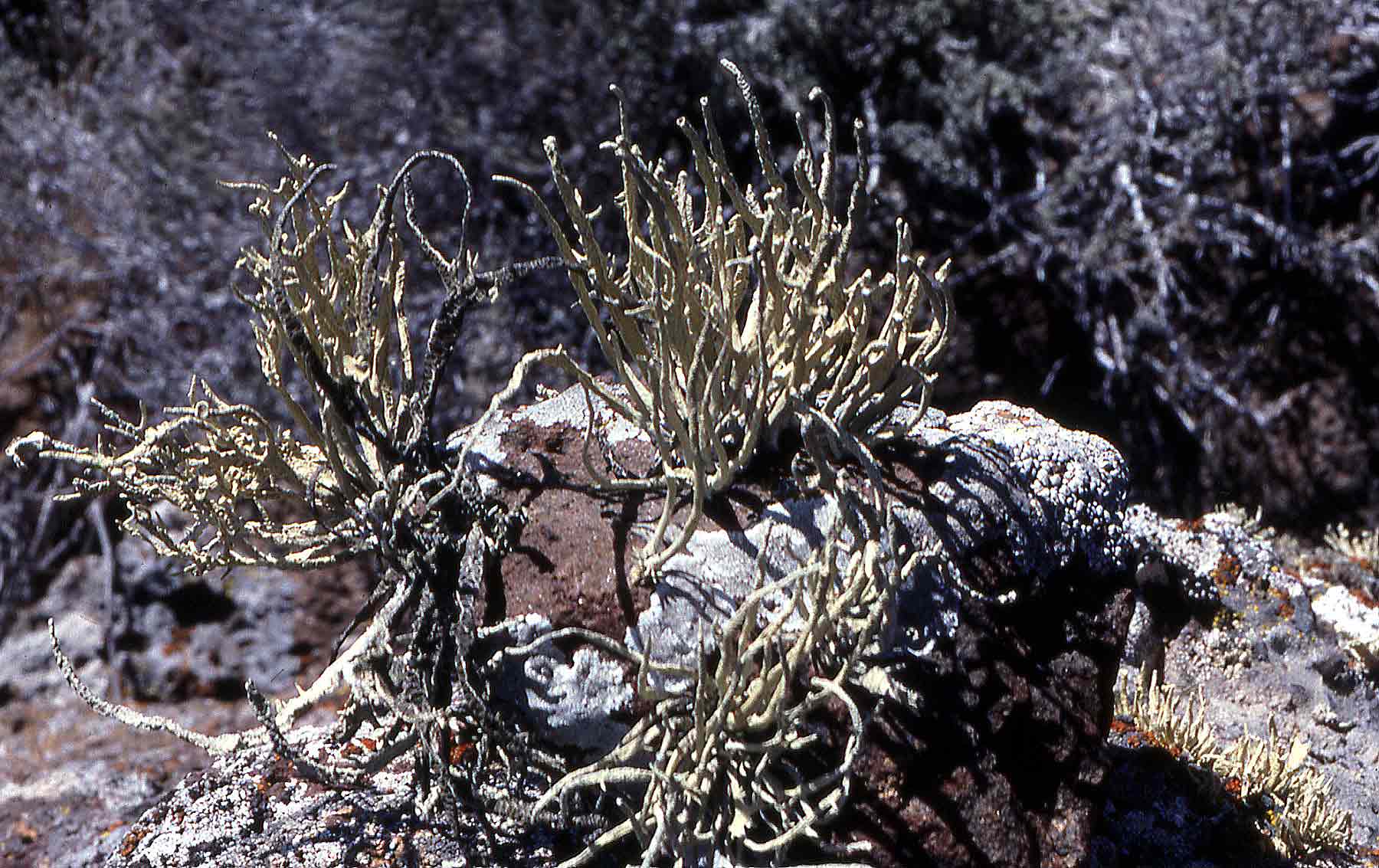
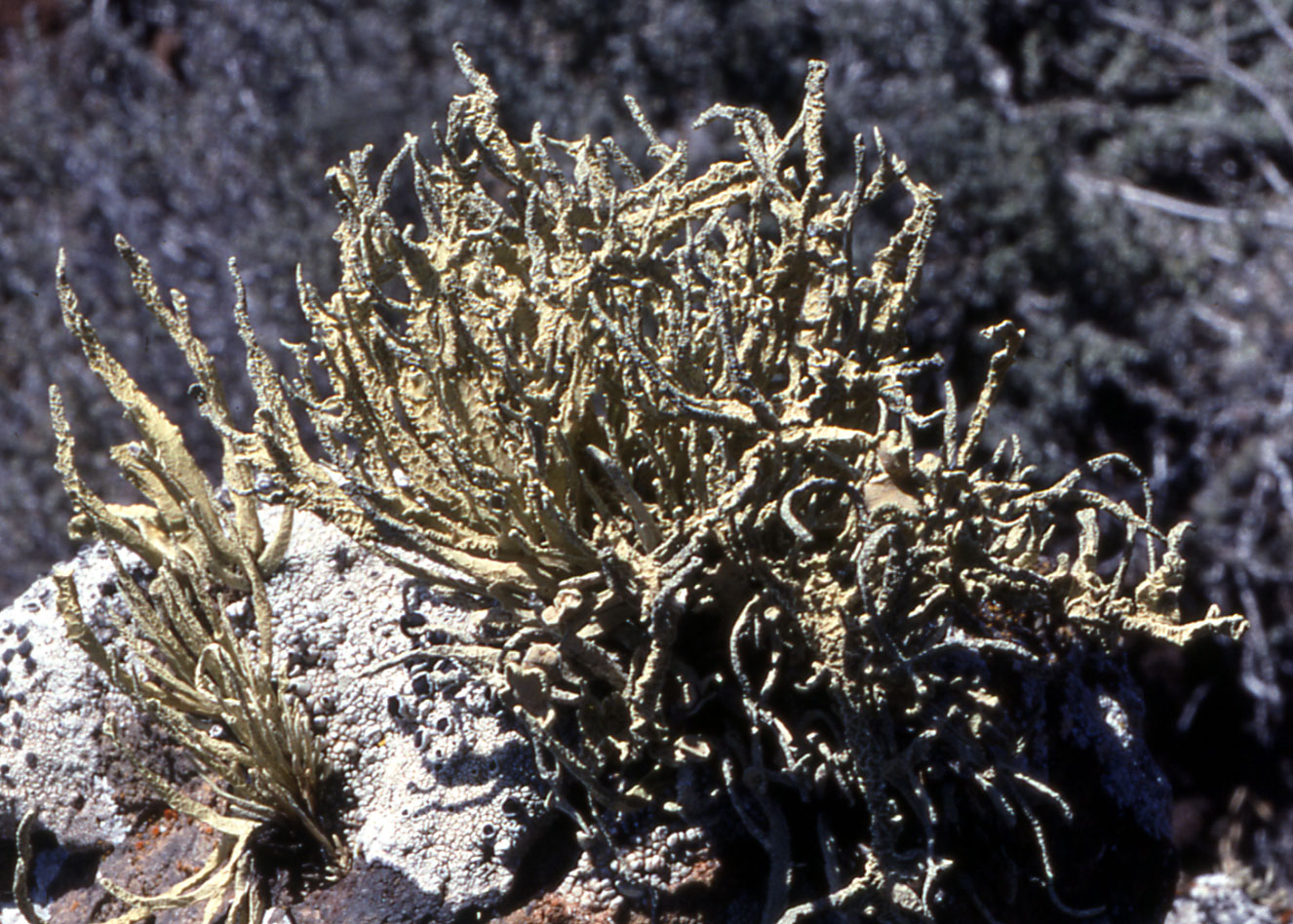
It most often occurs on red volcanic rocks of cones and mesas away the
immediate coast. It is
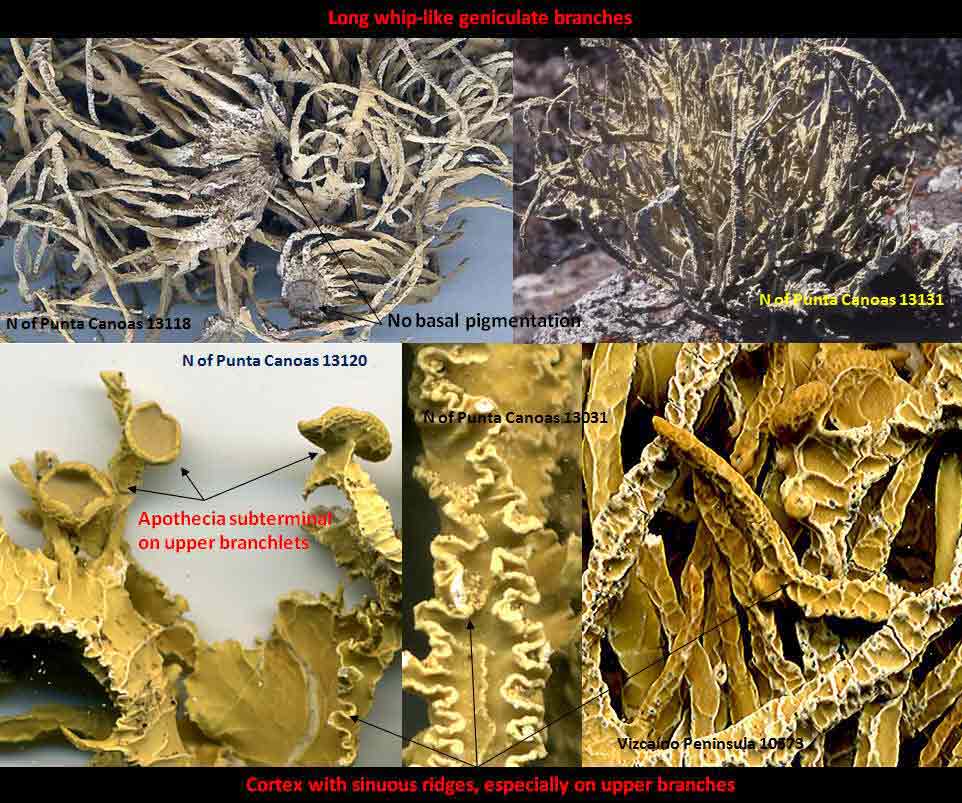
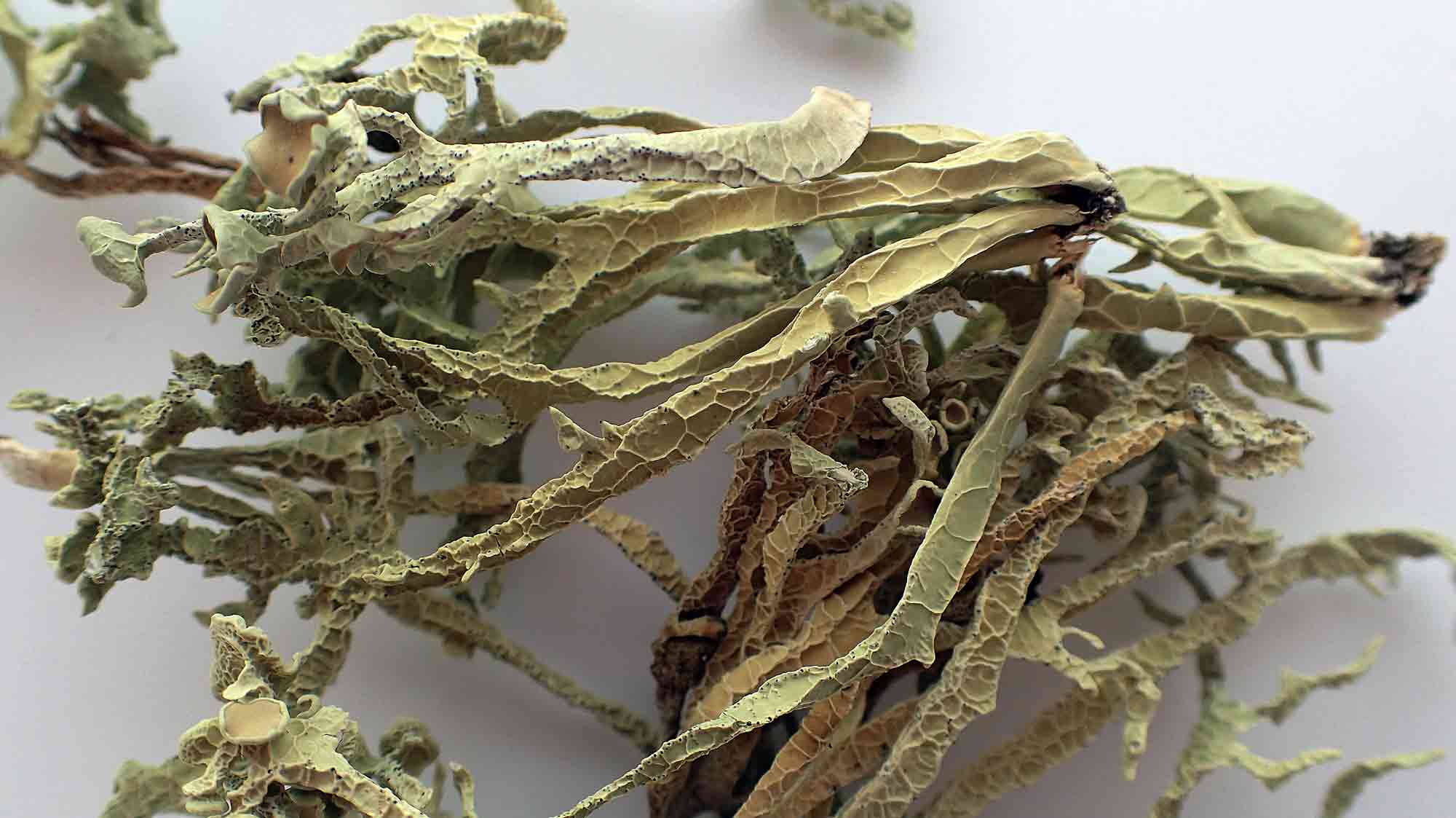
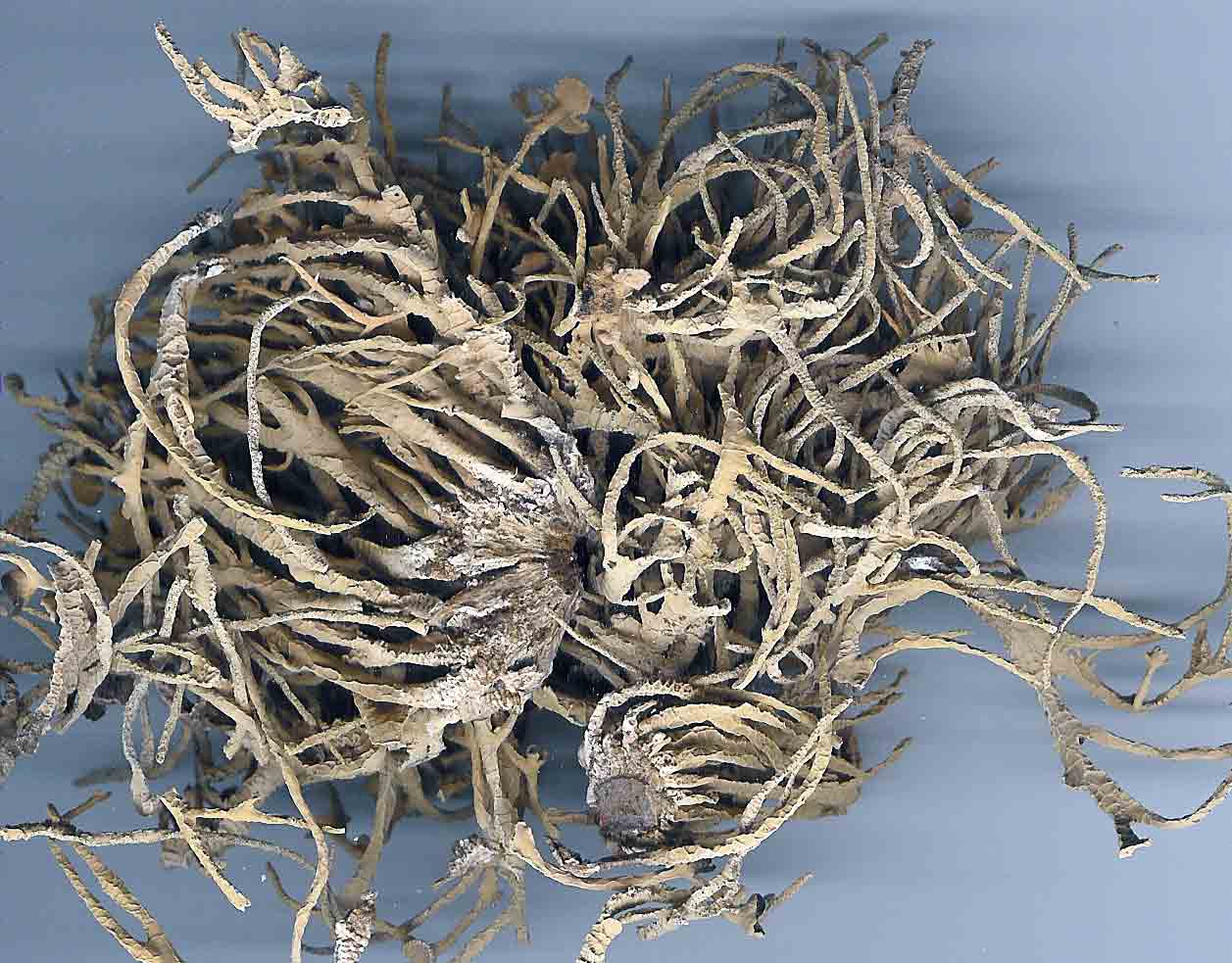
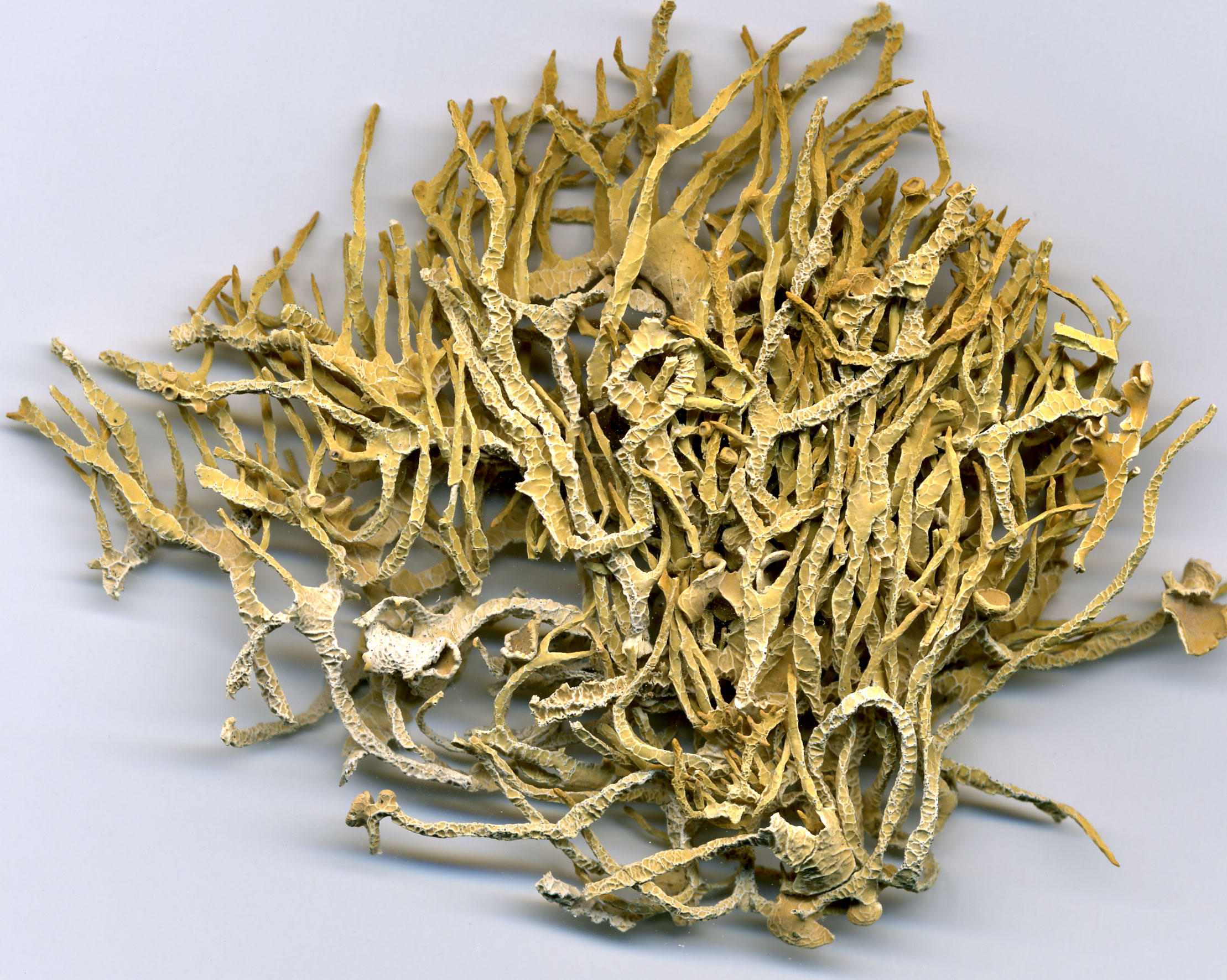
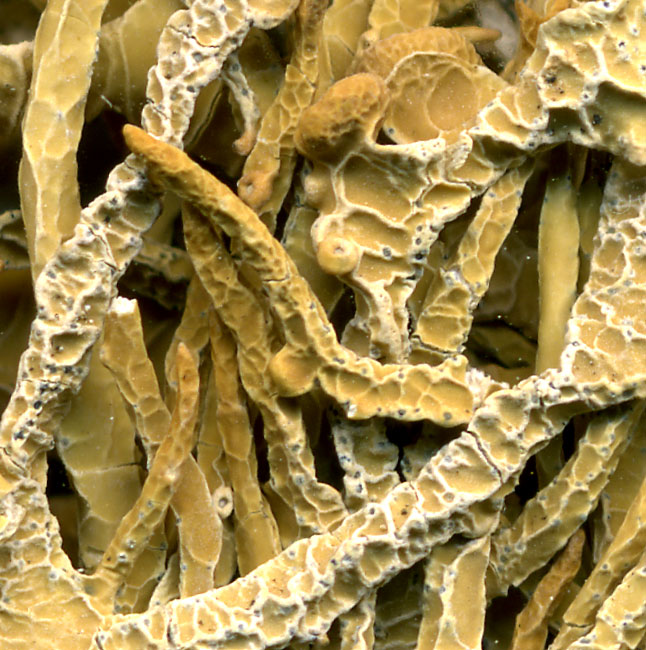
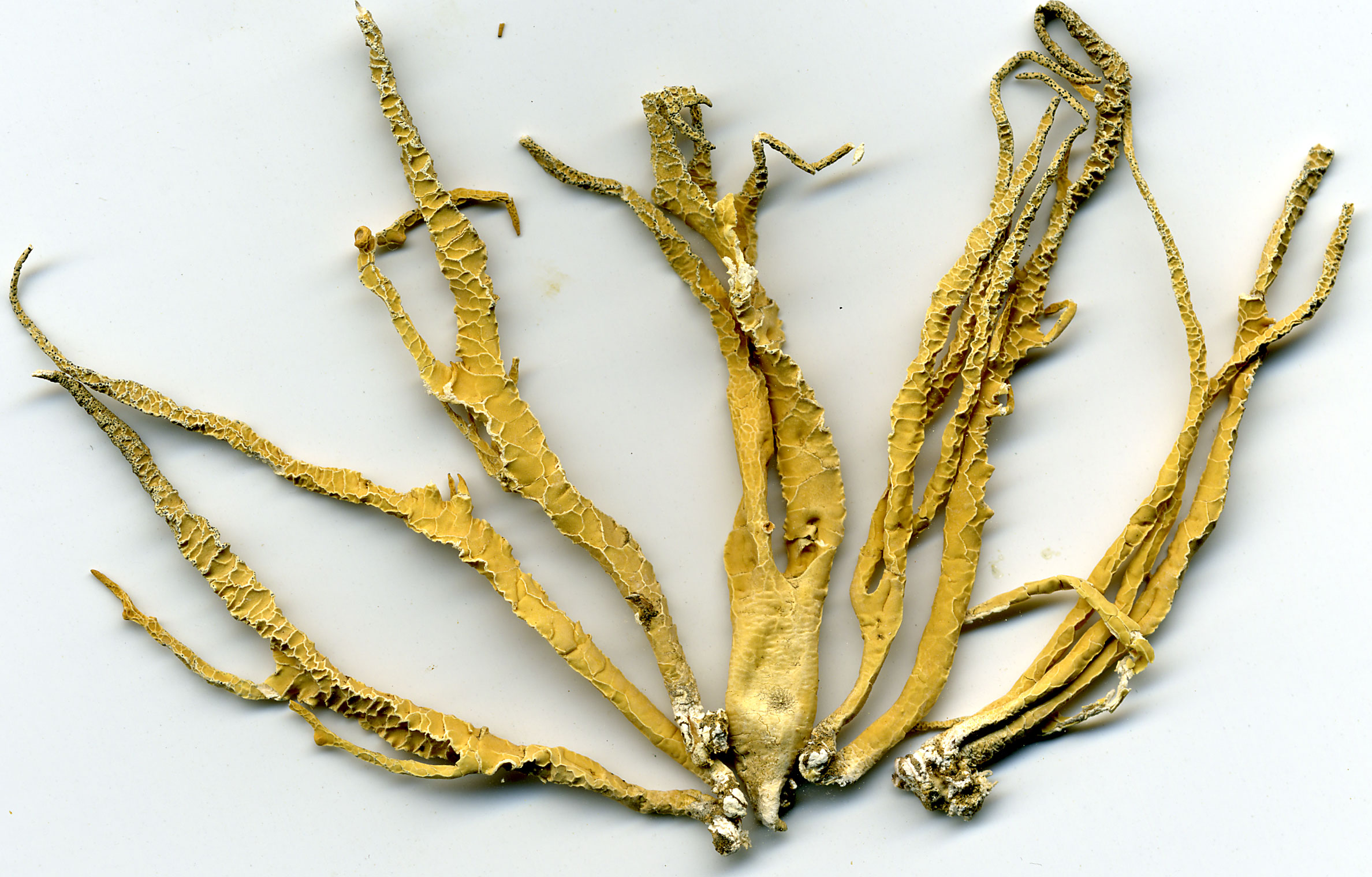
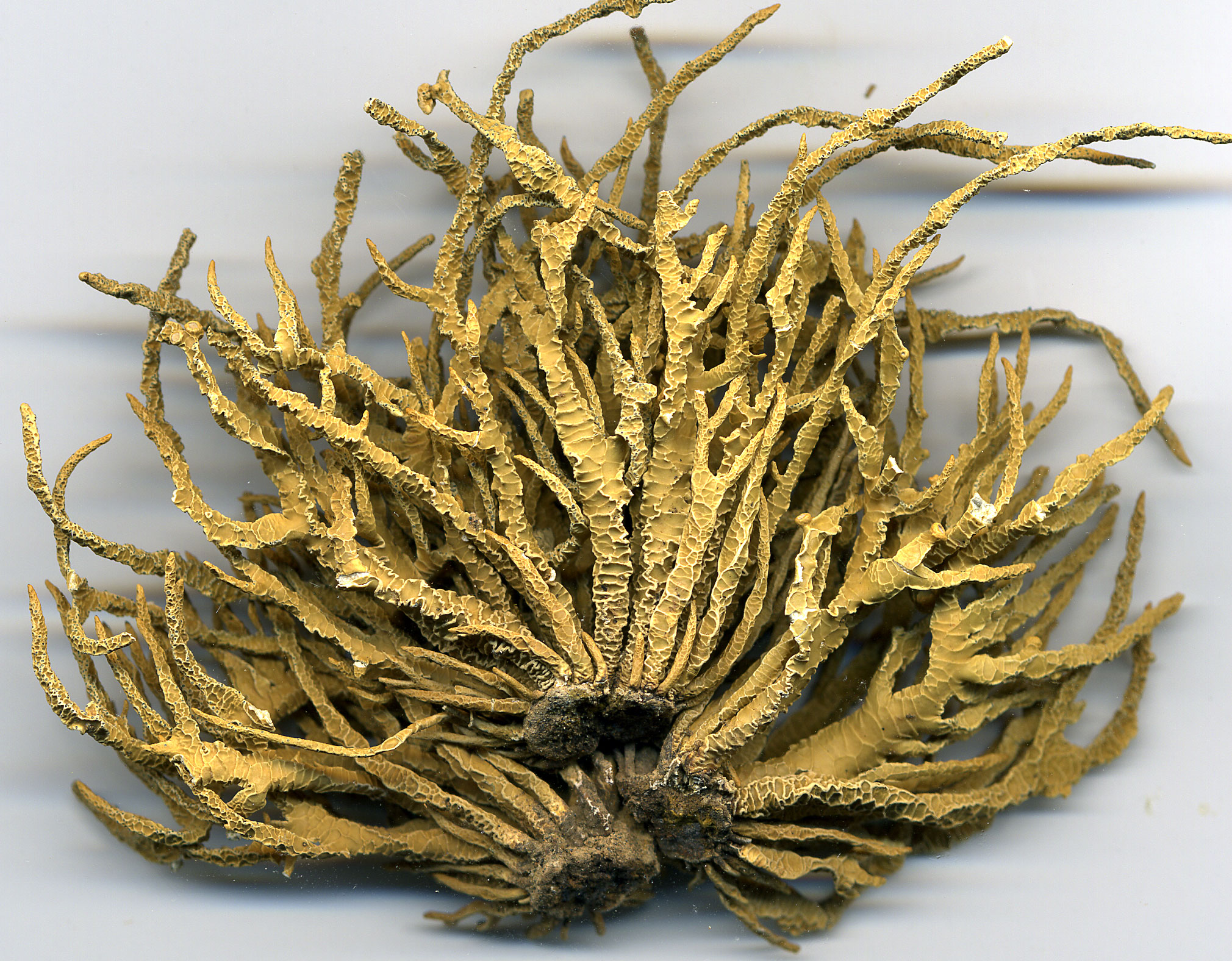
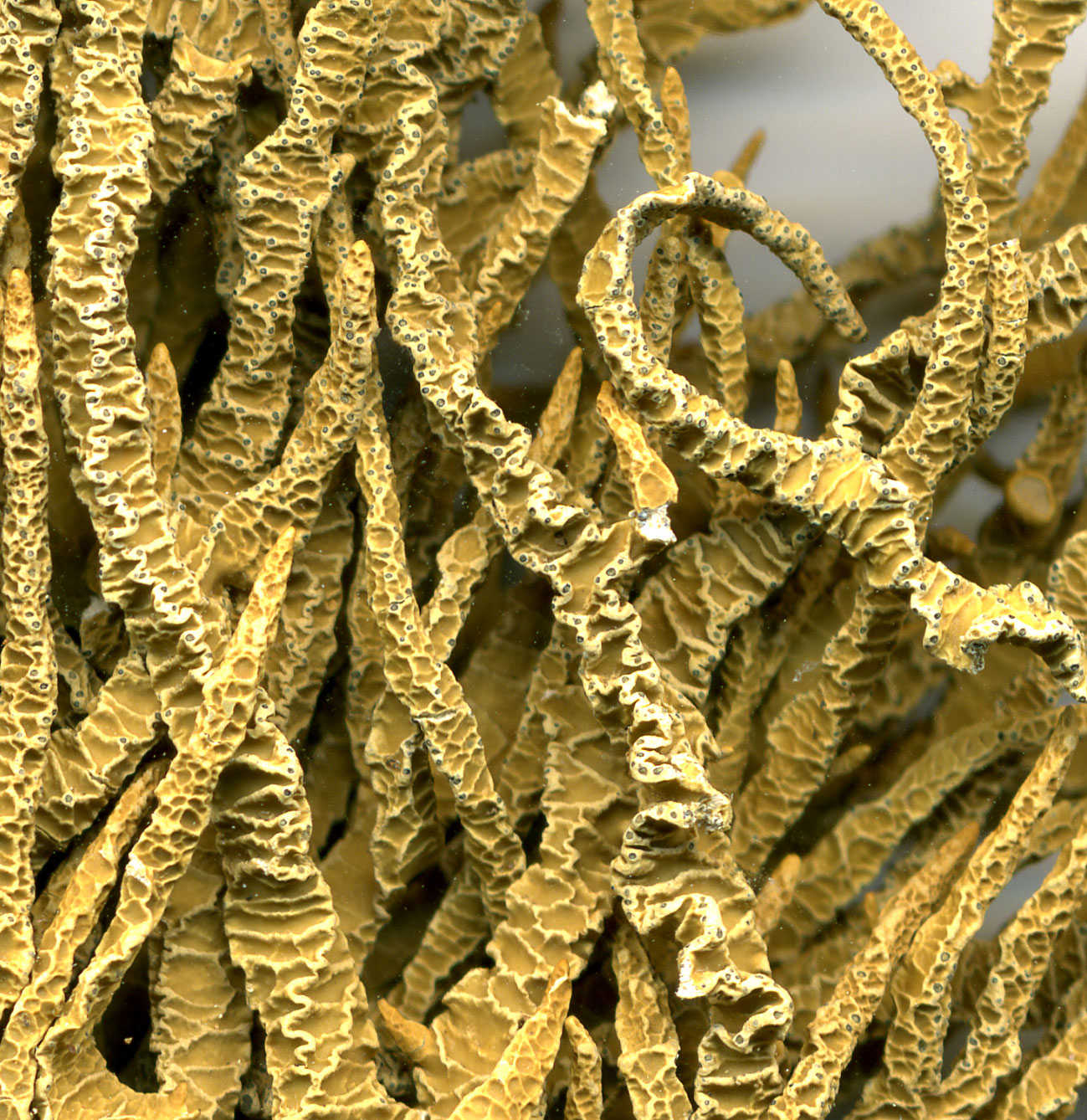
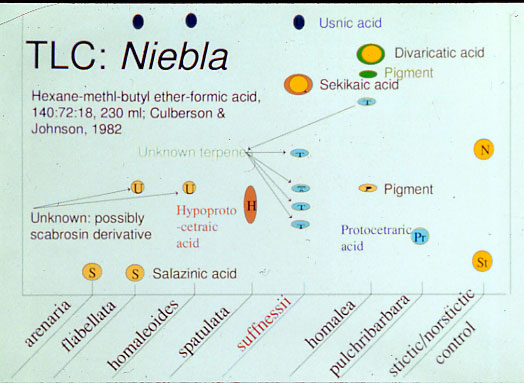
generally recognized by having sekikaic acid and numerous hair-like to whip-like branchlets
that differ from the primary (basal) branch by the sharply reticulate cortex, although the distinction
between the primary branch and the branchlet is
often not sharp.
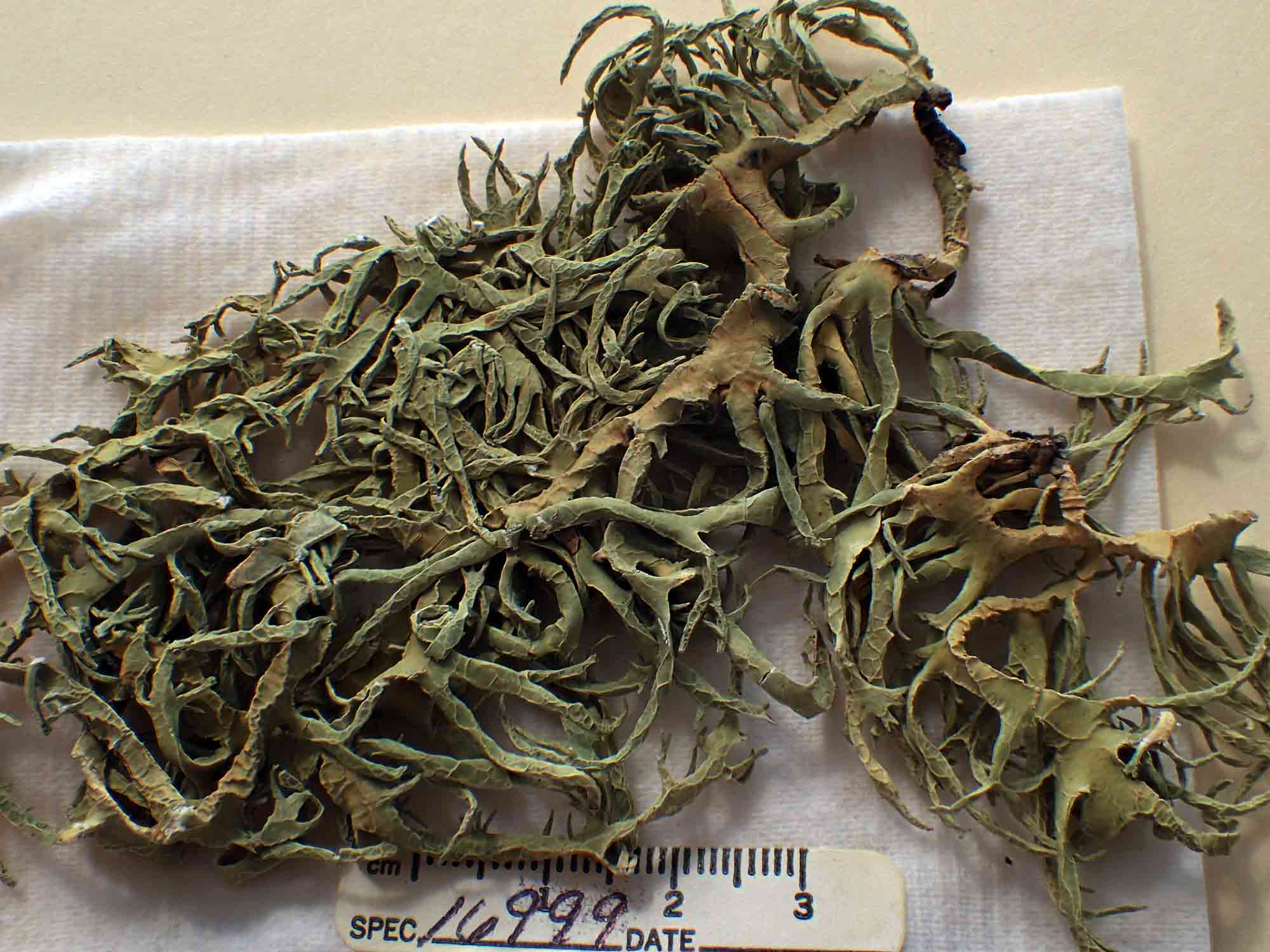
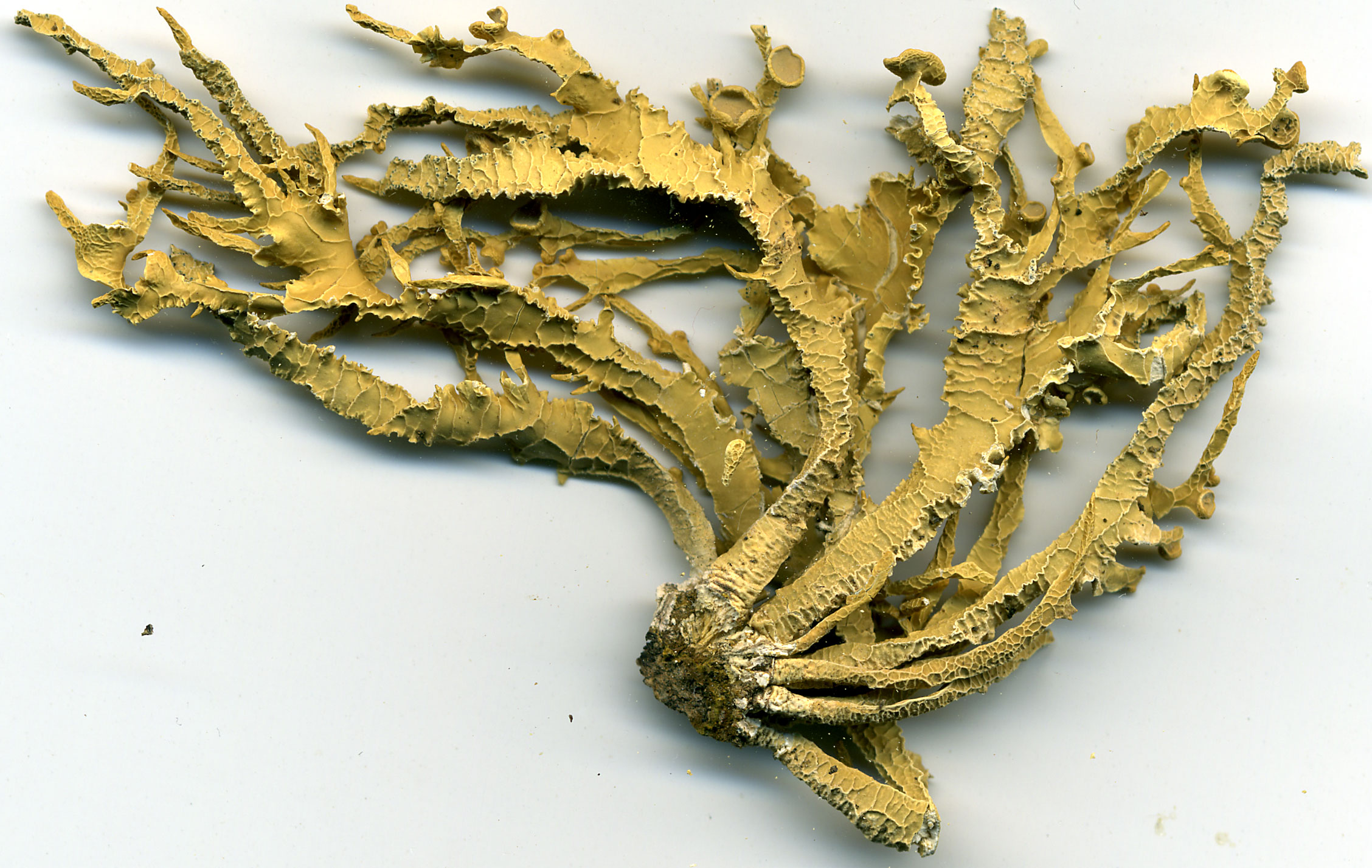
Several morphs can be
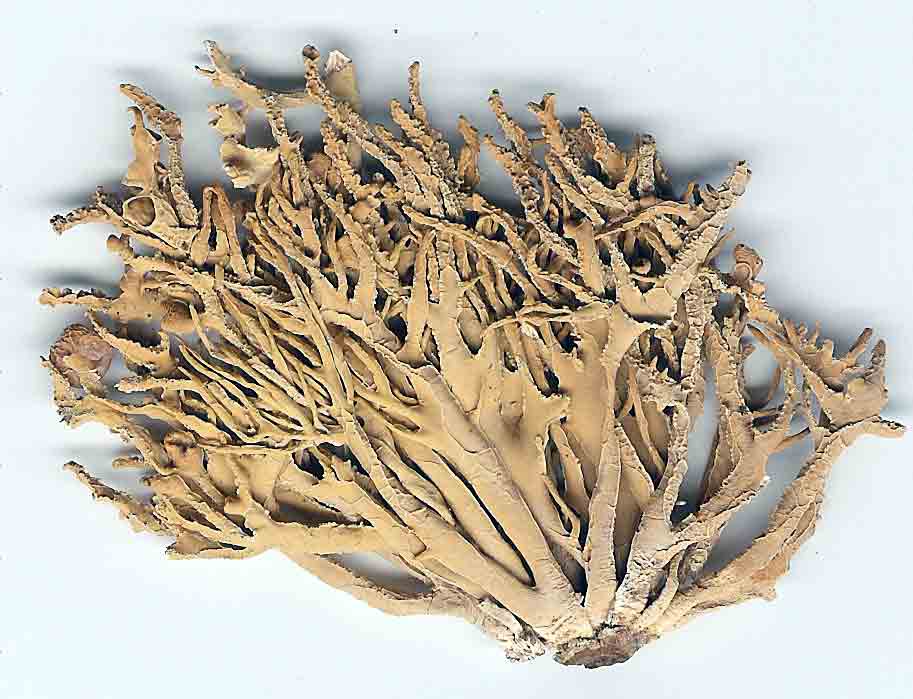
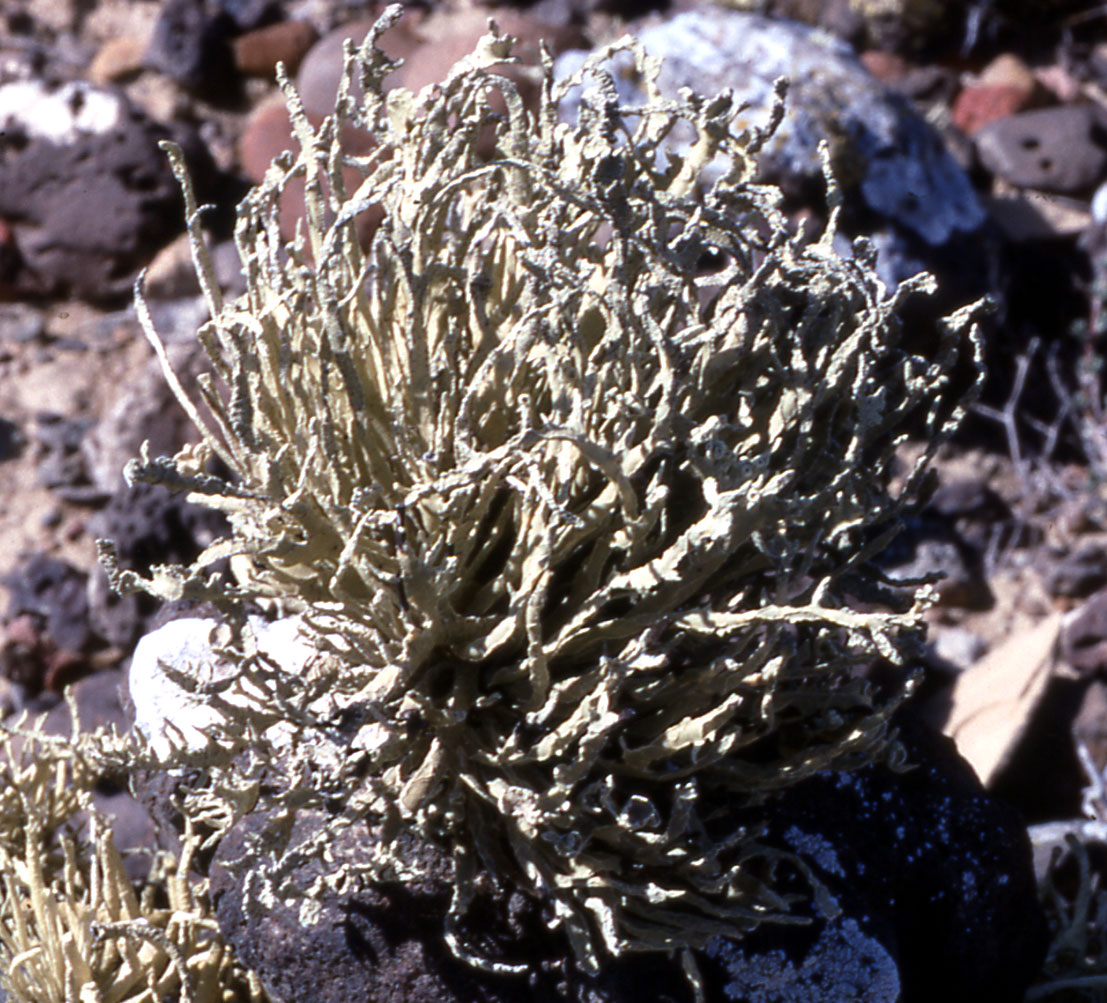
recognized by differences in the habit and cortical features. The typical morph
from Cerro Elephante is much like the type for
N. marinii (salazinic
acid species) in having inflated primary branches that dichotomously divide numerous times, gradually
narrowing while becoming more fringed with short to long whip-like branchlets.
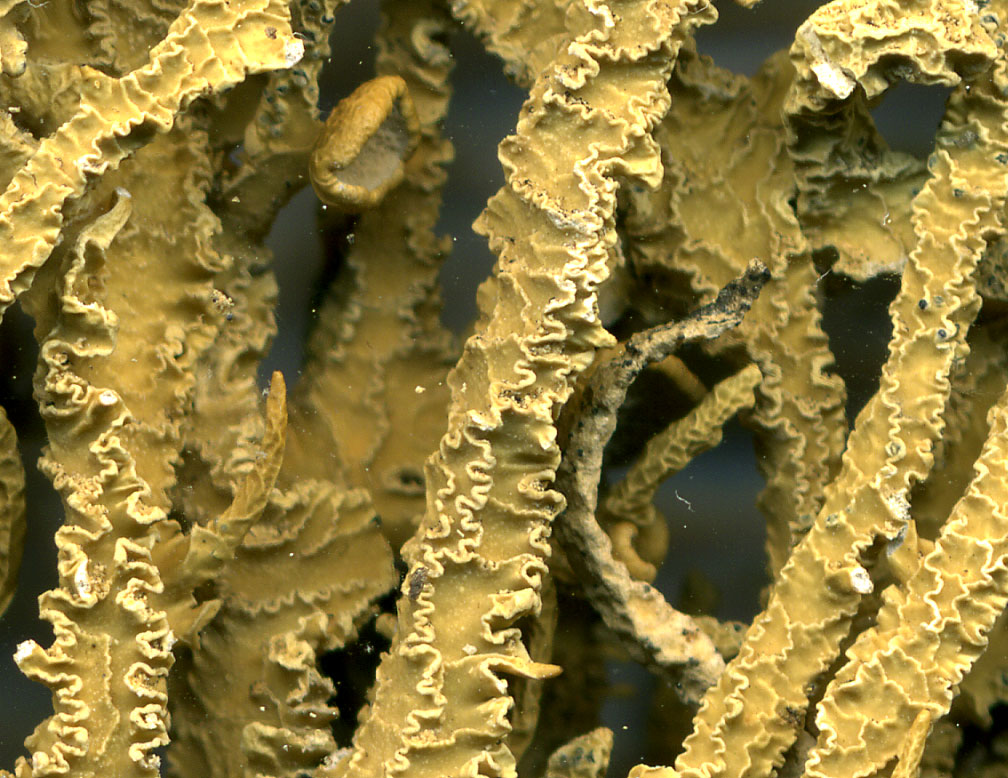
The cortex on the inflated portion near base is relatively smooth. A
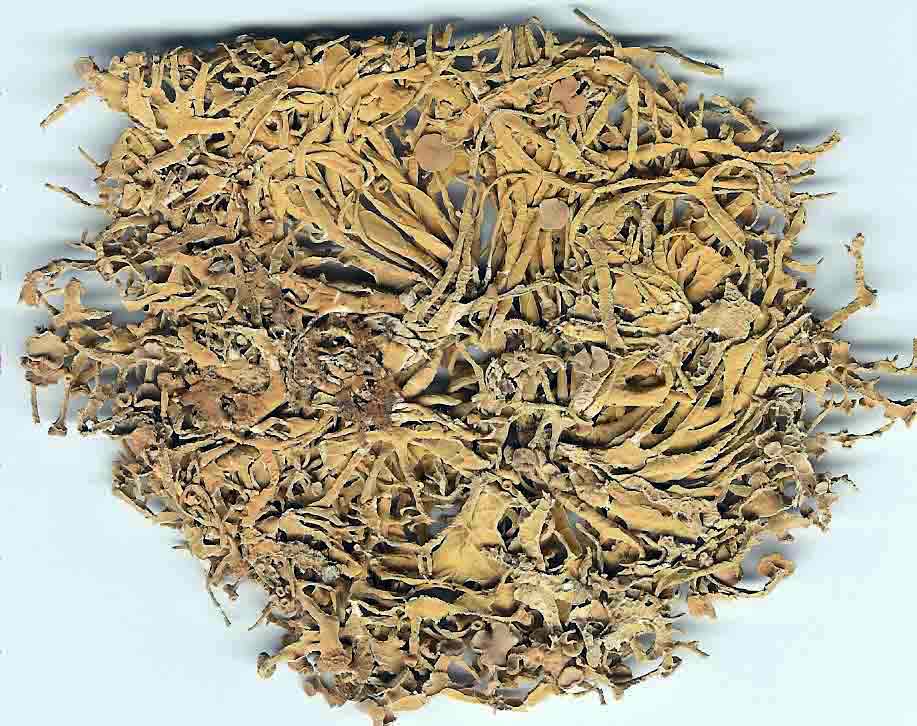
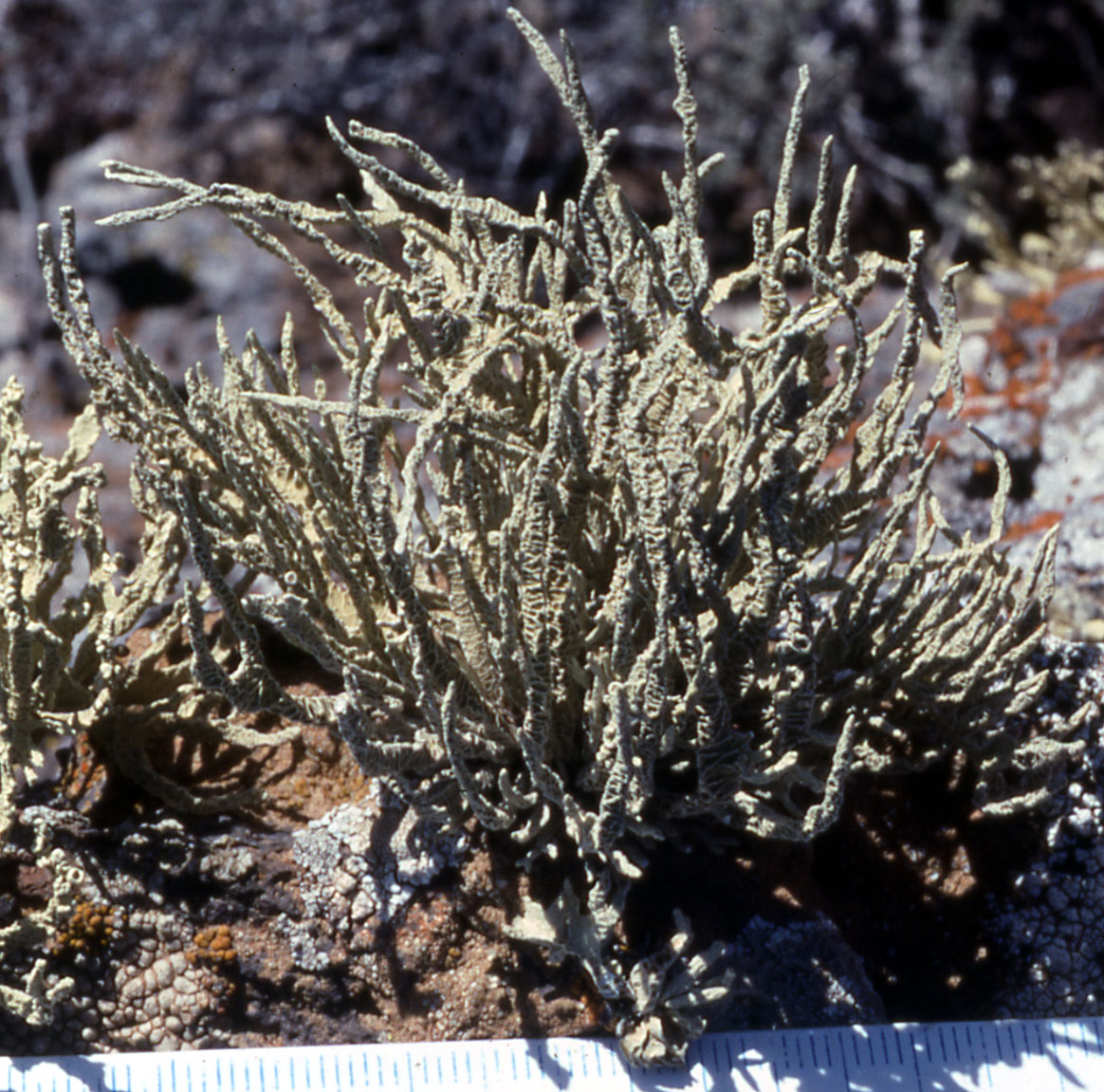
second morph has more prominent reticulate ridging and less inflated branches.
It occurs infrequently on the Vizcaíno Peninsula (Arroyo San Andrés) and more
frequently further north. A third morph, given an unpublished name,
N.
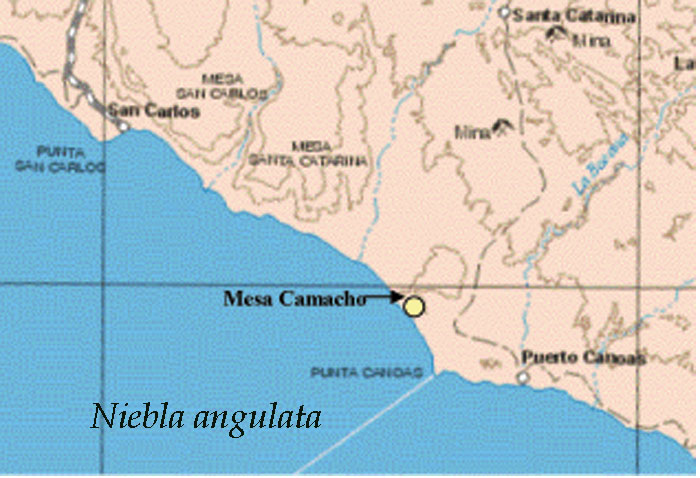
sinuata, has sharp sinuous cortical ridges; it is known only from Mesa
Camacho.
Niebla suffnessii was first collected in May 1986 on red lava on the Vizcaíno Peninsula
at the summit of a
volcanic cone, Cerro Elephante, 1,640 ft in elevation, ~ 12 mi north of Bahía Asunción;
it was the only Niebla species at this location; however, upon returning
to the volcanic cone in Jan 2016, it seems to have vanished, a change in climate
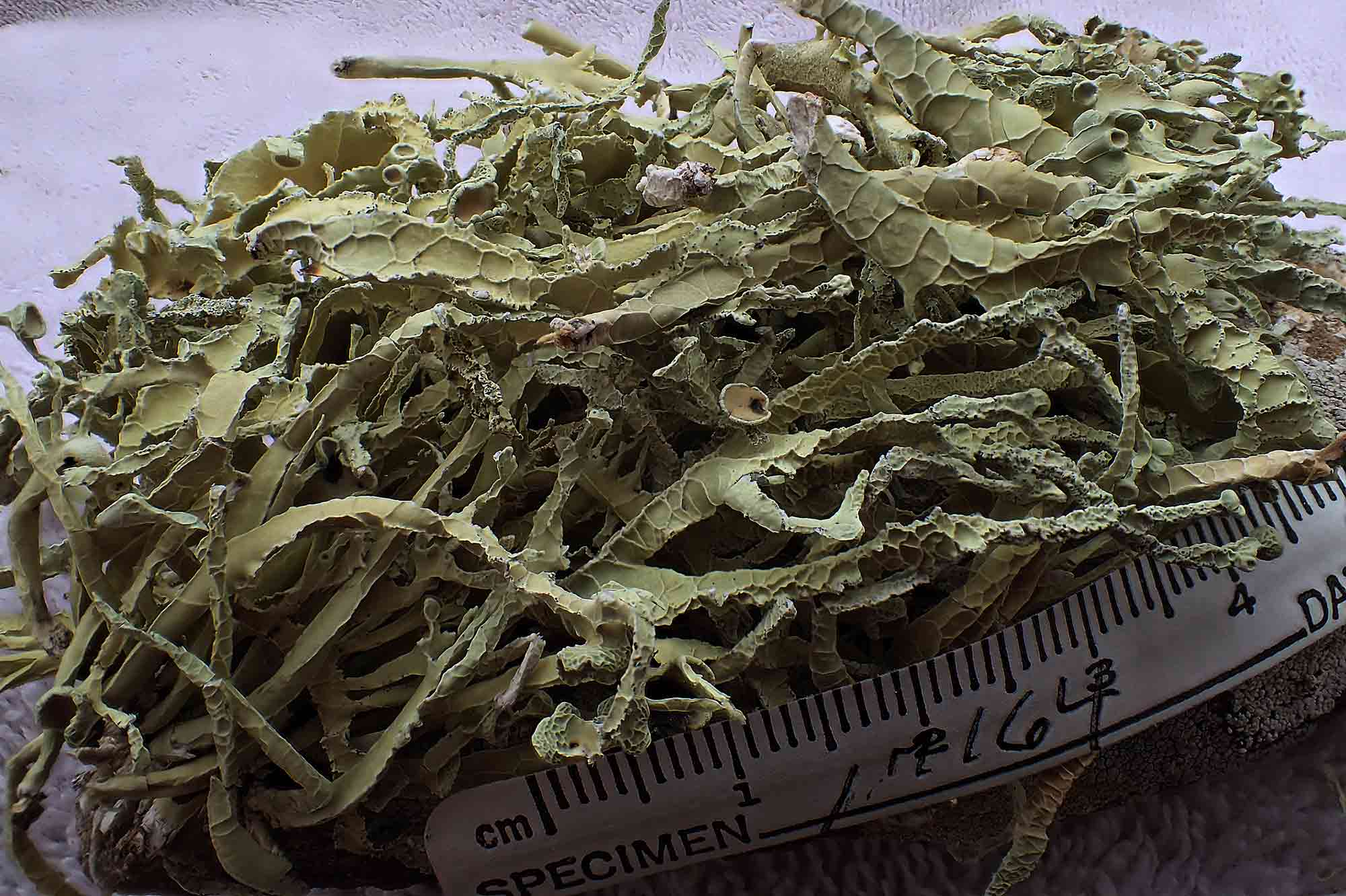
seems the mostly logical explanation. Thalli were generally bushy in habit with a pale-yellowish-green, pruinose cortex
and with numerous whip-like branchlets bearing lenticular apothecia. Further up the road, near Arroyo San Andrés, additional specimens
of N. suffnessii were collected in association with other sekikaic-acid
species, N.
lobulata, N. siphonoloba, and
N. usneoides.
Niebla lobulata,
as the epithet implies, is distinguished by the lobulate branchlets, and N. siphonoloba, as its epithet implies,
by
tubular, pipe-like branches that rarely divide. Niebla usneoides—easily
recognized by its isidiate flagelliform branchlets, was noted to be abundant
over large areas, but in 2016 it too seems to have vanished.
Several other sekikaic
acid species of Niebla with relatively long narrow branches or branchlets
occur further north. Niebla fimbriata,
which is found in the Northern Vizcaíno Desert, north of Punta Canoas and in the
Channel Islands,
differs by the primary branches producing brittle
spine-like side branchlets pointing in the same direction; the branchlets detach easily as evident from bumpy (lobed)
branch margins, while occasionally basal branches lack the side branchlets, or
the basal branches are mostly decumbent from which many secondary branches grow
upright. Its apothecia are shaped more like a cup instead
of a lens, and the cortex is dark green with longitudinal creases, instead of yellowish-green
and turgid. Niebla disrupta, a
California endemic, differs in the dichotomously divided primary branches with a
smooth glossy cortex, cracking transversely at various internals, and by
apothecia that develop more near the base of the thallus.
On Mesa Camacho and around Bahía María
Niebla turgida (divaricatic acid)
is similar to N. suffnessii where they seem to occur near each other.
They are easily separated by their lichen substances. Niebla turgida has divaricatic acid
and dark pigmentation (skyrin) near the base of the thallus. It also has a reticulate cortex
with ±rectangular areoles (not rounded), and more conspicuous pycnidia,
appearing slightly larger and more raised by the thalline margin.
Phylogeny of Niebla
suffnessii is supported from a specimen collected in the vicinity of the type locality, Cerro Elephante, on the Vizcaíno Peninsula (Spjut et al. 2020, Fig. 7).
Additional References: See
Niebla.
|