|
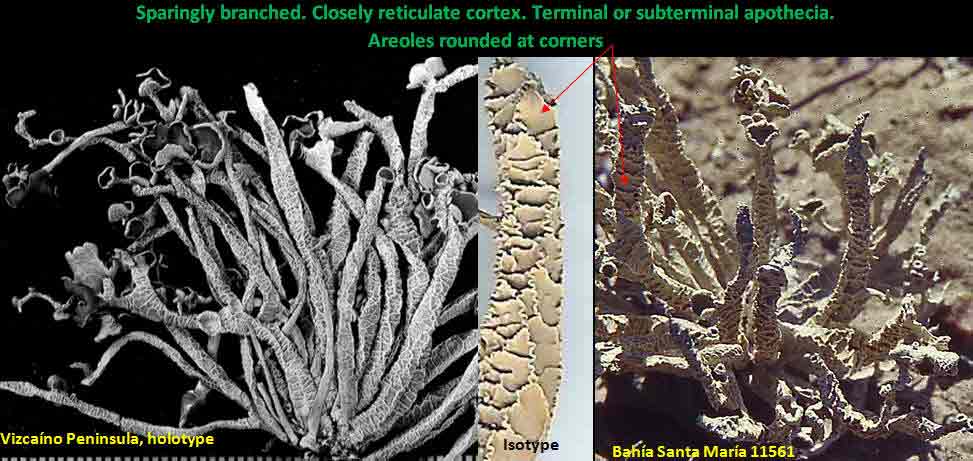
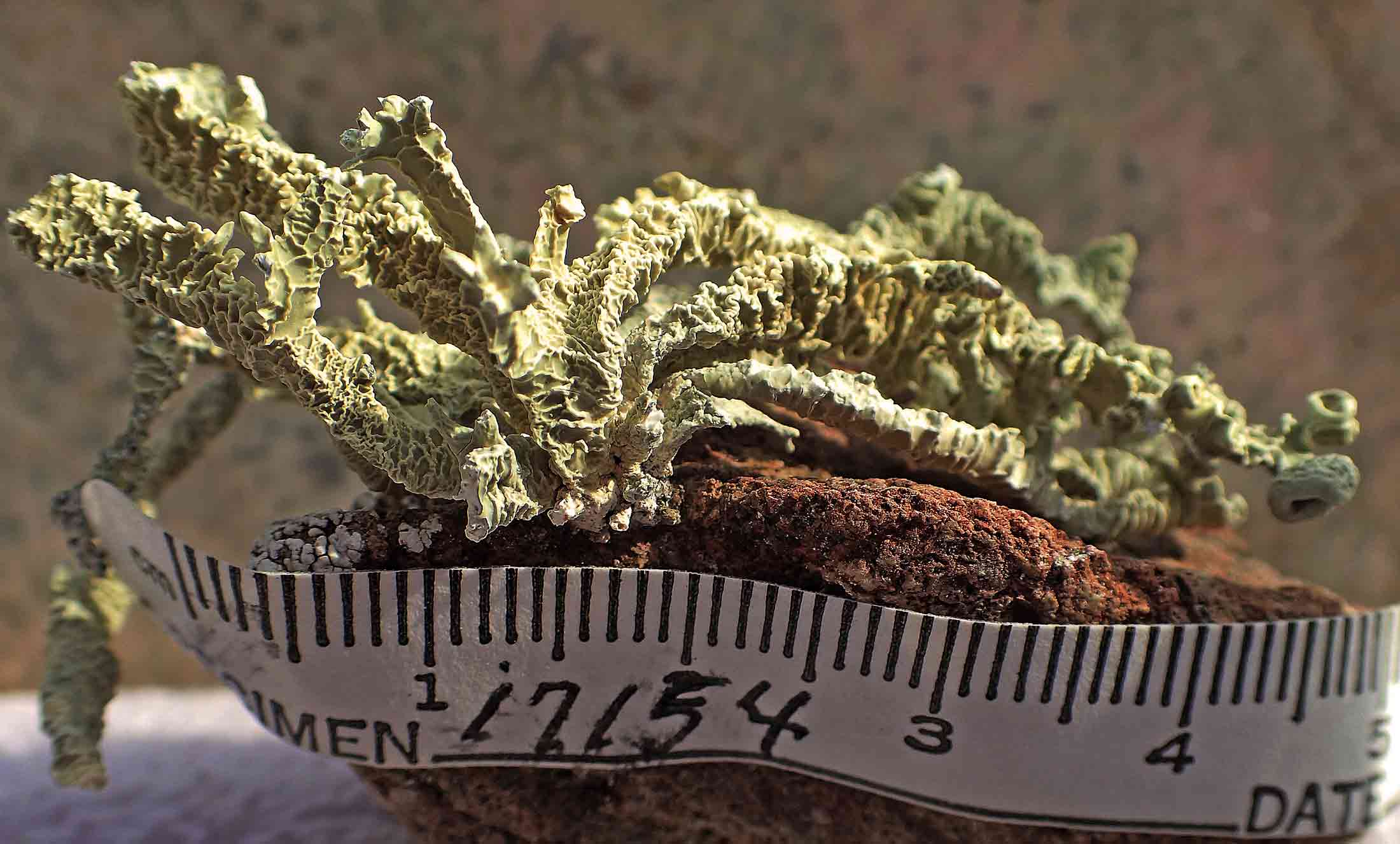
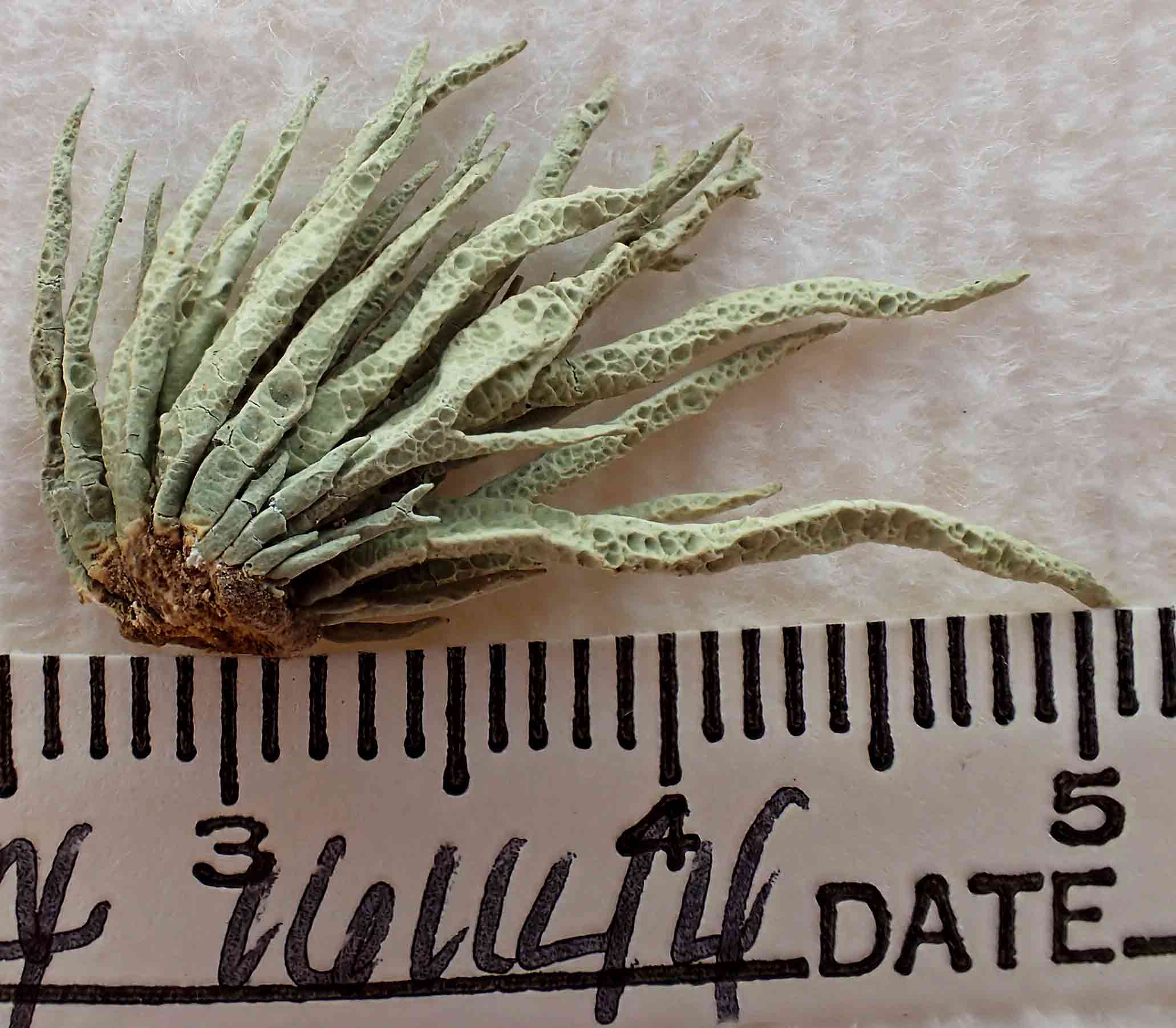
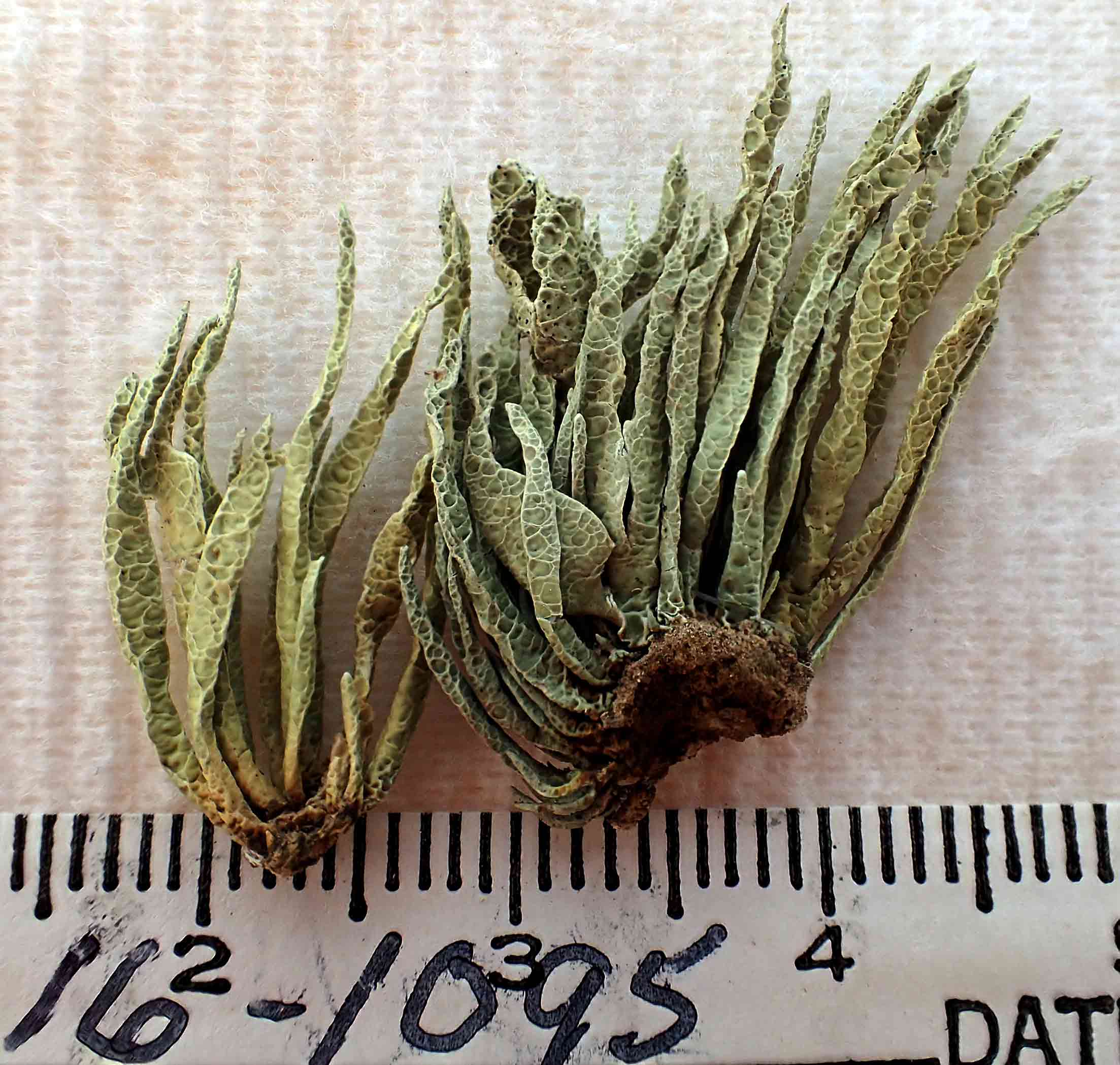
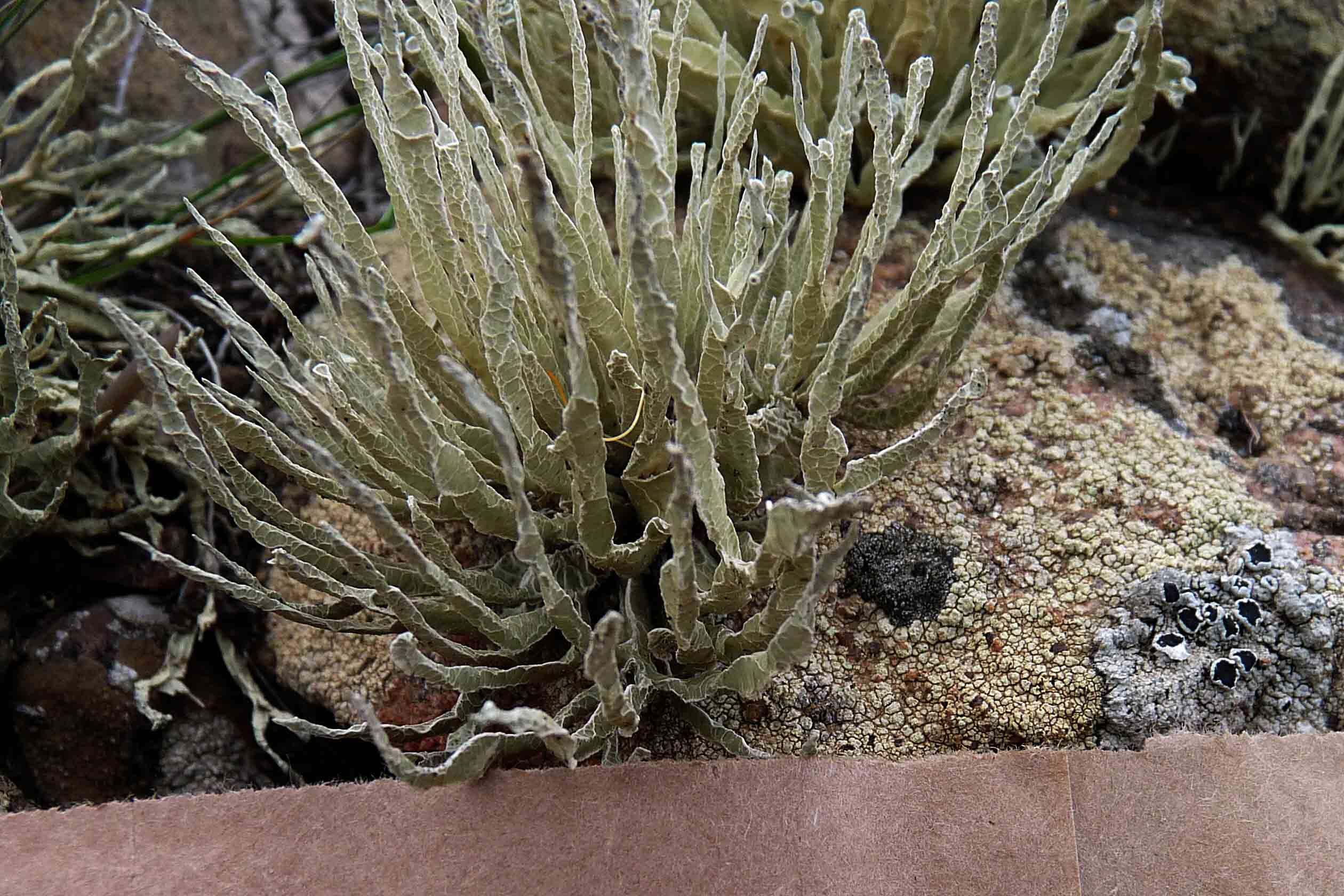
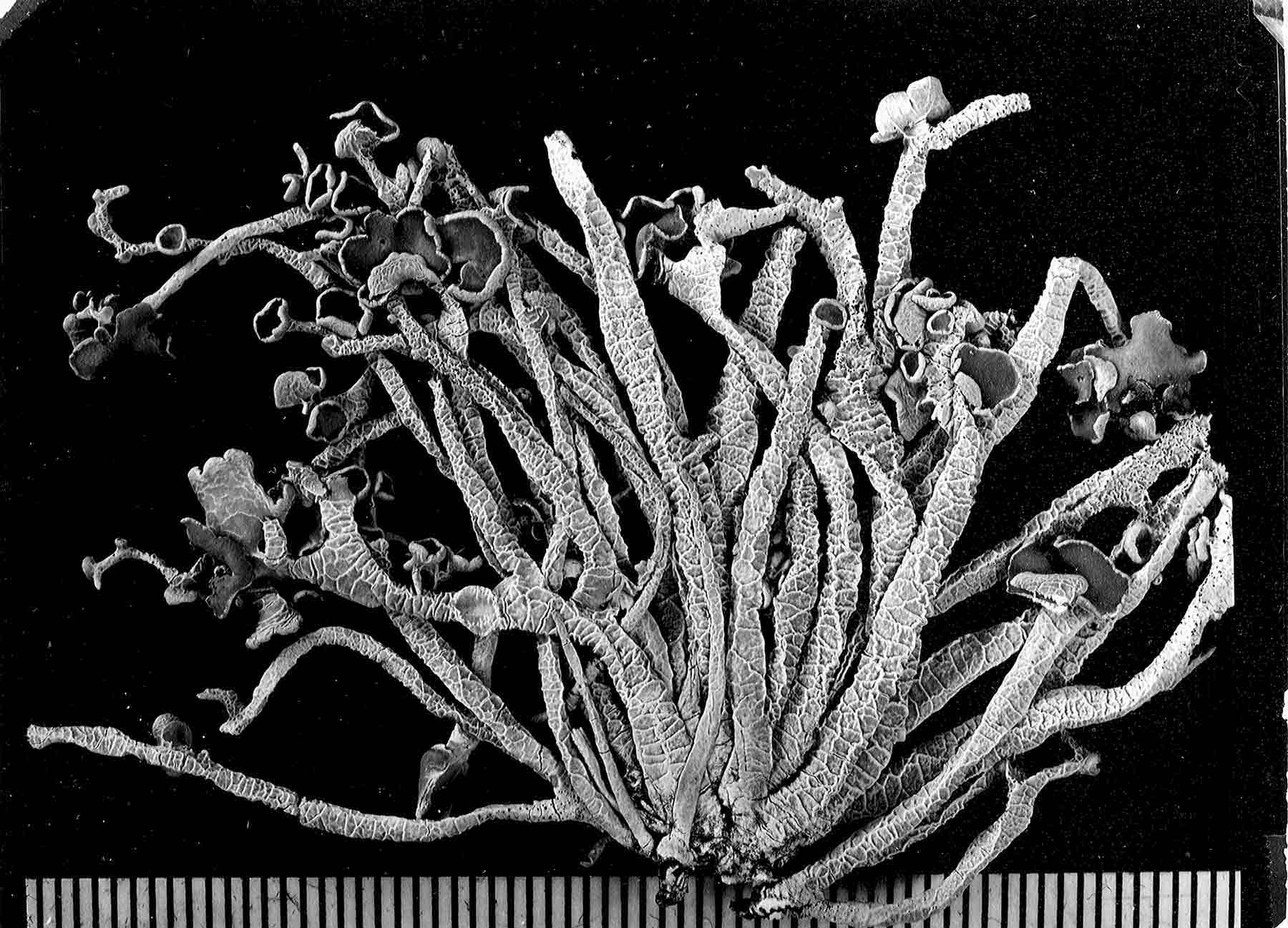
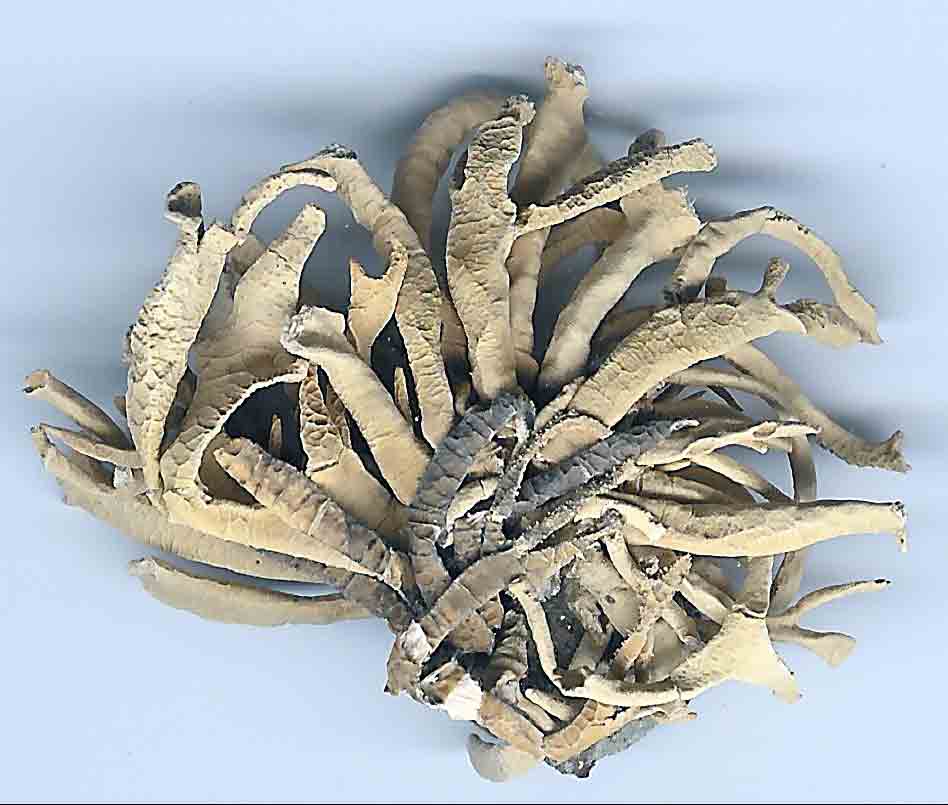
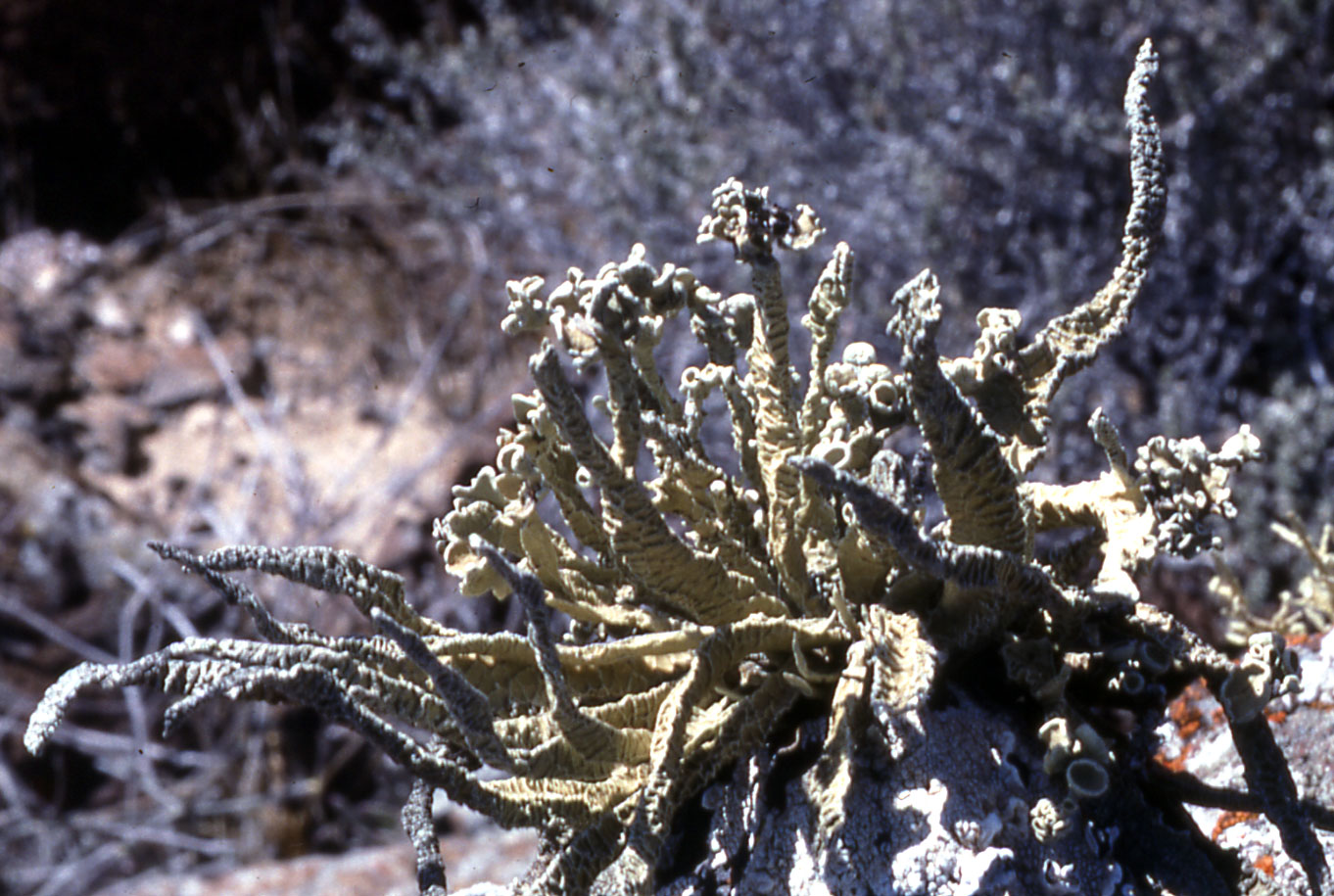
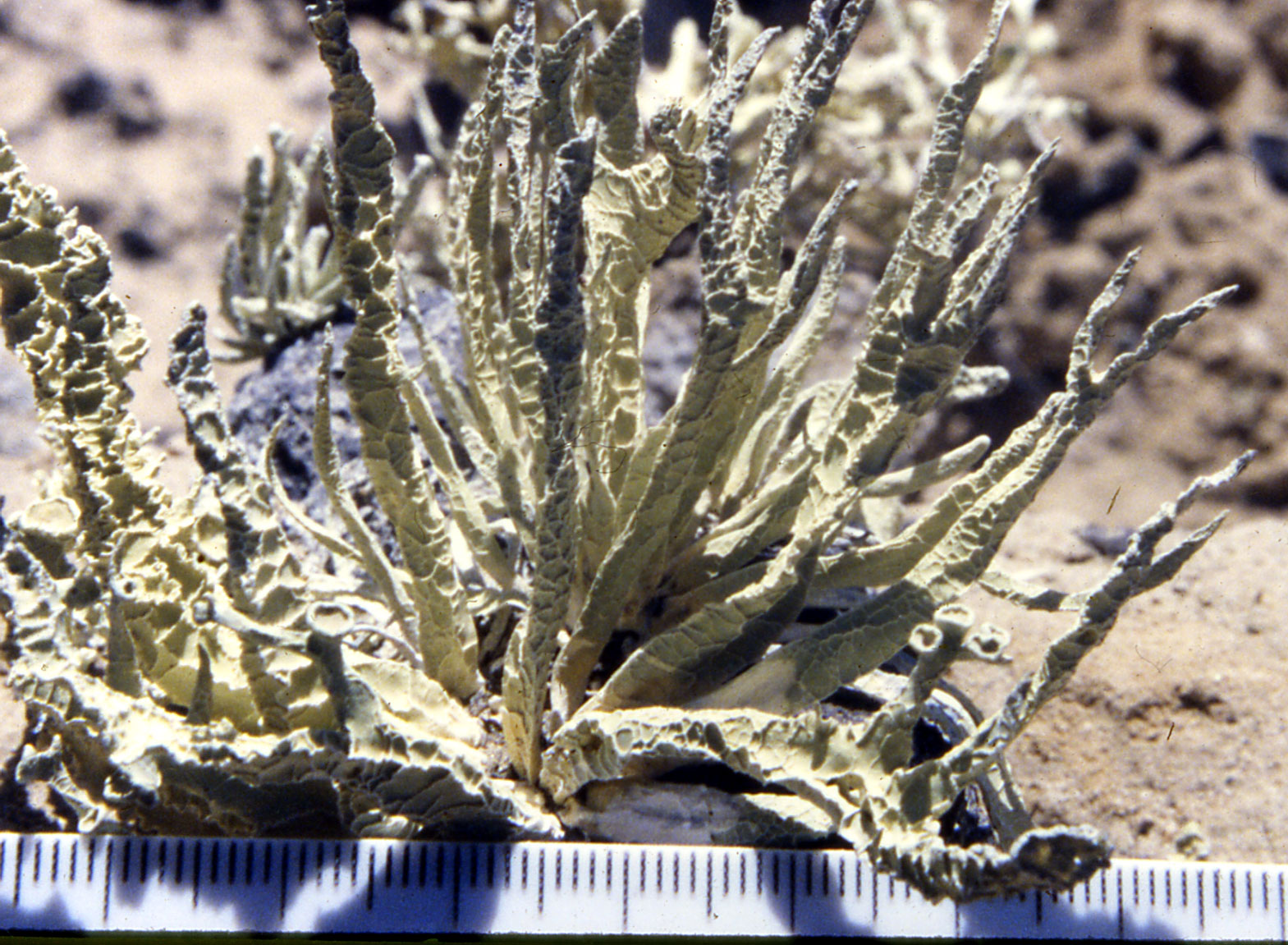
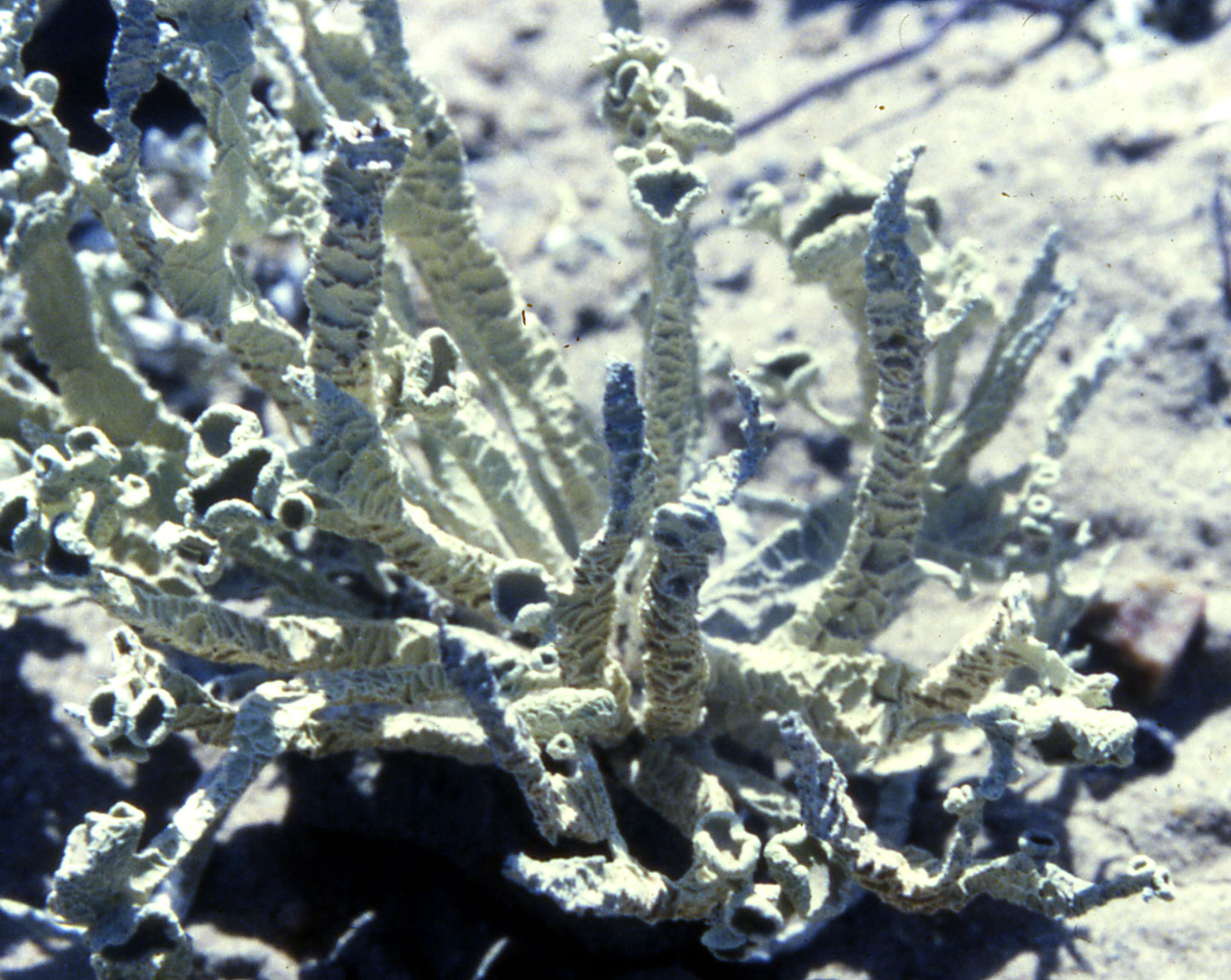
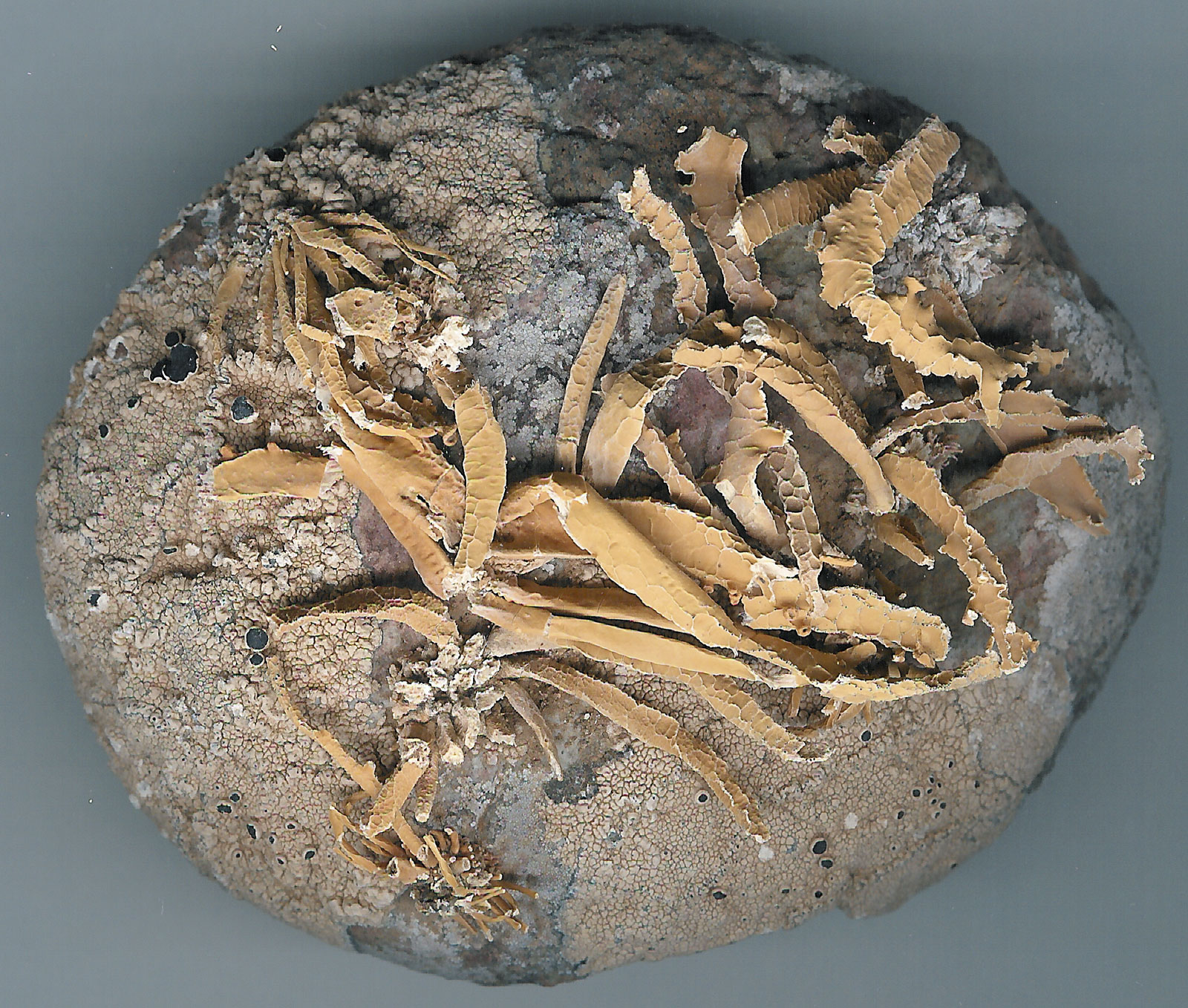
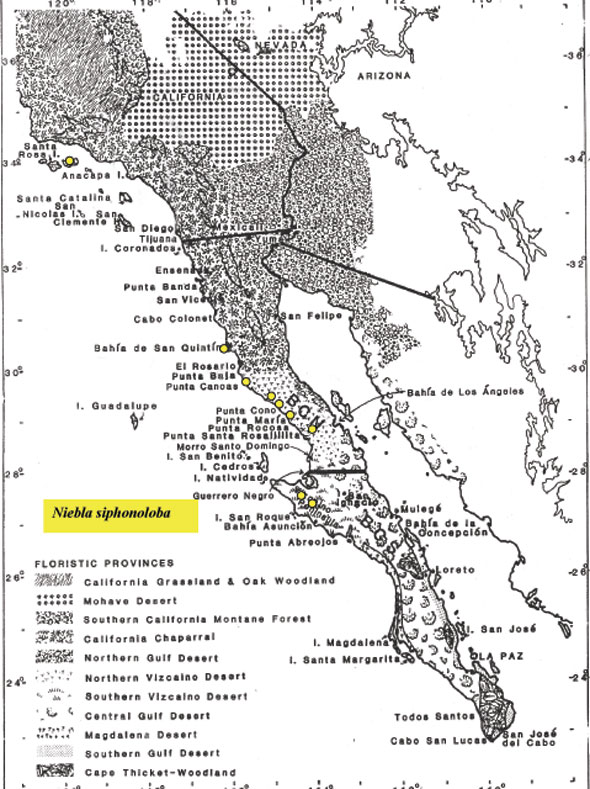
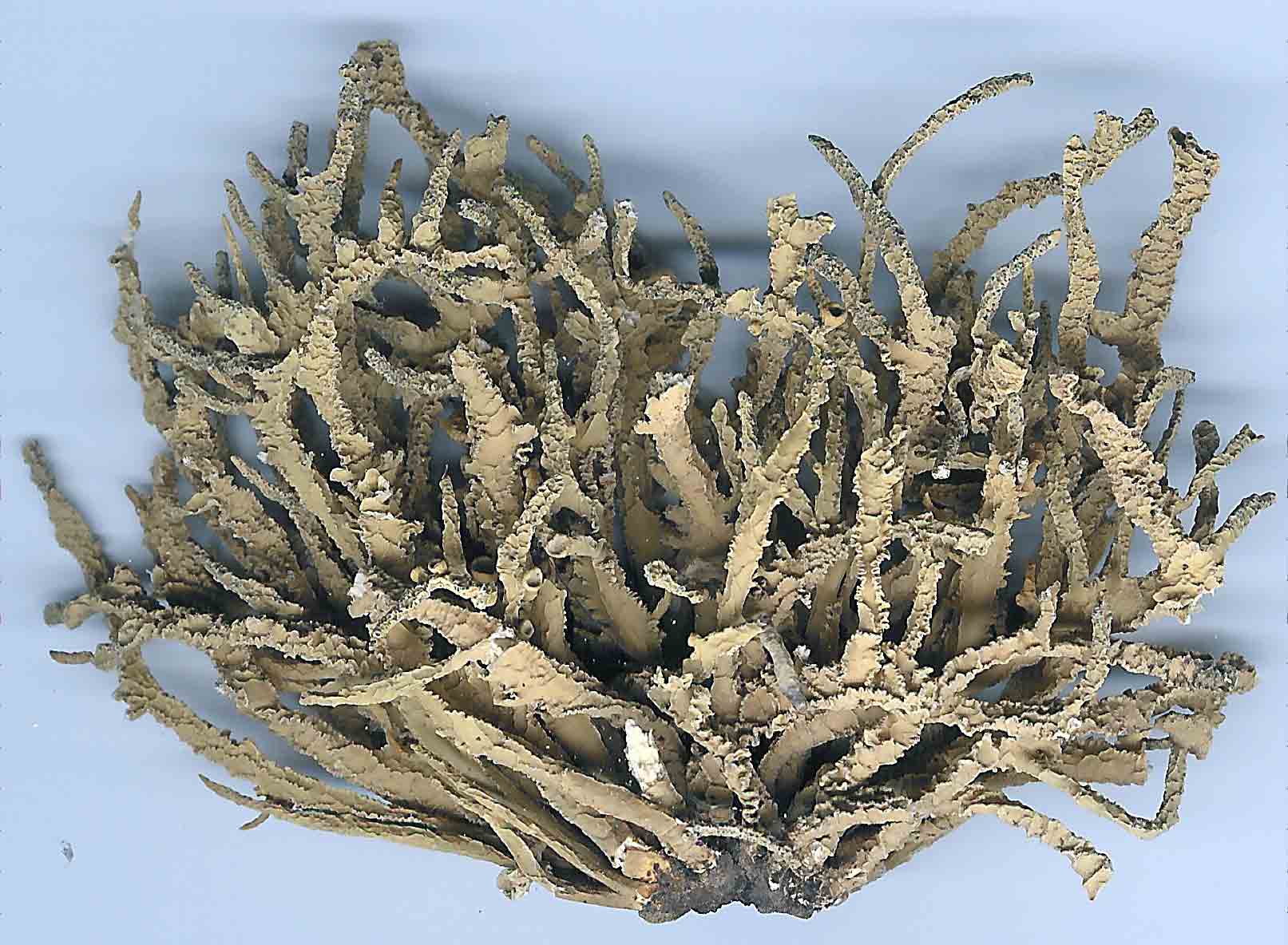
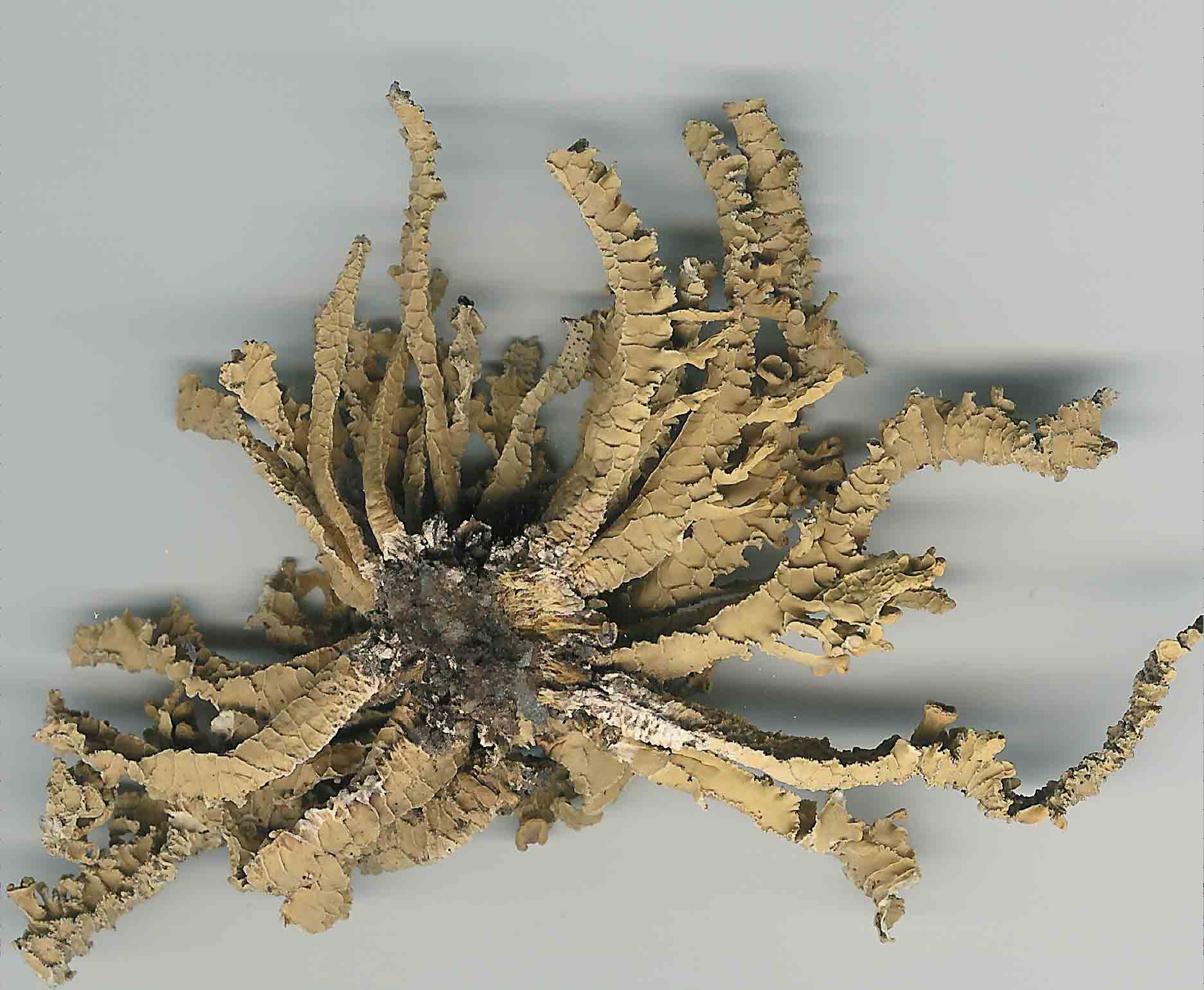
Niebla siphonoloba is a fruticose lichen frequently found on volcanic rocks along the Pacific Coast from the Vizcaíno Peninsula
of Baja California to the Channel Islands, California.
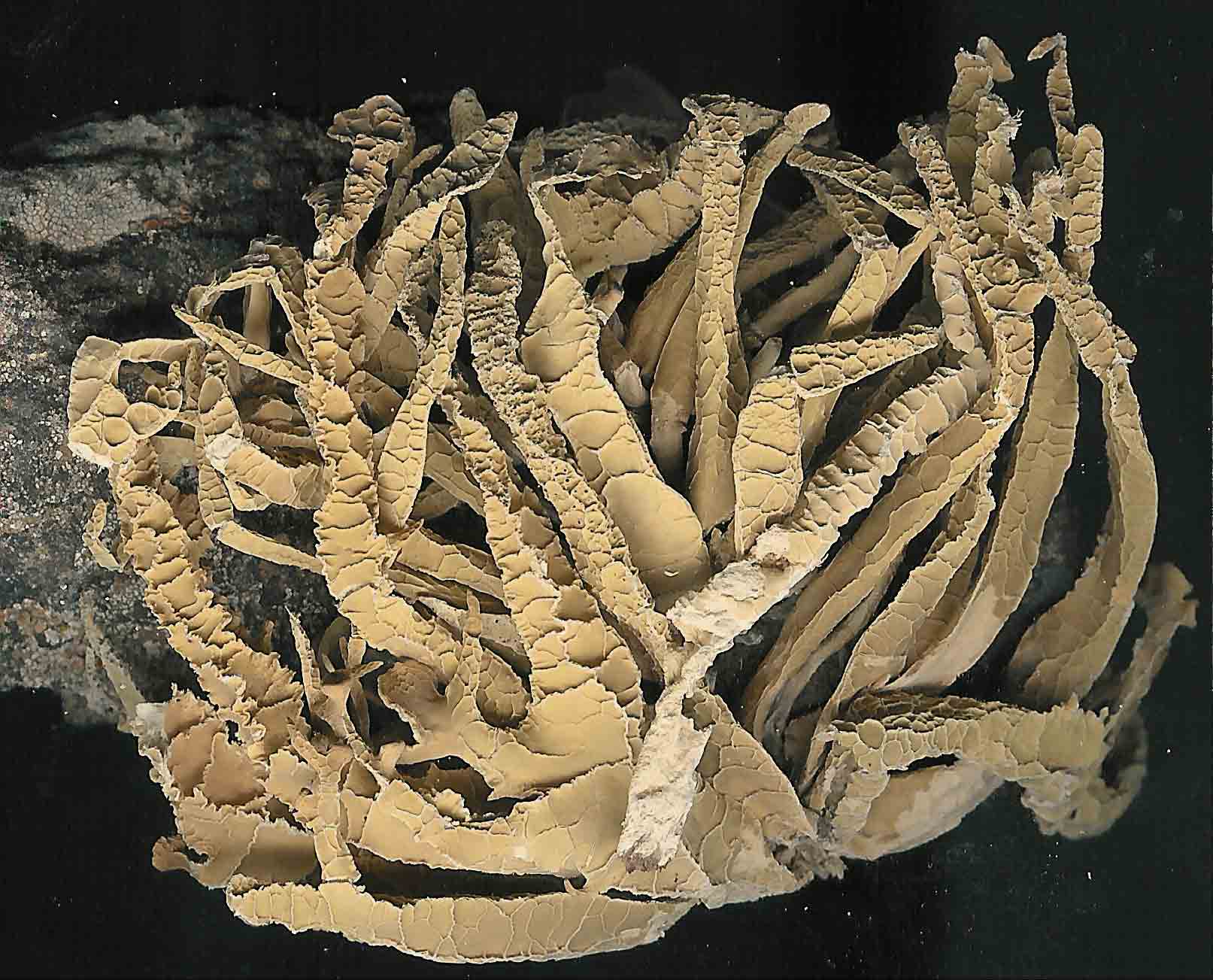
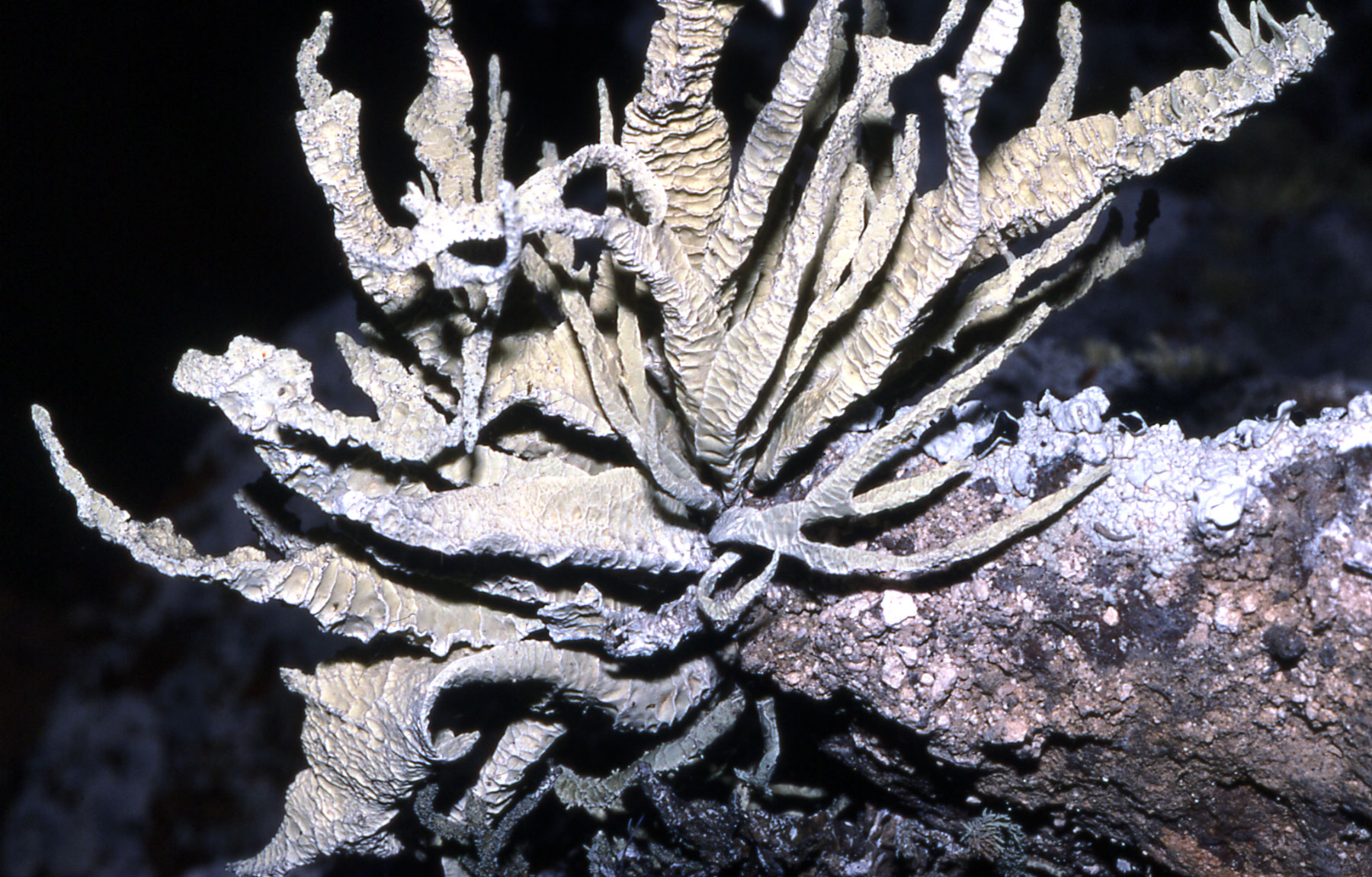
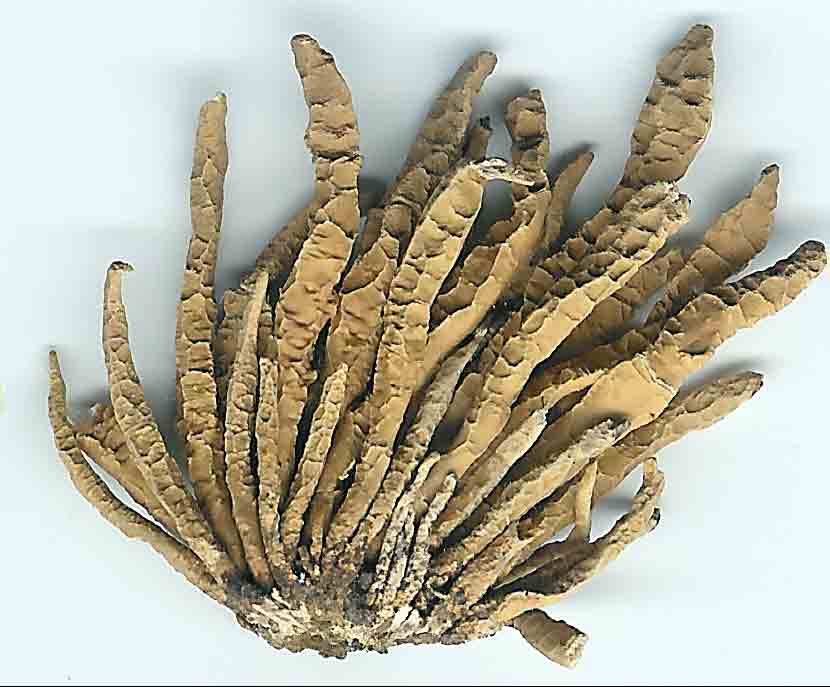
The epithet was chosen for its 'pipe-like' or 'bent tubular' basal branches
sparingly divided into secondary branches that hardly differ from the primary
branch. Thus, unlike many species of Niebla, N. siphonoloba
does not produce distinct fragmentation branchlets. Its deeply
crateriformed
cortex and terminal and subterminal mouth-like apothecia gives this lichen the
appearance of a life form from another world. The apothecia sometimes
appear to 'smile,' others 'laugh,' while still others seem to be 'clamming-up.'
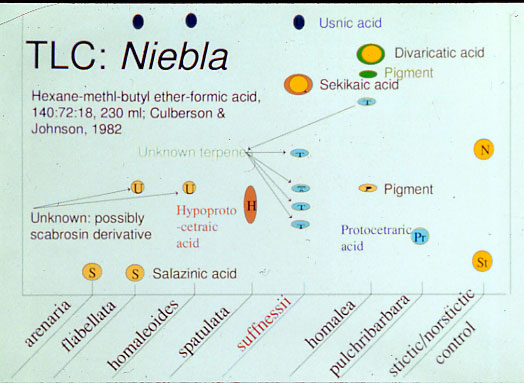
Niebla siphonoloba is most similar to N. rugosa, which is easily
distinguished by its secondary metabolite of divaricatic acid, in contrast to
sekikaic acid in N. siphonoloba. Additionally,
N. rugosa has sharply angled branches, especially in the upper half
of the thallus, undivided transverse cortical ridges that connect between the
longitudinal ridges in which areoles (spaces) appear rectangular, compared to
sinuous areoles of N. siphonoloba, and it has apothecia cups situated on
saucer-like bases.
Niebla siphonoloba
was first discovered in a Niebla community on the Vizcaíno
Peninsula near Arroyo San Andrés, represented by only sekikaic acid species, N. lobulata,
N. suffnessii and
N. usneoides. Niebla
siphonoloba
was recognized by its mostly simple basal lobes and subterminal scattered
apothecia. Niebla lobulata was distinguished by its flattened
branches with lobulate to broadly lobed margins. Niebla suffnessii was
identified by its numerous
long whip-like branchlets, and N. usneoides was easily identified by its
abundant isidia.
A community of Niebla species almost exclusively
dominated by sekikaic-acid thalli such as found on the Vizcaíno Peninsula is rare, while partial
segregation of chemotypes by habitat type have been reported from near Punta Canoas
(Spjut 1996), volcanic slopes near Bahía de San Quintín (Rundel et al. 1972),
and near El Tomatal (Sipman, Willdenowia 19:
543–555, 1990).
Niebla siphonoloba
has been found growing with N. lobulata and
N.
marinii at Morro Santo Domingo, N. podetiaforma, N. lobulata,
and N. flabellata along the shores of Bahía Santa María, N. suffnessii, N.
lobulata, and N. usneoides on Mesa Camacho, and
N. josecuervoi
at Bahía de San Quintín.
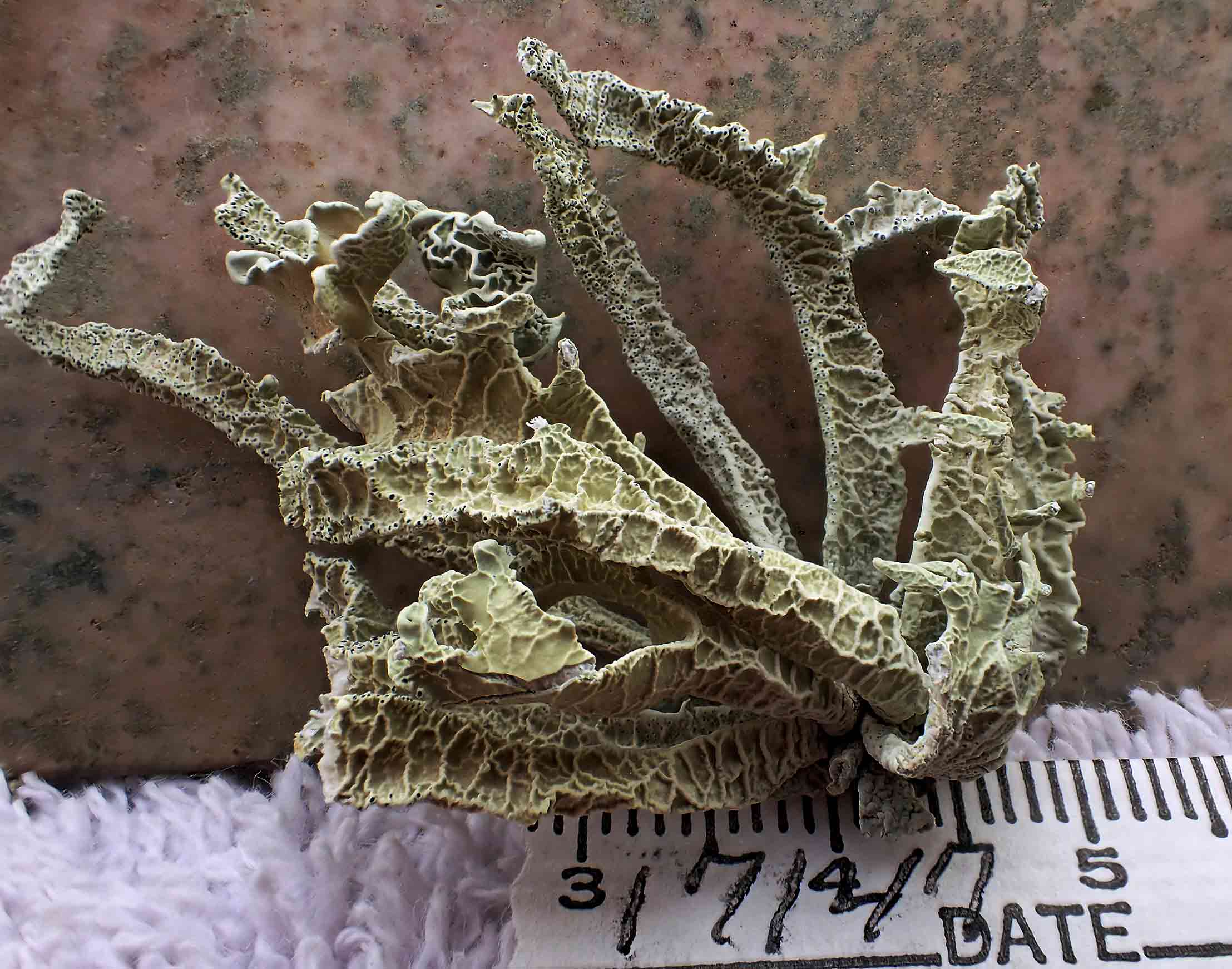
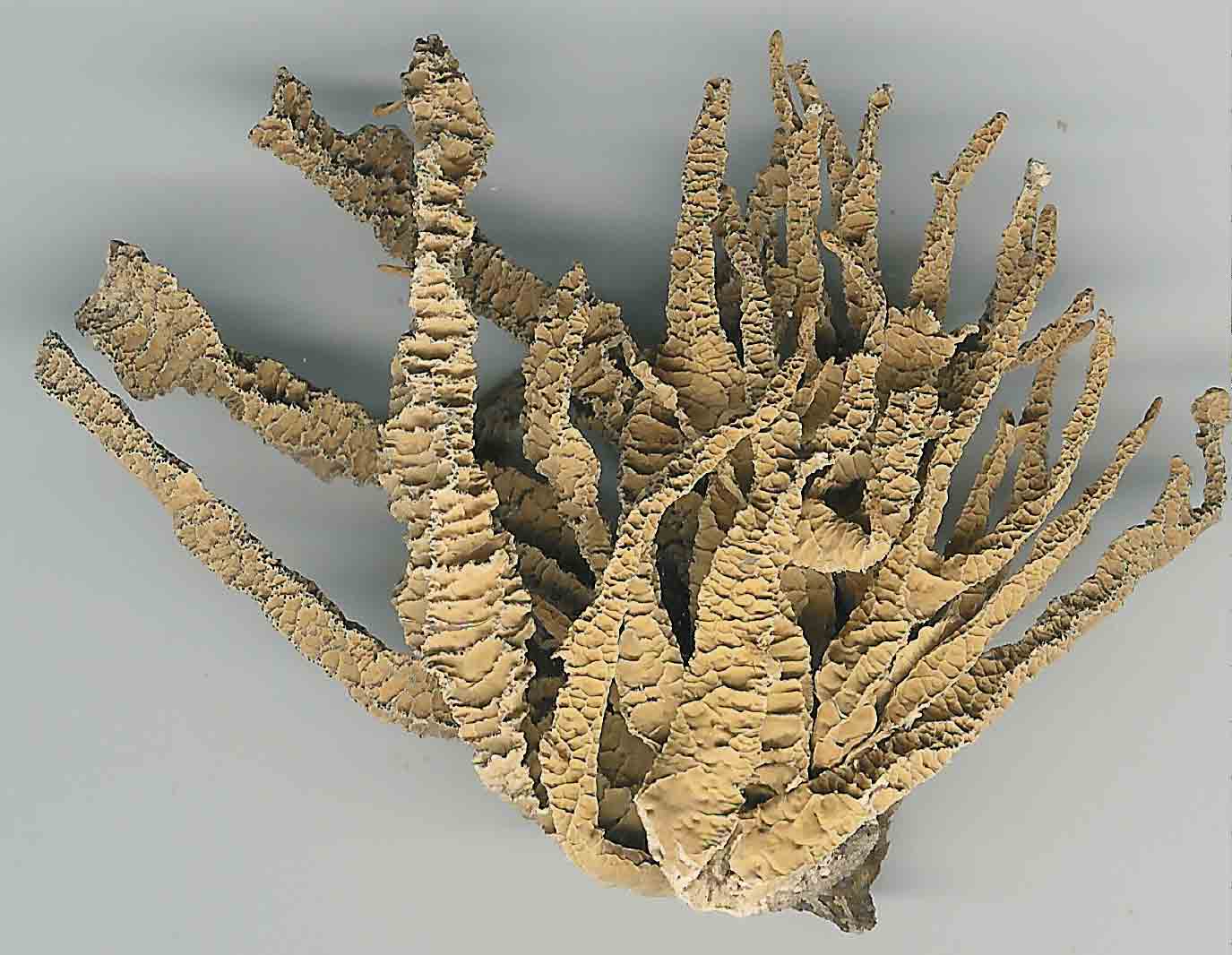
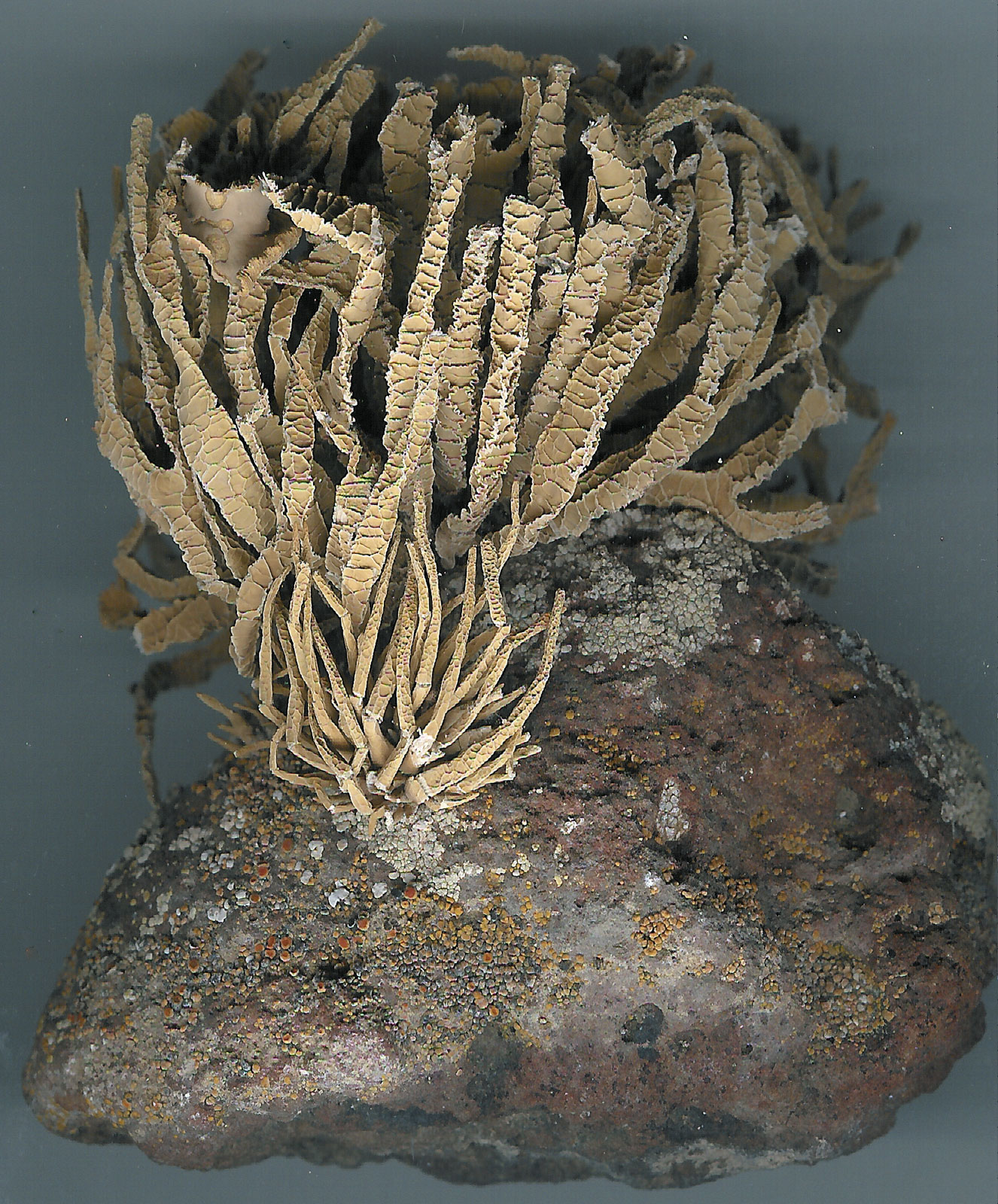
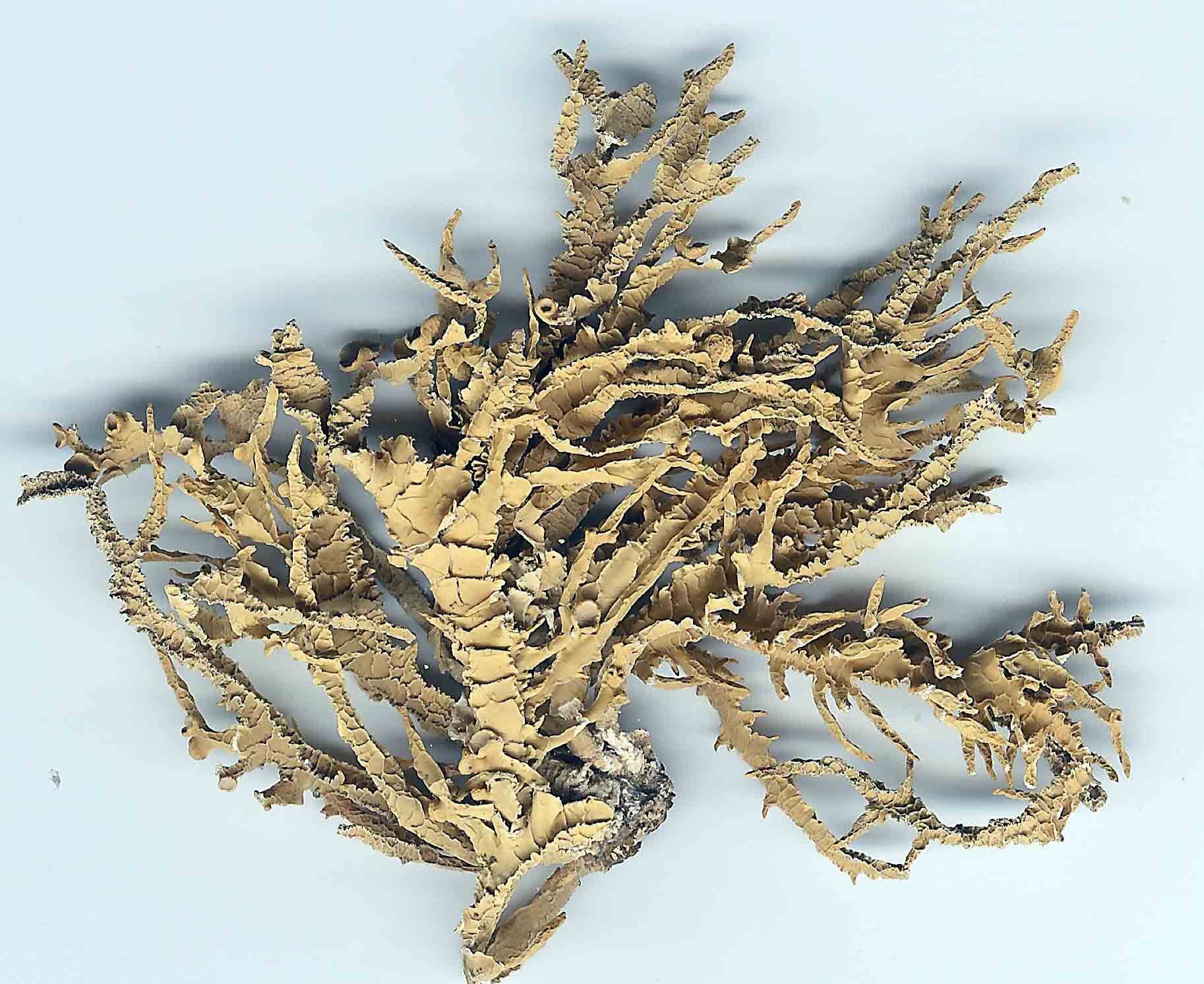
On
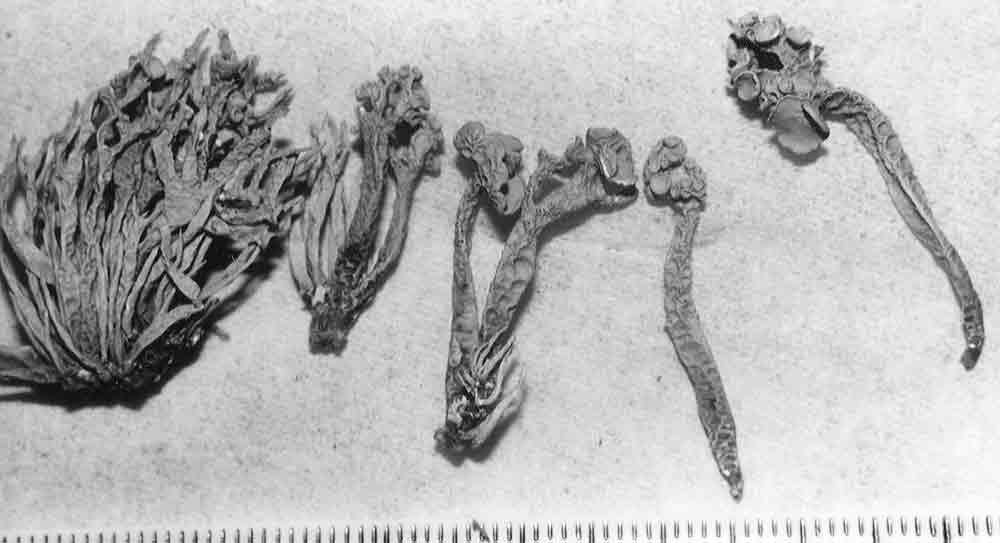
Santa Cruz Island, specimens referred to Niebla siphonoloba, as shown
below for one (Bratt 6426) of many studied from Ragged Mt., have more
basal branches with a cortex that is crateriformed instead of the sinuous
ridging seen in the Baja California specimens. This
variant from Santa Cruz Island, possibly a distinct species, appears related to the densely branched
N. dactylifera on
San Nicolas Island. However, it also
intergrades with N. fimbriata on Santa
Cruz Island (e.g., Bratt 6436, Photo 12.3 in Spjut 1996), distinguished by the strongly arched basal branches with
intact fimbriate
branchlets, while sharing the craterformed cortex as also seen in
N. dissecta. These Channel Island
species probably represent a sekikaic acid species complex that has undergone
adaptive radiation since their isolation from the mainland species and
may have occasionally hybridized, including also the related N.
cornea and N. disrupta.
Niebla sinuata
Spjut ineditus is distinguished by the sinuous cortical ridges and lobulate
margins.
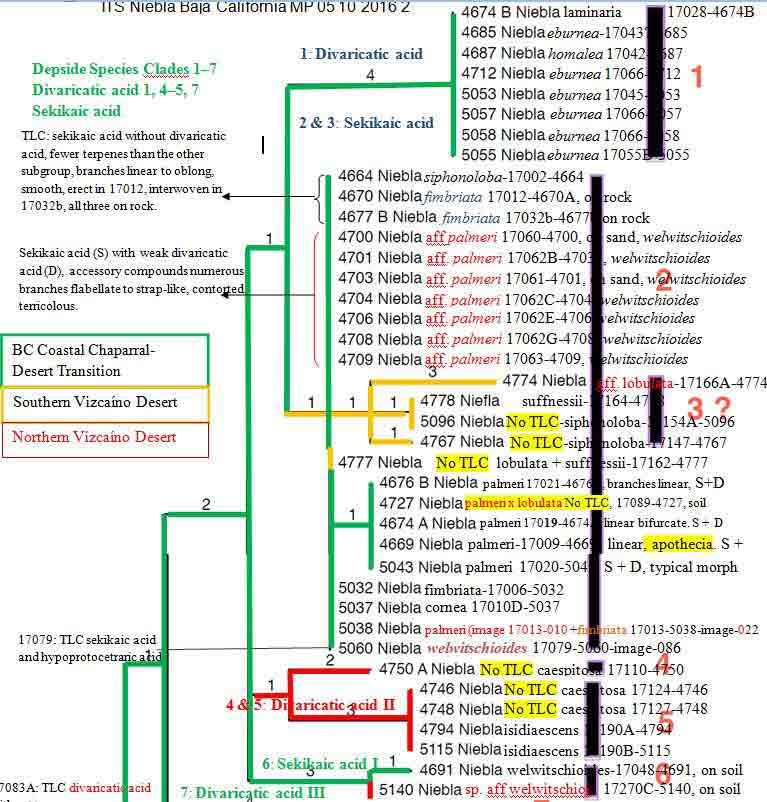
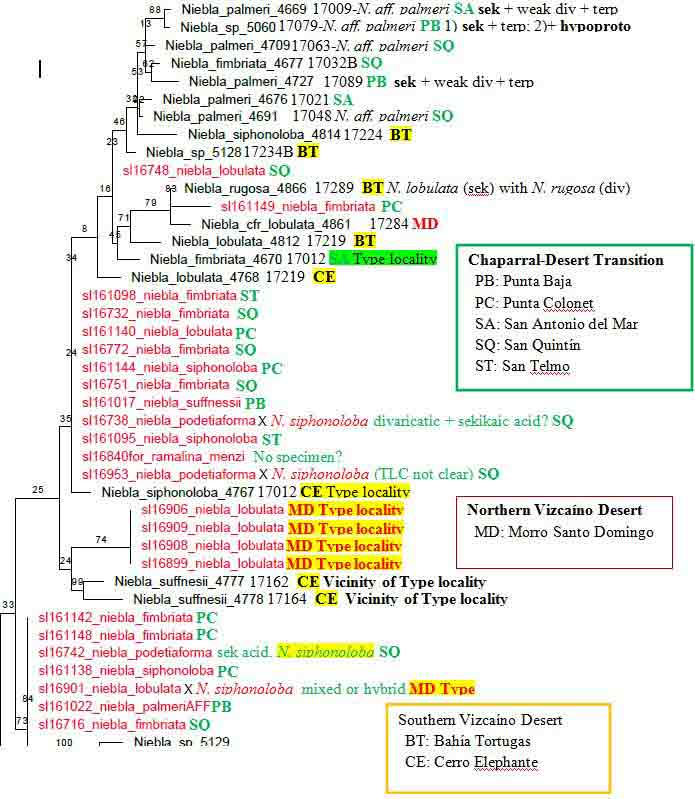
Niebla siphonoloba
appears supported from the type locality, collected on top surface of volcanic
rocks on mesa north of Cerro Elephante, as shown in the 6-loci phylogeny, and
that of N. suffnessii collected nearer Cerro Elephante where it has since
vanished from the volcanic cone as a result of climate change.
On Mesa Camacho, an
undescribed species, referred to as N. sinuata, differs by the
intermarginal sinuous lobes and apothecia developing further below the apex.
Additional Reference:
Rundel, P.W., P.A. Bowler & T.W. Mulroy.
1972. A fog-induced lichen community in northwestern Baja California,
with two new species of Desmazieria. The Bryologist 75: 501–508.
Further References: See
Niebla.
|