Niebla rugosa
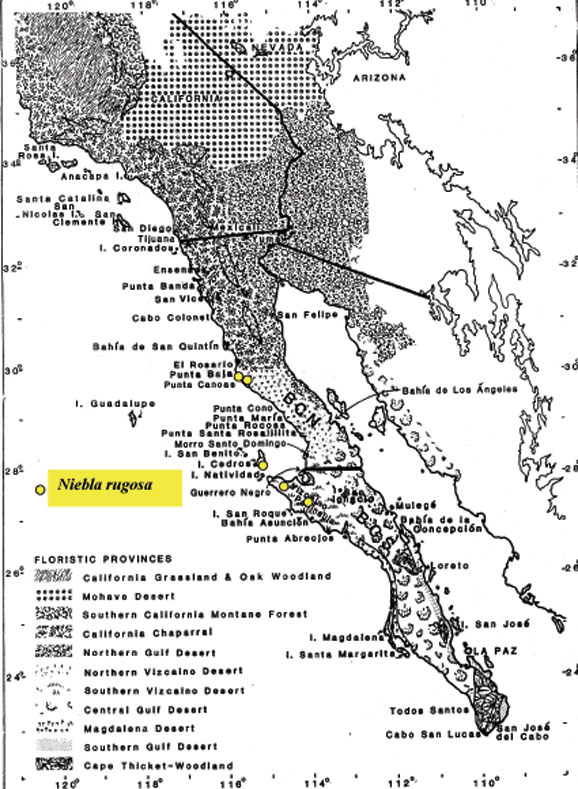
is a species of fruticose lichen endemic to the Pacific Coast Region of Baja California, infrequently occurring from the Vizcaíno
Peninsula north to near Punta San Carolos, and also on Isla Cedros. It is
found on boulders on Mesa Camacho, rock walls in a narrow wind-sheltered canyon
on the eastern side of Isla Cedros, on pebbles near San Carlos, and on gypsum
near Bahía
Tortugas; the locations are generally further away from the ocean than other
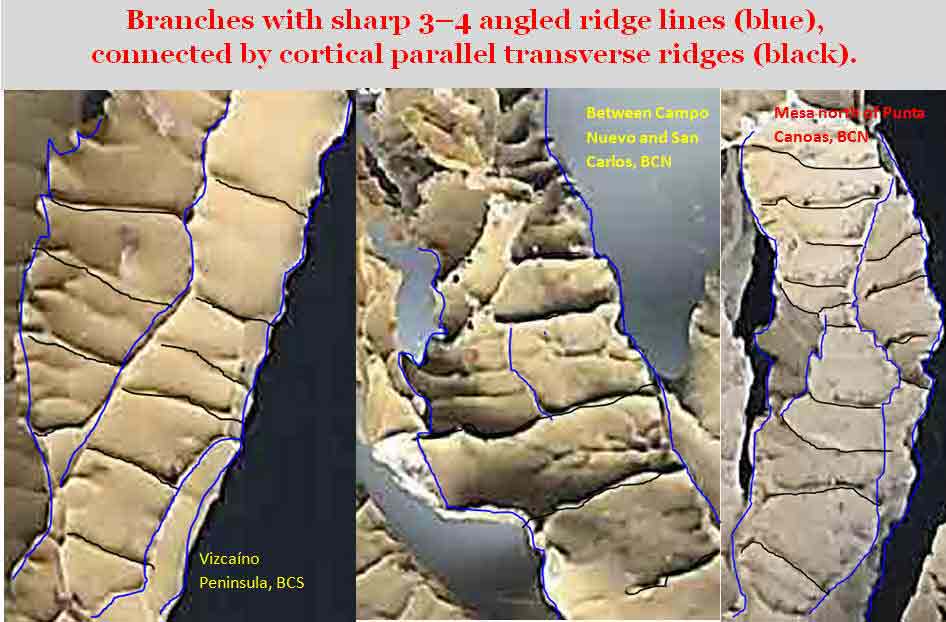
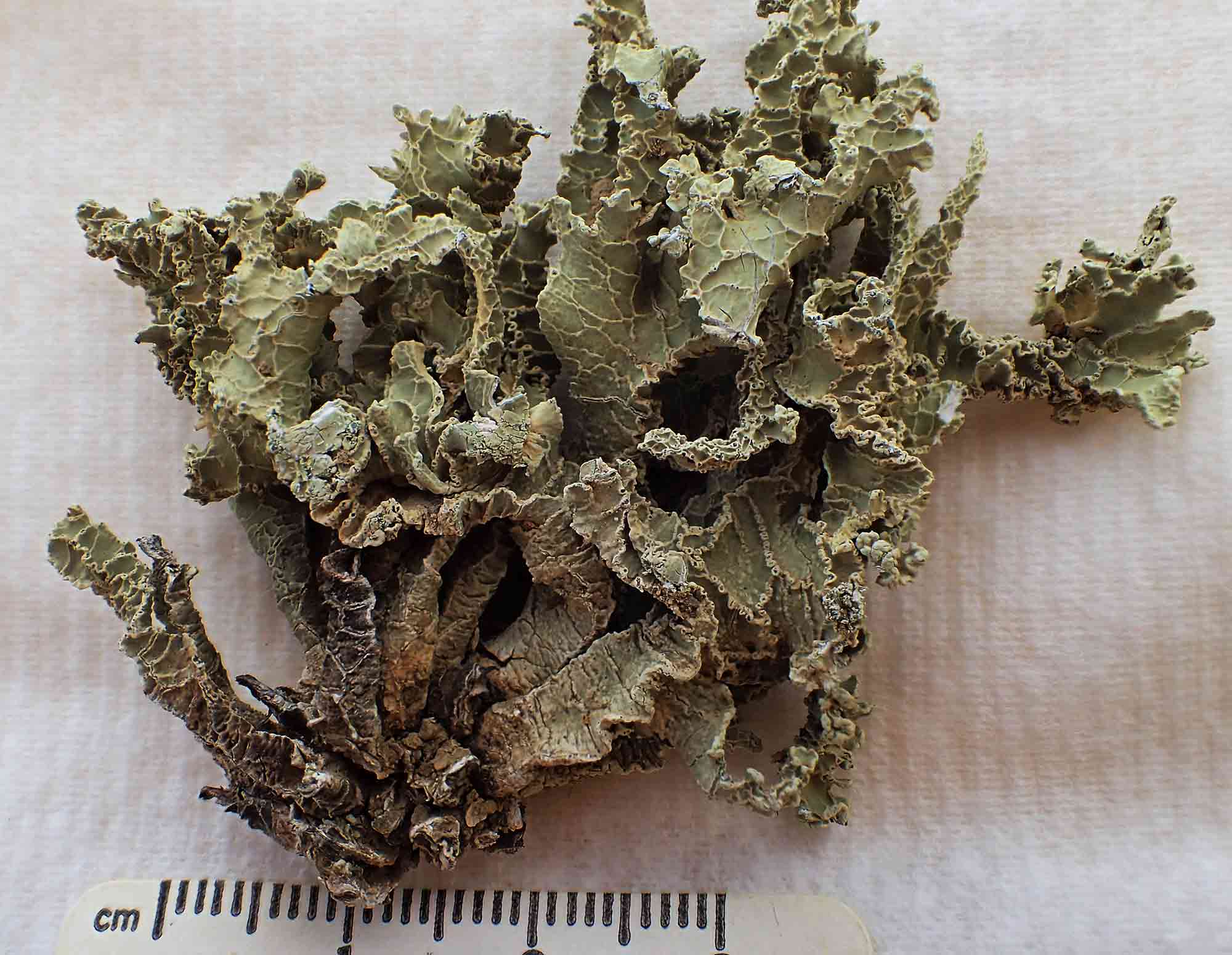
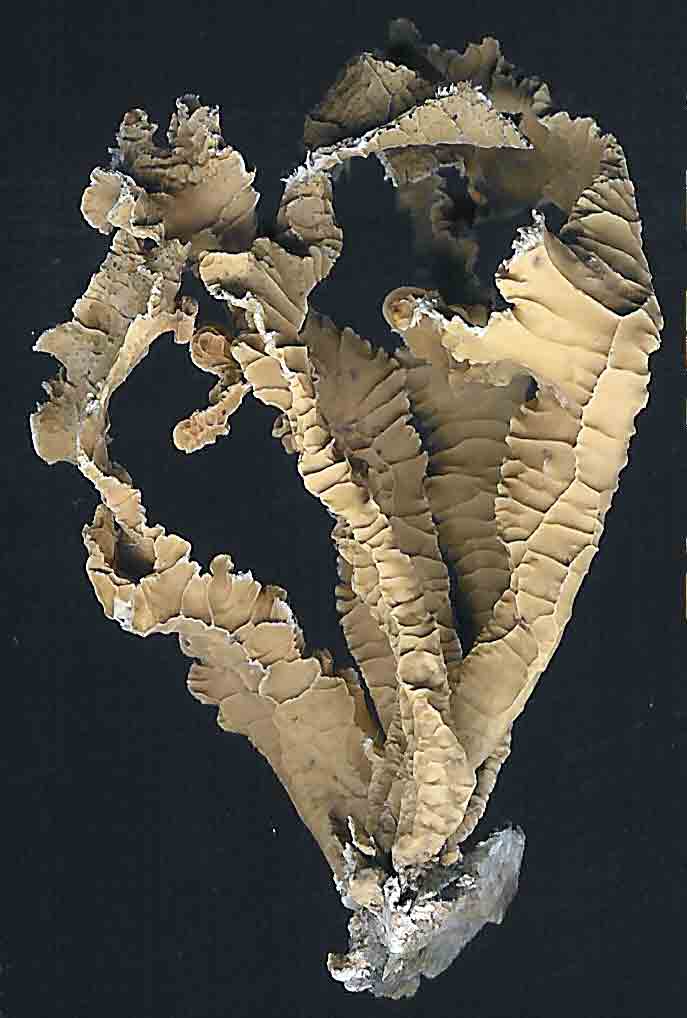
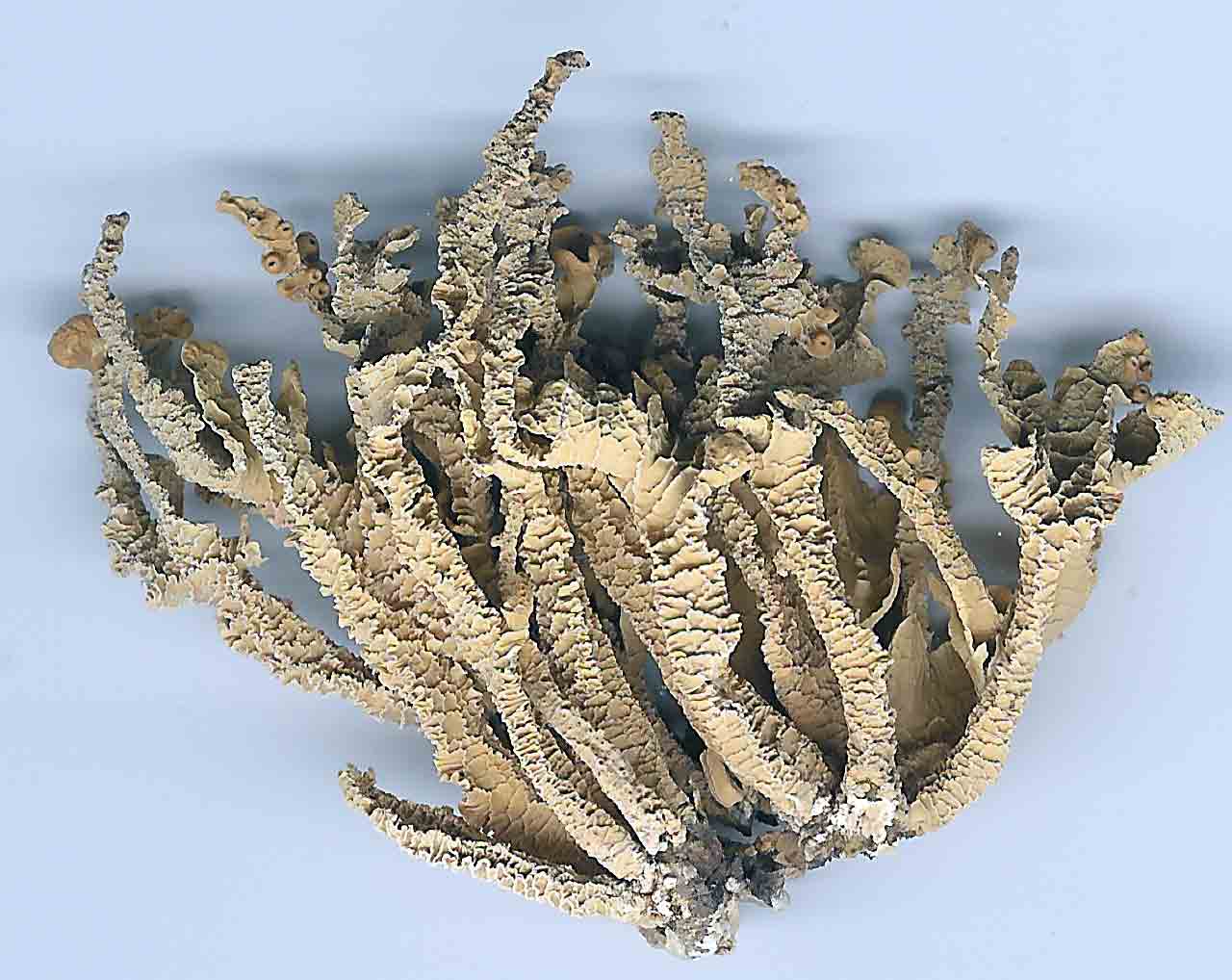
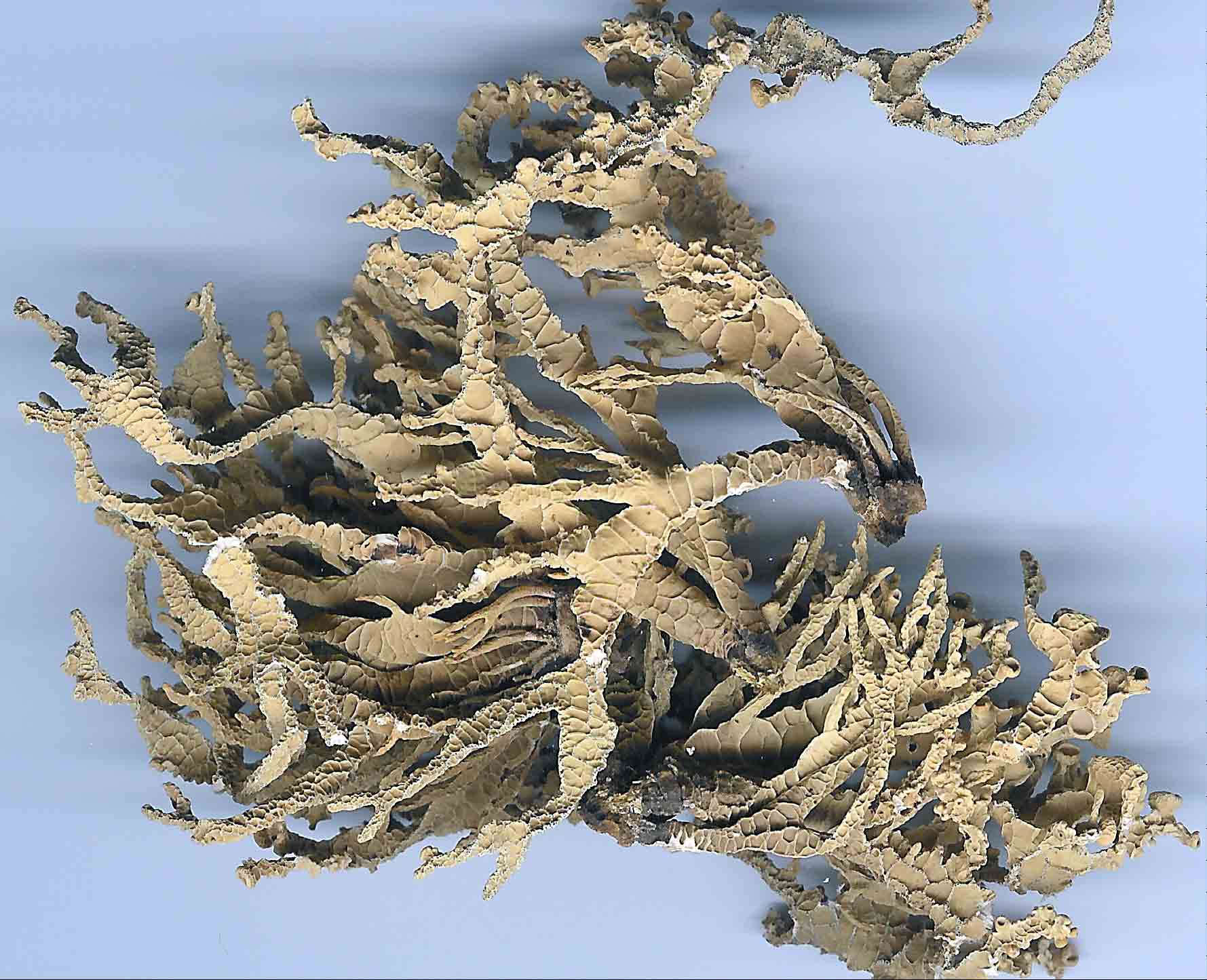
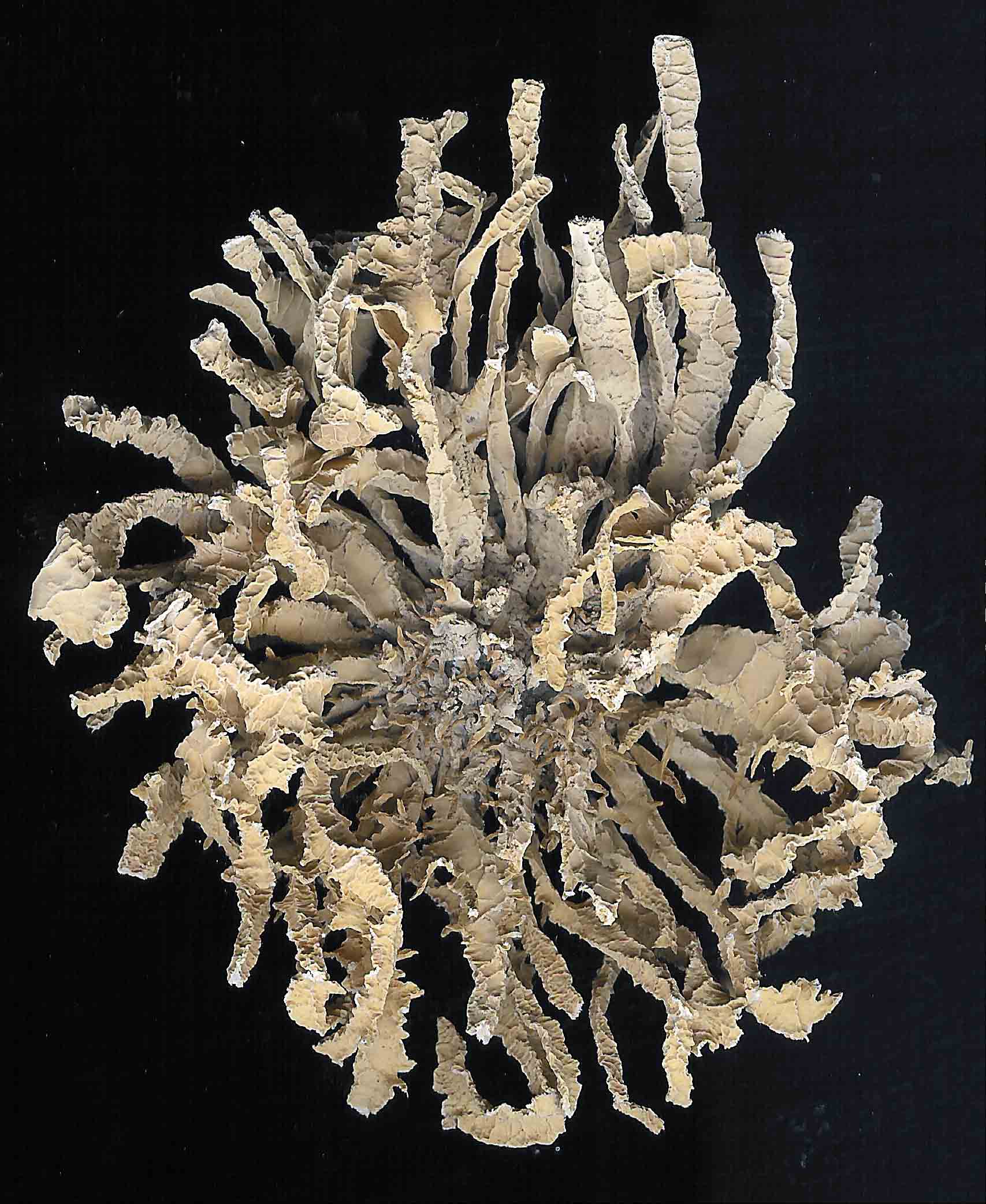
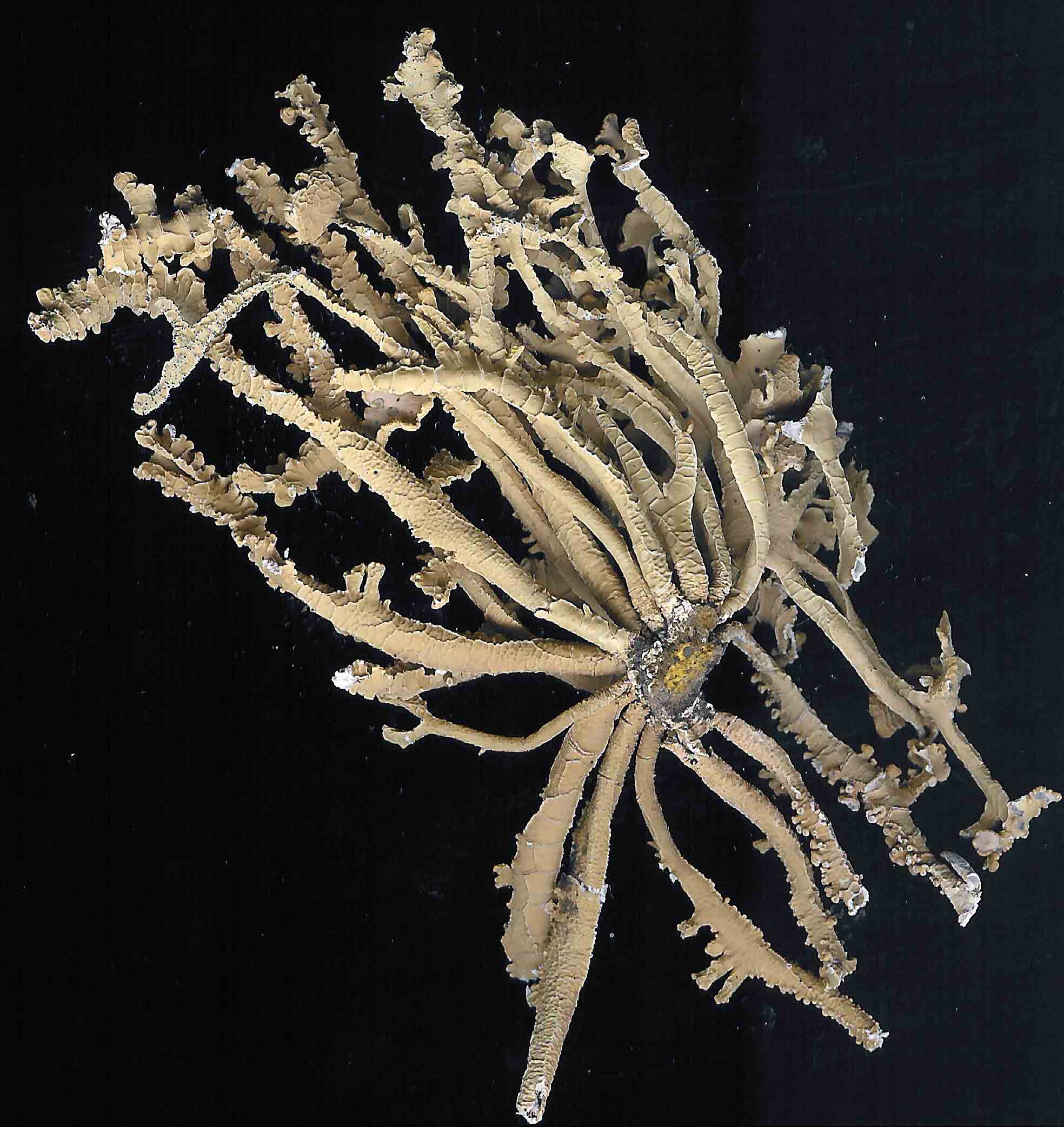
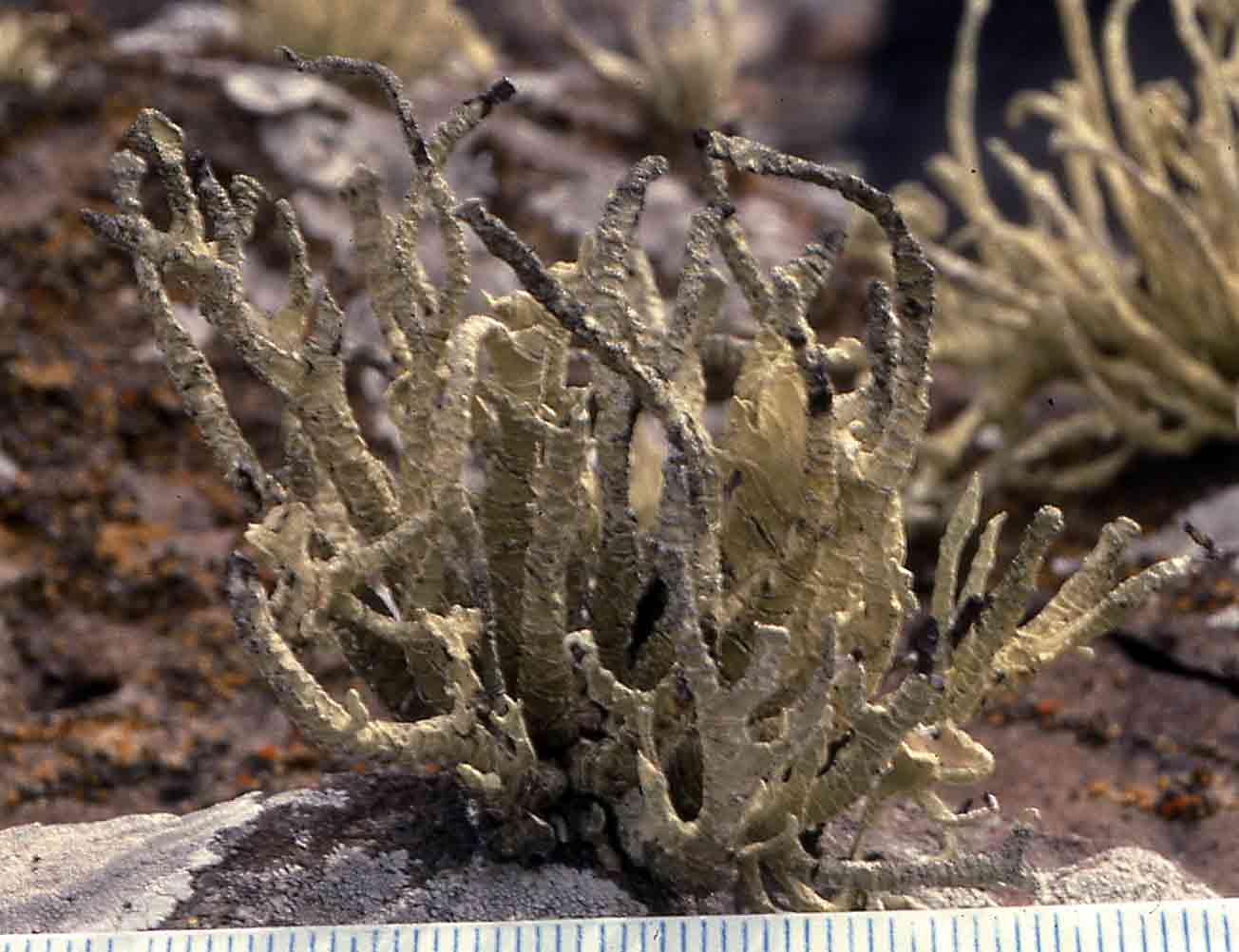
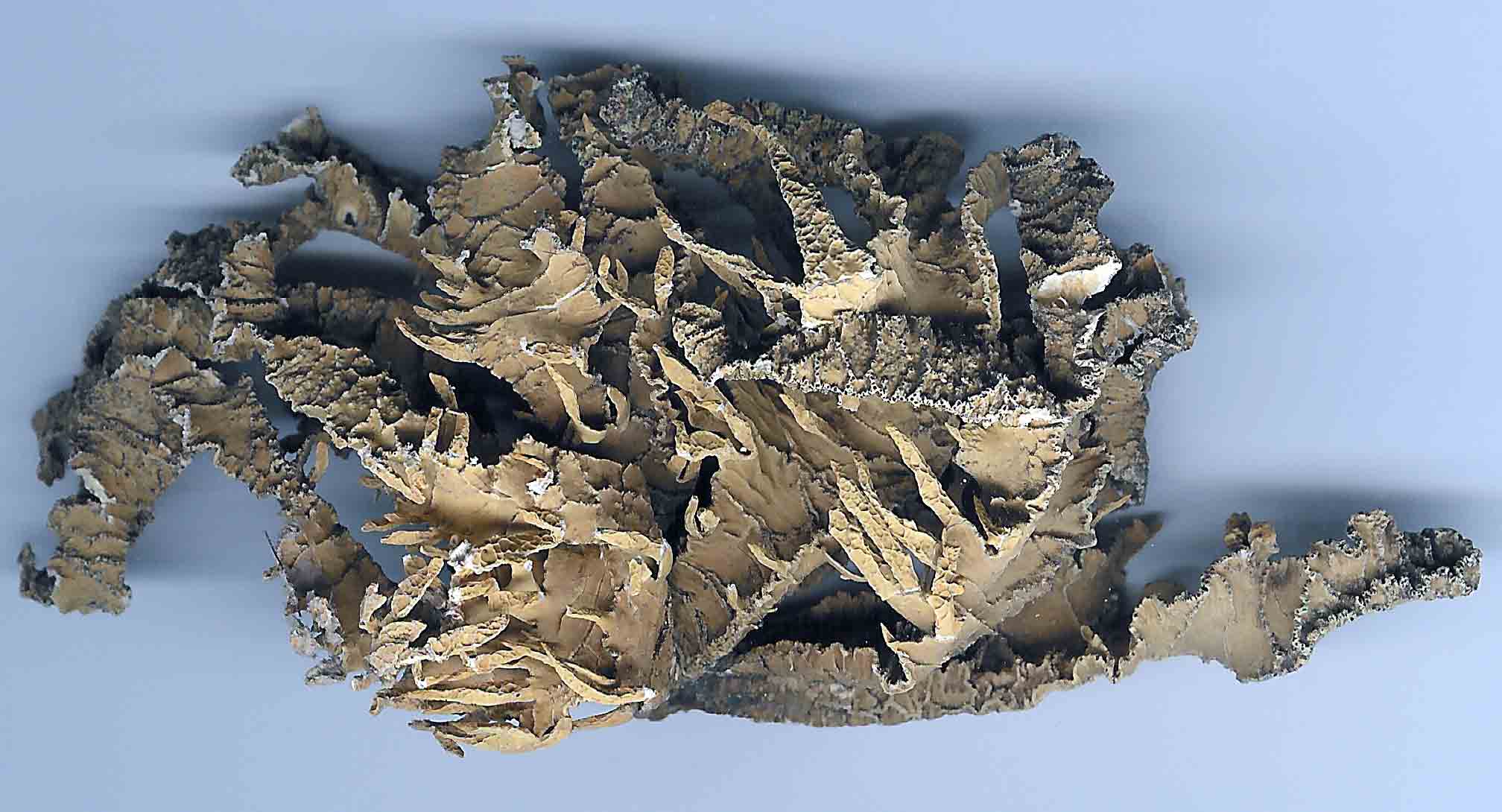
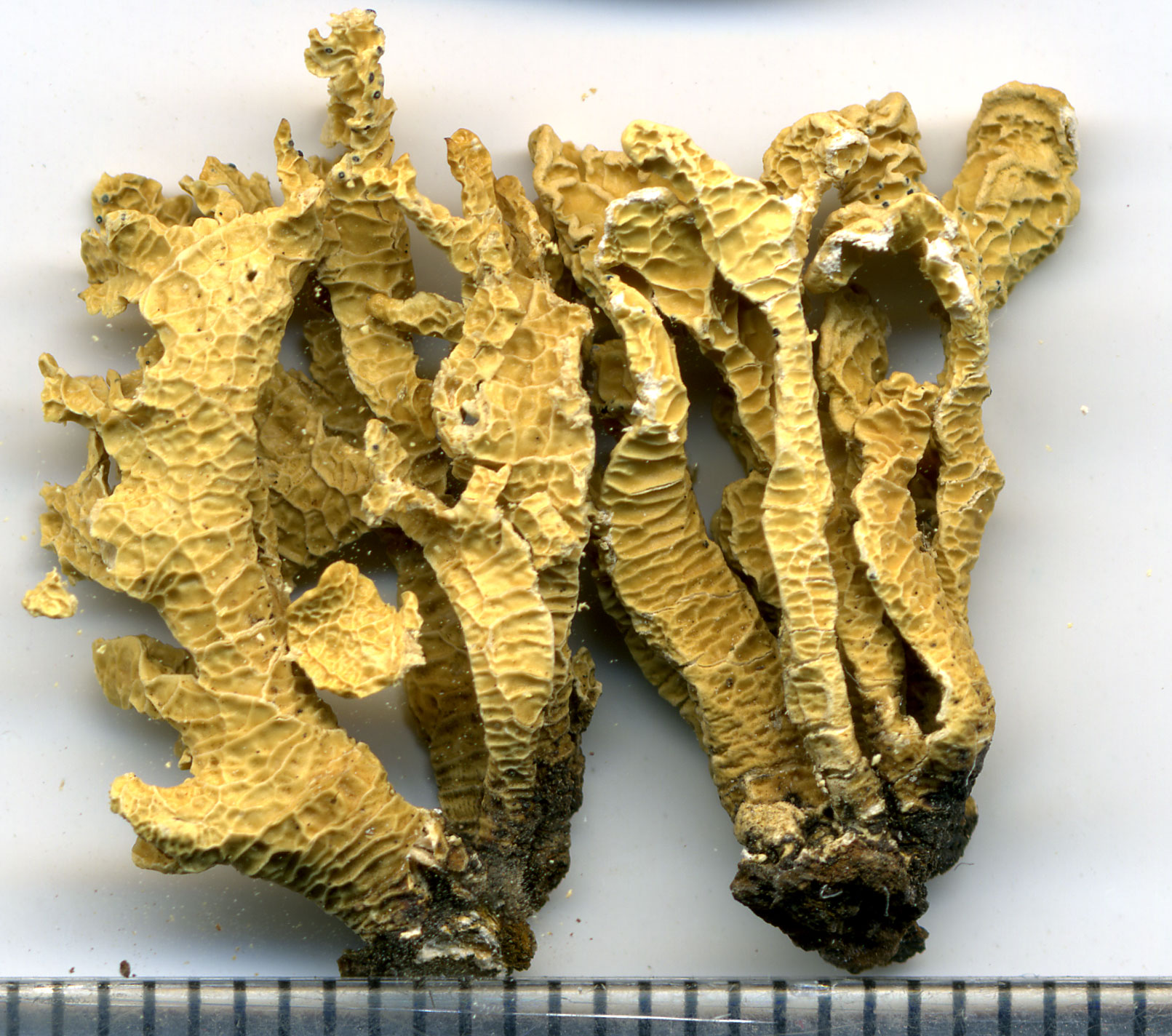
related species. The species is distinctive for the ladder-like cortical
ridges on tubular branches.
Niebla rugosa
resembles N. podetiaforma in the small tufts of subtubular
branches, but differs in the branches sharply angled along margins, in
contrast to being
rounded in N. podetiaforma. Transverse cortical ridges that
connect between the margins are
± parallel
like a step
ladder. As
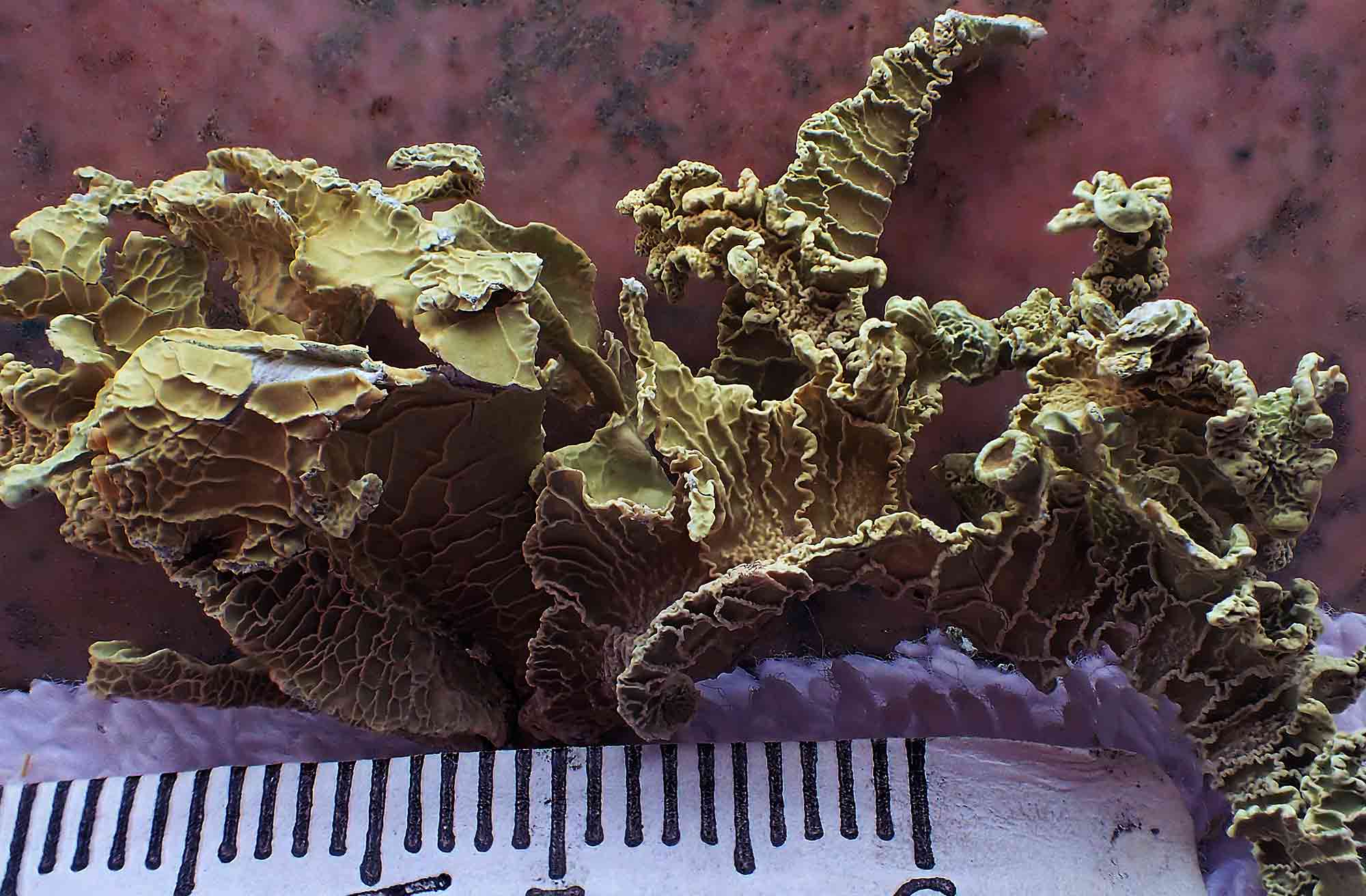
the epithet implies, Niebla rugosa has a wrinkled thallus due in part to
the prominent transverse cortical ridges.
Niebla podetiaforma cortical ridges divide between margins. Additionally, branches
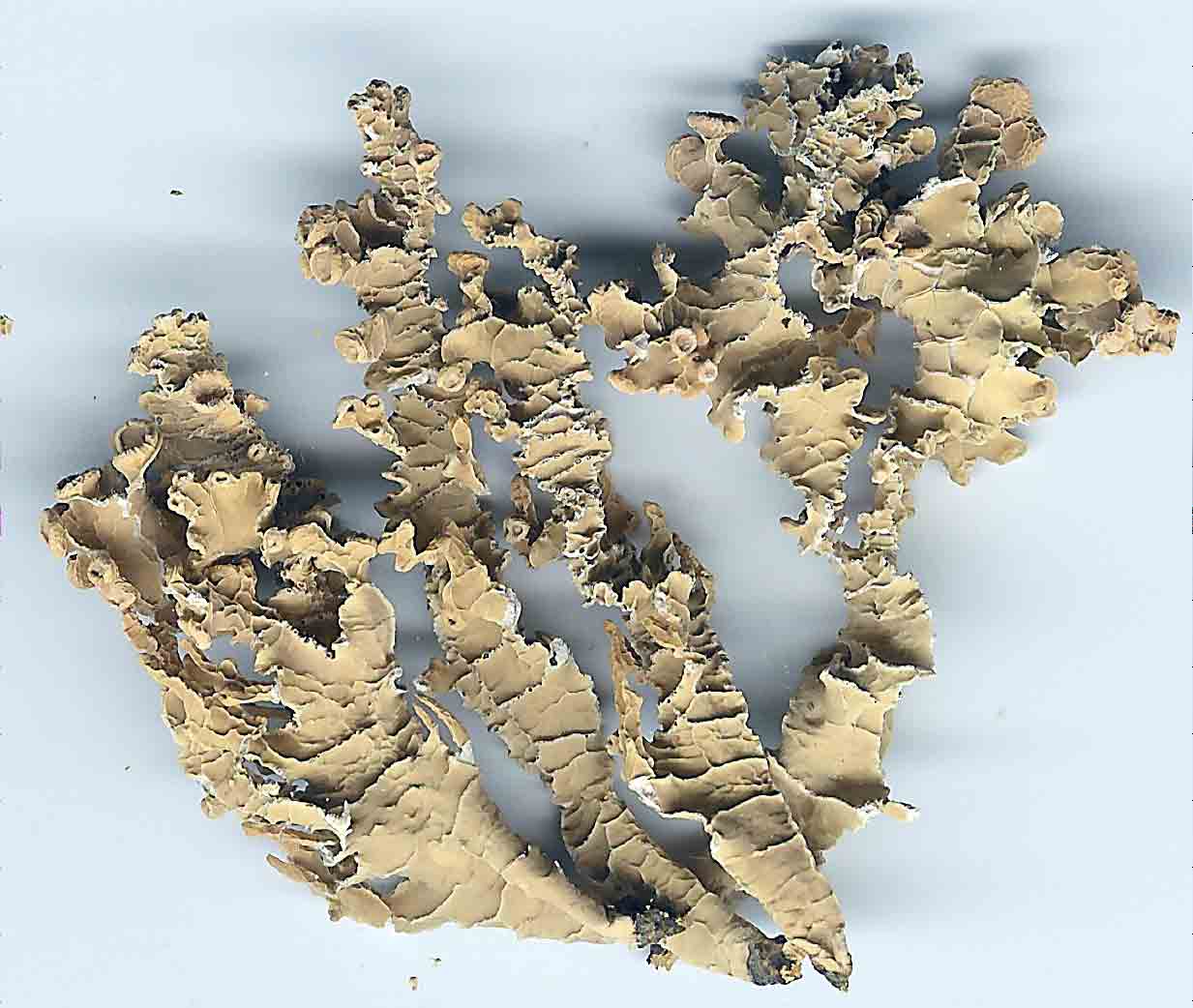
of N. rugosa are closely undulate along margins, especially upper third
to upper half in which the marginal indentations form lobules (phyllidia).
Phyllidia are absent in
N. podetiaforma. Phyllidia may be
replaced by apothecia as seen in Leavitt et al. 16-915, 16-1006.
Another
species with small tufts of mostly simple basal branches,
Niebla
siphonoloba, differs in the cortical ridges interconnecting between margins,
which seems related to the prismatic outline of the branches, although some
areas of a branch may have undivided transverse connecting ridges. Generally, N. rugosa has wide
rectangular areas between cortical ridges, in contrast to circular to
square areoles in
N. siphonoloba. They also differ
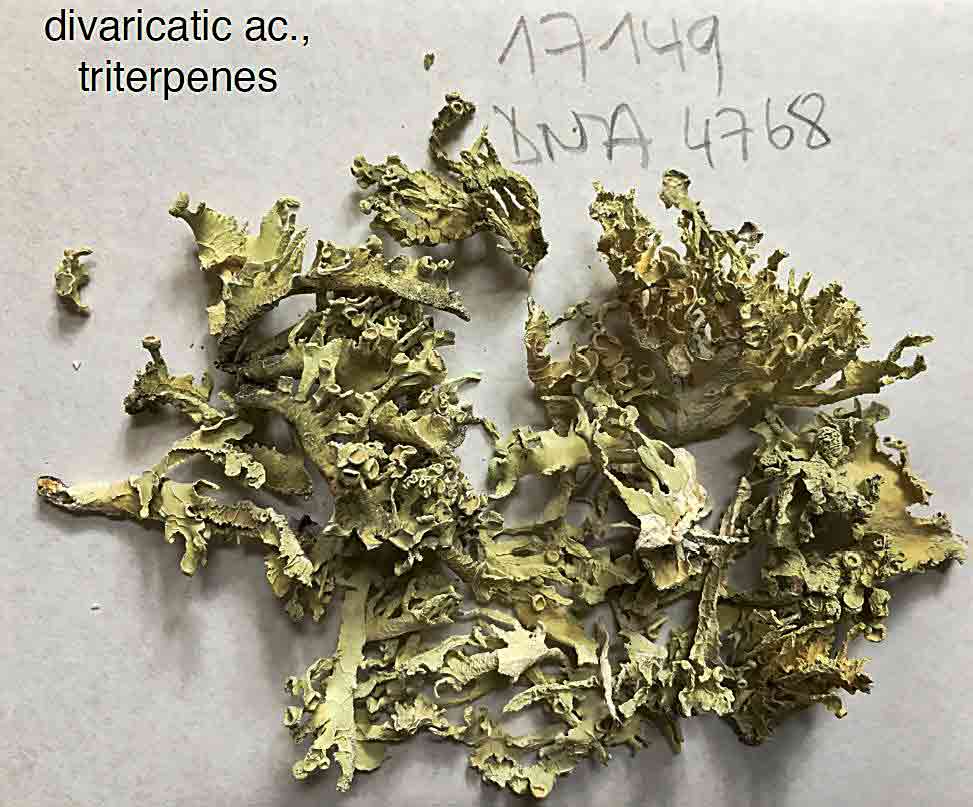
in chemistry, divaricatic acid (with triterpenes) in N. rugosa; sekikaic acid
(with triterpenes) in N.
siphonoloba.
Another
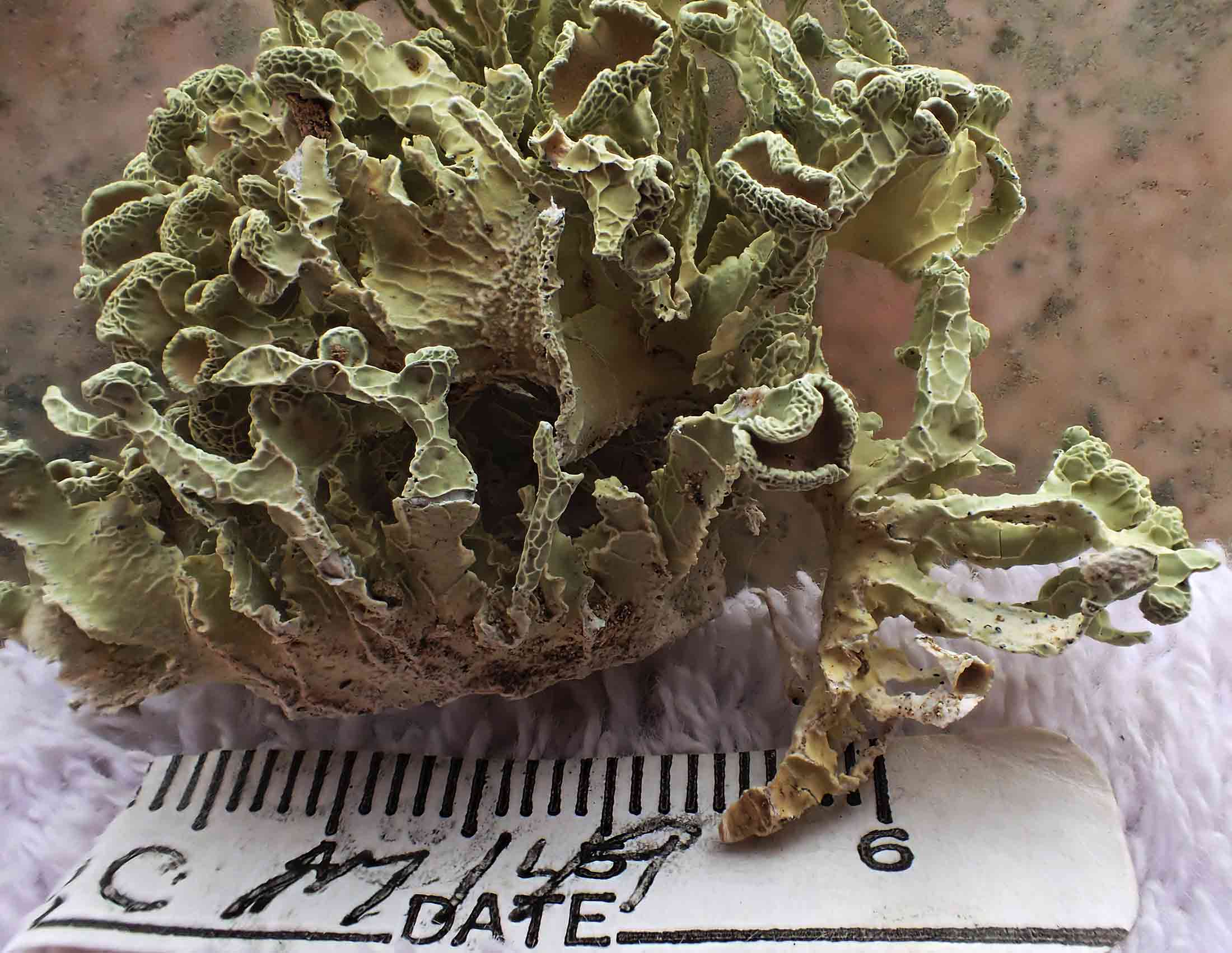
distinctive feature of N. rugosa is the cupular apothecia
on saucer-like marginal lobes. The
apothecia are perpendicular to the saucer lobe in contrast to slightly
elevated otherwise similar apothecia seen in N. contorta.
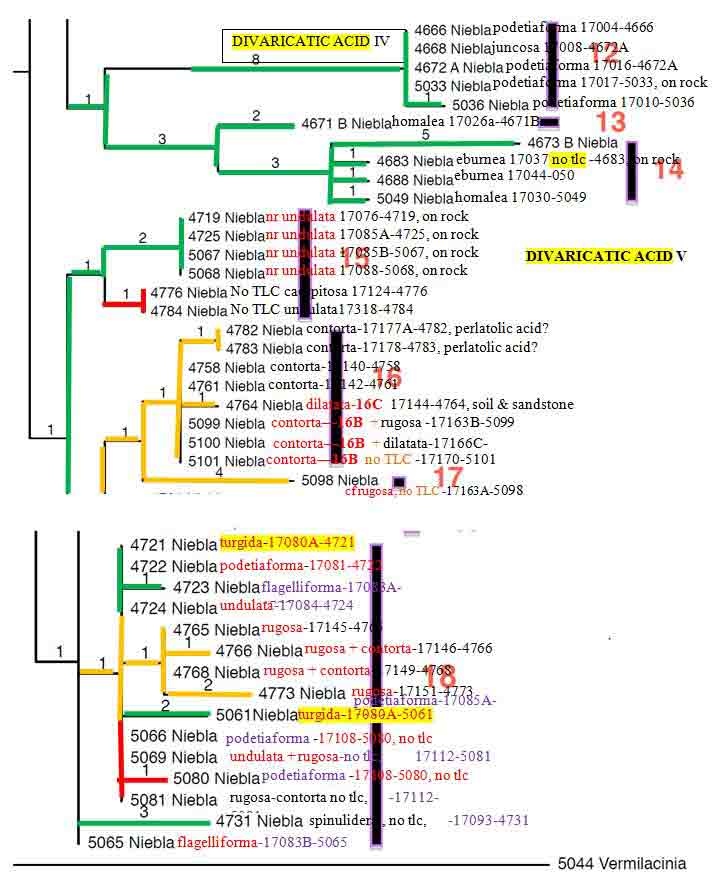
Niebla
rugosa is supported by ITS phylogeny Group 18 (6-loci in Spjut et
al. 2020, 17145-4768) from the Vizcaíno Peninsula north of
Cerro Elephante on a mesa bordering Arroyo San Andrés based on
four specimens (Spjut
& Sérusiaux 17145, 17146, 17149, 17151)
as shown above. The type locality is northwest of
Bahía Tortugas. They occur
in
a subclade within a large divaricatic acid group of species
characterized by inflated to slightly inflated tubular basal
branches (N. contorta, N. podetiaforma,
N. turgida,
N. undulata)
and N. flagelliforma. The 6-loci phylogeny shows N.
rugosa in a basal position where most closely related to specimens
collected in Chaparral Desert Transition rather than to those specimens
collected from the Northern Vizcaíno Desert (NVD). A combined phylogeny
for Jorna et al. (2021) shows one specimen, 16-1006, collected in
the southern NVD (Morro Santo Domingo) unresolved in a terminal subclade
with the same species mentioned above but somewhat of a reverse
relationship with basal clades represented by specimens collected in
Coastal Sage Chaparral and Chaparral Desert Transition regions.
Additional References: See
Niebla.