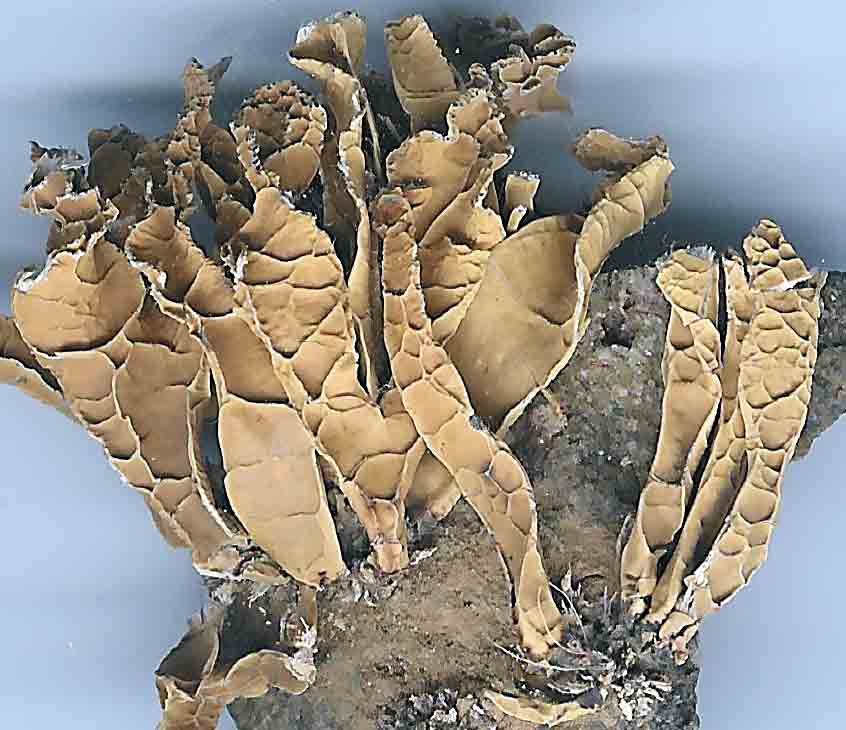
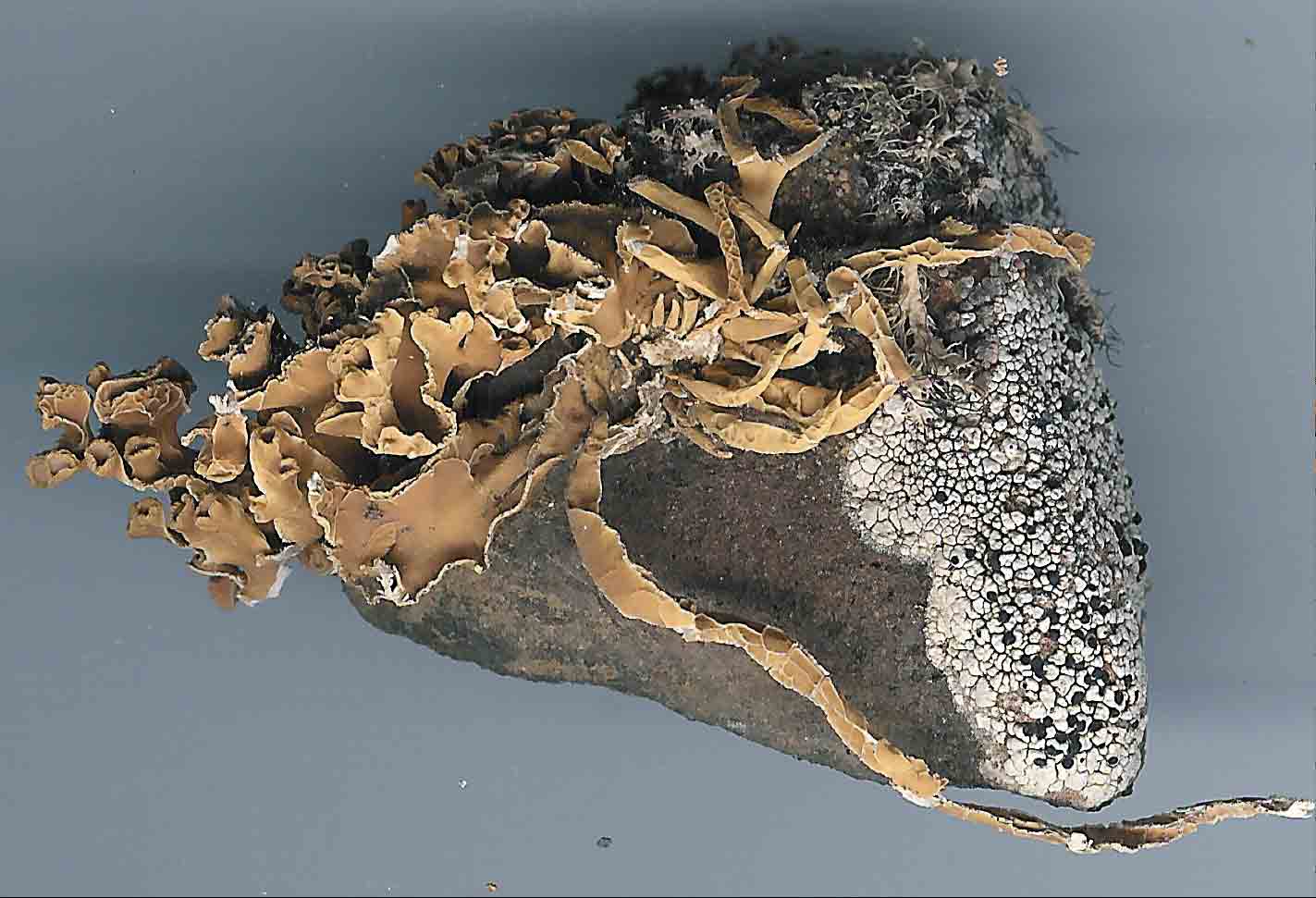
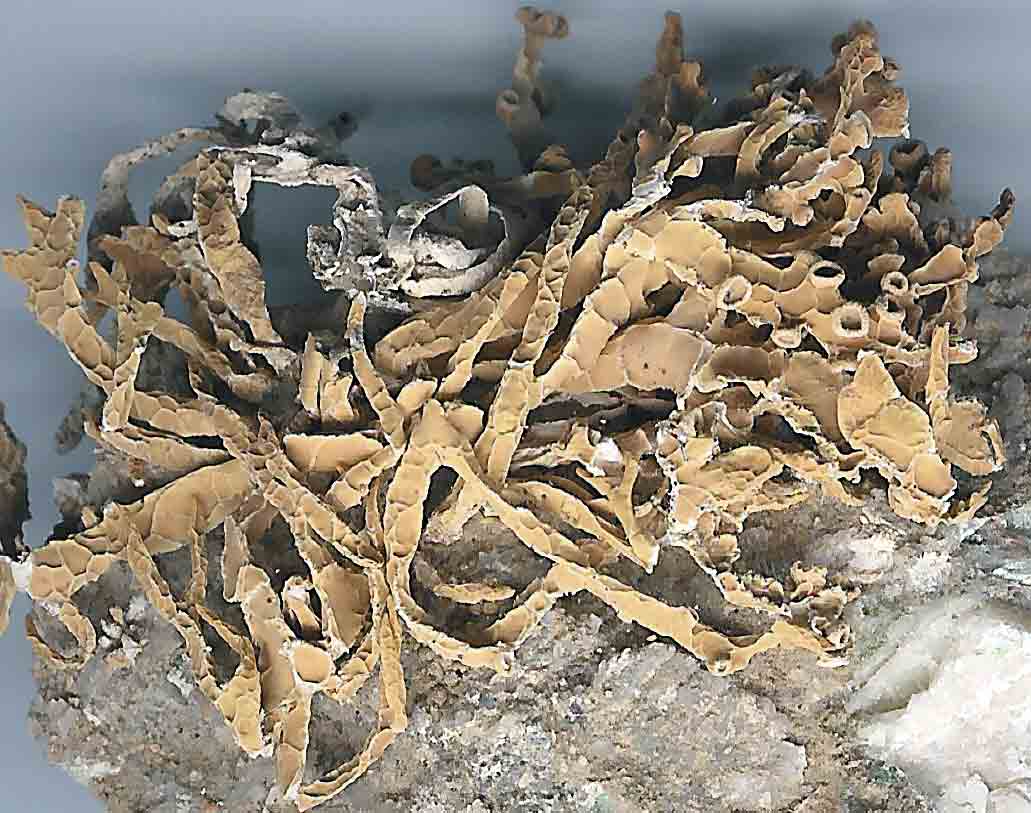
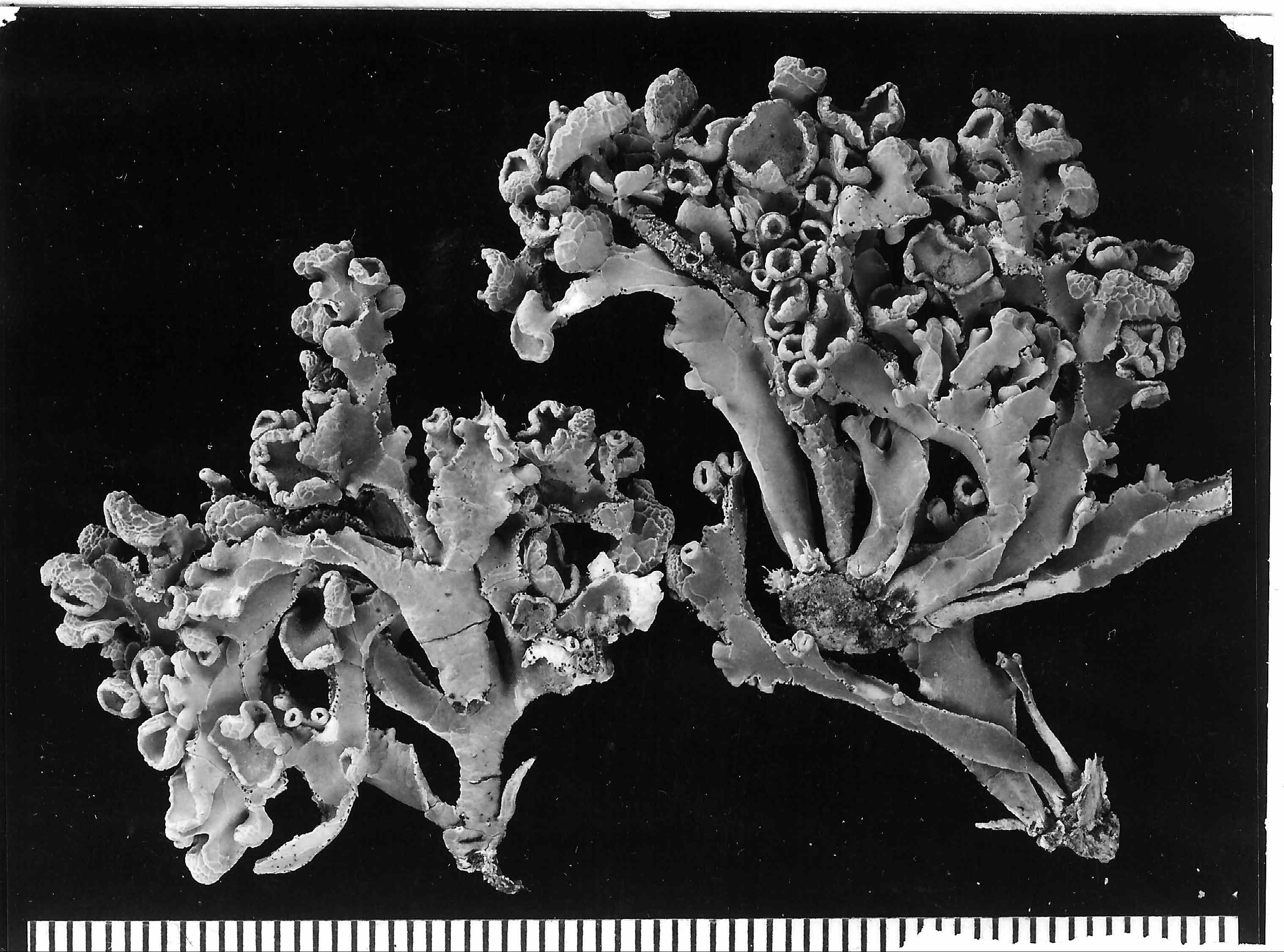
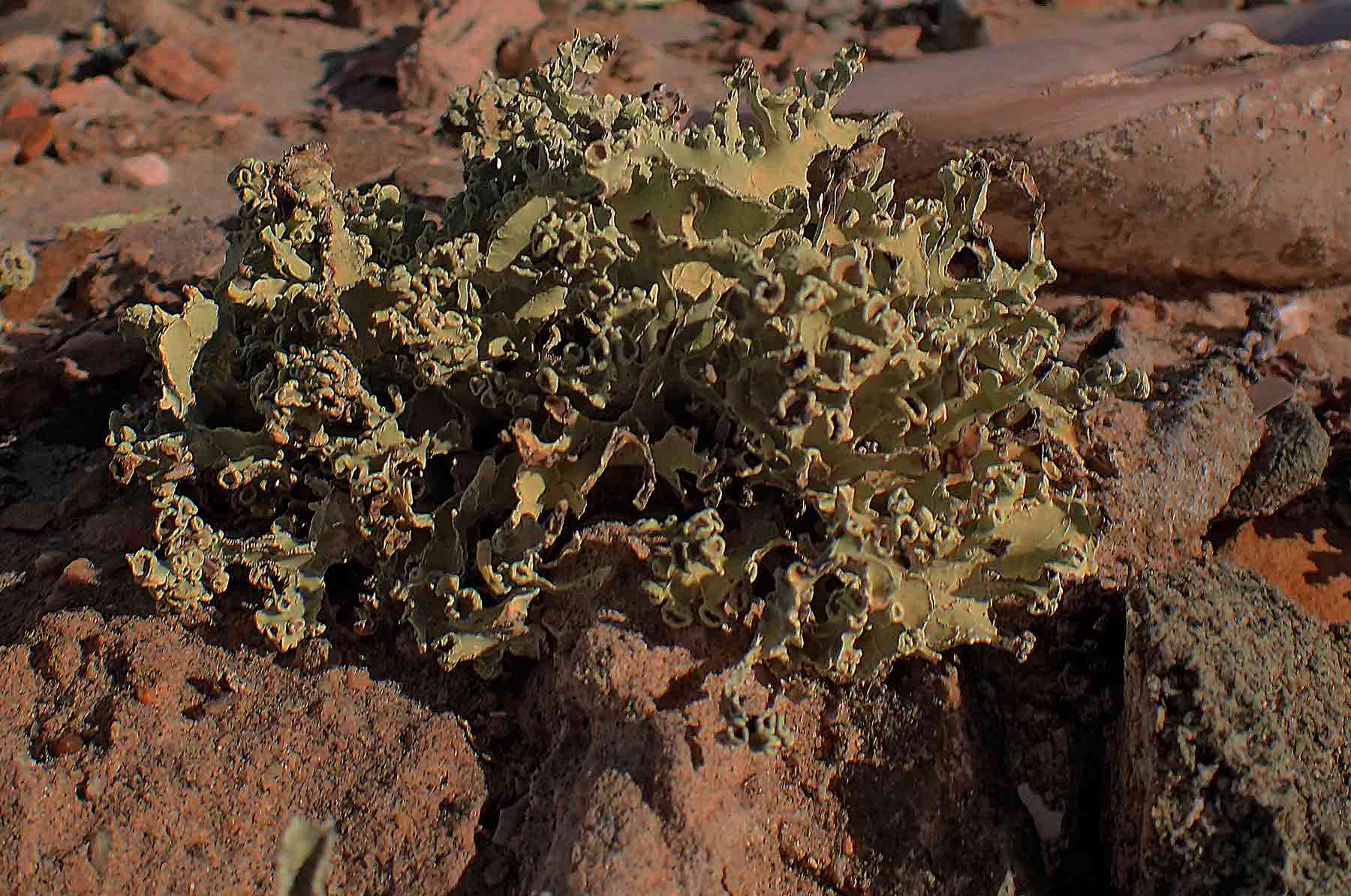
Niebla contorta is a fruticose lichen endemic to Baja
California Sur, occurring mostly in the Southern Vizcaíno Desert and on Isla Santa Margarita in the
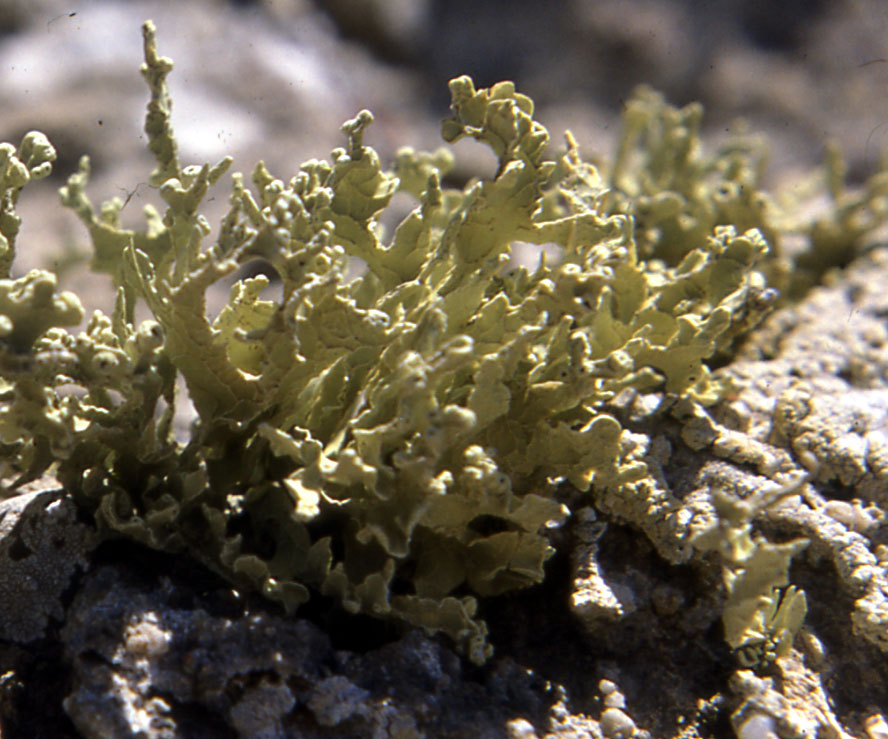
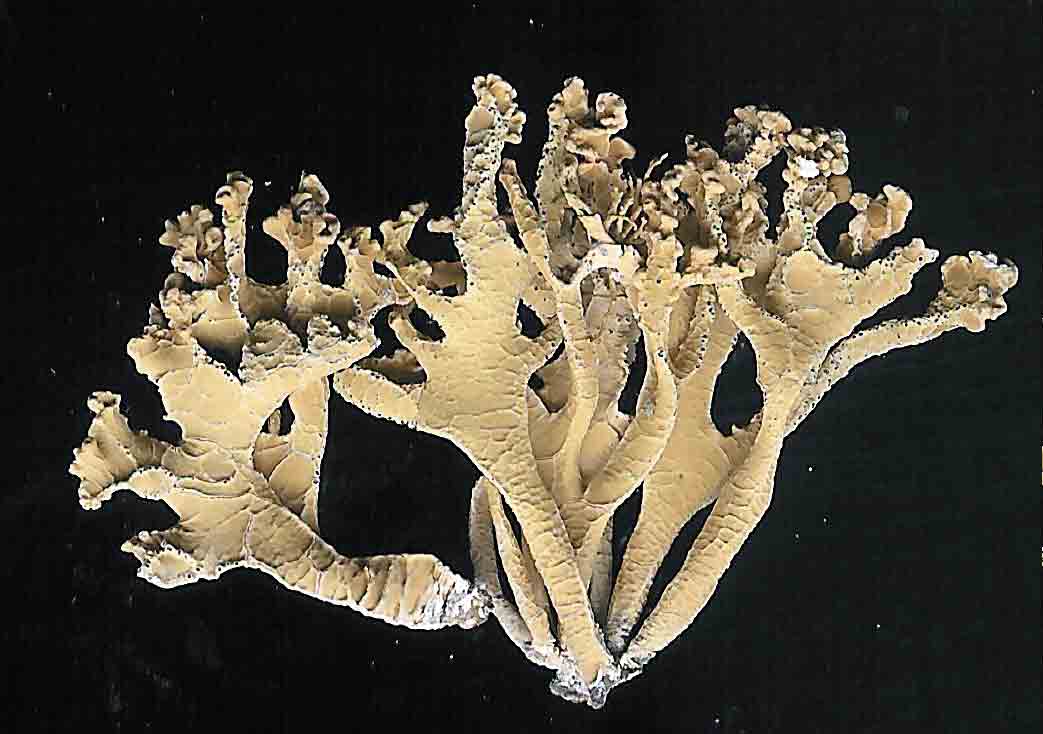
Magdalena Desert region. It is distinguished by having divaricatic acid
with triterpenes and by the relatively small thallus, <3.5 cm high,
with tubular branches near base that become ribbon-like towards apex,
appearing flattened, dilated, contorted, undulate, and/or lobulate.
Apothecia when present are submarginal along the apical lobes.
The type for Niebla contorta
is from the Vizcaíno Peninsula southeast of Bahía Asunción where found on
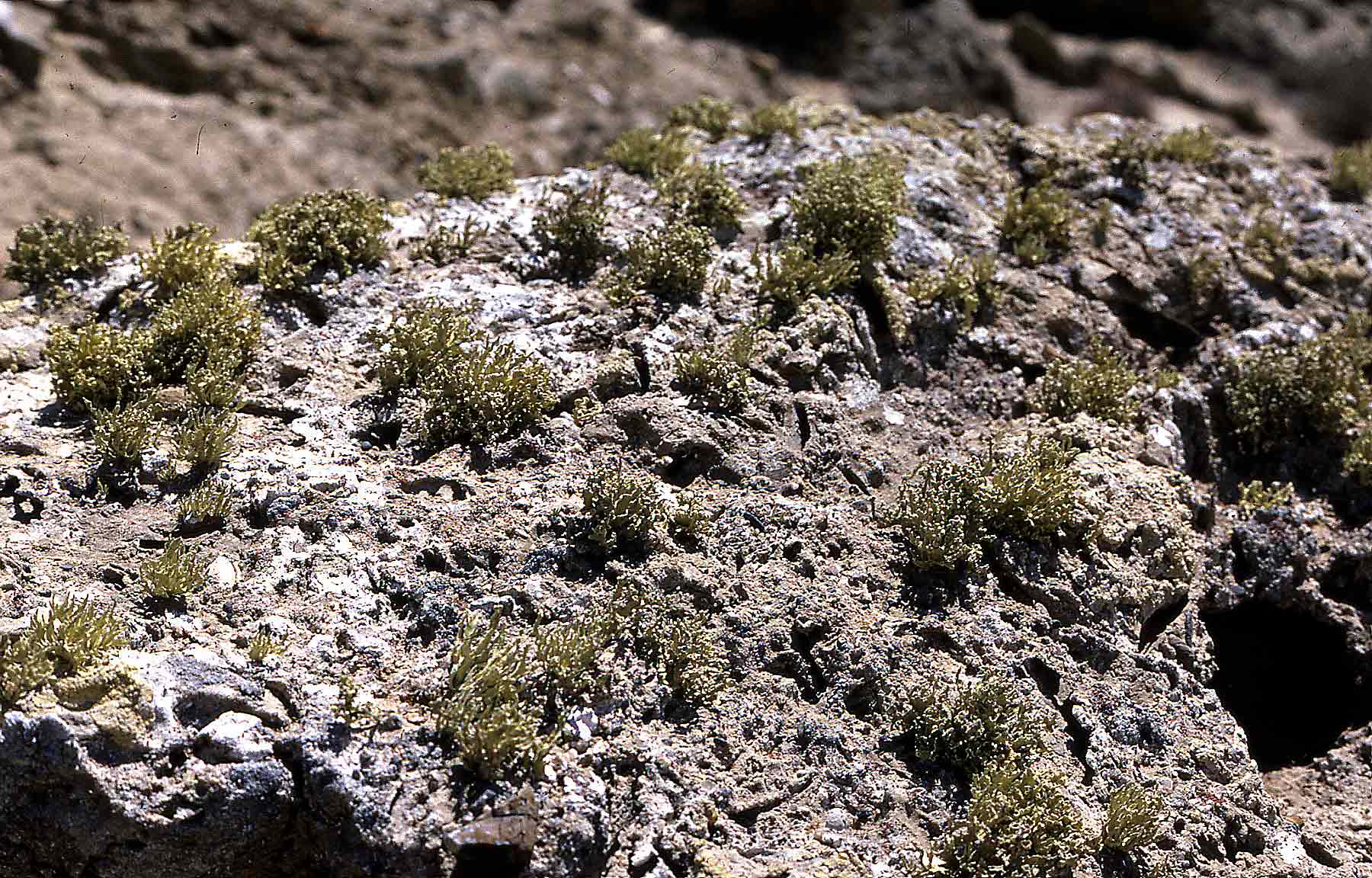
calcareous rocks embedded with fossilized shells. As a species it was observed to
form a single
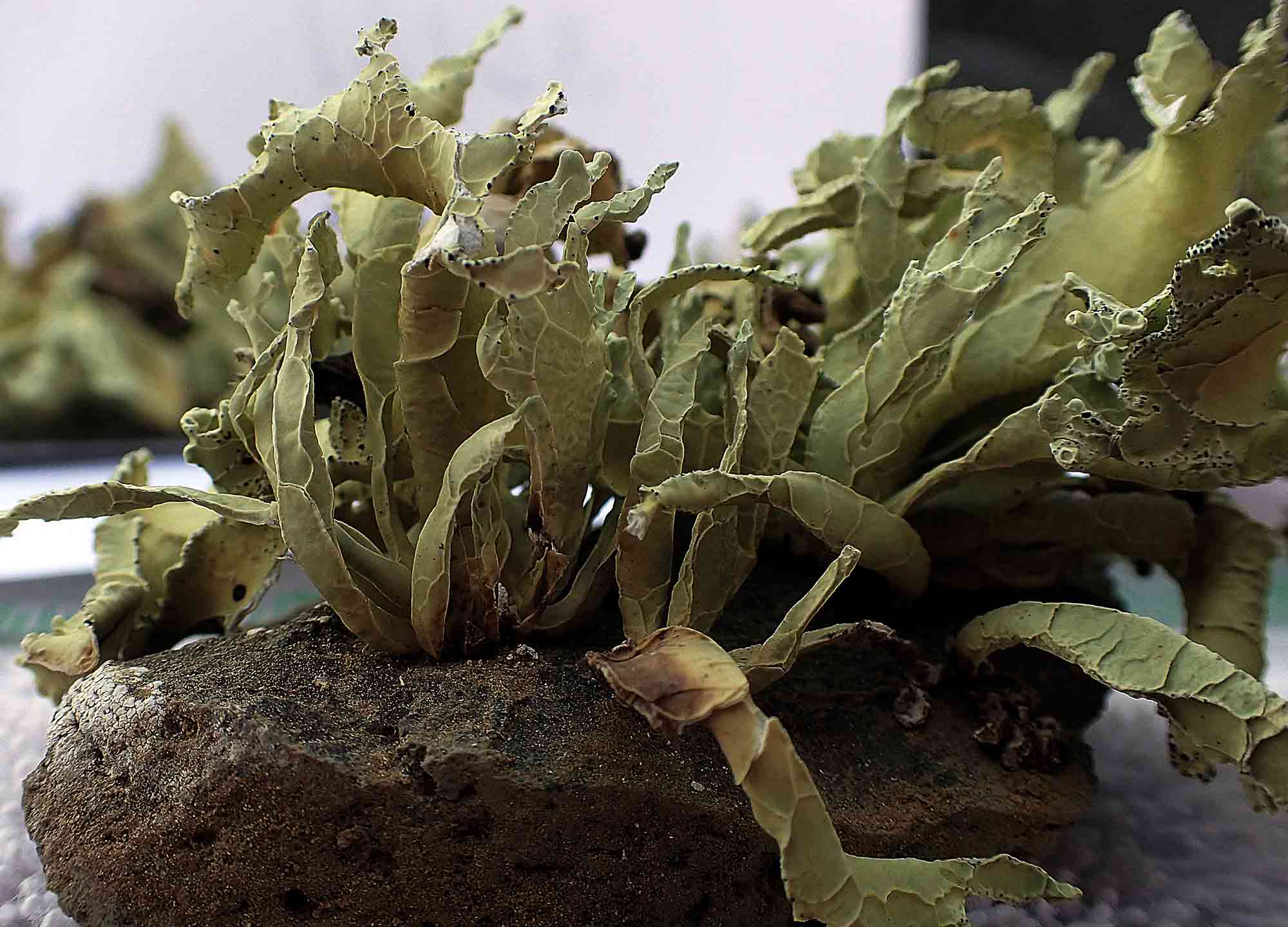
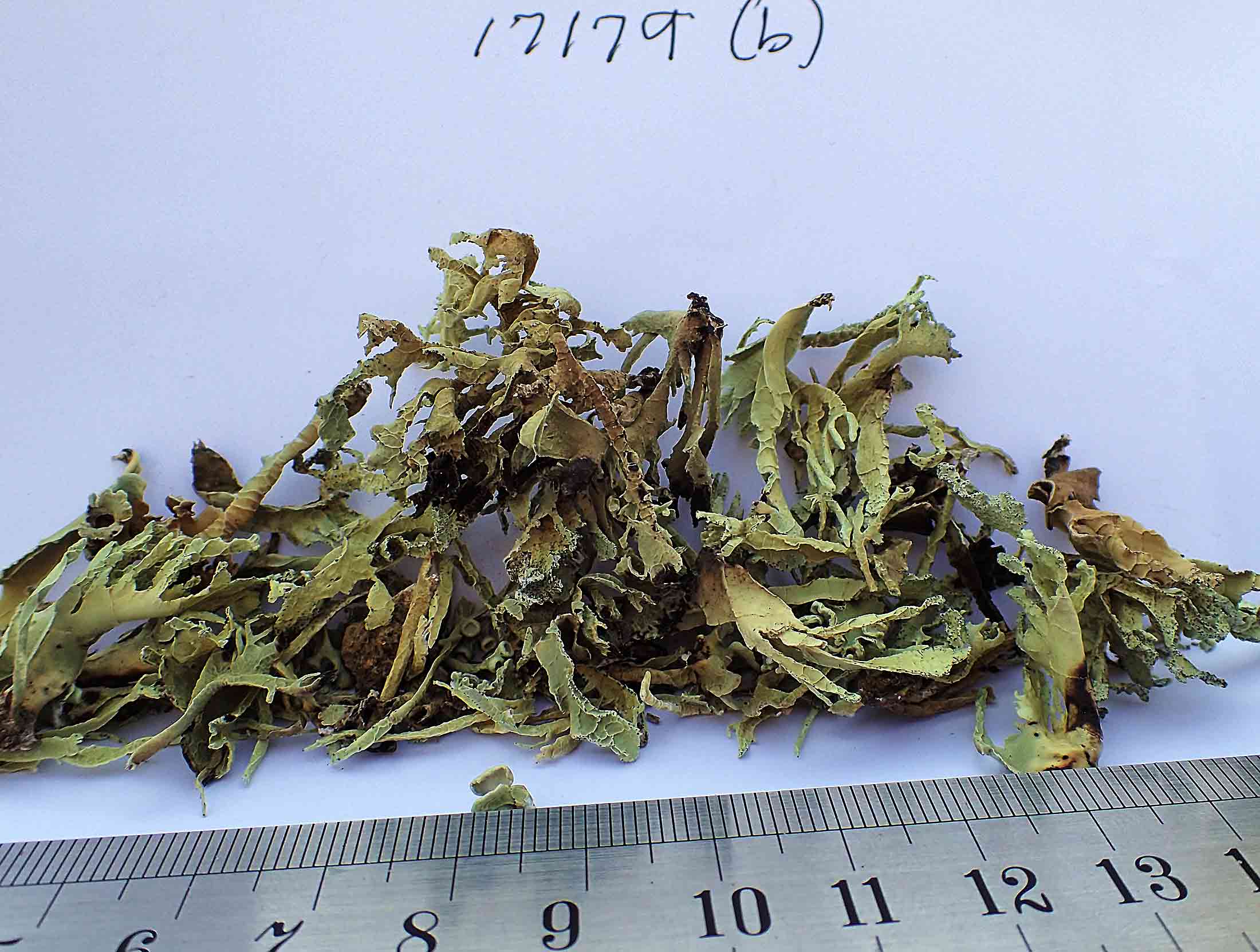
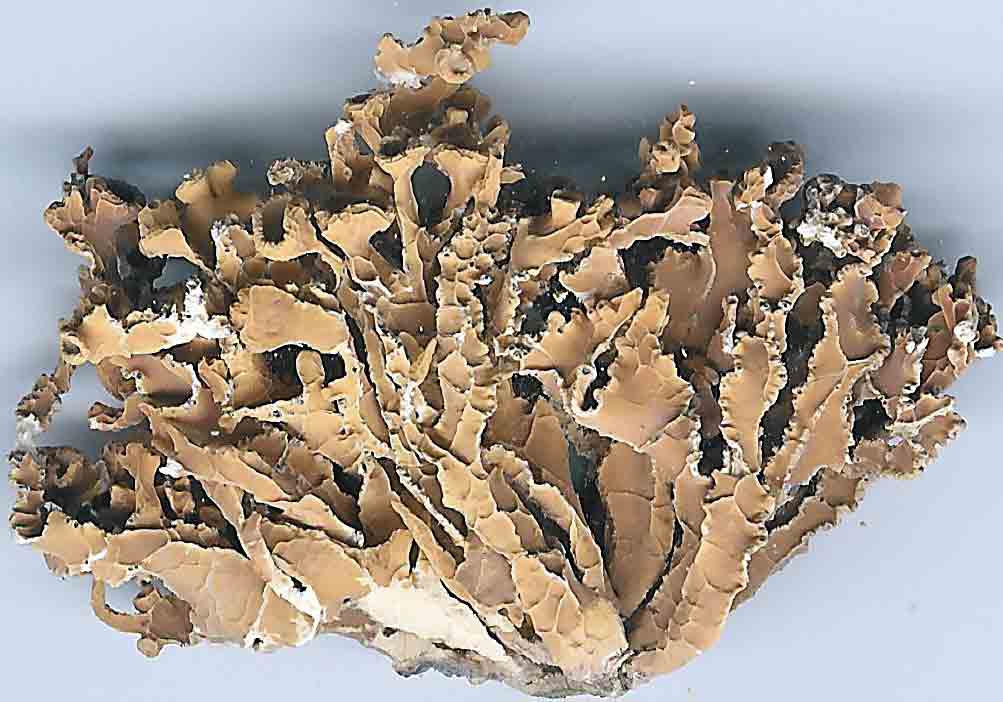
dominant community of Niebla contorta; the thalli appearing fairly uniform in their morphology
as shown in
top center row of images with reference to Punta Prieta, and by specimens
collected on
three occasions that were all found to have divaricatic acid with triterpenes.
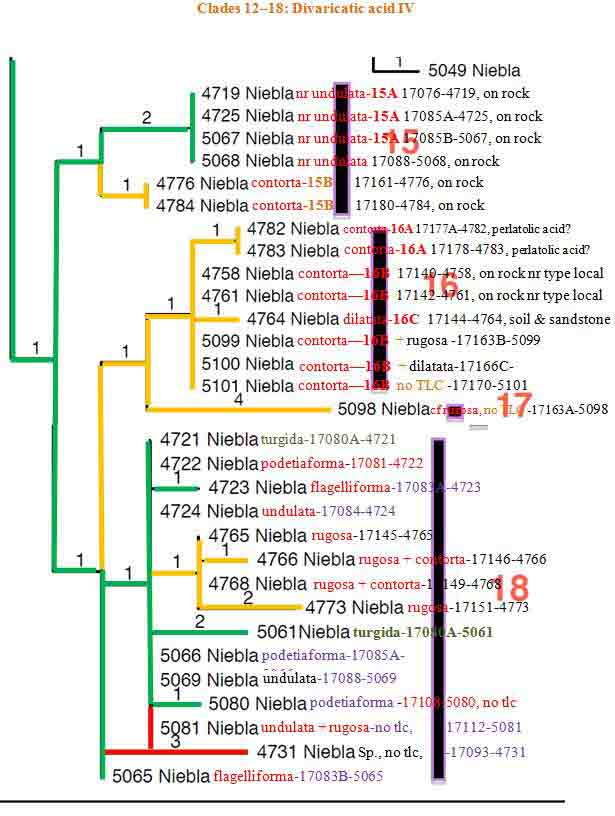
In the above phylogeny DNA from two type specimens appear in Group 16
represented by two specimens collected within a km of the type locality; the
road south from Bahía Asunción appeared to have changed slightly since last
traveled there in the 1990's. Another species within several km,
N. dilatata, formed a single dominant community on decomposed lava
and soil, shown in Group 16 with a difference of one mutation; however, the type
locality for N. dilatata is Isla Guadalupe where one might expect to find
greater phylogenomic differences.
Niebla contorta
was rec0gnized to include other morphotypes from different locations on the Vizcaíno Peninsula and on Isla Santa Margarita.
On Punta
Eugenia and Punta Cono, the thalli lobes are more tongue-shaped to channeled
as in
N. dilatata
or N. caespitosa. These
similar species differ
in having more strongly flattened branches with broader round lobes. Also, the lobes
of N.
dilatata tend to be thickened along the apical margins, whereas those of
N. caespitosa appear thinner towards the margins.
Another related species, N. rugosa, differs by the
ladder-like ridging on the upper branches. Niebla undulata,
perhaps most similar, is distinguished by its larger size and often by dark pigmentation
spots on the cortex; its type is from southern NVD on a
ridge just northwest of Puerto San Andrés. DNA from a specimen collected
in the SVD northwest of Bahía Tortugas, identified
N. undulata, however,
was found to be within a clade of N. contorta (Spjut et et al. 2020, Fig.
7).
The phylogenetic tree shown above
is a snip from a larger image of a draft ITS Niebla tree generated May 11, 2016
by Professor Emmanuël Sérusiaux in regard to collections we made in Jan-Feb 2016
and in reference to the 2020 publication cited above (Spjut et al. 2020). The green, yellow
and red colors were added to the lineage-lines by Spjut to distinguish the
geographical regions, green for the Chaparral Desert Transition (CDT), red for the Northern Vizcaíno Desert (NVD) and
yellow for the Southern
Vizcaíno Desert (SVD). Species names and collection numbers were also added by
Spjut. The published results using 6-loci (Spjut et al. 2020, Fig. 7) are similar
to the ITS except that N. contorta in the ITS tree occurs in two
sister clades in which N. contorta lies within
the larger sister clade of N. nr. undulata. Although the 6-loci of
Spjut et al. (2020) would seem to provide a finer species resolution, this did not distinguish
their occurrence in the CDT region separate from that of the NVD.
Political boundaries were decidedly more practical.
When phylogeographic distinction is made based on the ITS
phylogenetic tree, N.
contorta appears to have a closer, but disjunct, phylogeographic
relationship to the CDT specimens instead of to those in the neighboring NVD
region. Other examples are mentioned for vascular plants and for species in
Vermilacinia in the Supplement data (S1) file.
Additionally, specimens in Group
15 that belong to the green group (N. nr undulata) were collected near El Rosario,
whereas those in the yellow sister clade are from
near Cerro Elephante (17161) and Bahía Tortugas (17180). They appear to
represent cryptic N.
contorta from two widely separate locations on the Vizcaíno Peninsula by the
topotypes for N. contorta appearing in Group 16, 17140 and 17142.
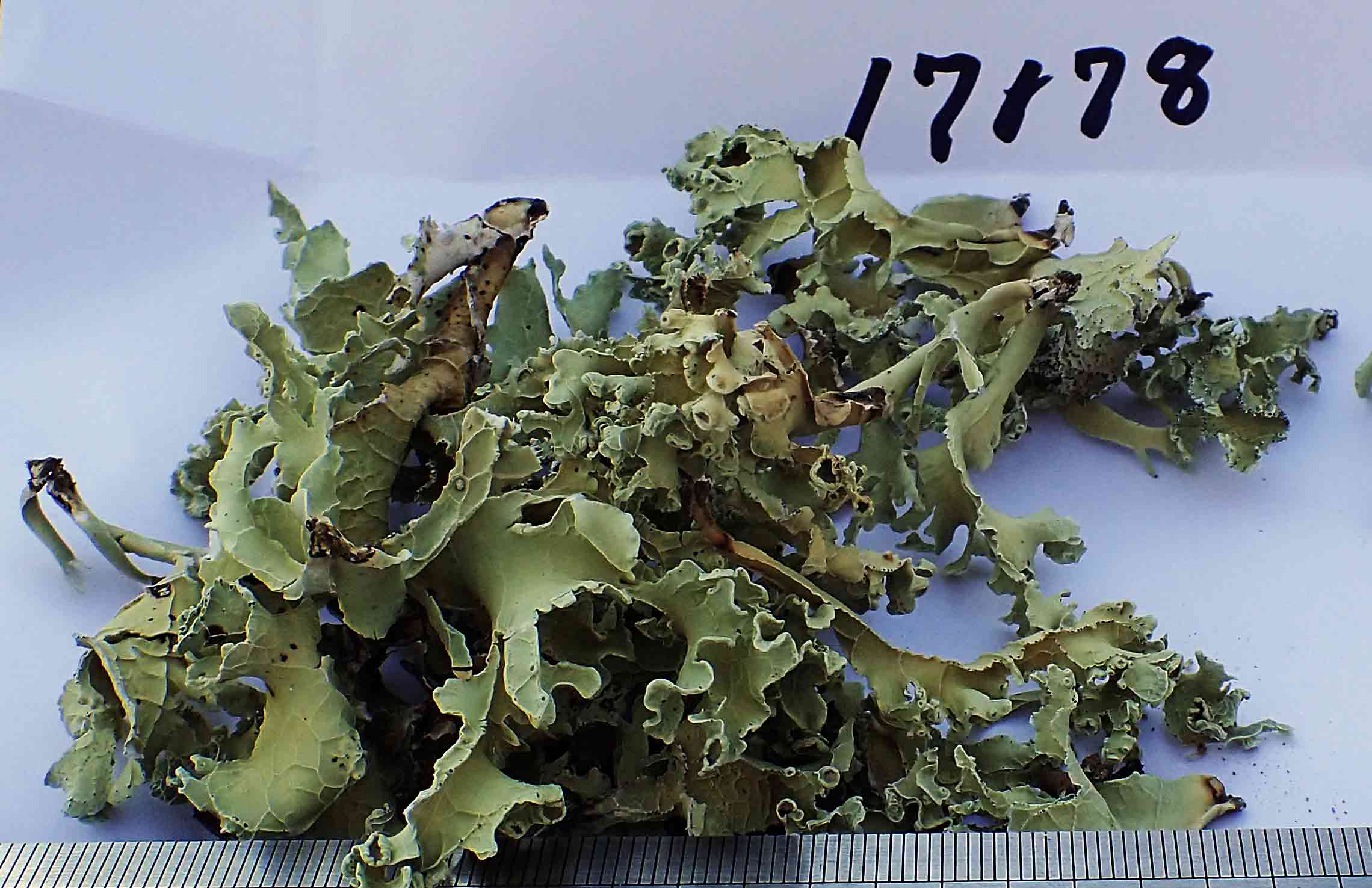
The other specimens in a separate lineage within this group, 17177 and 17178,
are suspected to have perlatolic acid, nevertheless, identified N. contorta
(with divaricatic acid); they were collected near Bahía Tortugas. Then there is
17163B—in the N. contorta type Group 16—that was collected near Cerro Elephante
on the same rock with 17163A that was found to belong to a separate monophyletic
Group—17, sister to Group 16. Group 18 is similar to a sister subclade
in Fig. 7 of Spjut et al. (2020) with N. contorta; their
phylogeographical relationships are to specimens in all three Baja desert regions
as shown above but with less agreement among the species identifications;
however, the appearance of
N. flagelliforma in the phylogenetic tree
within this group has similarities to that shown in the phylogenetic trees of
Jorna et al . (2021).
For more discussion
and reference materials see Introduction to Niebla