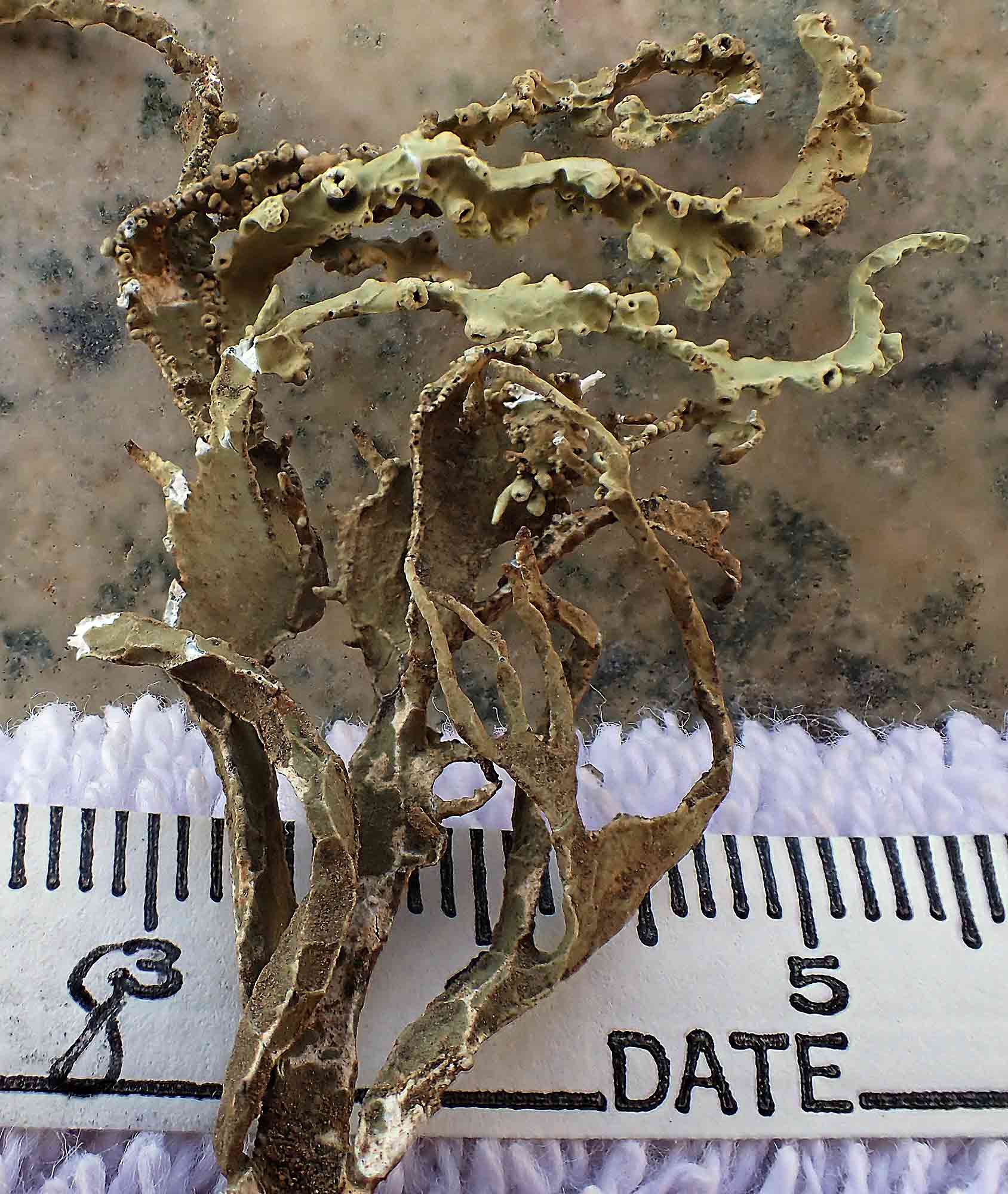
Niebla laminaria

The World Botanical Associates Web Page
Prepared by Richard W. Spjut
April 2003, Oct 2005

Niebla and Vermilacinia (Ramalinaceae) from California and Baja California.  
Spjut, R.W., 1996. ISSN 0833-1475, 208 pp.  
Sida, Botanical Miscellany: 14. Botanical Research Institute of Texas, Inc.


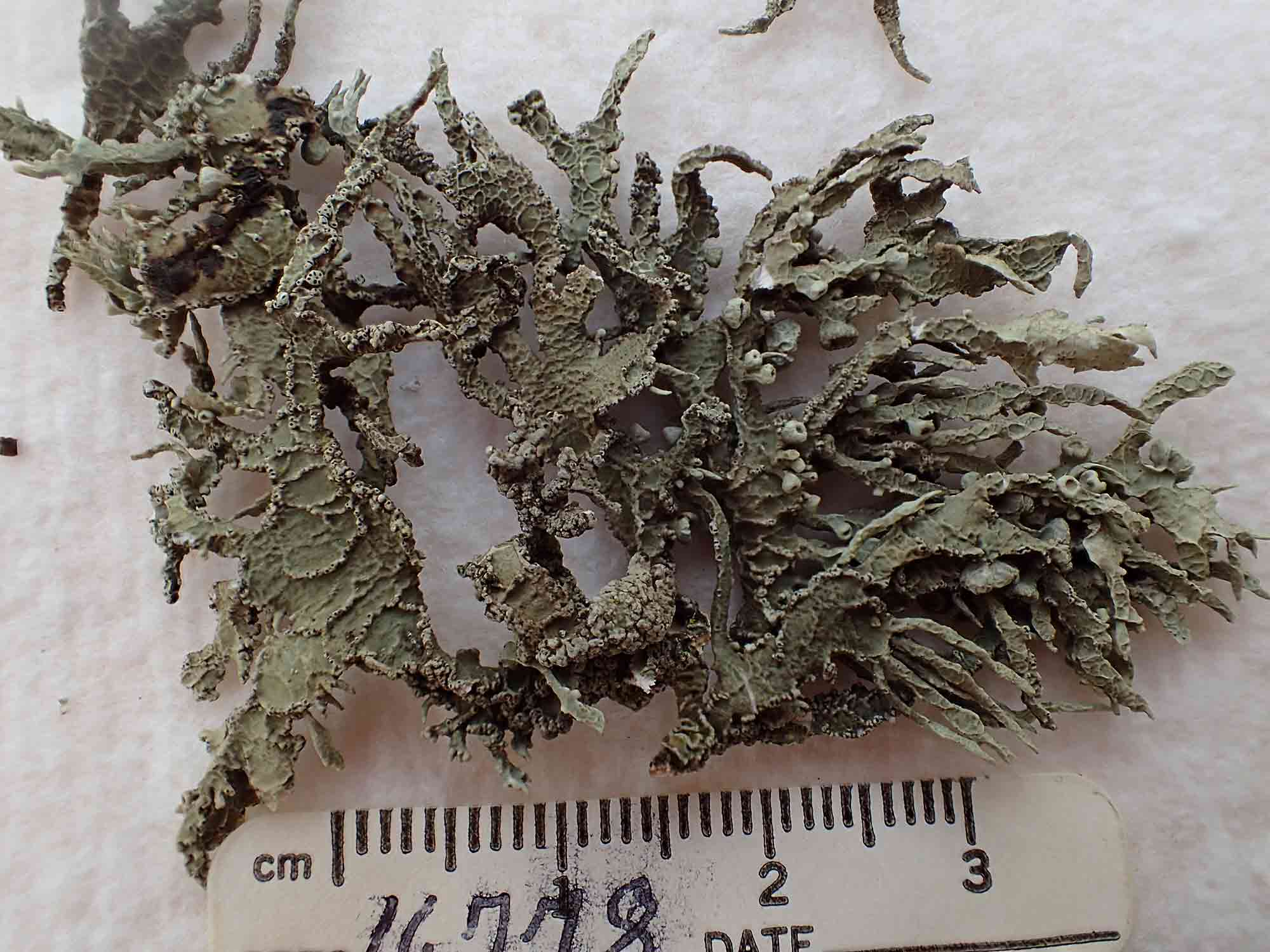
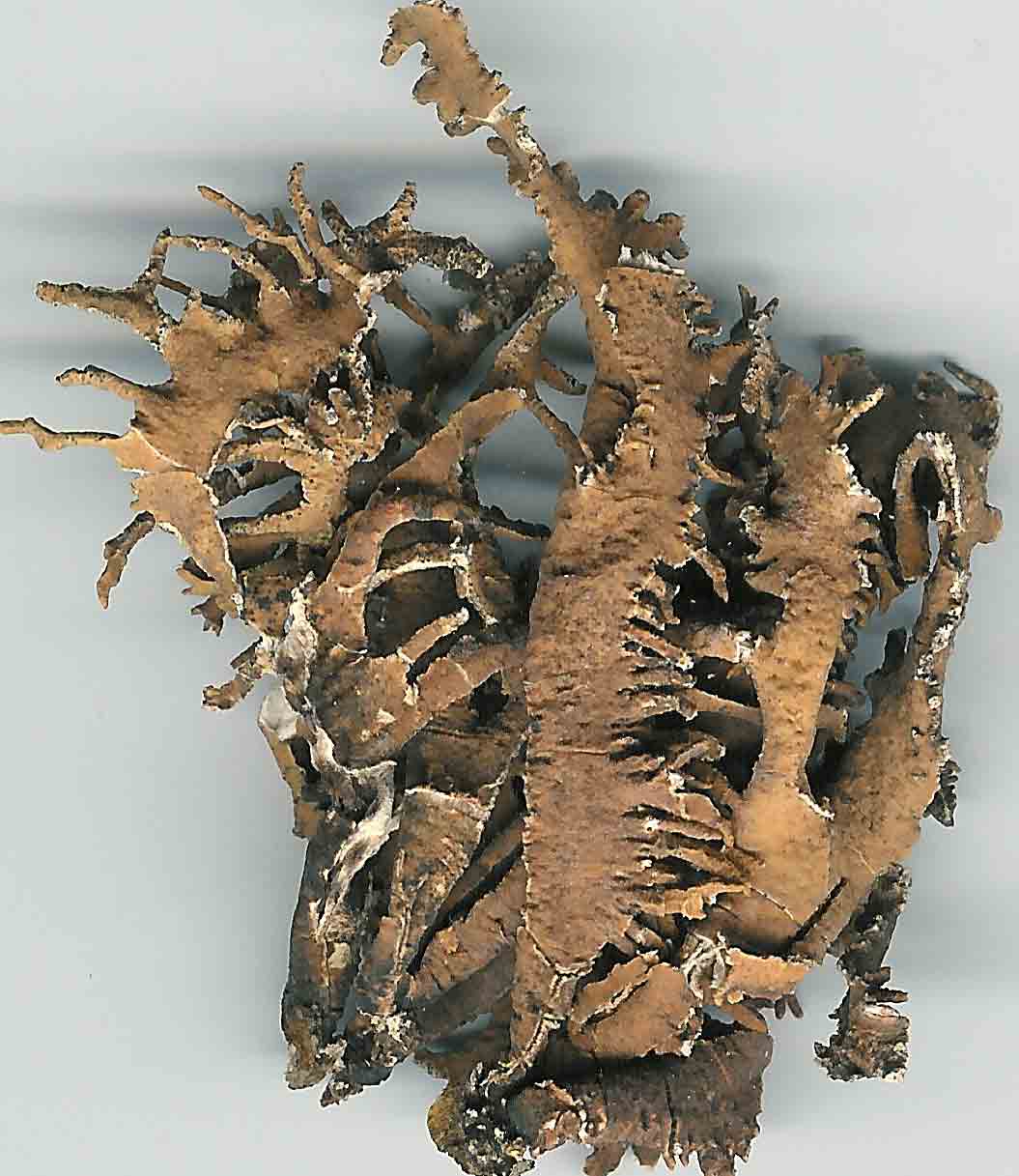
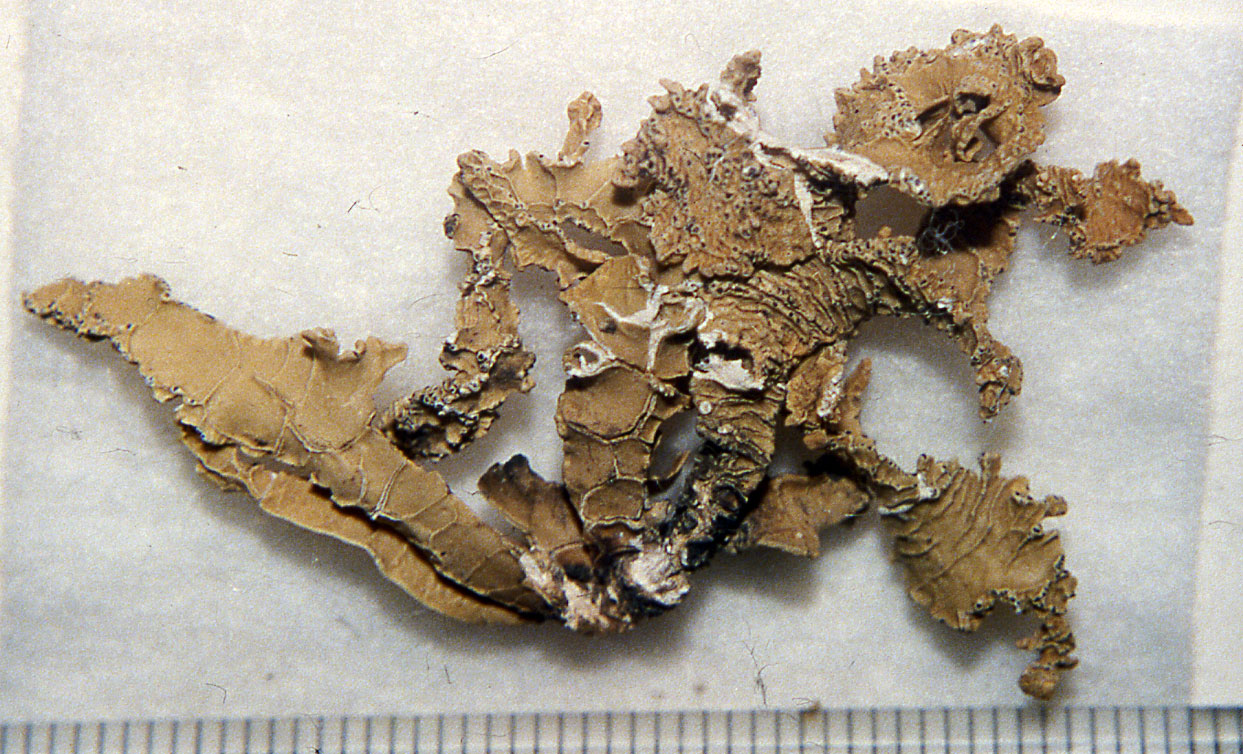
laminaria-9047L.jpg (73310 bytes)

Cerro Solo, Spjut & Marin 9047L, Apr 1985

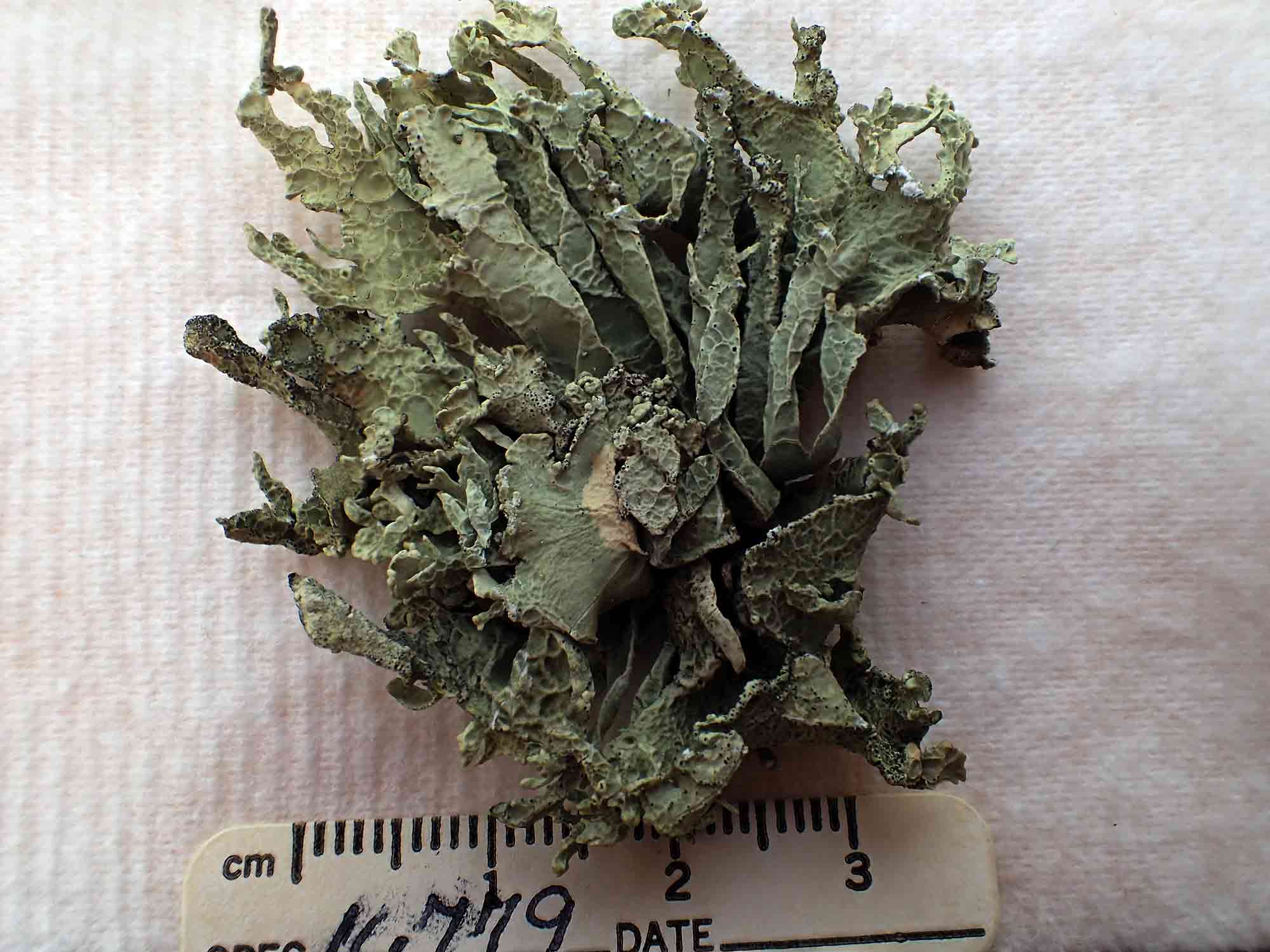
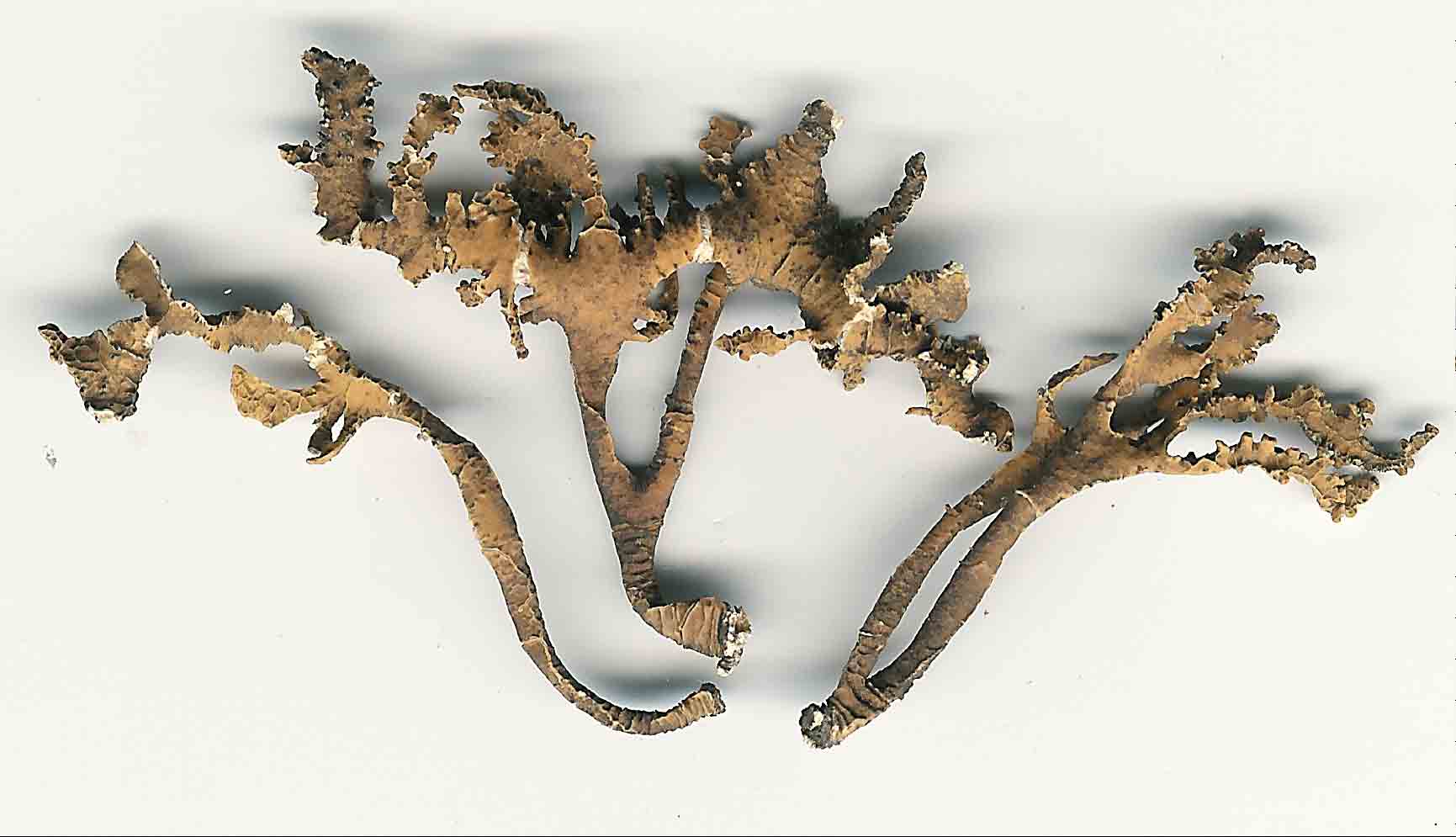
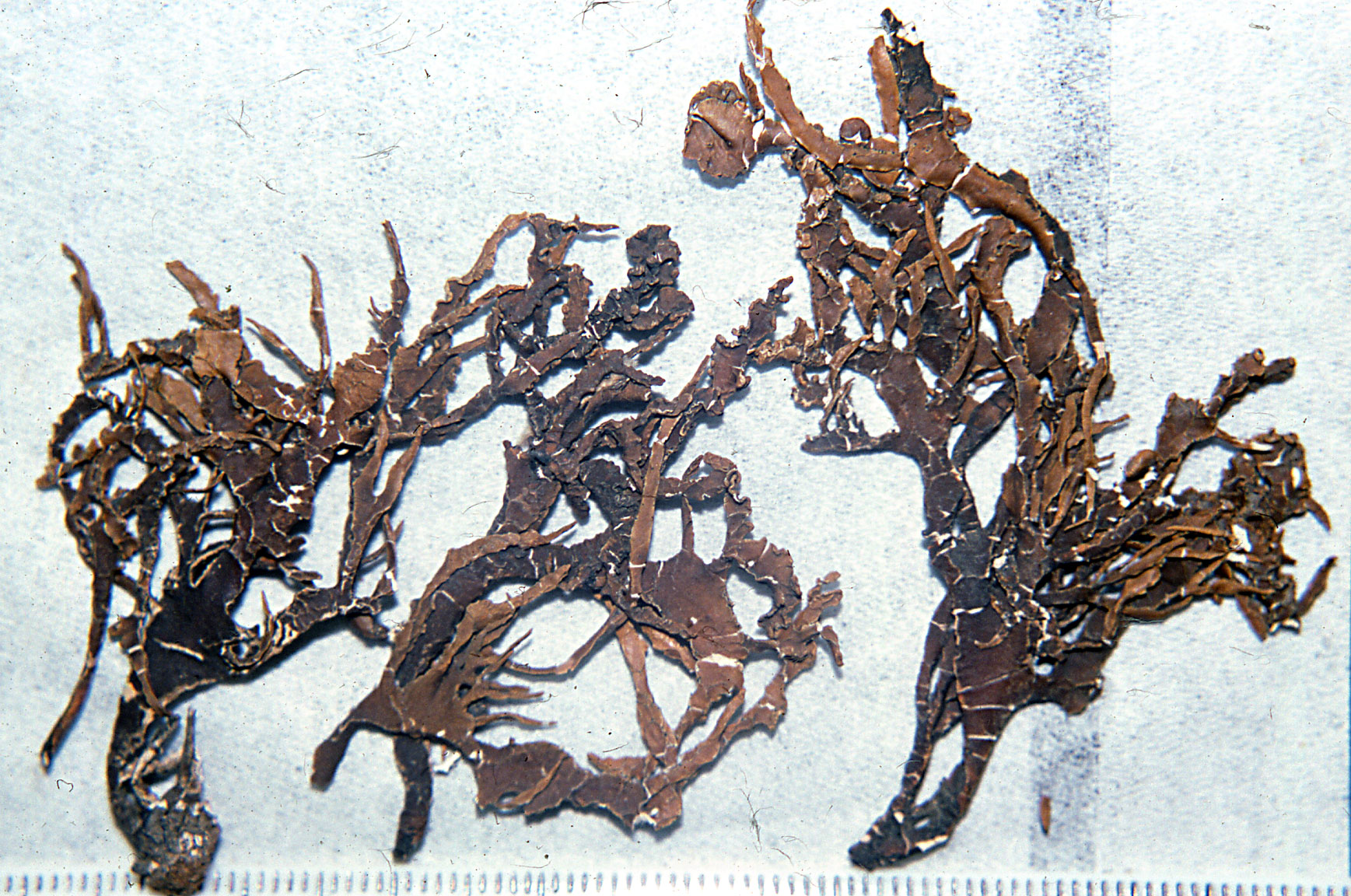
laminaria-11536.jpg (79913 bytes)

Punta Cono, Spjut &
Marin 11536
, Apr 1990

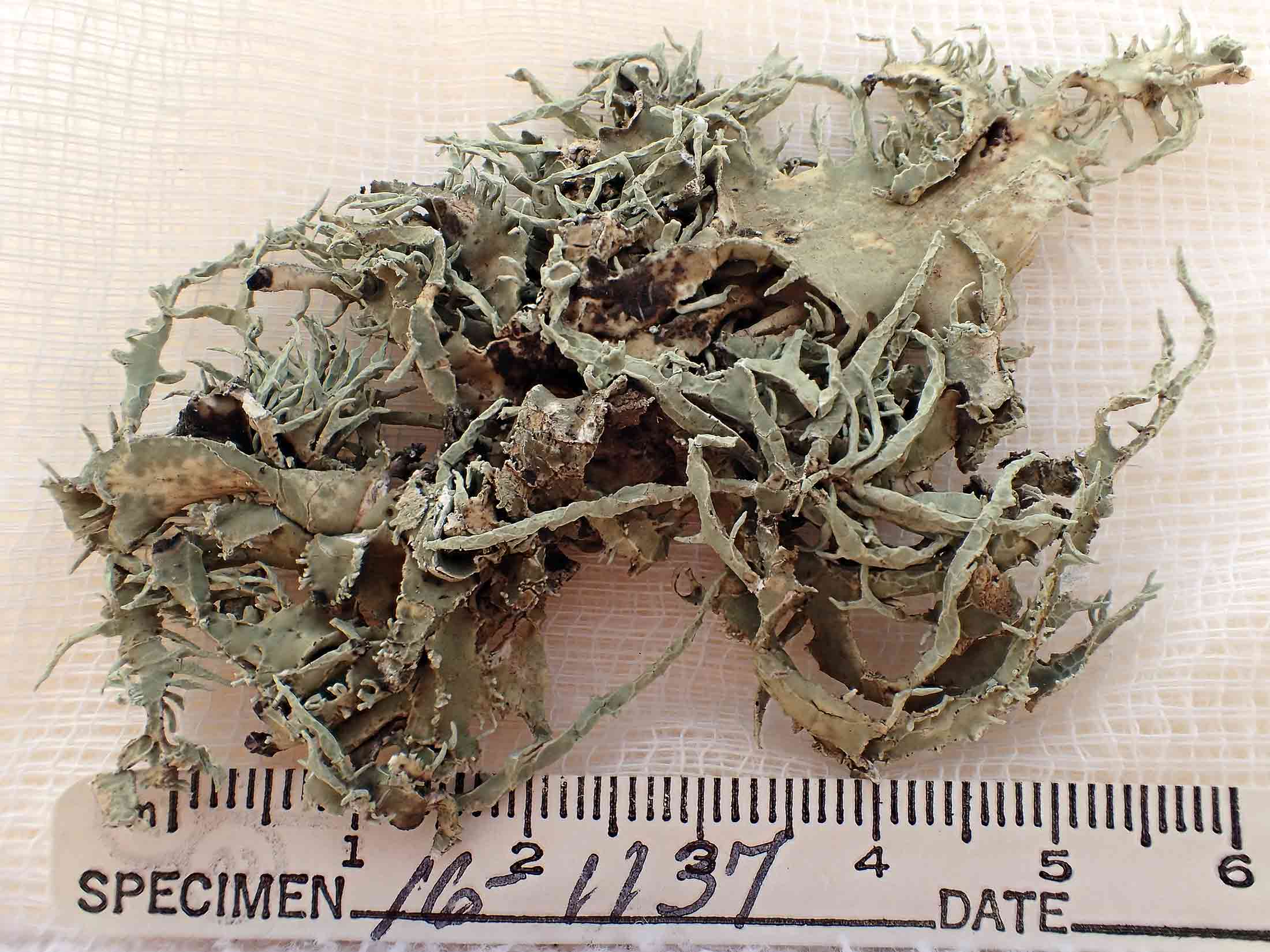
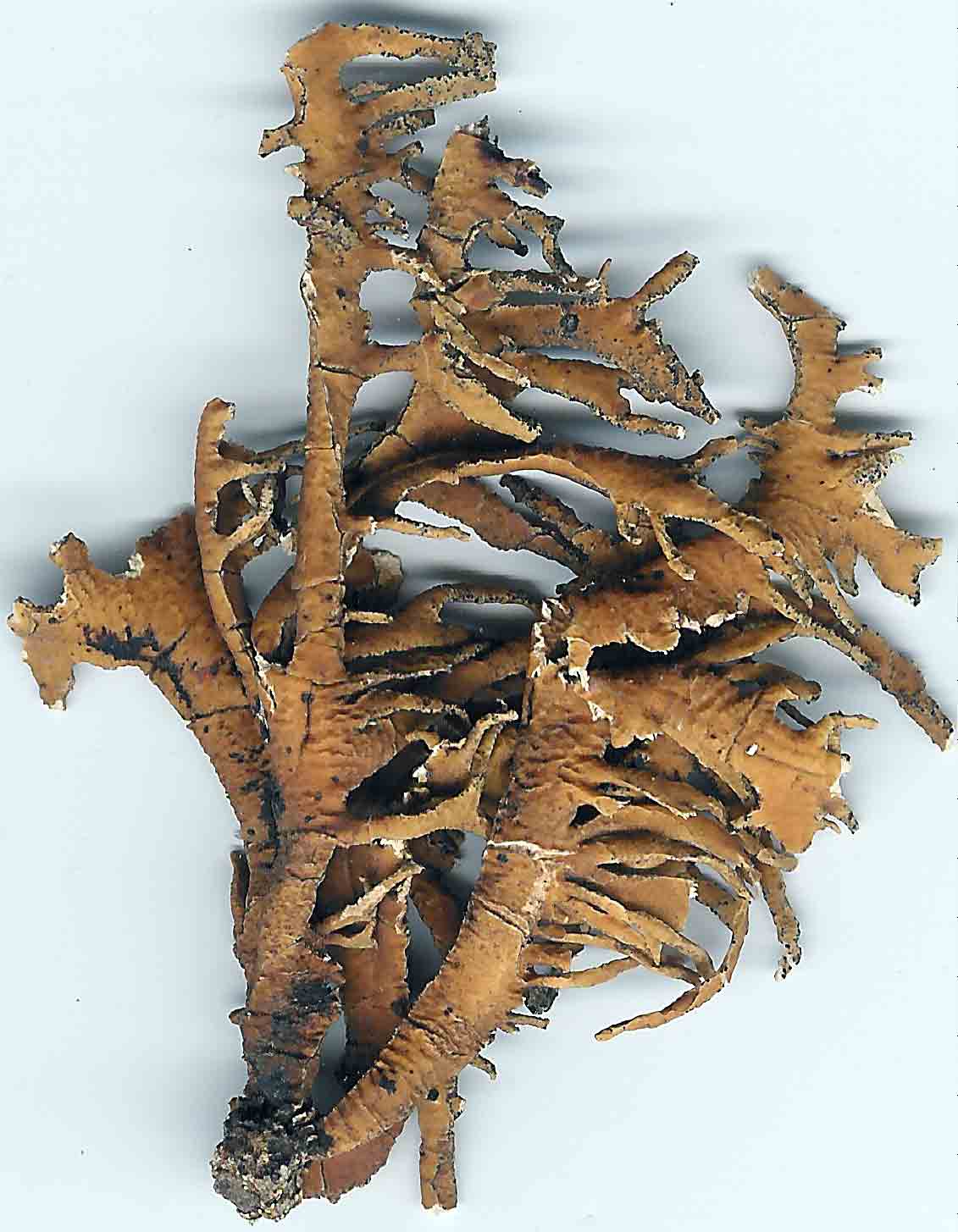
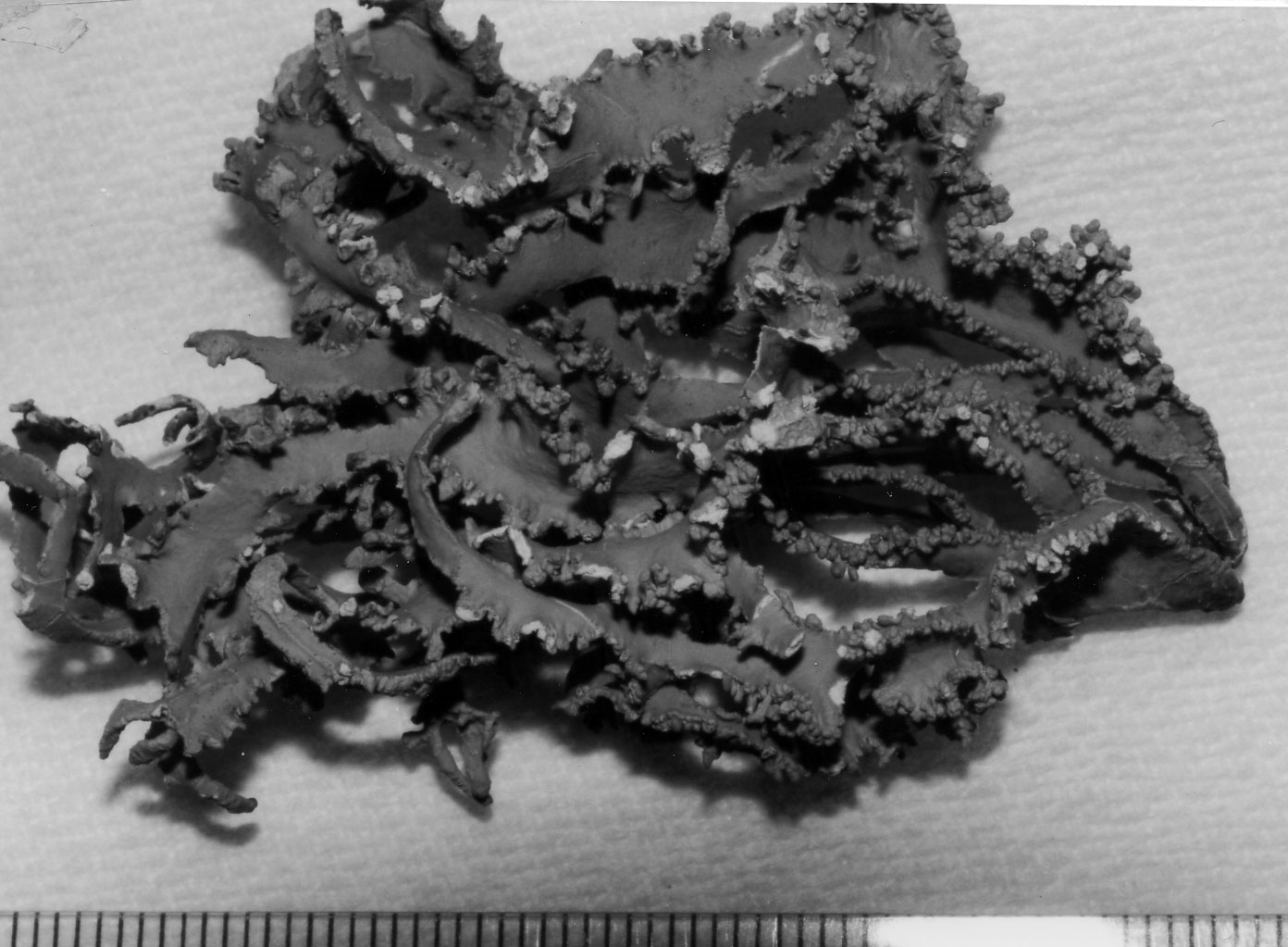
laminaria-11543.jpg (68418 bytes)

Punta Cono, Spjut & Marin 11543, Apr 1990

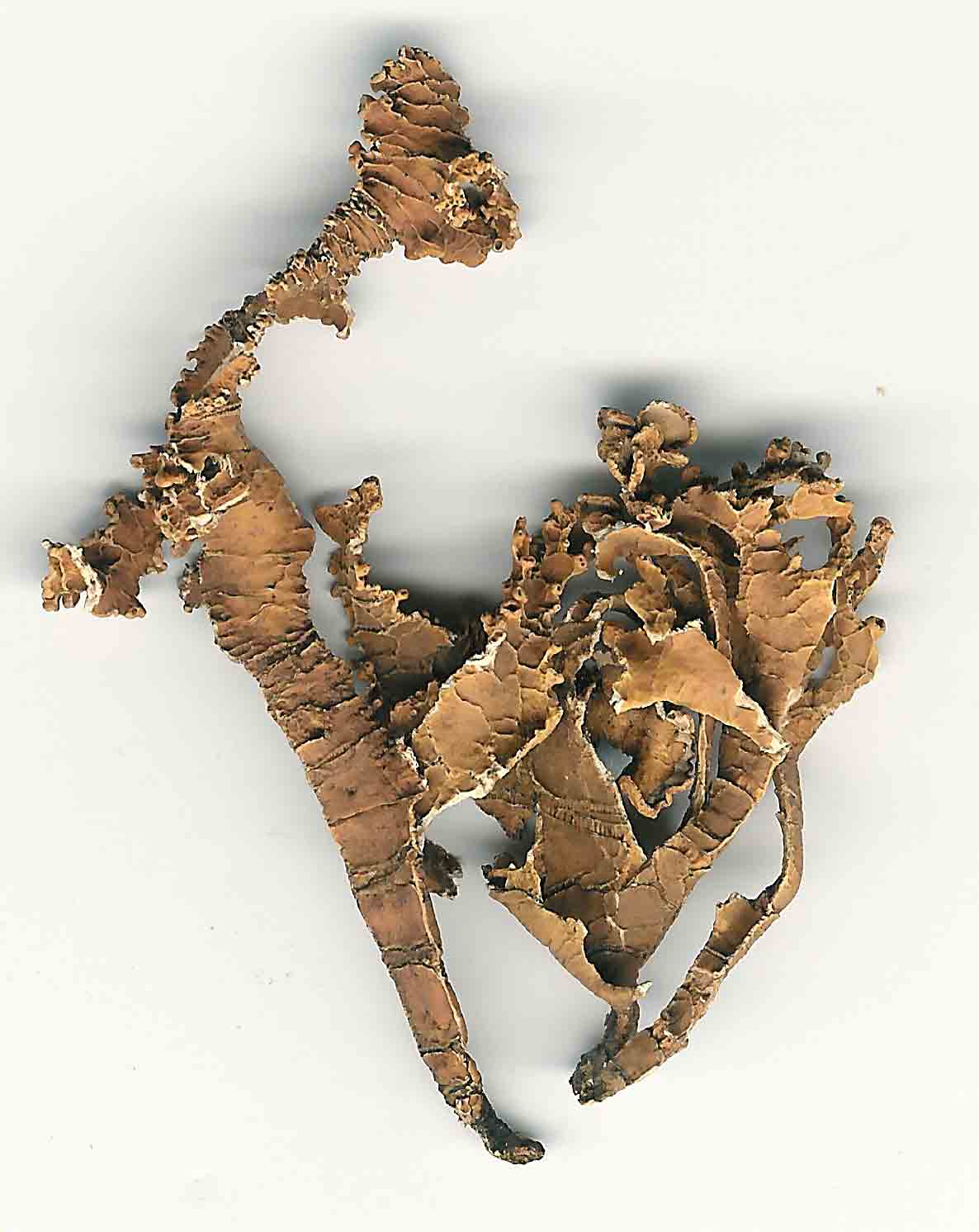
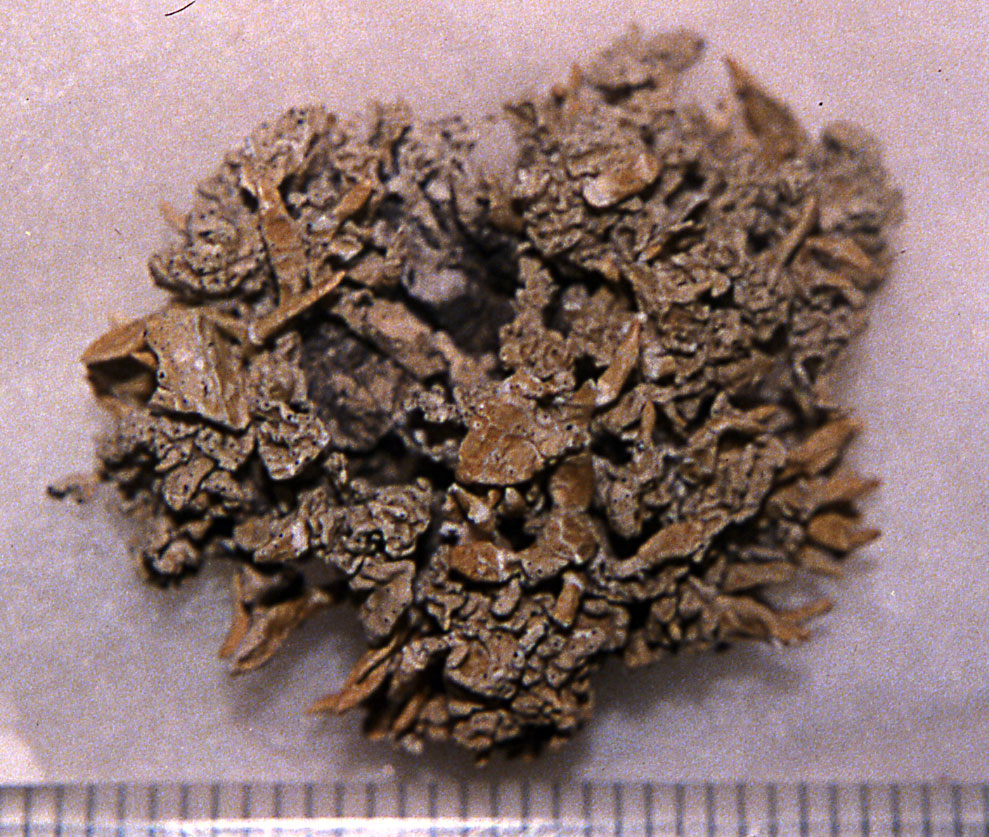
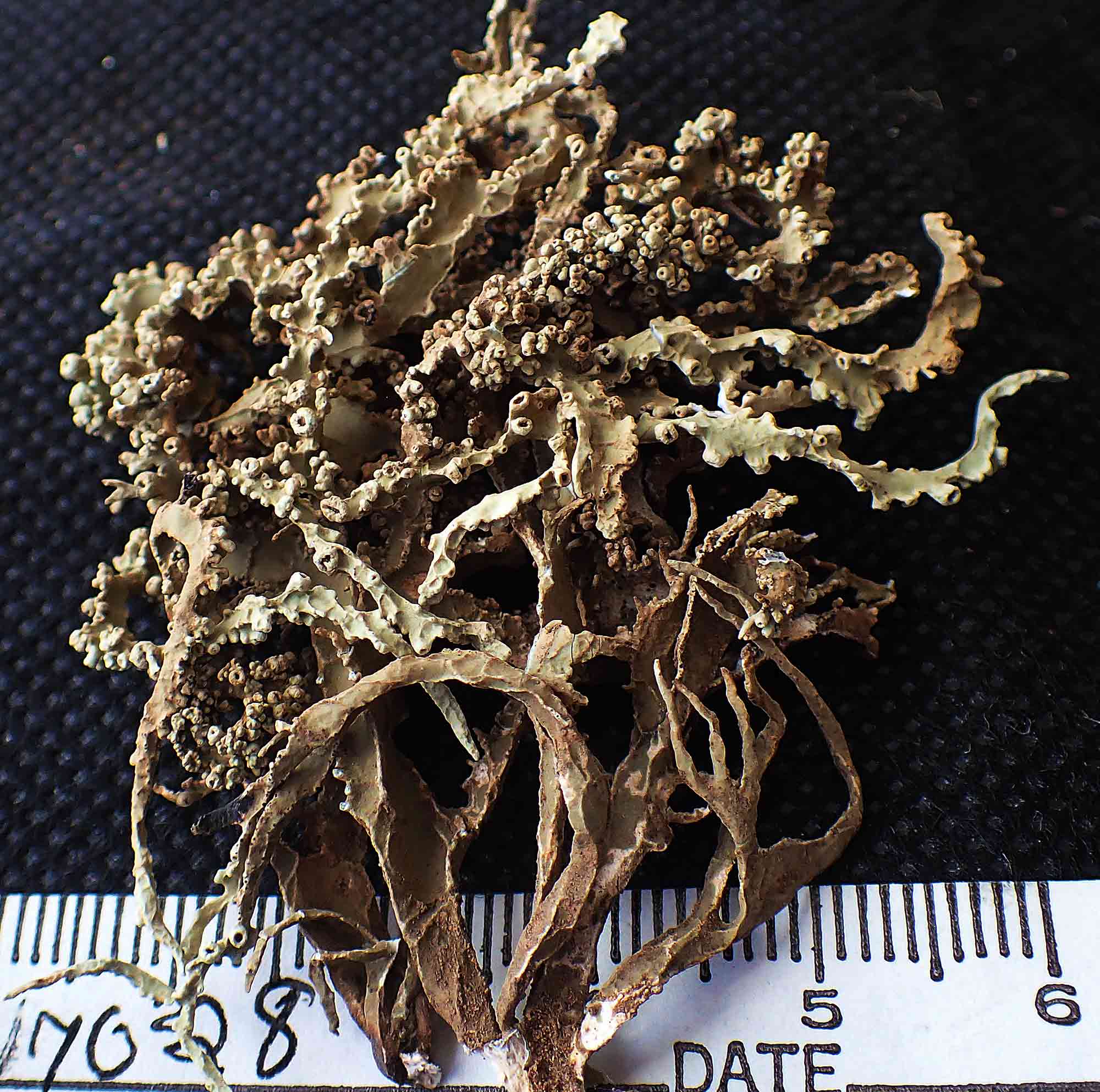
niebla_laminaria_10396.jpg (90264 bytes)

Punta María, Spjut 10396,
Mar 1988

Pt. Lobos, CA.  Bratt 5651

San Nicolas Island,
Timbrook & Kuinzenga  735

California (COLO: S-7344)

Punta Banda, BCN
Spjut & Marin 9032C3
May 1985, Holotype


     Niebla laminaria is recognized by having divaricatic acid and by the presence of fimbriate to nodular branchlets, or lobes, along a primary branch.  It is mainly a California species that is distinguished from relatives in the coastal desert of Baja California by the relatively thick cortex and solid medulla; however, it is also recognized to occur in the Northern Vizcaíno Desert.  The type was pulled out of a ~100 g sample of N. homalea collected for antitumor and anti-HIV screening in the coastal chaparral region of Baja California Norte near Punta Banda.  Niebla homalea was distinguished by having relatively smooth branch margins.  Additional specimens of N. laminaria from other locations, which reinforce the taxonomic features, appear relatively rare, and because none fit well within the circumscribed Californian species such as N. testudinaria, N. eburnea and N. homalea, they seem best classified under a distinct species.  Also, the taxonomy of the Baja California species considers differences in branch marginal features; thus, recognizing N. laminaria by its irregular marginal features, compared to relatively smooth margins in N. homalea and N. testudinaria, provides clarity to all species in question.  Niebla laminaria can be further characterized by having relatively few branches from a holdfast.  An occasional morph of N. undulata (Spjut 1996, Plate 9E) resembles the type of N. laminaria in the blade-like branches; however, it differs by the bluish-green, thinner cortex and by a fistulose to subfistuose medulla in which these features seem more related to the contorted appearance of its thallus branches.

     Specimens of N. laminaria with well-developed fimbriate branchlets appear similar to those of N. caespitosa with lacerated branches.  The distinction between these is based in part upon development of apical dilated branches as seen in N. caespitosa, which is associated with its flabellate type of thallus, compared to the broad linear type of branch in N. laminaria, regarded as blade-like type of morphology.  One notable exception is Bratt 5651 from Point Lobos, CA, which is regarded N. laminaria by its rigid thallus, and also by  the presence of nodular branchlets, which are considered characteristic of N. laminaria.