|
Niebla sorocarpia
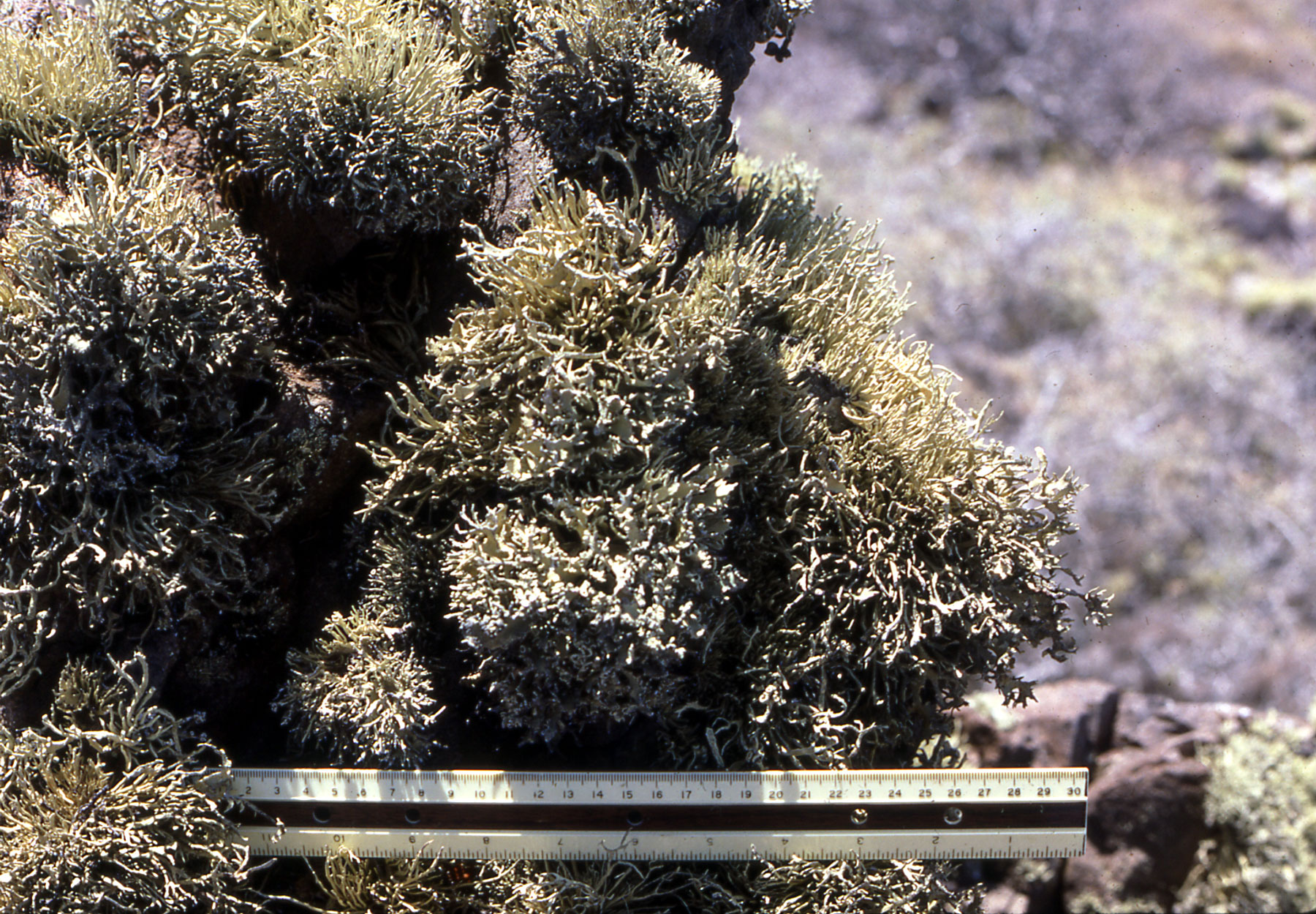
is a species of fruticose lichen occurring on vertical faces of rock outcrops and
surfaces of stones of mesas, ridges and peaks along the
Pacific Coast from near Punta Santa Rosalillita in Baja California to near
Monterrey, California, and in the Channel Islands.
Niebla sorocarpia
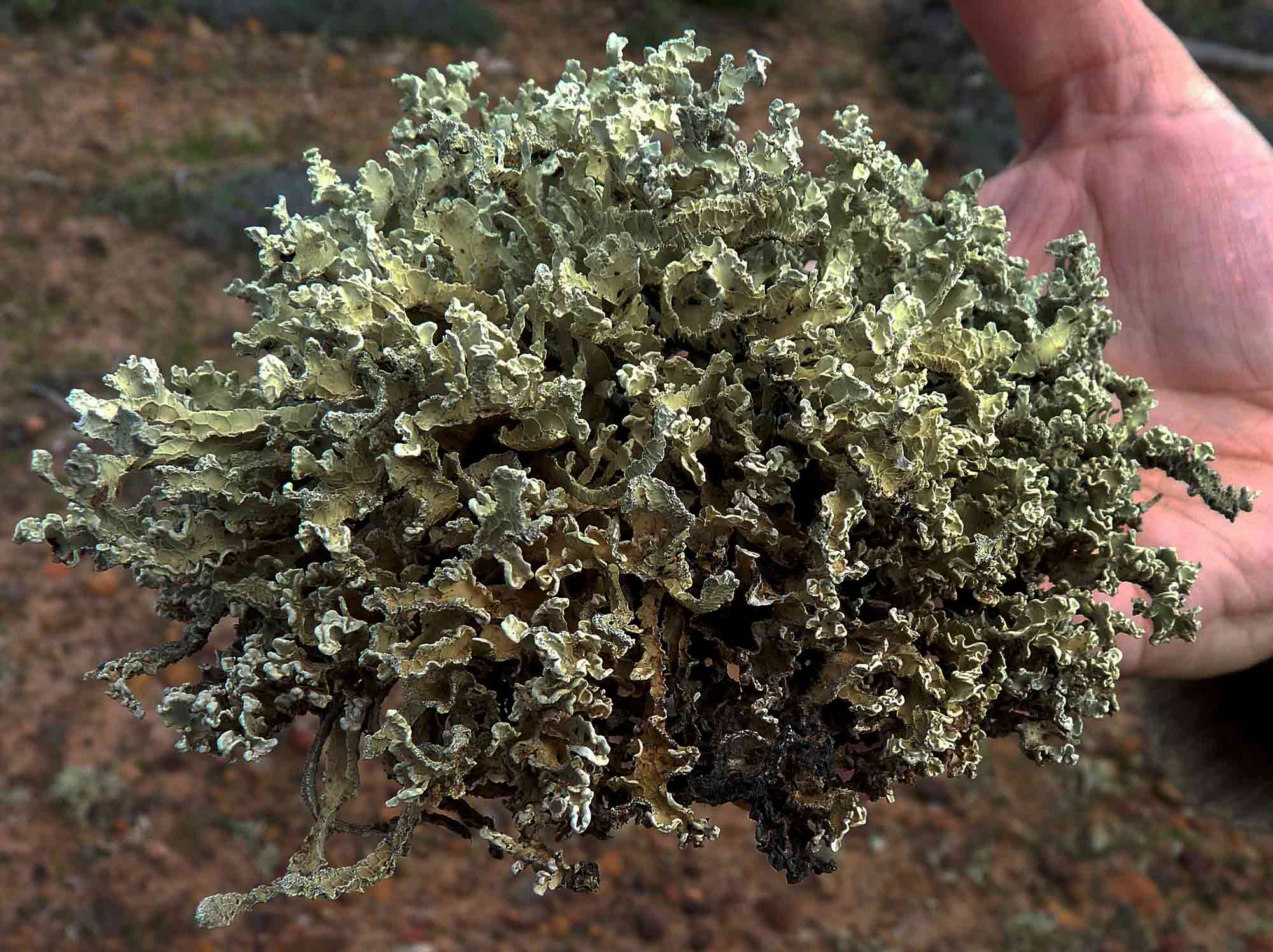
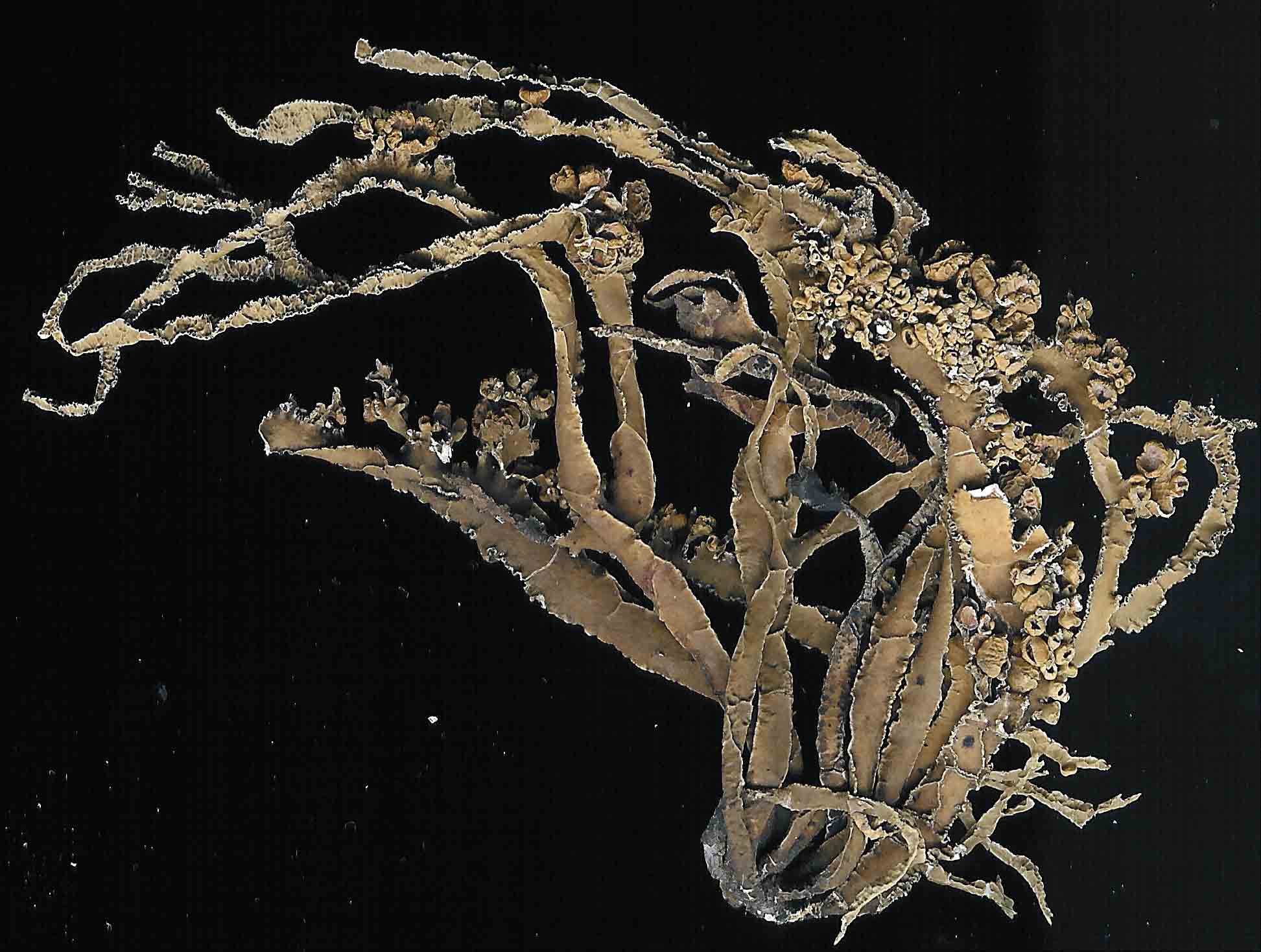
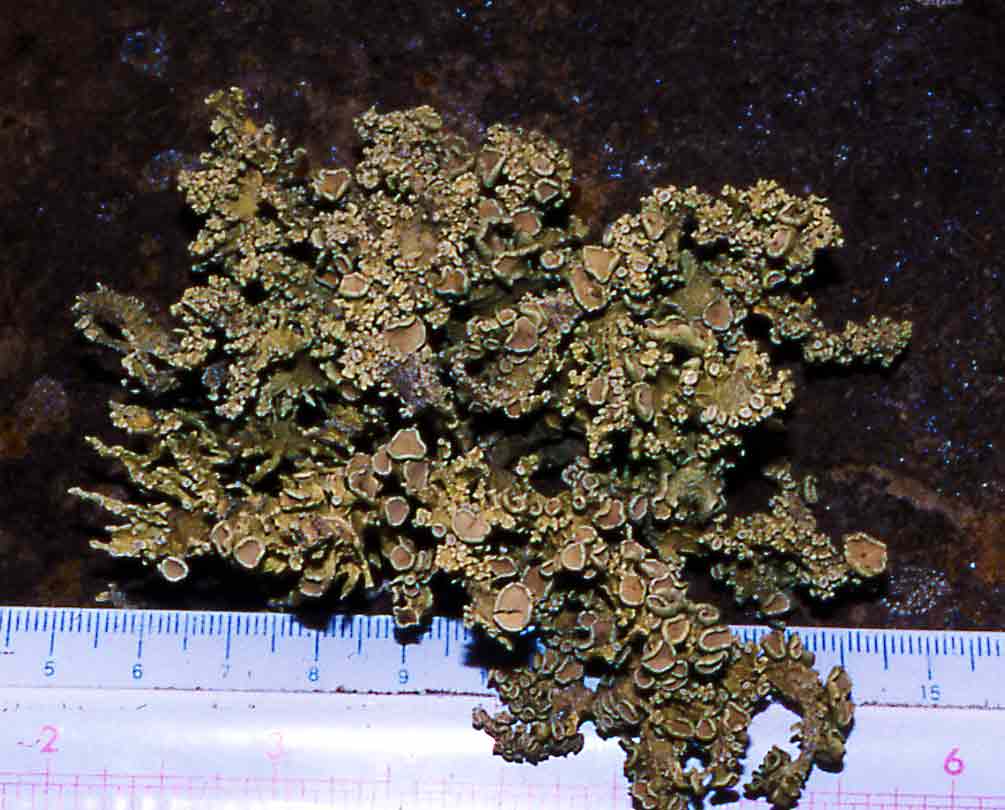
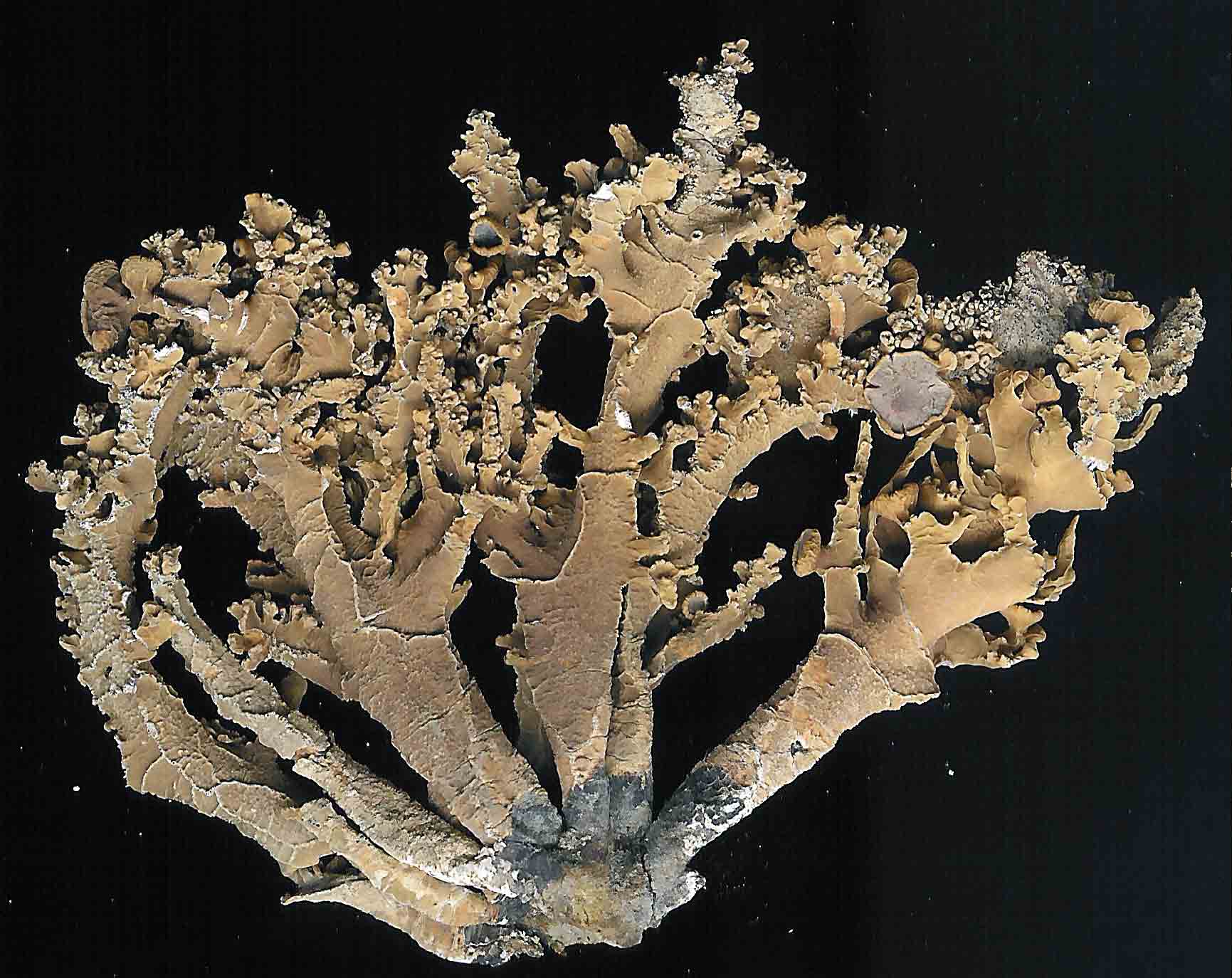
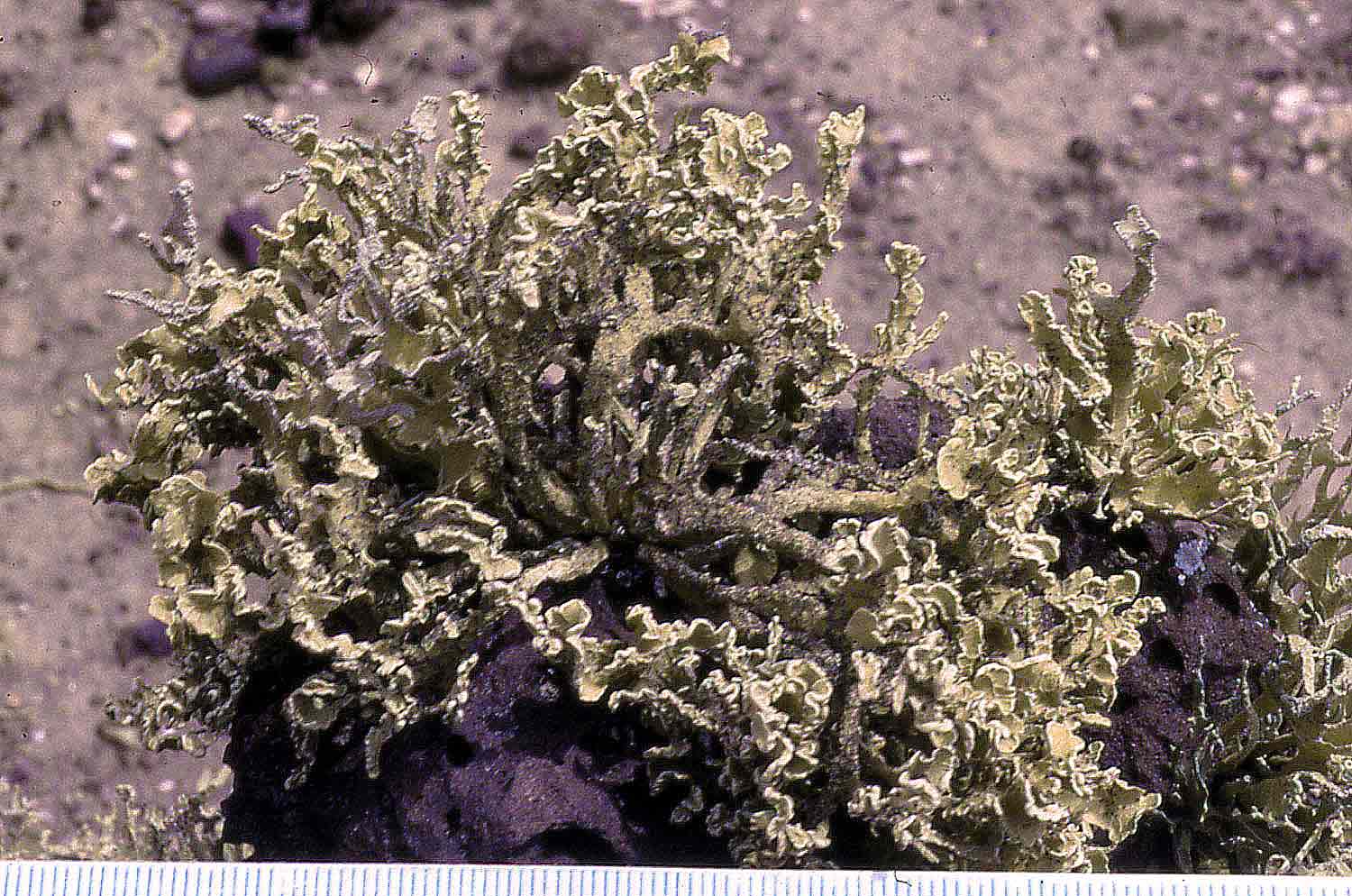
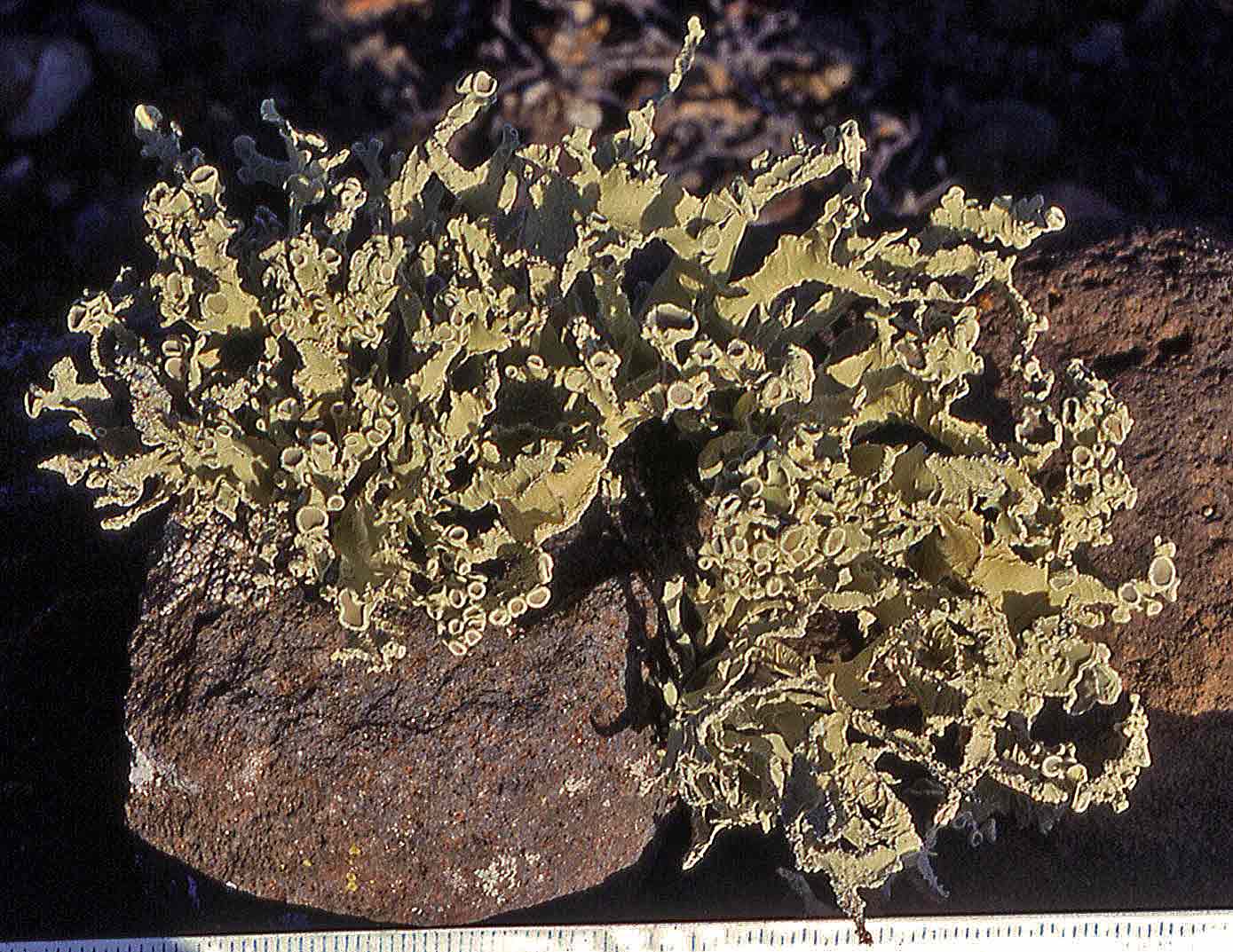
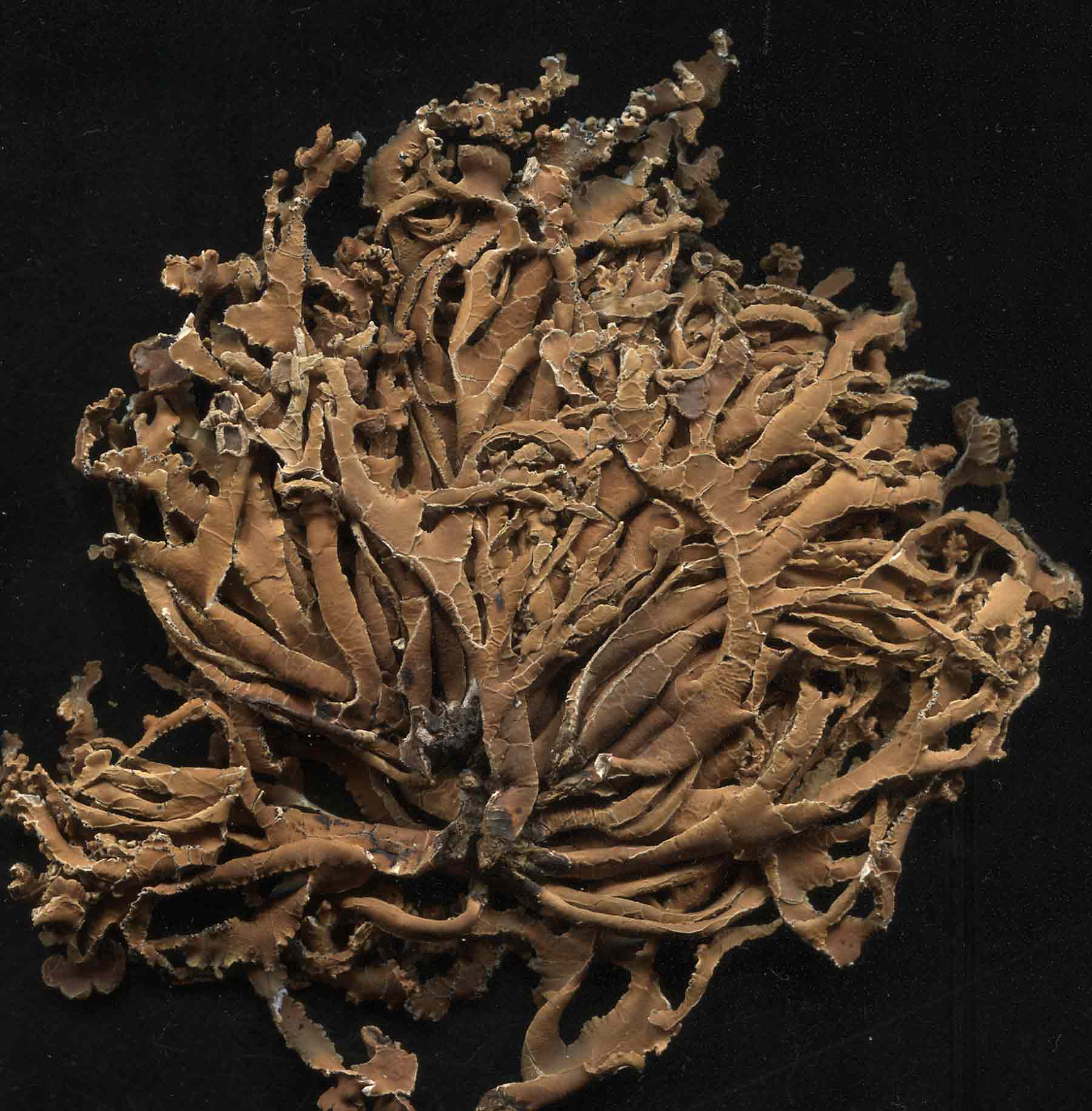
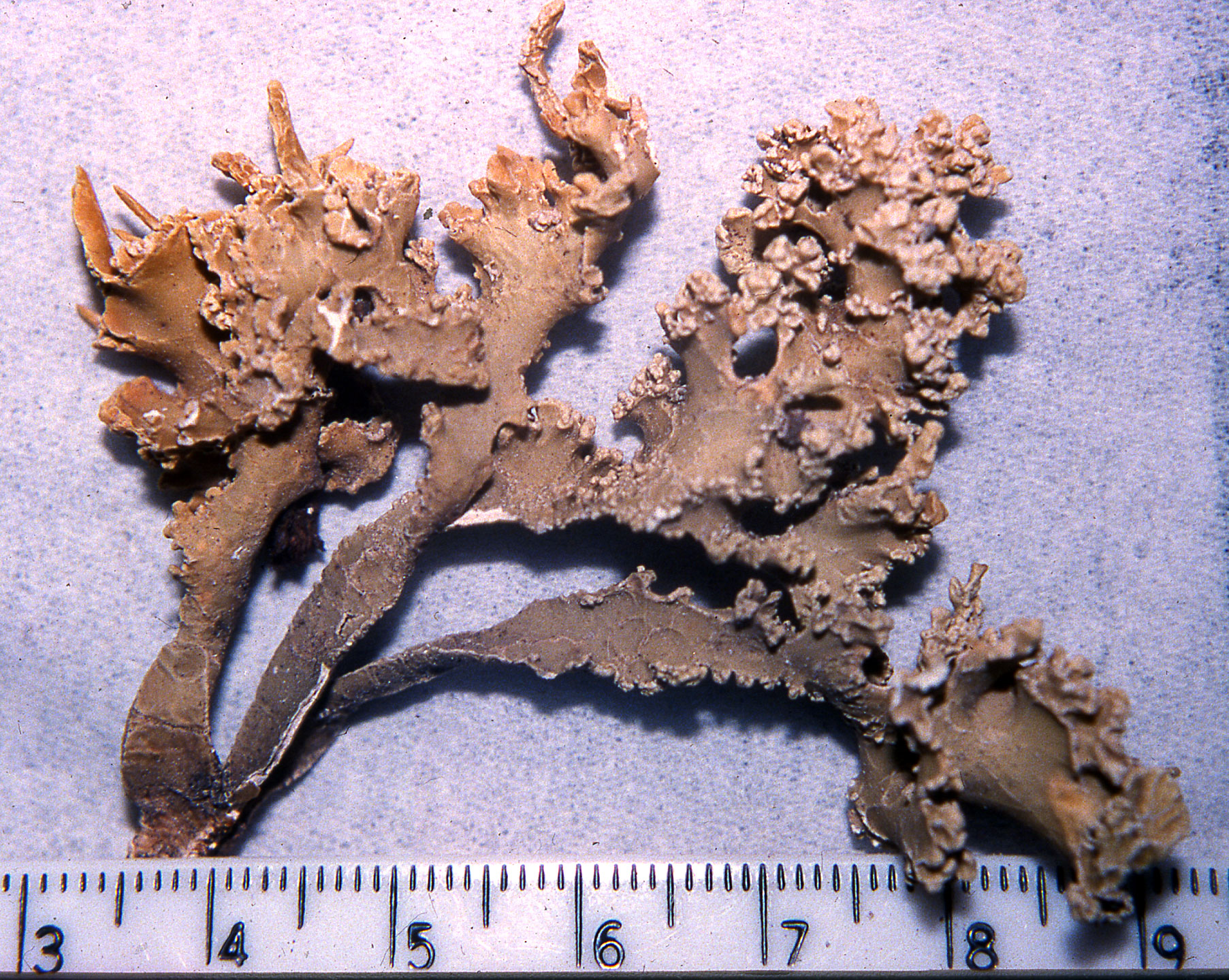
is distinctive for its superficial appearance to “broccoli.” The basal tubular
branches twist and divide into smaller branches that are fringed with elongate lobulate branchlets bearing aggregates of isidioid apothecia. The
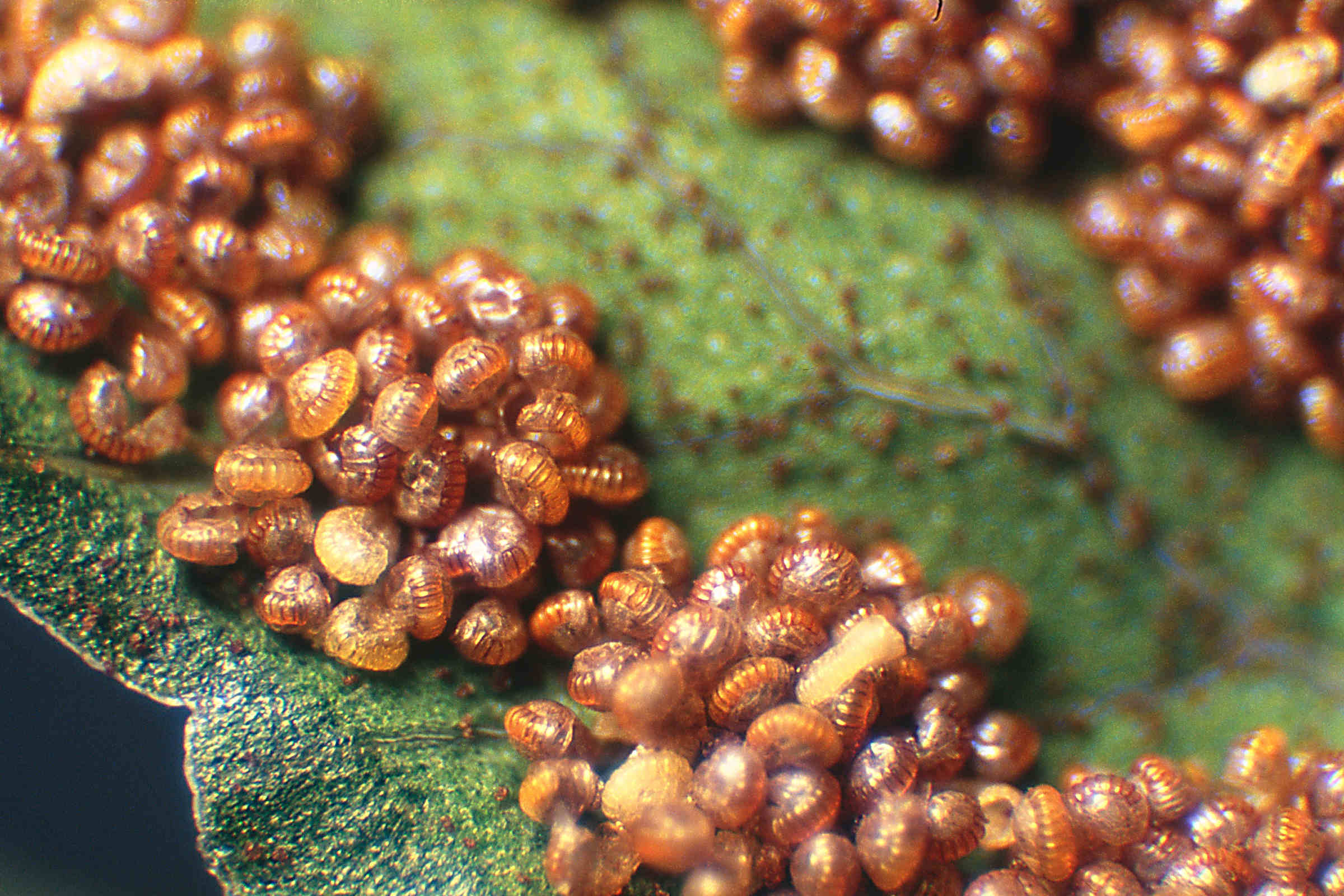
apothecia apparently initiate then abort development, while occasional ones
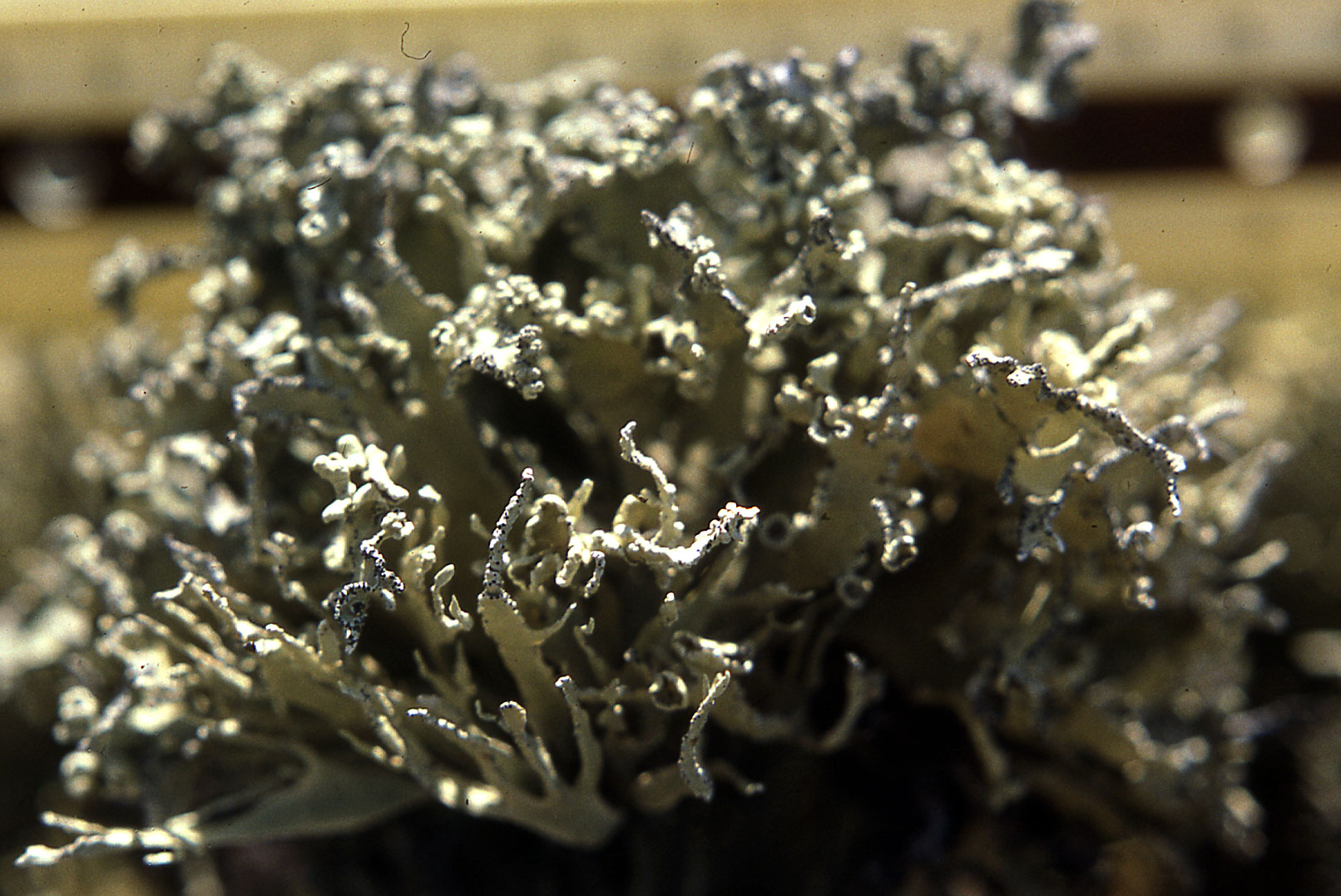
mature. Pycnidia often develop along side apothecia, or also on spike-like filamentous branchlets that lose their cortex
(decorticate).
The cortex may erode around the thalline margin of pycnidia and apothecia, and along margins of
lobulate branches to the extent that lobules appear soralia-like. Further
loss of cortex seems to occur from storing specimens in the herbarium, probably
from inadvertently being rubbed.
The epithet was chosen for apothecia
that—in aborting their development in aggregates along margins of terminal
branch lobes—they resemble sori of dryopterid ferns such as in the genus
Gymnocarpium. Ainsworth and Bisby's Dictionary of the Fungi by
Hawksworth, Kirk, Sutton & Pegler (8th ed., 1995) define sorocarp as “a stalked
fruiting structure" and sorus as a “fruiting structure in certain fungi, esp.
the spore mass in Uredinales and Ustilaginales, a group of fruit bodies.”
Niebla
sorocarpia with relatively narrow branches to apex such as shown above for
Spjut & Marin 12732 are still recognized by their aggregate apothecia in
contrast to branch margins of N. juncosa or
N.
infundibula lined with
±
continuous pycnidia. Niebla juncosa has a brittle thallus that easily falls apart
when collected, whereas that of N. infundibula is rigid with a thick
shiny cortex.
Niebla sorocarpia
can be difficult to distinguish from variants of N. undulata
that have aggregate
apothecia. Niebla
sorocarpia differs in its bushy growth with relatively longer tubular basal branches,
> 6 cm in length, compared to shorter basal branches of N. undulata.
Generally, the “stalk” of the 'sorocarp' is much longer in N. sorocarpia,
relative to the upper “sorocarp lobes.”
Niebla
eburnea
can appear similar to N. sorocarpia by
the aggregate apothecia on expanded terminal lobes; it differs by terminal
digitate branching, smooth to rippled cortex often becoming irregularly cracked
with age as seen towards the base of the thallus, and by the at least some
apothecia fully developing. It may hybridize with N. sorocarpia,
N. homalea,
and
N. laminaria. The latter differs in having marginal
nodular apothecia, especially thalli with irregularly divided lobes as seen
by a specimen from Stewart's Point (Hutchinson 867 at COLO) in Sonoma
County. Niebla sorocarpia
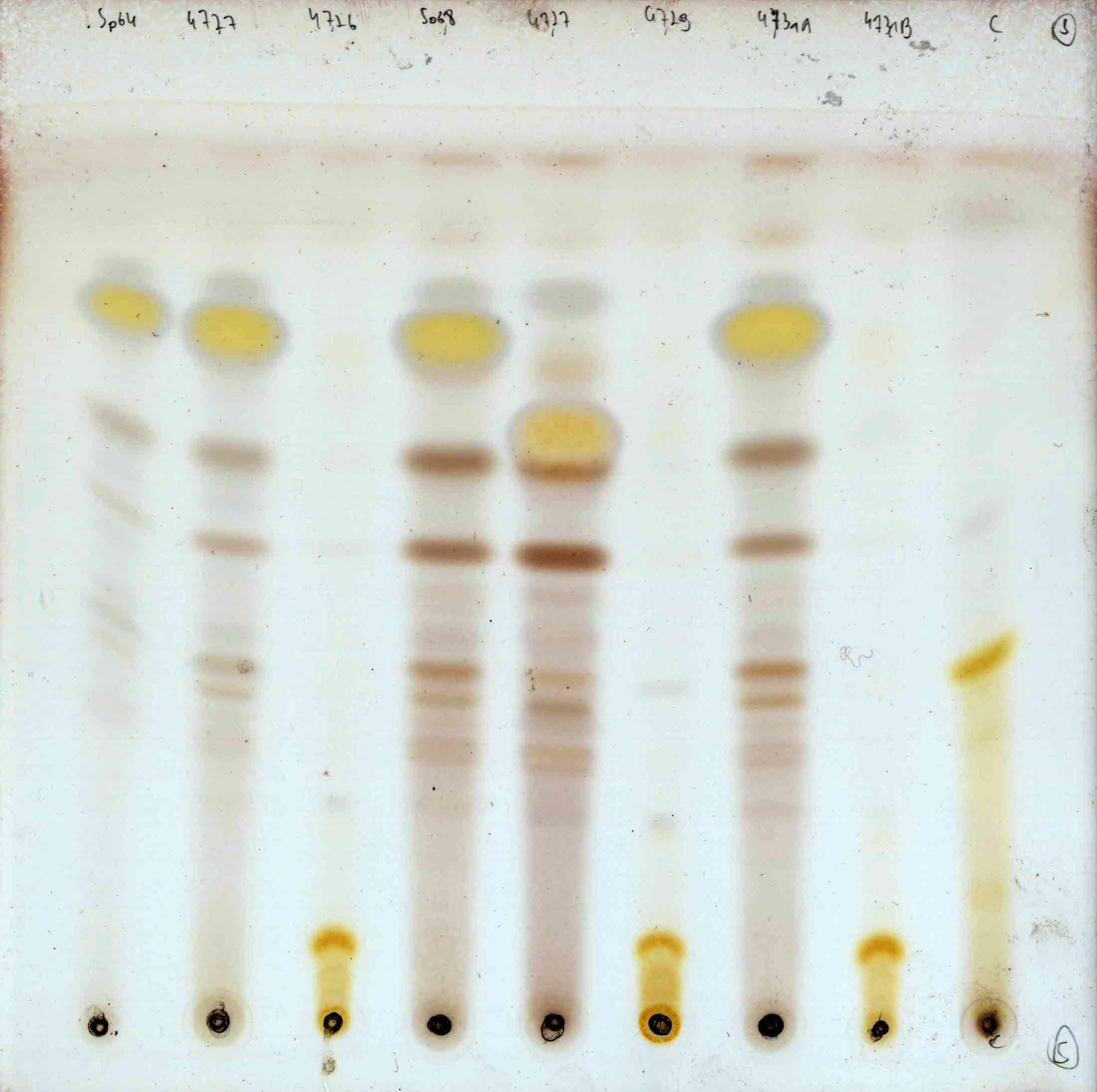
is also characterized by having divaricatic acid (with triterpenes) in contrast
to N. lobulata with sekikaic acid that might appear otherwise similar;
apothecia are usually not aggregate in N. lobulata.
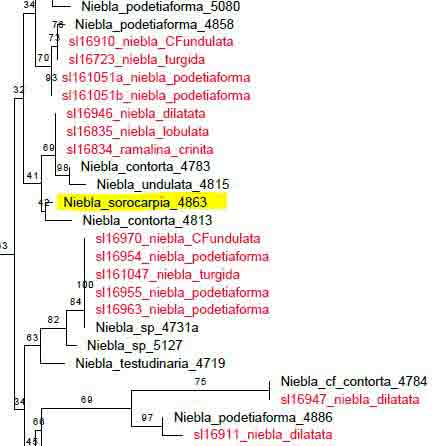
Although Niebla sorocarpia appears distinct for the aggregate
apothecia, its phylogeny is not that well differentiated from related
divaricatic acid species. Two specimens, which differ in apical
development, terminally lobulate in 17087 and apotheciate in 17286, occur in
sister clades, a common pattern seen for many depside species (Spjut et al.
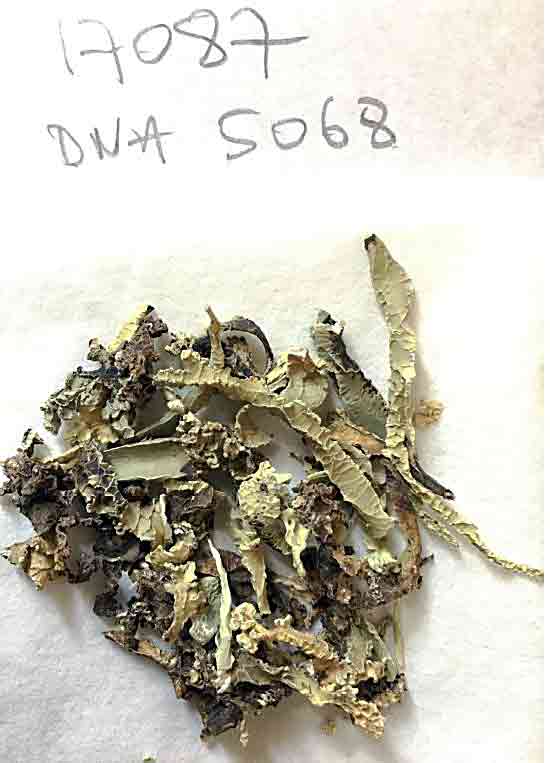
2020). BPP analysis indicated two species, Stacey 1 species. The above images also show the eroding cortex on the terminal
lobes.
Additional References: See
Niebla.
|